

Vendakkai Fry Recipe
Malayalam വെണ്ടക്ക ഫ്രൈTamil வெண்டைக்காய் ஃப்ரைKannada ಬೆಂಡೆಕಾಯಿ ಫ್ರೈTelugu బెండకాయ ఫ్రై
- Prep15 min
- Cook25 min
- Serves4
- DifficultyEasy
- DietVegan
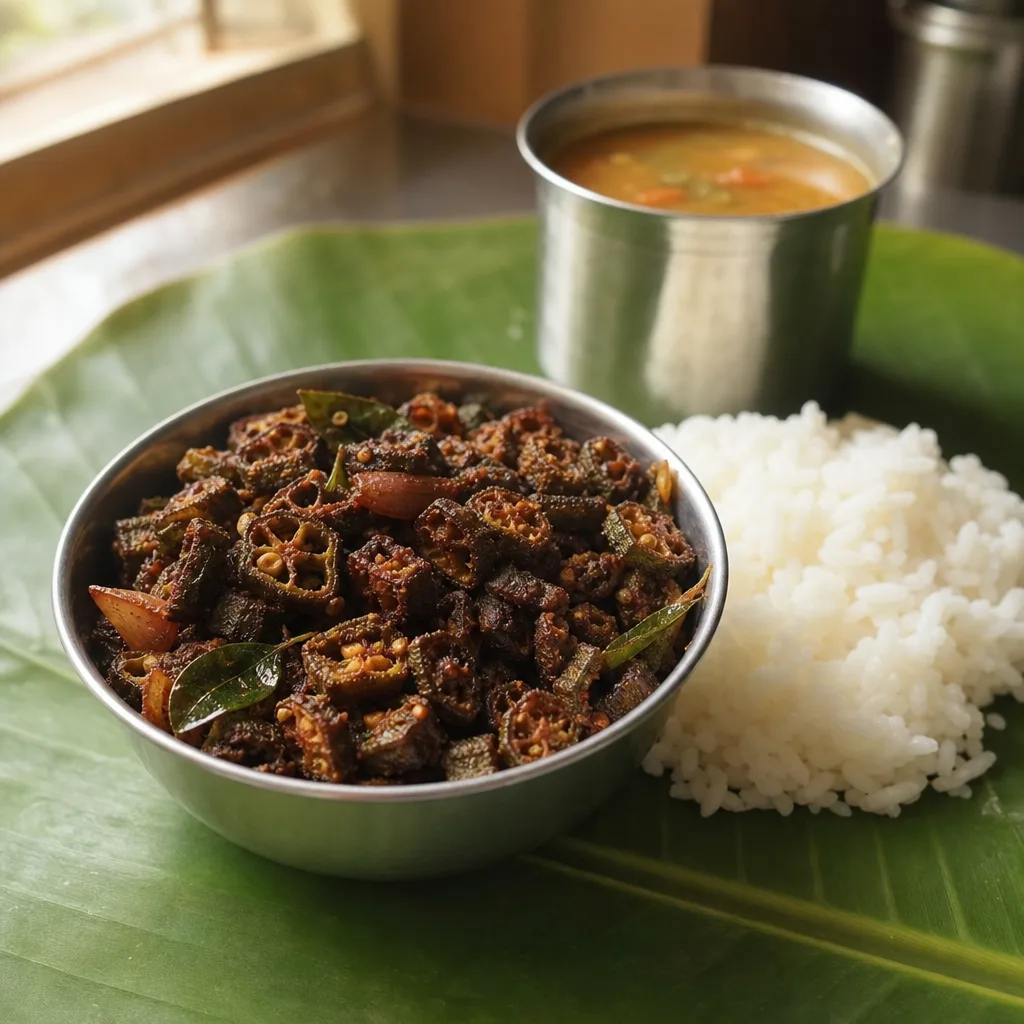
This is the dry okra fry that appears on a Tamil Brahmin lunch plate, cooked in gingelly oil with a sparing hand on the spices. The okra is sliced, tossed in a dry masala, and fried until the sliminess is completely gone and the edges just begin to crisp. It is not deep-fried. It is not battered. It is a simple pan fry that takes patience.
The one thing Iyer households insist on is dryness: dry okra before it is cut, a dry pan, and enough time on the heat so the dish does not taste sticky. Rush any of those and the result is unpleasant. The spicing is restrained — turmeric, red chilli powder, and coriander powder — because the point is the vegetable, not a masala coating.
Some households add a pinch of rice flour toward the end to pull away any last trace of sliminess and to give a very slight crust. Others skip it entirely and rely on cooking time alone. Both are correct.
Ingredients (serves 4)
Main
Method
Dry the okra thoroughly
Wash the okra and spread it in a single layer on a clean dry cloth. Leave it for at least 20 minutes until every pod is completely dry on the outside. Any surface moisture will cause steaming in the pan and bring out the sliminess. Do not skip this.
Slice the okra
Trim the top stem and the very tip of each pod and discard them. Cut each pod into rounds about 1 cm thick. If the pods are very small and thin, cut them slightly thicker. Set aside on a dry plate.
Heat the oil and temper
Set a wide iron or heavy-bottomed pan over medium heat. Pour in the gingelly oil and let it warm until it shimmers. Add the mustard seeds and wait for them to pop. Add the urad dal and stir for about 30 seconds until it turns pale gold. Add the broken dry red chillies and curry leaves and stand back — the leaves will splutter.
Fry the shallots
Add the sliced shallots and fry on medium heat, stirring often, for 4 to 5 minutes until they are soft and just beginning to colour at the edges. They should not brown deeply — just soften and turn translucent with a little colour.
Add the okra
Tip in all the sliced okra and stir to mix with the shallots. Spread it out in as even a layer as the pan allows. Do not cover the pan. A lid traps steam and makes the okra slimy.
Cook on medium heat without hurrying
Cook on medium heat, turning the okra every 2 minutes with a flat spatula. After about 8 minutes the sliminess will be visible — the pieces will look glossy and sticky. Keep cooking. It will pass. Do not add water.
Add the dry masala
Once the sliminess has subsided and the okra looks drier, about 10 minutes in, add the turmeric, red chilli powder, coriander powder, and salt. Stir well to coat every piece. The masala should not be added earlier or it will clump in the moisture.
Finish until dry and lightly crisped
Continue cooking on medium heat for another 8 to 10 minutes, turning every couple of minutes. The okra is ready when the pieces are completely dry, the masala has coated them evenly, and the edges of some pieces are just beginning to crisp and darken. There should be no stickiness at all.
Add rice flour if using
If you want a slightly crisper result, sprinkle the rice flour over the okra in the last 2 minutes of cooking and toss well. It absorbs any remaining moisture and gives a very light coating. Cook for 2 more minutes and remove from the heat.
Rest and serve
Let the fry sit off the heat for 2 minutes before serving. It will crisp a little more as it rests. Serve immediately — it softens as it cools.
How to serve
Hot plain rice with sambar and rasam, as part of a Tamil Brahmin lunch plate. Also eaten with curd rice at the end of a meal.
Served with: Hot plain rice with sambar and rasam, as part of a Tamil Brahmin lunch plate. Also eaten with curd rice at the end of a meal.
Cook's tips
Choosing the okra
Use small to medium pods that snap cleanly when bent. Large, thick pods are fibrous and do not fry well. Avoid any pod that is soft, yellowing, or has brown patches.
The rice flour question
Rice flour is a household shortcut to speed up the drying and add a little crispness. Traditional cooks who have the time skip it entirely. Both results are correct. If you add it, use only 1 tsp — more makes it powdery.
Pan choice matters
A wide iron kadai or a heavy stainless pan gives the best result. A non-stick pan traps moisture and makes it harder to get the edges to crisp. Use the widest pan you have so the okra is not piled too deep.
Do not cover the pan
This is the most common mistake. A lid at any point in cooking will cause the okra to steam, and the sliminess will return and not leave. Cook uncovered throughout.
Storing leftovers
This does not store well. It softens overnight and the texture is lost. Cook only what will be eaten at that meal.
Regional variations
Chettinad vendakkai varuval uses a heavier spice rub with fennel and kalpasi; Andhra households add tamarind paste and extra red chilli; Kerala Hindu homes use coconut oil and curry leaves with less chilli powder.
Glossary
- Vendakkai வெண்டைக்காய்
- Tamil name for okra or ladies' finger.
- Gingelly oil நல்லெண்ணெய்
- Cold-pressed sesame oil used in Tamil Nadu cooking; has a mild, nutty flavour distinct from the strong toasted sesame oil used in East Asian cooking.
- Urad dal உளுந்து
- Skinned and split black gram used whole in tempering to add a nutty flavour and slight crunch.
- Shallots சின்ன வெங்காயம்
- Small red shallots used across South Indian cooking; sweeter and more aromatic than large onions.
- Varuval வறுவல்
- Tamil word for a dry fry preparation, cooked without gravy until the moisture is driven off.
Two things decide this dish: the okra must be bone-dry before it goes into the pan, and the pan must stay uncovered throughout. Get those right and the sliminess takes care of itself with time and steady heat. Rush either and no amount of spice will save it.
More Dry Vegetable Sides recipes
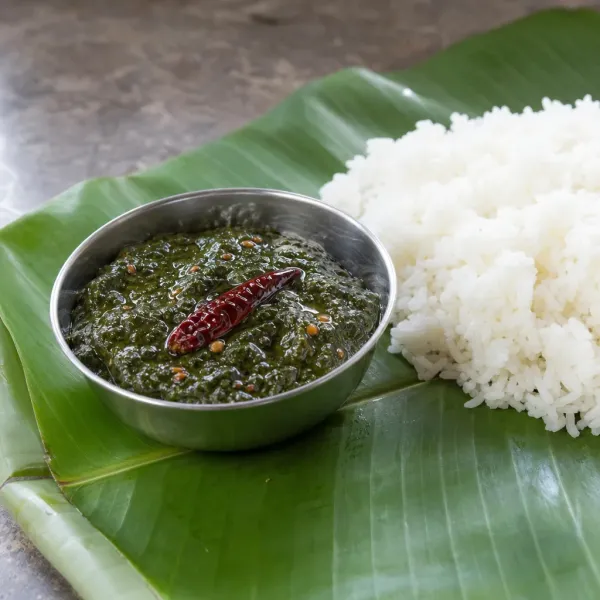
Keerai Masiyal
Traditional Tamil Brahmin keerai masiyal made with arai keerai, garlic, pepper and a gingelly oil tempering. Served hot on plain rice.
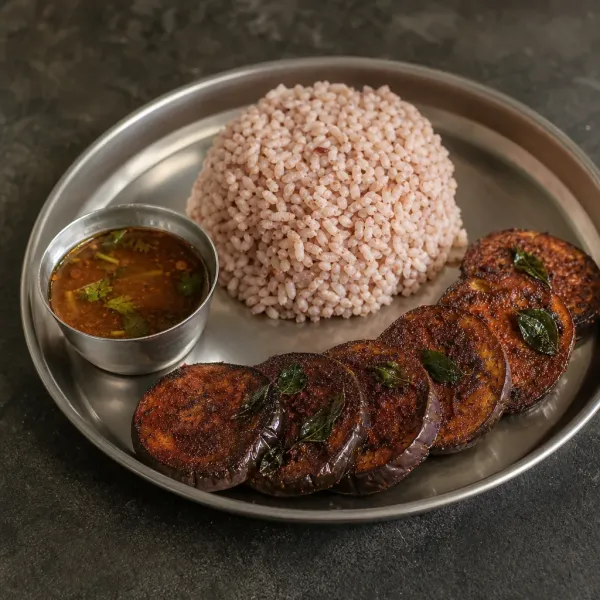
Kathirikai Varuval
Authentic Tamil kathirikai varuval: brinjal rounds shallow-fried in gingelly oil with a tamarind-spice coating. Traditional Kongunad household recipe.
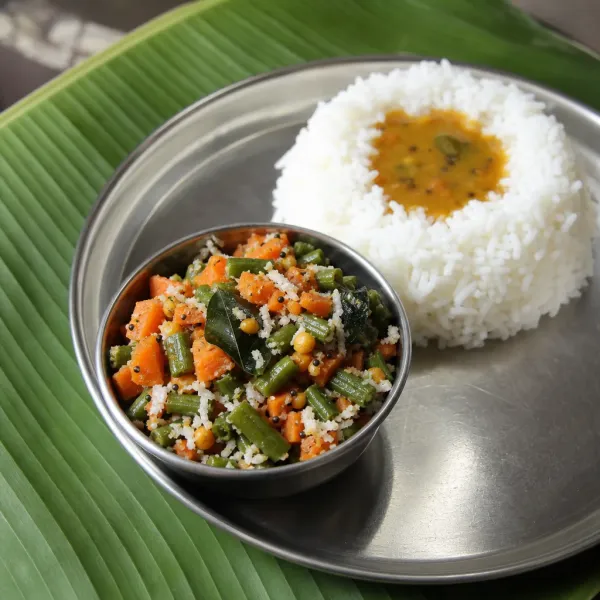
Carrot Beans Palya
Traditional Karnataka carrot beans palya with mustard seeds, curry leaves, chana dal, and fresh grated coconut. Dry stir-fry ready in 30 minutes.
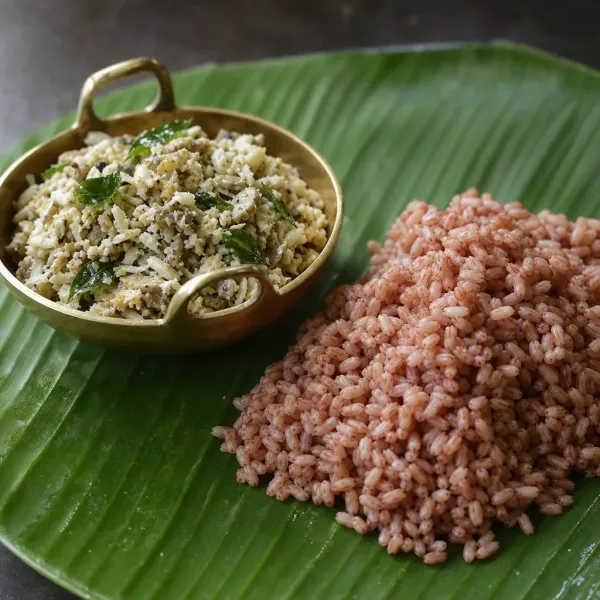
Mushroom Thoran
Traditional Kerala mushroom thoran with fresh grated coconut, cumin, and curry leaves. A dry, fragrant side dish for matta rice and sadya.
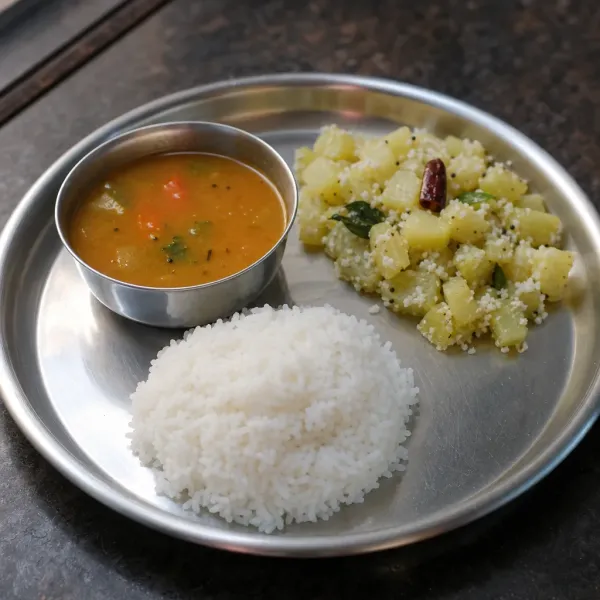
Chow Chow Poriyal (Chayote Stir-Fry)
Traditional Tamil Brahmin chow chow poriyal with gingelly oil, mustard seeds, urad dal, and fresh grated coconut. Dry, simple, and ready in 30 minute…
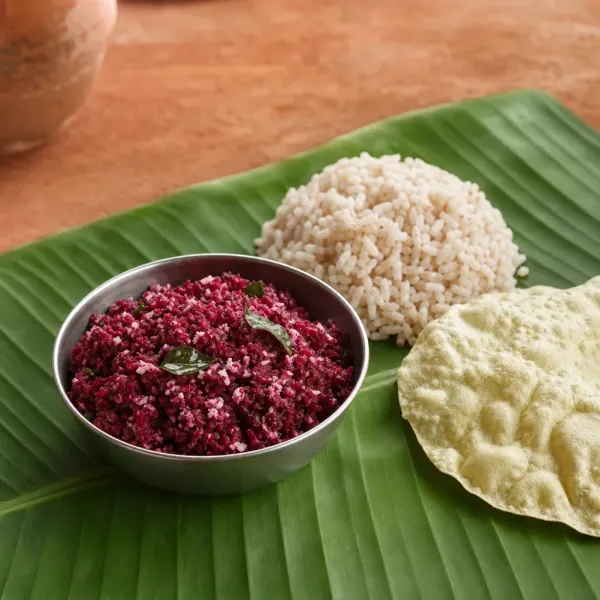
Beetroot Thoran
Traditional Kerala beetroot thoran with fresh grated coconut, shallots and curry leaves. Dry, vivid and ready in 30 minutes. A daily rice-meal staple.