

Beetroot Thoran Recipe
Malayalam ബീറ്റ്റൂട്ട് തോരൻTamil பீட்ரூட் துவரன்Kannada ಬೀಟ್ರೂಟ್ ತೊರಣ್Telugu బీట్రూట్ తోరన్
- Prep15 min
- Cook15 min
- Serves4
- DifficultyEasy
- DietVegan
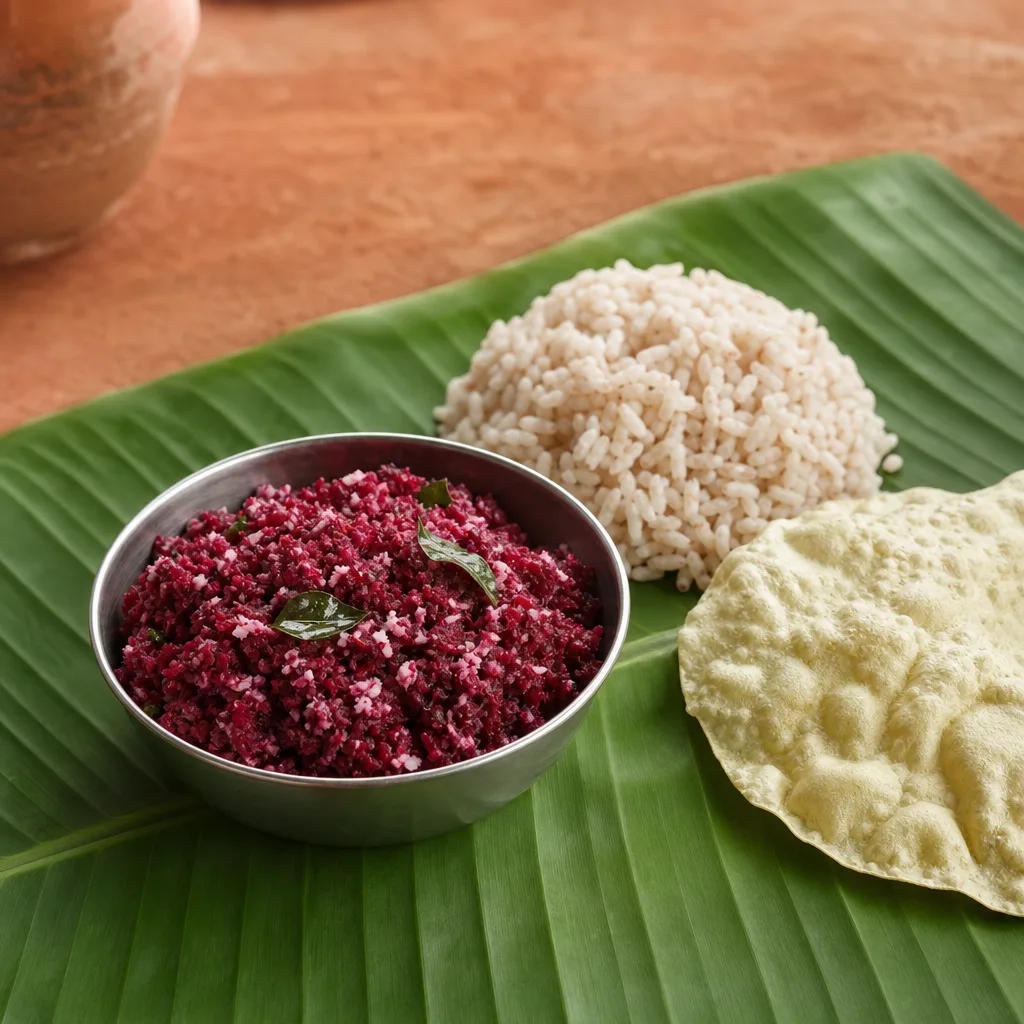
Thoran is the everyday dry vegetable dish of Kerala, cooked in every household at least once a day. Beetroot thoran is one of the most common, partly because beetroot is forgiving and partly because its deep magenta colour makes the rice plate look generous and bright. It is not a festive dish; it belongs to the ordinary noon meal.
The method is the same across most Kerala kitchens: the vegetable is finely grated or chopped, cooked briefly with shallots and green chilli, then mixed with fresh grated coconut and a tempering of mustard, dried red chilli and curry leaves in coconut oil. The coconut is not cooked long; it goes in near the end and stays pale and moist. If you cook it until it browns, it becomes something else entirely.
Households differ mainly on texture. Some cooks grate the beetroot fine on a box grater so it cooks in minutes and the dish is almost jammy. Others cut it into very small cubes for a little bite. Both are correct. What is not correct is cooking it down to a soft mash, or adding water and making it wet. A thoran is dry when it reaches the plate.
Ingredients (serves 4)
Main vegetable
Coconut paste
For cooking
For tempering
Method
Prepare the coconut mixture
Combine the fresh grated coconut, torn green chilli and turmeric powder in a small bowl. Using your fingers, mix and lightly squeeze them together for about 30 seconds until the coconut is tinted yellow and the chilli is well distributed. Do not grind this; it stays coarse. Set aside.
Temper the oil
Heat the coconut oil in a wide, heavy pan or cheena chatti over medium heat. When the oil is hot, add the mustard seeds and keep the lid ready. They will splutter within 20 to 30 seconds. Once the spluttering settles, add the broken dried red chilli and curry leaves. Stand back; the curry leaves will crackle loudly. Let them sizzle for 15 seconds.
Cook the shallots
Add the sliced shallots to the pan. Cook over medium heat, stirring occasionally, for 3 to 4 minutes until they soften and turn translucent at the edges. Do not let them brown; you want them soft, not caramelised.
Add the beetroot and salt
Add the grated or diced beetroot and salt. Stir everything together. The pan will look very full if you are using grated beetroot; it will reduce quickly. Stir once more to coat the beetroot in the oil and shallots.
Cook the beetroot covered
Cover the pan with a lid and cook on medium-low heat for 6 to 8 minutes, stirring once halfway through. The beetroot will release a little of its own moisture and cook in that steam. If you are using diced beetroot rather than grated, it may need 10 to 12 minutes. Check by pressing a piece against the side of the pan; it should give without resistance.
Check for dryness
Remove the lid and increase the heat to medium. If there is any liquid pooled at the bottom of the pan, stir continuously for a minute or two until it evaporates. The beetroot should look glossy but not wet. A thoran that reaches the plate with liquid will make the rice soggy.
Add the coconut mixture
Reduce the heat to low. Add the coconut, green chilli and turmeric mixture. Stir gently but thoroughly, folding the coconut through the beetroot so it is evenly distributed. Cook uncovered for 2 minutes only, stirring once. The coconut should warm through and absorb the colour of the beetroot but must not brown or dry out completely. Take it off the heat the moment it looks evenly mixed and fragrant.
Taste and serve
Taste for salt and adjust. Serve immediately or at room temperature. Thoran does not improve by sitting on the stove.
How to serve
Plain cooked matta rice (Kerala red rice), sambar or a simple dal, and papadam. On a sadya plate it sits alongside other thorans, olan, avial and pachadi.
Served with: Plain cooked matta rice (Kerala red rice), sambar or a simple dal, and papadam. On a sadya plate it sits alongside other thorans, olan, avial and pachadi.
Cook's tips
Grating vs. dicing
Grating is faster and gives a softer, more cohesive thoran that clings to the rice. Dicing gives a little chew. Both are traditional; choose based on what you prefer. A box grater on the large holes works well.
Beetroot staining
Raw beetroot stains everything immediately: hands, board, cloth. Work quickly or wear gloves. The colour will bleed into the coconut and turn the whole dish a deep pink-magenta, which is correct and expected.
Do not add water
Beetroot has enough moisture to cook itself under a lid. Adding water makes the dish wet and pushes it towards a curry. If it looks very dry before it is cooked through, lower the heat and replace the lid for another two minutes.
Fresh coconut is not optional here
Desiccated coconut absorbs moisture differently and turns grainy and dry. Fresh coconut, grated from the shell the same day or the day before, is what gives thoran its characteristic soft, moist texture. Frozen fresh-grated coconut, thawed, is an acceptable substitute in households where fresh is not available daily.
Leftovers
Store covered at room temperature if eating within the same day. Refrigerate if keeping overnight. Cold thoran can be reheated in a dry pan on low heat for two minutes; do not add oil or water.
Regional variations
Mappila households sometimes add a small piece of green chilli and omit the dried red chilli; some Malabar kitchens skip the coconut entirely and finish with a squeeze of lemon.
Glossary
- Thoran തോരൻ
- Kerala dry vegetable stir-fry finished with fresh grated coconut; a fixture of the daily rice meal and the sadya.
- Chuvannulli ചുവന്നുള്ളി
- Small red shallots used across Kerala cooking; sharper and more aromatic than large onions.
- Cheena chatti ചീനച്ചട്ടി
- Wide, shallow, flat-bottomed wok used in Kerala kitchens; ideal for thorans and stir-fries.
- Matta rice മട്ട അരി
- Kerala's traditional red parboiled rice, also called Rosematta or Palakkadan matta; the everyday rice of most Kerala households.
Two things decide whether this works: keeping the heat low enough after the coconut goes in so it stays moist and pale, and making sure all the liquid from the beetroot has cooked off before you add it. Get those two right and the dish looks after itself.
More Dry Vegetable Sides recipes
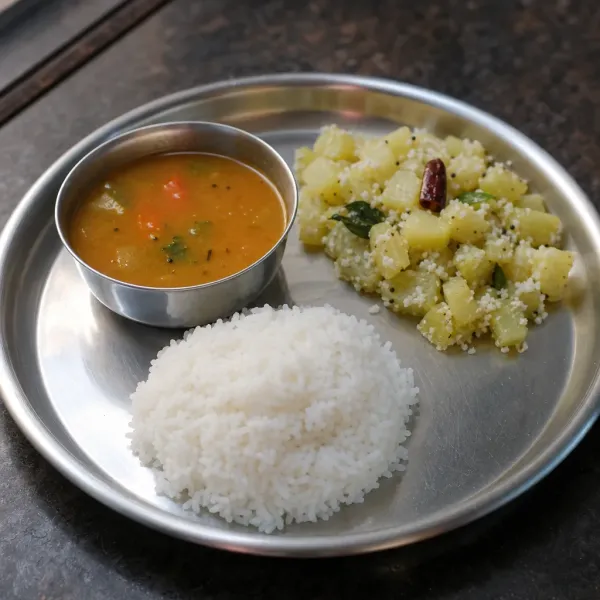
Chow Chow Poriyal (Chayote Stir-Fry)
Traditional Tamil Brahmin chow chow poriyal with gingelly oil, mustard seeds, urad dal, and fresh grated coconut. Dry, simple, and ready in 30 minute…
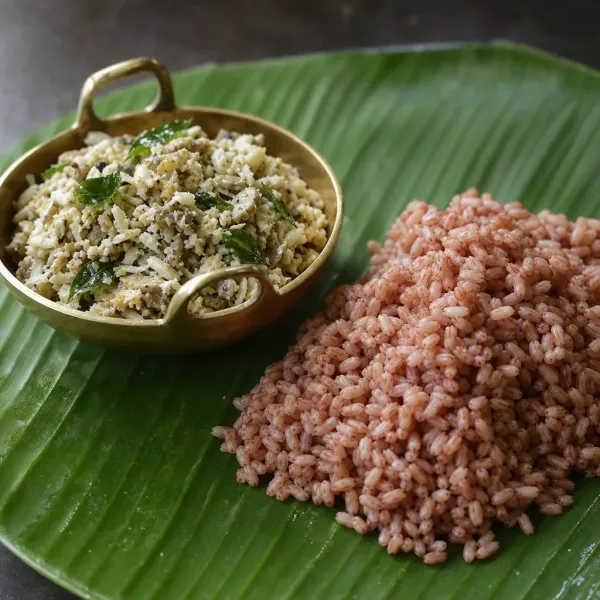
Mushroom Thoran
Traditional Kerala mushroom thoran with fresh grated coconut, cumin, and curry leaves. A dry, fragrant side dish for matta rice and sadya.
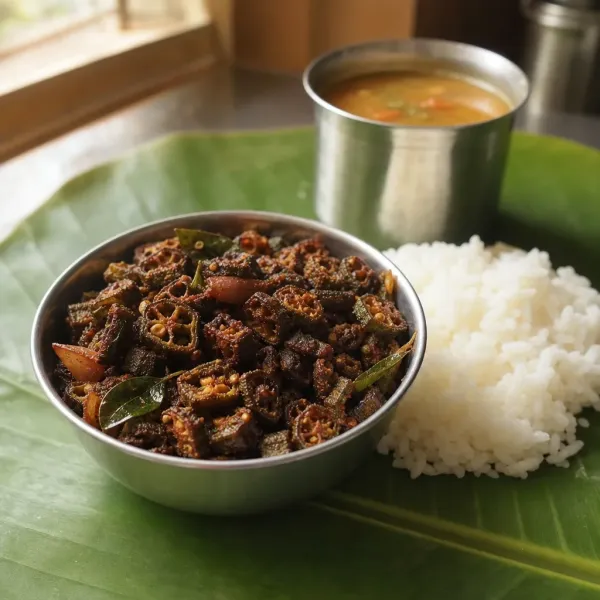
Vendakkai Fry
Traditional Tamil Brahmin vendakkai fry in gingelly oil with shallots, curry leaves and dry masala. Crisp, dry and slimy-free every time.
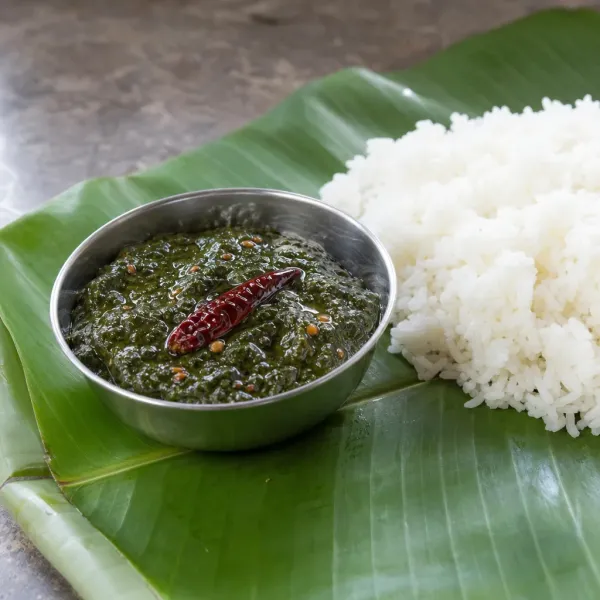
Keerai Masiyal
Traditional Tamil Brahmin keerai masiyal made with arai keerai, garlic, pepper and a gingelly oil tempering. Served hot on plain rice.
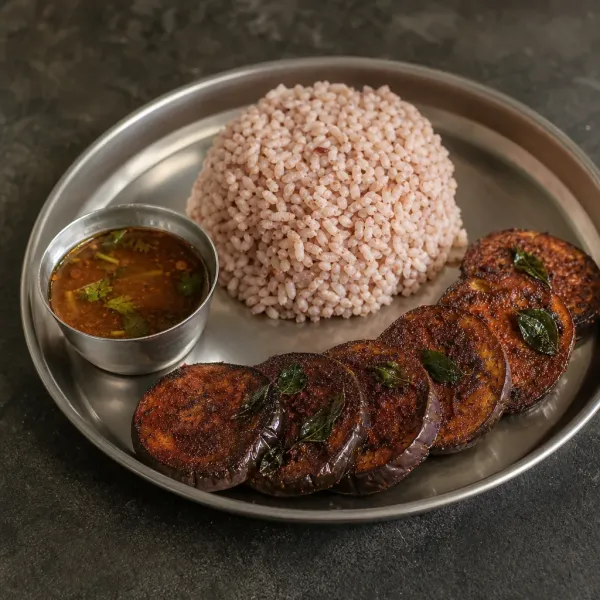
Kathirikai Varuval
Authentic Tamil kathirikai varuval: brinjal rounds shallow-fried in gingelly oil with a tamarind-spice coating. Traditional Kongunad household recipe.
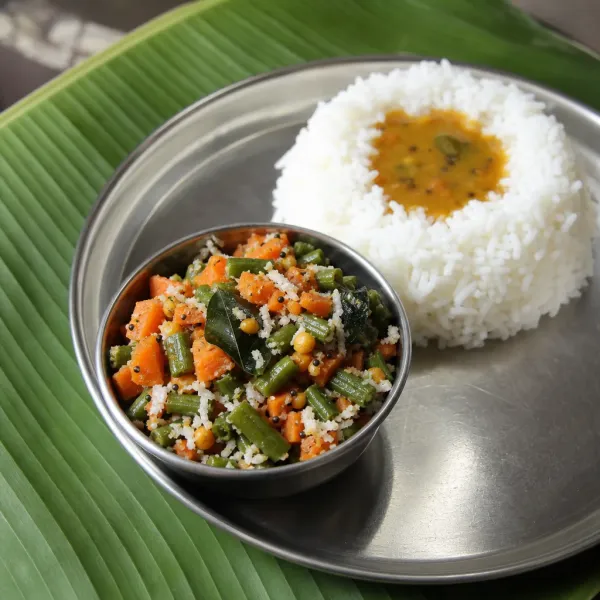
Carrot Beans Palya
Traditional Karnataka carrot beans palya with mustard seeds, curry leaves, chana dal, and fresh grated coconut. Dry stir-fry ready in 30 minutes.