

Kerala Prawn Curry with Coconut Milk Recipe
Malayalam തേങ്ങാപ്പാൽ ചെമ്മീൻ കറിTamil தேங்காய்ப்பால் இறால் கறிKannada ತೆಂಗಿನಕಾಯಿ ಹಾಲಿನ ಸೀಗಡಿ ಕರಿTelugu కొబ్బరిపాల రొయ్యల కూర
- Prep25 min
- Cook30 min
- Serves4
- DifficultyMedium
- DietNon-vegetarian
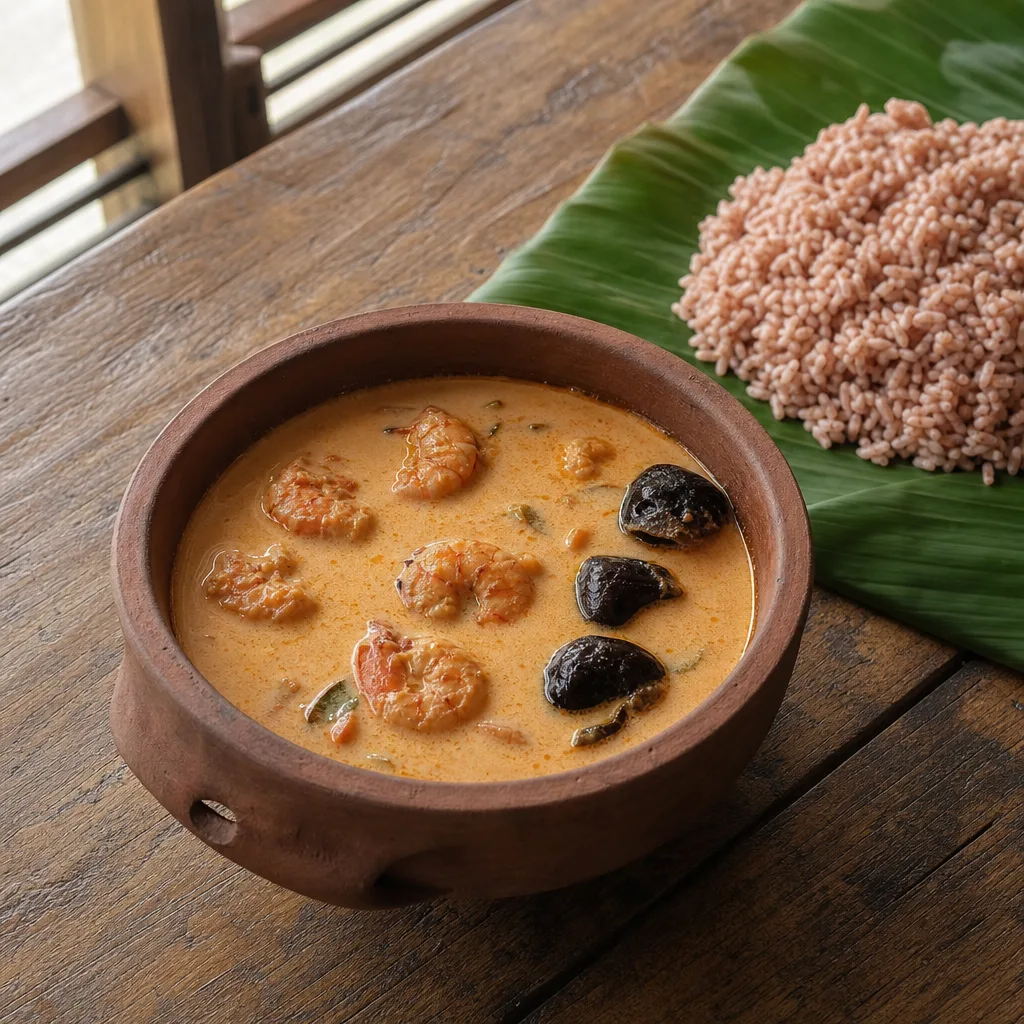
This is a Syrian Christian household curry from Travancore, cooked in an earthenware chatty on most days that fish appears on the table. The gravy is built in two stages: a thick paste of shallots, ginger, garlic and fresh coconut ground together, simmered with the prawns, and then finished with the second press of coconut milk poured in just before the pot comes off the fire. The colour is a pale, warm ivory with a blush of Kashmiri chilli. It is never red-orange.
Kudampuli, the dried black rind of Garcinia cambogia, is the souring agent here. It gives a clean, rounded tartness that tamarind does not. Two or three pieces go in early, with the spices, so the sourness cooks into the gravy. Green mango is used when kudampuli is not at hand, though most Nasrani kitchens keep a jar of dried kudampuli on the shelf year round.
In this house the curry is made in a mann chatty, an unglazed clay pot, which softens the heat and gives the gravy a faint earthiness that a steel pan cannot replicate. The pot is always pre-seasoned. Households differ on whether to add a short tempering of mustard and curry leaves at the end; many Nasrani cooks do not, leaving the gravy clean and unbroken.
Ingredients (serves 4)
Prawns
Ground paste
For cooking
Method
Marinate the prawns
Toss the cleaned prawns with ¼ tsp turmeric and a pinch of salt. Set aside while you prepare everything else. Do not leave them longer than 30 minutes or the salt will draw out moisture and make the gravy watery.
Extract the coconut milk
Add 250 ml of warm water to the grated coconut and squeeze firmly by hand for a full minute. Strain through a fine sieve or muslin, pressing hard. This is your thick first press; set it aside. Return the coconut to the bowl, add another 250 ml of warm water, squeeze again, and strain. This thinner second press goes into the curry first. Using the same coconut for both presses keeps the flavour unified.
Make the ground paste
Drain the soaked Kashmiri chillies and put them in a wet grinder or heavy stone grinder with the shallots, ginger, garlic, black pepper, coriander powder and turmeric. Add 3 to 4 tbsp of the thin coconut milk and grind to a smooth, fine paste. The paste should have no visible grain. A coarse paste will leave the gravy gritty and will not cook through evenly.
Fry the shallots
Heat the coconut oil in a mann chatty or heavy-bottomed pan over medium flame. Add the sliced shallots and fry, stirring often, until they are soft, translucent and just beginning to take on a pale gold at the edges, about 6 to 8 minutes. Do not let them brown fully; they will cook further with the paste.
Cook the paste
Add the green chillies and curry leaves and stir for 30 seconds. Tip in the ground paste and cook over medium-low heat, stirring constantly, until the raw smell of the garlic and ginger is completely gone and the oil begins to separate at the edges of the paste, about 8 to 10 minutes. If it sticks, add a splash of thin coconut milk rather than water. Rushing this step leaves a raw taste in the finished gravy.
Add the souring agent and thin milk
Drop in the kudampuli pieces and pour in the thin coconut milk. Stir well, season with salt, and bring to a gentle simmer over medium heat. Let it simmer uncovered for 5 minutes so the kudampuli releases its tartness into the gravy. Taste; the sourness should be present but not sharp.
Add the prawns
Slide the marinated prawns into the simmering gravy in a single layer. Stir gently to coat them. Cook over medium heat for 4 to 5 minutes. Prawns are ready when they have curled into a loose C shape and turned opaque all the way through. If they curl tightly into an O, they are overcooked and will be rubbery. Remove from heat the moment they are done.
Finish with thick coconut milk
With the pan off direct heat or on the lowest possible flame, pour in the thick coconut milk. Stir in gently. Do not boil after this point or the thick milk will split and the gravy will look curdled. Heat through for one minute only, just until the steam rises. Taste for salt and sourness and adjust if needed.
Rest before serving
Cover the pot and let the curry rest for 5 minutes off the heat before serving. The gravy thickens slightly as it rests, and the flavours settle. It tastes better ten minutes after cooking than it does the moment it leaves the fire.
How to serve
Kappa (boiled and mashed tapioca) or matta rice. Some households serve it with appam on feast days.
Served with: Kappa (boiled and mashed tapioca) or matta rice. Some households serve it with appam on feast days.
Cook's tips
On kudampuli
Kudampuli varies in intensity; dried pieces from a new batch will be stronger than old ones. Start with 3 pieces and taste after 5 minutes of simmering. You can add a fourth but you cannot take tartness out. Remove the pieces before serving; they are not eaten.
On the mann chatty
A new clay pot must be cured before use: fill it with water and a handful of rice, bring slowly to a boil, then discard the water. Repeat once. An unseasoned pot can give the curry a raw, earthy flavour and may crack on the flame.
Canned coconut milk
Freshly extracted coconut milk makes a noticeably sweeter, less flat gravy. If using canned milk as a shortcut, use 120 ml full-fat for the thick press and dilute another 120 ml with 130 ml water for the thin press. Shake the can well before opening.
Size of the prawns
Medium prawns (roughly 25 to 30 per 500 g) are right for this curry. Very large prawns take longer and risk undercooking in the centre; very small ones overcook before the gravy has a chance to coat them.
Keeping and reheating
The curry keeps in the refrigerator for two days. Reheat very gently on a low flame; do not boil. The thick coconut milk will separate if it reaches a hard boil. If that happens, the gravy is not ruined but it will look oily and broken.
Regional variations
Mappila version uses fennel and thin coconut milk with more heat; Travancore Hindu households omit shallots in some fasts; Kuttanad households add a small piece of kudampuli instead of green mango.
Glossary
- Kudampuli കുടംപുളി
- Dried rind of Garcinia cambogia; the souring agent specific to Kerala seafood cooking. Also called Malabar tamarind in English.
- Chuvannulli ചുവന്നുള്ളി
- Kerala shallots; small, pinkish-red, with a sharper and more aromatic flavour than regular onions.
- Mann chatty മൺ ചട്ടി
- Unglazed earthenware cooking pot traditional to Kerala kitchens; distributes heat gently and is especially suited to coconut-milk curries.
- Matta rice മട്ട അരി
- Red parboiled rice grown in Kerala; nutty, slightly chewy, and the everyday rice of most Kerala households.
- Kappa കപ്പ
- Tapioca; a common Kerala staple, typically boiled, drained and lightly mashed. Eaten with fish or prawn curries.
Two things decide this curry. The first is cooking the ground paste long enough that no raw smell of garlic or ginger remains before the liquid goes in; a hurried paste stays bitter underneath the coconut. The second is the heat after the thick coconut milk is added: keep it low and brief, or the gravy breaks. Get those two right and everything else follows.
More Non-Vegetarian recipes
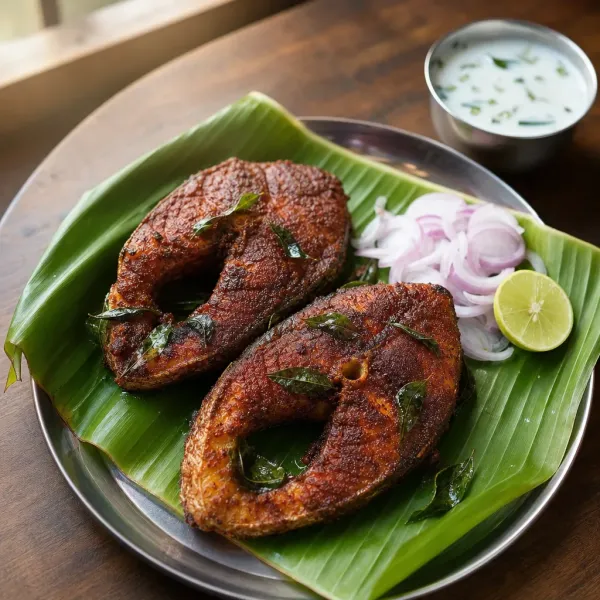
Kerala Fish Fry (Meen Varuthathu)
Authentic Malabar Mappila fish fry with chilli paste and kudampuli marinade, fried on a tawa in coconut oil. Traditional Kerala method.
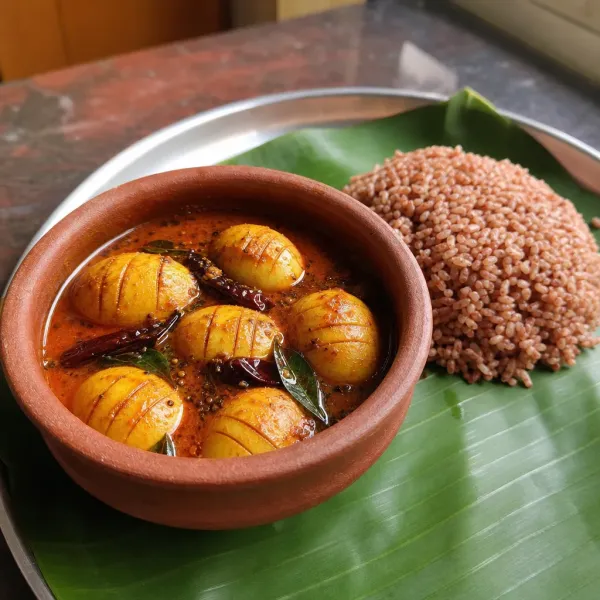
Mutta Curry
Traditional Kerala Nasrani mutta curry with kudampuli, shallots, and coconut milk. Step-by-step home recipe with exact quantities and cook's notes.
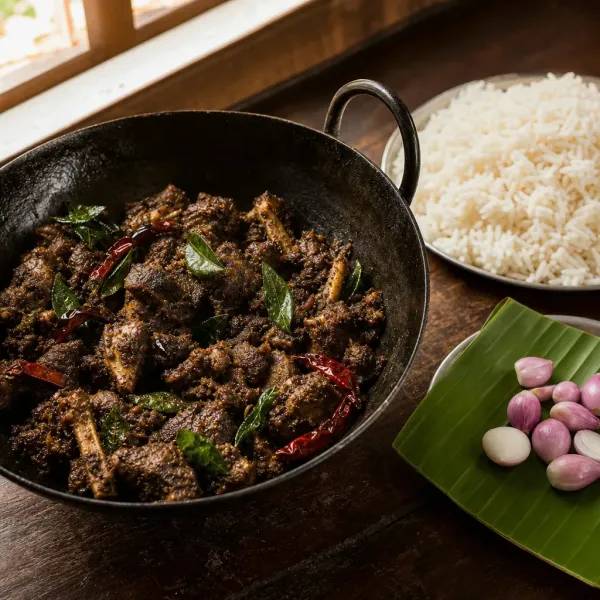
Mutton Chukka Varuval
Authentic Chettinad mutton chukka varuval with freshly ground kalpasi-marathi mokku masala, roasted dry in gingelly oil. Traditional household method.
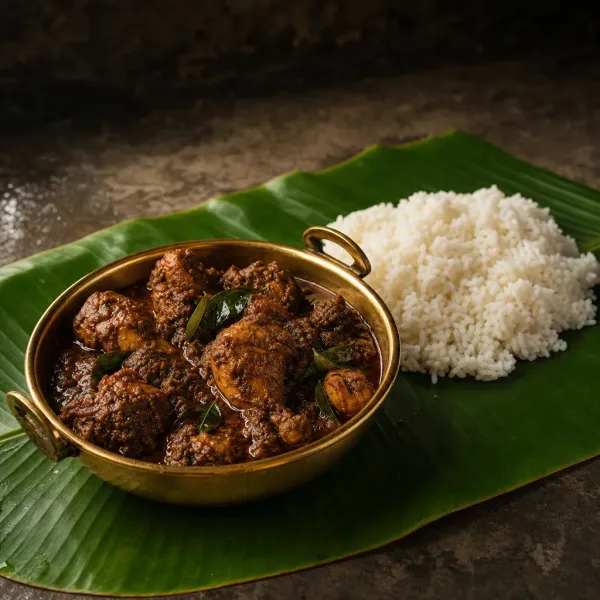
Chettinad Chicken Curry
Authentic Chettinad chicken curry from the Nagarathar kitchen, with fresh-ground masala of kalpasi, marathi mokku and whole spices. Cooked in gingell…
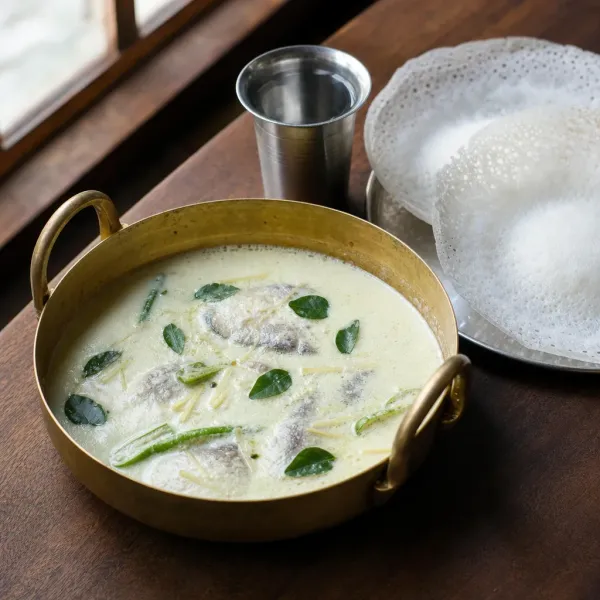
Meen Moilee
Traditional Nasrani Meen Moilee from Travancore: pale coconut-milk fish stew with green chilli, ginger and shallots. Served with appam or matta rice.
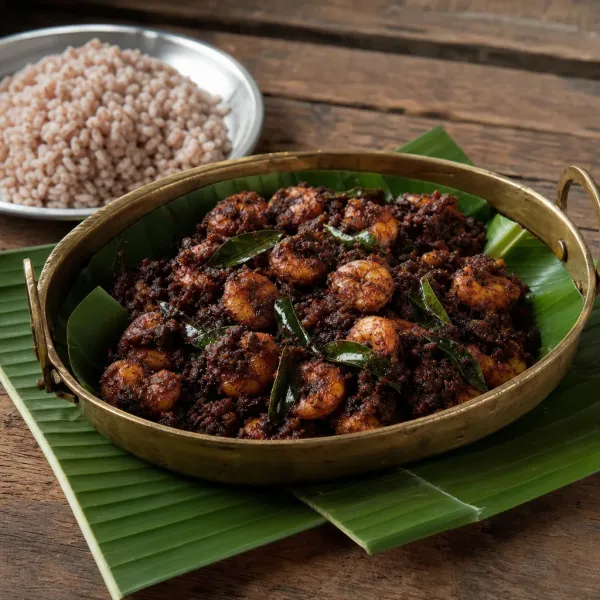
Chemmeen Roast
Traditional Kerala Nasrani chemmeen roast with shallots, kudampuli and coconut oil. Step-by-step method with the slow roasting technique that makes i…