

Mutta Curry Recipe
Malayalam മുട്ട കറിTamil முட்டை கறிKannada ಮೊಟ್ಟೆ ಕರಿTelugu గుడ్డు కూర
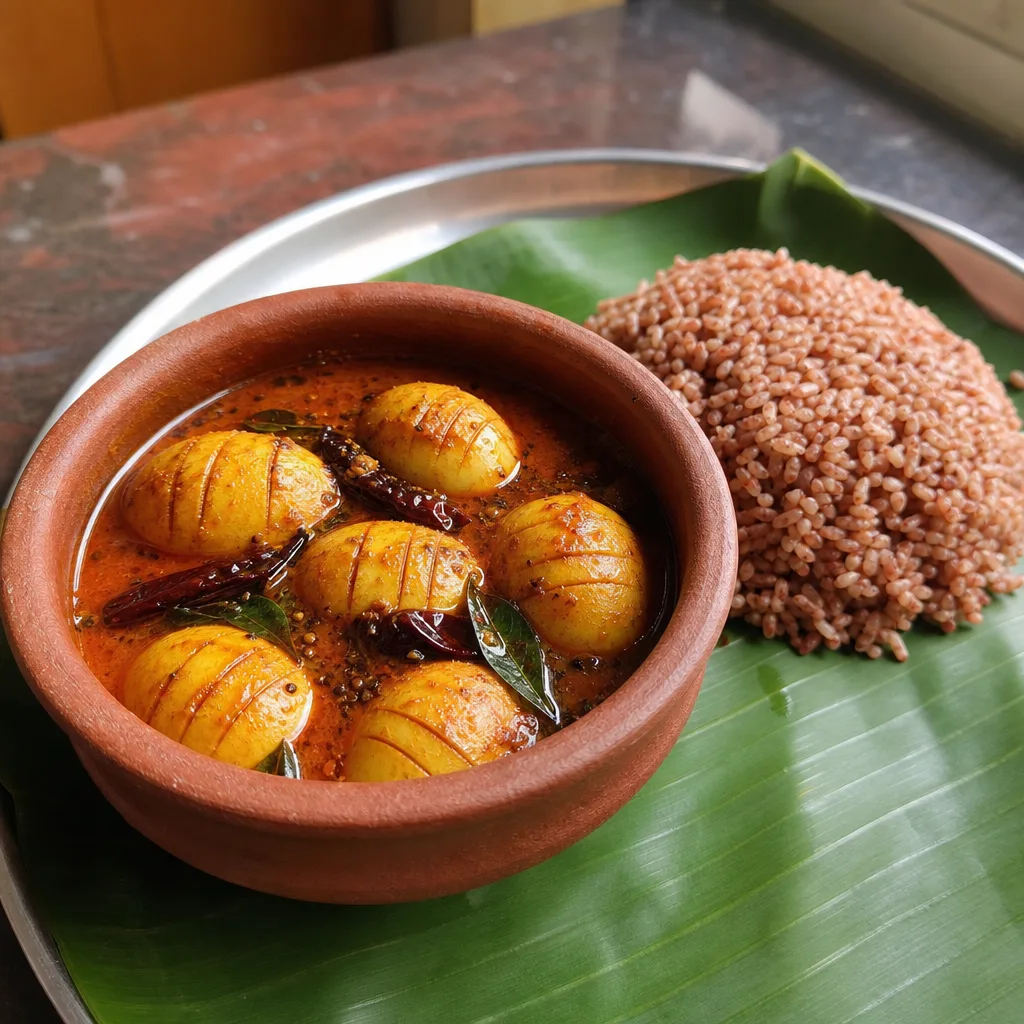
- Prep20 min
- Cook35 min
- Serves4
- DifficultyEasy
- DietEgg
In a Nasrani kitchen in central Travancore, mutta curry is a quick weekday dish. It comes together on a Sunday morning before church or on any evening when there is rice on the stove and not much else. The eggs are hard-boiled, scored or halved, and simmered in a red-tinted coconut oil gravy that is sharp with kudampuli and rounded with thick coconut milk poured in at the end. It is not a rich restaurant-style curry. It is direct, a little sour, and meant to be eaten warm with matta rice or appam.
The base is shallots, green chilli, ginger, and tomato cooked down in coconut oil, then deepened with coriander, chilli, and turmeric powders. Kudampuli – the dried Malabar tamarind – gives the sourness. It does not taste like tamarind; it is milder and slightly fruity. Some households use one piece, some use two; how much you use determines whether the gravy is gently sour or assertively so. A small amount of thick coconut milk is stirred in only after the pot comes off the heat, or just before, so it does not split.
Nasrani cooking in general uses less whole spice than Mappila cooking and rarely uses fennel or star anise in egg dishes. The heat comes from the dry chilli powder, adjusted at home according to who is eating. Households with young children halve the chilli; households that eat with fish pickle on the side often want more heat in the curry itself.
Ingredients (serves 4)
Eggs
For the gravy
For the tempering
Method
Hard-boil the eggs
Lower the eggs gently into a pot of boiling water. Keep the heat at a steady boil for 10 minutes. Transfer immediately to a bowl of cold water and leave for 5 minutes. Peel carefully. If you rush the cooling, the shells cling and the white tears.
Score the eggs
With a sharp knife, make three or four shallow cuts through the white of each egg, going lengthwise. Do not cut all the way through. These cuts let the gravy colour the white and let the egg absorb the sour and spiced flavours as it simmers. Some households halve the eggs instead; halved eggs give more surface but fall apart more easily in the pot.
Soak the kudampuli
Place the two pieces of kudampuli in a small bowl with 3 tbsp warm water. Let them sit for at least 10 minutes. The soaking water is used in the curry along with the fruit.
Fry the shallots
Heat 3 tbsp coconut oil in a wide, heavy pan over medium flame. Add the sliced shallots and a small pinch of salt. Stir often and cook for 8 to 10 minutes until they are soft, deeply golden at the edges, and smell sweet. Do not rush this step on high heat; shallots that are not properly softened leave a raw bite in the finished curry.
Add the aromatics
Add the slit green chillies, ginger, and garlic to the softened shallots. Stir and cook on medium flame for 3 minutes until the raw smell of the garlic leaves and everything is fragrant. Add the chopped tomato and cook, pressing it down with the back of the spoon, for another 4 to 5 minutes until it breaks down completely and the oil begins to show at the edges of the pan.
Add the powders
Reduce the flame to low. Add the coriander powder, red chilli powder, turmeric, and black pepper. Stir continuously for 90 seconds, letting the powders cook into the oil and shallot base. If the pan looks dry, add a tablespoon of water. The mixture should darken slightly and smell toasted, not raw.
Add kudampuli and water
Add the soaked kudampuli pieces along with their soaking water. Pour in approximately 150 ml of plain water. Stir, scraping up anything stuck to the bottom. Taste for salt and adjust. The gravy will be thin at this stage; it thickens as it simmers.
Simmer the eggs
Slide the scored eggs into the gravy in a single layer. Spoon the gravy over each egg. Cover the pan and simmer on low flame for 8 minutes, turning the eggs once halfway through. The gravy should reduce to a medium consistency, coating the back of a spoon. The eggs will take on a light reddish-orange stain from the chilli and kudampuli.
Stir in the coconut milk
Take the pan off the heat. Wait 30 seconds for the bubbling to stop completely. Pour the coconut milk around the edges of the pan and stir gently to combine. Do not return the pan to a high flame after adding the coconut milk or it will split and look grainy. If you need to warm it again, do so on the lowest flame possible, without boiling.
Make the tempering
In a small tempering pan, heat 1 tbsp coconut oil over medium-high flame. When the oil shimmers, add the mustard seeds and cover loosely. When they finish popping, add the broken dried red chillies and curry leaves. The leaves will splutter loudly; keep a lid ready. Fry for 20 seconds until the leaves are crisp. Pour the entire contents over the curry immediately.
Rest and serve
Let the curry rest for 5 minutes with the lid on before serving. This brief rest allows the tempering flavours to settle into the gravy and the eggs to absorb a final layer of flavour. Serve warm, not piping hot.
How to serve
Matta rice (red parboiled rice) is the most common pairing. Appam or vellayappam are the Sunday morning partners. Some households eat it with pathiri or with sliced bread on weekday mornings.
Served with: Matta rice (red parboiled rice) is the most common pairing. Appam or vellayappam are the Sunday morning partners. Some households eat it with pathiri or with sliced bread on weekday mornings.
Cook's tips
Kudampuli quantity
Two pieces gives a noticeable but not aggressive sourness. If your kudampuli is very dry and old it may be less potent; taste the gravy after simmering and add a little more soaking water if it needs more tartness. Fresh kudampuli from the season is stronger; one piece may be enough.
Coconut milk from a carton
Full-fat canned or cartoned coconut milk works. Shake the can well before opening. The freshly extracted milk from half a grated coconut is richer and will make the gravy silkier, but canned milk is a genuinely common household shortcut and the result is still good.
The eggs going rubbery
This happens when the eggs boil too long or simmer in the gravy at too high a heat for too long. 10 minutes of boiling and 8 minutes of gentle simmering is the limit. The yolk should be fully set but not chalky.
Storing leftovers
The curry keeps well for a day in the refrigerator. The gravy thickens on cooling; add a small splash of water when reheating on low flame. Do not reheat at a rolling boil.
Shallots vs onions
Shallots are not interchangeable with onions here. They cook down softer, have a sweeter finish, and do not leave a sharp raw edge in the gravy. If shallots are genuinely unavailable, use one small red onion, but the flavour will be coarser.
Regional variations
Mappila mutta curry uses fennel and kus kus paste and a thinner coconut milk gravy; Nair household versions often skip the coconut milk entirely and finish with a raw coconut paste; Tamil Nadu Chettinad muttai kuzhambu uses gingelly oil and a distinct masala with kalpasi.
Glossary
- Kudampuli കുടംപുളി
- Dried rind of Garcinia cambogia, the Malabar tamarind; used as the souring agent in many Kerala fish and egg curries. Milder and fruitier than tamarind.
- Chuvannulli ചുവന്നുള്ളി
- Kerala shallots; small, pink-skinned, sweeter and more aromatic than large onions. The standard allium in most Kerala cooking.
- Matta rice മട്ട അരി
- Red parboiled rice from Palakkad and Thrissur; has a nutty flavour and firmer texture than white rice. The everyday table rice of many Kerala households.
- Vellayappam വെള്ളയപ്പം
- Fermented rice and coconut pancake; the Nasrani term for what is also called appam; the lacy, soft-centred fermented rice bread.
What decides whether this curry works is patience at two points: the shallots must be fully softened and lightly golden before the masala powders go in, and the coconut milk must go in off the heat. Both steps take less than a minute to get wrong and the difference shows immediately in the finished dish.
More Non-Vegetarian recipes
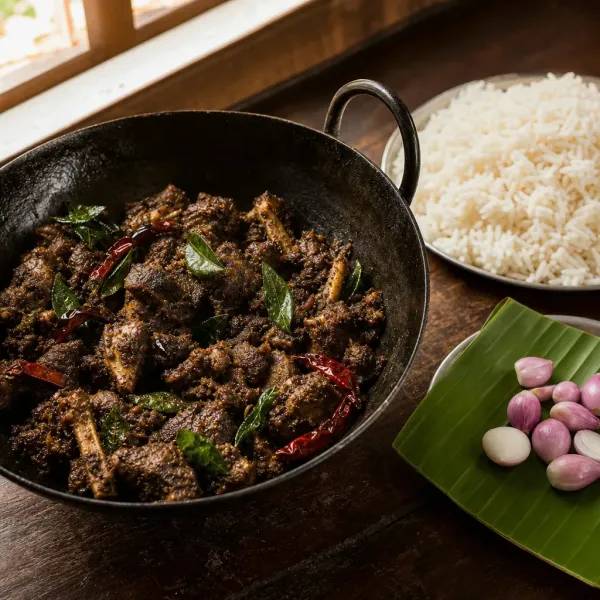
Mutton Chukka Varuval
Authentic Chettinad mutton chukka varuval with freshly ground kalpasi-marathi mokku masala, roasted dry in gingelly oil. Traditional household method.
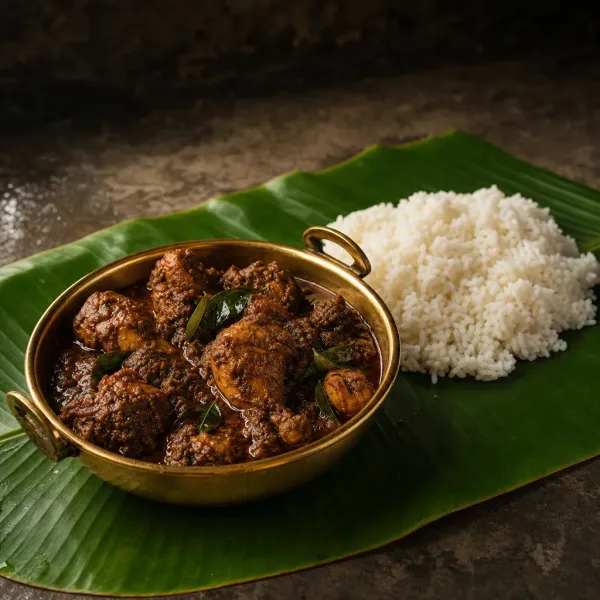
Chettinad Chicken Curry
Authentic Chettinad chicken curry from the Nagarathar kitchen, with fresh-ground masala of kalpasi, marathi mokku and whole spices. Cooked in gingell…
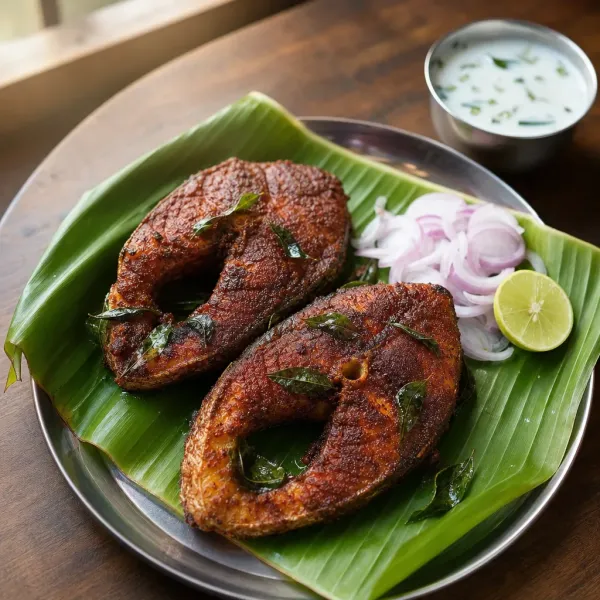
Kerala Fish Fry (Meen Varuthathu)
Authentic Malabar Mappila fish fry with chilli paste and kudampuli marinade, fried on a tawa in coconut oil. Traditional Kerala method.
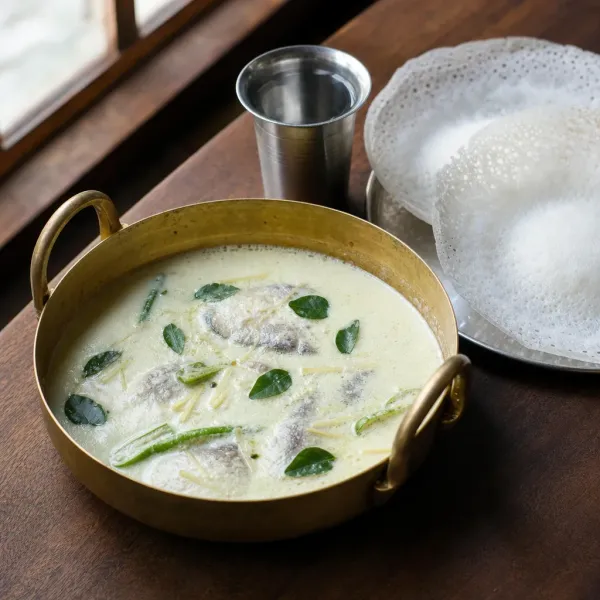
Meen Moilee
Traditional Nasrani Meen Moilee from Travancore: pale coconut-milk fish stew with green chilli, ginger and shallots. Served with appam or matta rice.
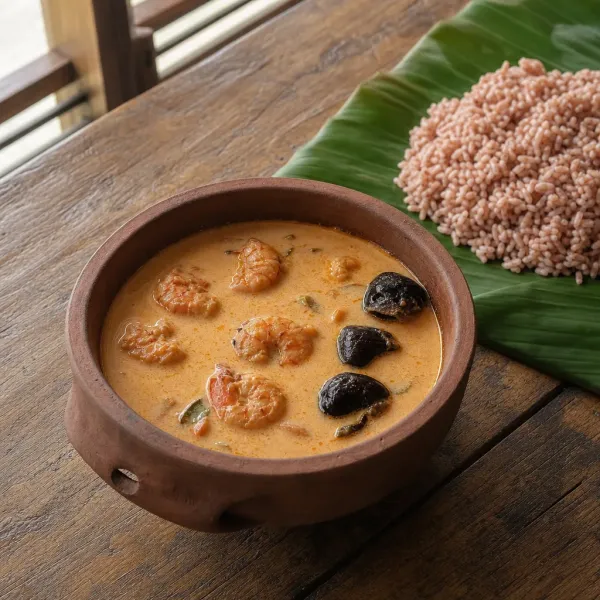
Kerala Prawn Curry with Coconut Milk
Traditional Travancore Nasrani prawn curry made with fresh coconut milk, kudampuli and shallots in an earthenware chatty. Step-by-step household reci…
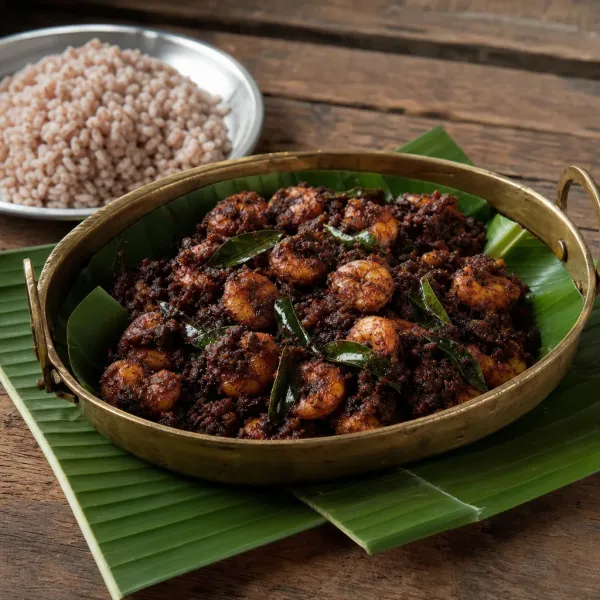
Chemmeen Roast
Traditional Kerala Nasrani chemmeen roast with shallots, kudampuli and coconut oil. Step-by-step method with the slow roasting technique that makes i…