

Mutton Chukka Varuval Recipe
Malayalam മട്ടൺ ചുക്ക വരുവൽTamil மட்டன் சுக்கா வருவல்Kannada ಮಟನ್ ಚುಕ್ಕಾ ವರುವಲ್Telugu మటన్ చుక్కా వరువల్
- Prep25 min
- Cook1 hr 15 min
- Serves4
- DifficultyMedium
- DietNon-vegetarian
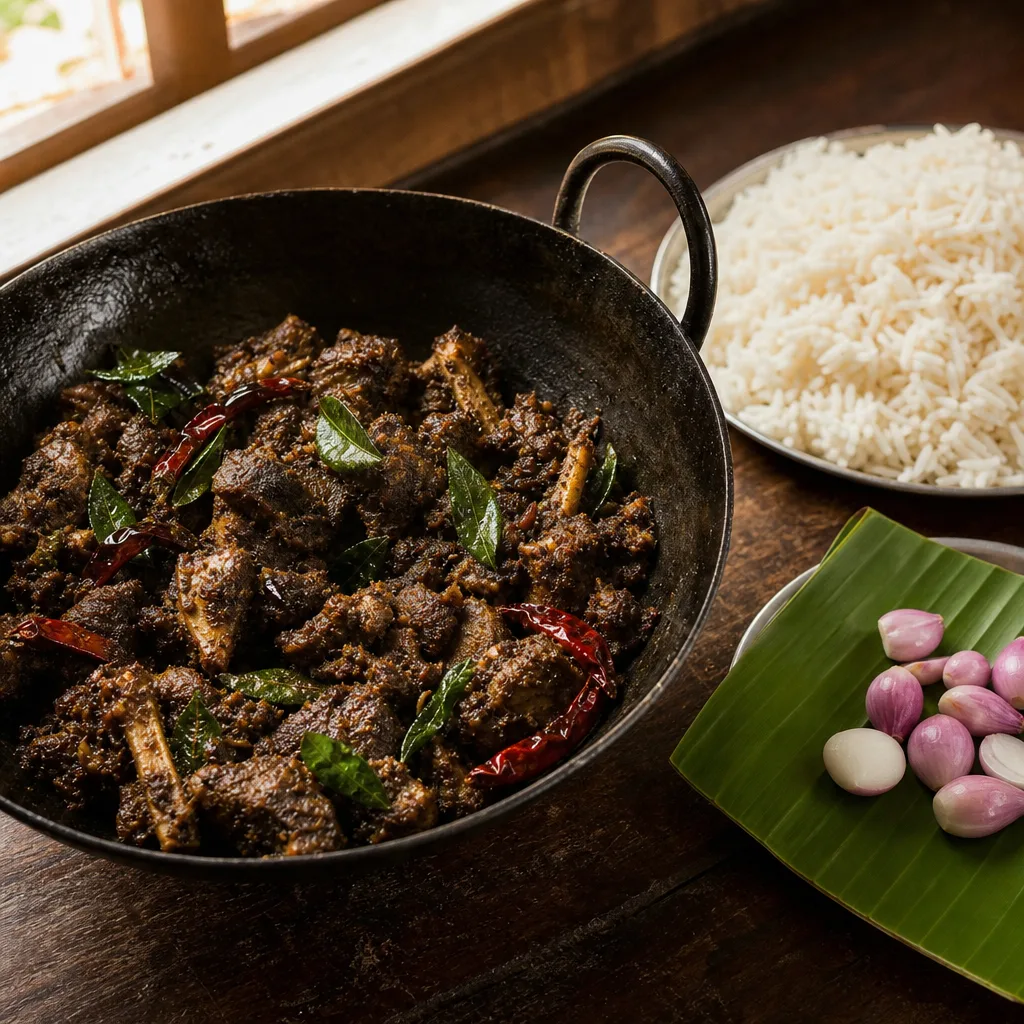
Mutton chukka is a Chettinad dry-roast preparation in which bone-in mutton pieces are first pressure-cooked until just tender, then transferred to a wide iron kadai and roasted over sustained heat with freshly ground spices until every drop of moisture is gone and each piece is coated in a dark, fragrant crust. The word chukka simply means dry in this context, and dryness is the whole point. If there is any gravy left, it has not finished cooking.
Chettinad cooks grind the masala fresh for this dish, using a stone grinder or heavy mixer. The combination of kalpasi, marathi mokku, and star anise marks it immediately as Chettinad rather than any other Tamil kitchen. Gingelly oil is the fat for the roasting stage; it gives a particular nutty depth that coconut oil cannot replicate here. The final tempering of curry leaves and dried red chillies in the same pan is not optional — it is part of the flavour.
At the table this is served with plain seeraga samba rice or parotta, never with rice noodles or bread. Some households finish with a squeeze of lime; others consider that an intrusion. The heat level is genuinely high in a traditional Chettinad house. If you reduce the chillies, reduce them, but do not call what you make a mild version of the same dish.
Ingredients (serves 4)
For pressure-cooking the mutton
For the Chettinad dry roast masala (grind together)
For roasting
Method
Dry-roast and grind the masala
Set a small heavy pan over medium-low heat with nothing in it. Add the coriander seeds, peppercorns, cumin, fennel, dried red chillies, star anise, kalpasi, marathi mokku, cinnamon, and cloves all at once. Stir without stopping for 3 to 4 minutes until the coriander turns a shade darker and the kitchen smells toasted, not burnt. Tip onto a plate and leave to cool completely. Grind to a coarse-fine powder in a mixer; you want no whole pieces, but stop before it turns to dust. Set aside.
Pressure-cook the mutton
Put the mutton pieces into the pressure cooker with the halved shallots, crushed garlic, ginger slices, turmeric, salt, and 150 ml water. Close the lid and cook on medium heat for 4 to 5 whistles, then lower the flame and cook for another 8 minutes. Let the pressure release on its own. Open and check: the meat should be tender when pressed but not falling apart — it still has to hold through the roasting. If it needs another whistle, give it. Reserve every drop of the cooking liquid in the pot.
Reduce the cooking liquid
With the mutton still in the cooker, set it back on medium heat uncovered. Let the liquid reduce until it coats the pieces and the bottom is almost dry. This concentrates the flavour and means you carry less moisture into the roasting pan. Watch the heat so it does not scorch.
Fry shallots, garlic and ginger
Heat gingelly oil in a wide iron kadai or heavy pan over medium-high heat. Add the sliced shallots and a pinch of salt. Fry for 6 to 8 minutes, stirring often, until they are golden at the edges and soft through. Add the sliced garlic and ginger matchsticks and fry for another 2 minutes until the raw smell is gone.
Add tomato and cook down
Add the chopped tomatoes and two sprigs of curry leaves to the kadai. Cook on medium heat, pressing the tomatoes with the back of the spoon, for 5 to 6 minutes until the tomatoes break down completely and the oil begins to show at the edges of the mass. The mixture should look jammy and dark, not watery.
Add the masala powder
Lower the heat slightly. Add the ground Chettinad masala to the kadai and stir it into the shallot-tomato base immediately. Keep stirring for 2 minutes. The masala will darken and become very fragrant. If it threatens to stick, add a tablespoon of the reserved mutton cooking liquid. Do not add water; you want the masala to fry, not steam.
Add the mutton and roast
Add the cooked mutton pieces along with any remaining reduced cooking liquid. Toss well so every piece is coated in the masala. Spread the pieces in a single layer as much as possible, raise the heat to medium-high, and roast. Stir and turn every 2 minutes. You are looking for the masala to cling and darken on the meat and for the surface of each piece to look dry and slightly crusted. This takes 15 to 20 minutes of active cooking. Do not cover the pan.
Check salt and dryness
Taste for salt and adjust. Tilt the pan — there should be no liquid pooling. If any moisture remains, keep roasting. The finished chukka should look almost black-brown on the crust and leave the pan practically clean when you scoop the pieces out.
Temper and finish
Push the mutton to one side of the kadai. Add the remaining tablespoon of gingelly oil to the cleared side, then add the 3 dried red chillies and the last sprig of curry leaves. Let them crackle for 30 seconds, then fold everything together. Take the pan off the heat. Rest for 3 minutes before serving; the crust firms slightly as it cools.
How to serve
Seeraga samba rice or layered parotta. Sliced raw shallots and a wedge of lime on the side are common at the table.
Served with: Seeraga samba rice or layered parotta. Sliced raw shallots and a wedge of lime on the side are common at the table.
Cook's tips
Kalpasi and marathi mokku
These two spices are the most reliable signal that a chukka is Chettinad. Kalpasi (stone flower) looks like grey-green lichen and smells mossy and slightly resinous when roasted. Marathi mokku (dried kapok buds) are small, brown and faintly floral. Both are available at any Chettinad or Tamil provision shop. If you cannot find them, the dish will still be good, but it will not be Chettinad chukka.
Bone-in is not optional
Boneless mutton does not survive 20 minutes of dry-roasting without drying out. The bone and the natural gelatin around it keep the meat moist through the roasting stage. Shoulder with bone or ribs are the right cuts.
Gingelly oil
Use cold-pressed (chekku) gingelly oil, the dark, nutty variety, not refined sesame oil. Refined sesame oil has almost no flavour. The oil is part of the taste, not just a cooking medium.
The masala scorch danger
Step 6 is where most mistakes happen. Dry masala in a hot pan burns within 30 seconds if you stop stirring. Have the mutton pieces ready beside the stove before you add the masala so you can get them in quickly if the masala darkens too fast.
Storage
Chukka keeps well because it is dry. Refrigerate covered for up to 3 days. To reheat, use a dry kadai over low heat with a splash of water and stir until hot; do not microwave or the crust turns rubbery.
Regional variations
A Madurai version uses more fennel and less whole spice; a Kongu version adds kalpasi and marathi mokku to the dry roast; Tamil Muslim households sometimes include mint in the pressure-cook stage.
Glossary
- Chukka சுக்கா
- Dry; in cooking it means a dish from which all moisture has been roasted out.
- Varuval வருவல்
- Fry or roast; a Tamil term for anything cooked over direct heat until dry.
- Kalpasi கல்பாசி
- Stone flower, a dried lichen (Parmotrema perlatum) used as a spice in Chettinad cooking; imparts a mossy, earthy depth.
- Marathi mokku மரத்தி மொக்கு
- Dried flower buds of the kapok tree; used whole in Chettinad masalas for a faint floral-woody note.
- Sombu சோம்பு
- Fennel seeds; used more prominently in Chettinad and Madurai cooking than in northern Tamil Nadu.
- Seeraga samba சீரக சம்பா
- A small, slender, aromatic rice variety native to Tamil Nadu; the traditional rice eaten with Chettinad meat dishes.
- Kadai கடாய்
- A deep, wide, round-bottomed iron or steel cooking pan; the standard vessel for dry-roasting and frying in South Indian kitchens.
Two things decide whether this dish works. The first is patience in the roasting stage: the heat must stay high enough to evaporate all moisture and build a crust, but not so high that the masala burns before the meat dries. The second is the freshly ground Chettinad masala — particularly the kalpasi and marathi mokku. Without them the spice base is competent but anonymous. With them the dish has an identity that no other regional kitchen can replicate.
More Non-Vegetarian recipes
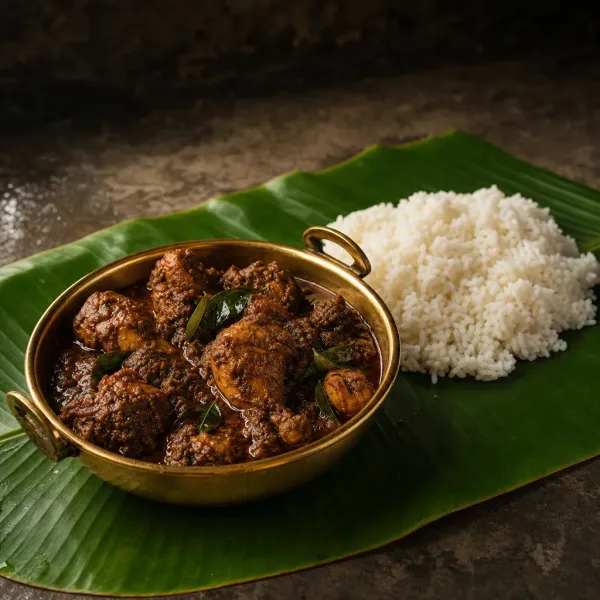
Chettinad Chicken Curry
Authentic Chettinad chicken curry from the Nagarathar kitchen, with fresh-ground masala of kalpasi, marathi mokku and whole spices. Cooked in gingell…
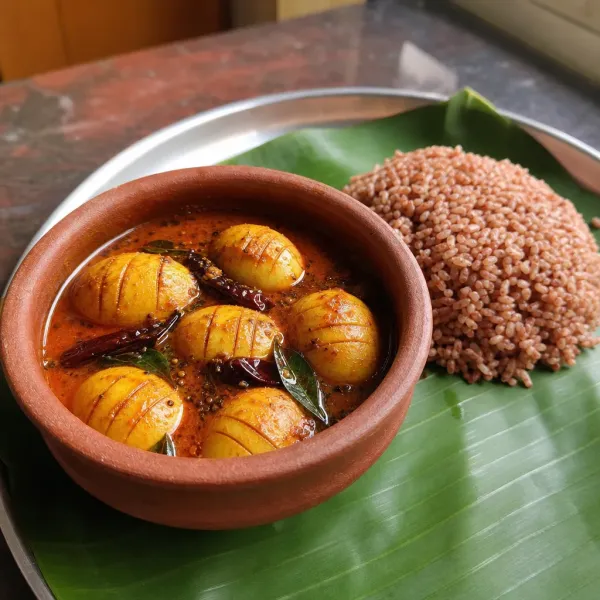
Mutta Curry
Traditional Kerala Nasrani mutta curry with kudampuli, shallots, and coconut milk. Step-by-step home recipe with exact quantities and cook's notes.
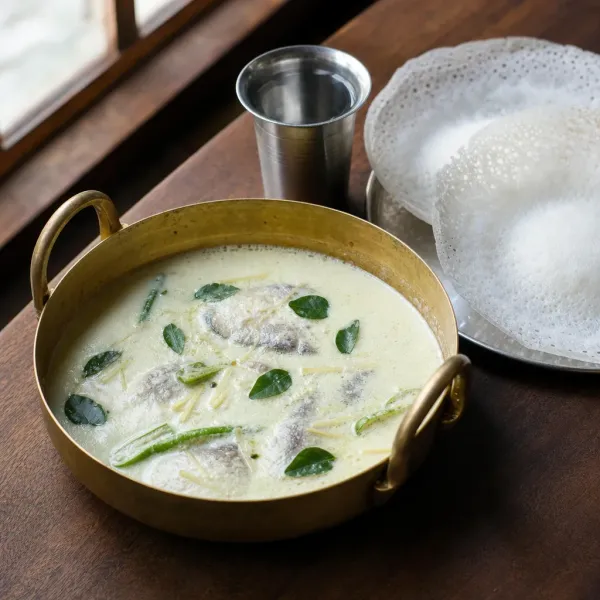
Meen Moilee
Traditional Nasrani Meen Moilee from Travancore: pale coconut-milk fish stew with green chilli, ginger and shallots. Served with appam or matta rice.
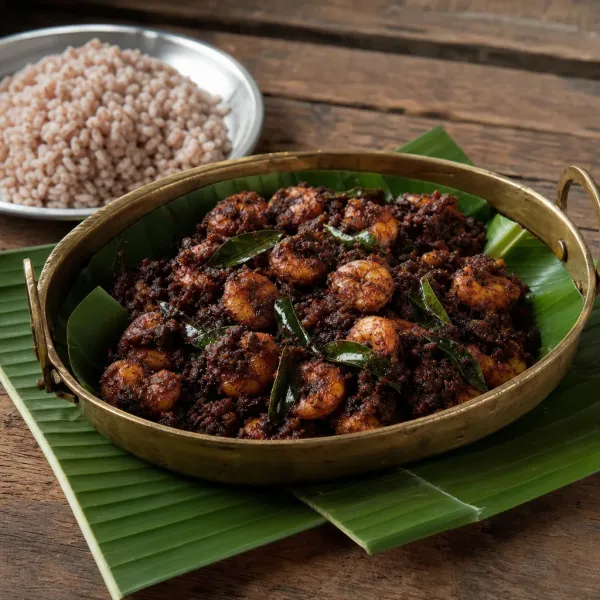
Chemmeen Roast
Traditional Kerala Nasrani chemmeen roast with shallots, kudampuli and coconut oil. Step-by-step method with the slow roasting technique that makes i…
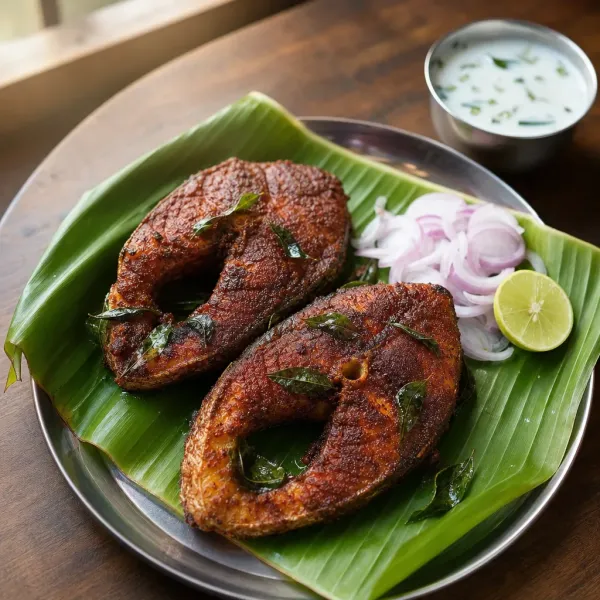
Kerala Fish Fry (Meen Varuthathu)
Authentic Malabar Mappila fish fry with chilli paste and kudampuli marinade, fried on a tawa in coconut oil. Traditional Kerala method.
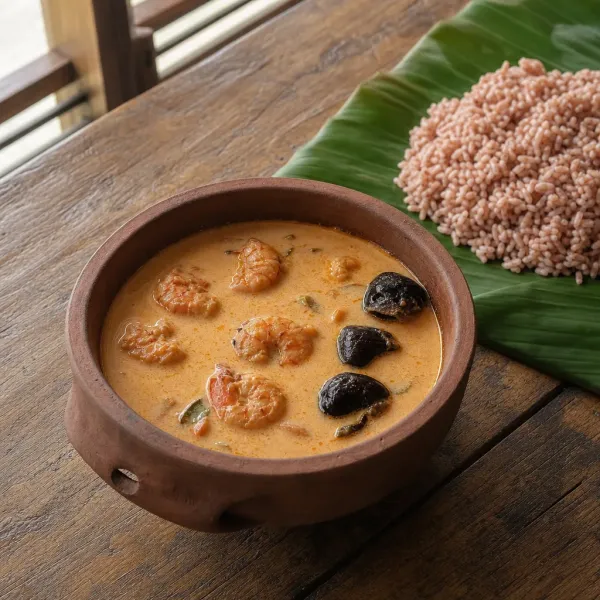
Kerala Prawn Curry with Coconut Milk
Traditional Travancore Nasrani prawn curry made with fresh coconut milk, kudampuli and shallots in an earthenware chatty. Step-by-step household reci…