

Chettinad Chicken Curry Recipe
Malayalam ചെട്ടിനാട് ചിക്കൻ കറിTamil செட்டிநாடு சிக்கன் கறிKannada ಚೆಟ್ಟಿನಾಡ್ ಚಿಕನ್ ಕರಿTelugu చెట్టినాడు చికెన్ కూర
- Prep40 min
- Cook55 min
- Serves4
- DifficultyHard
- DietNon-vegetarian
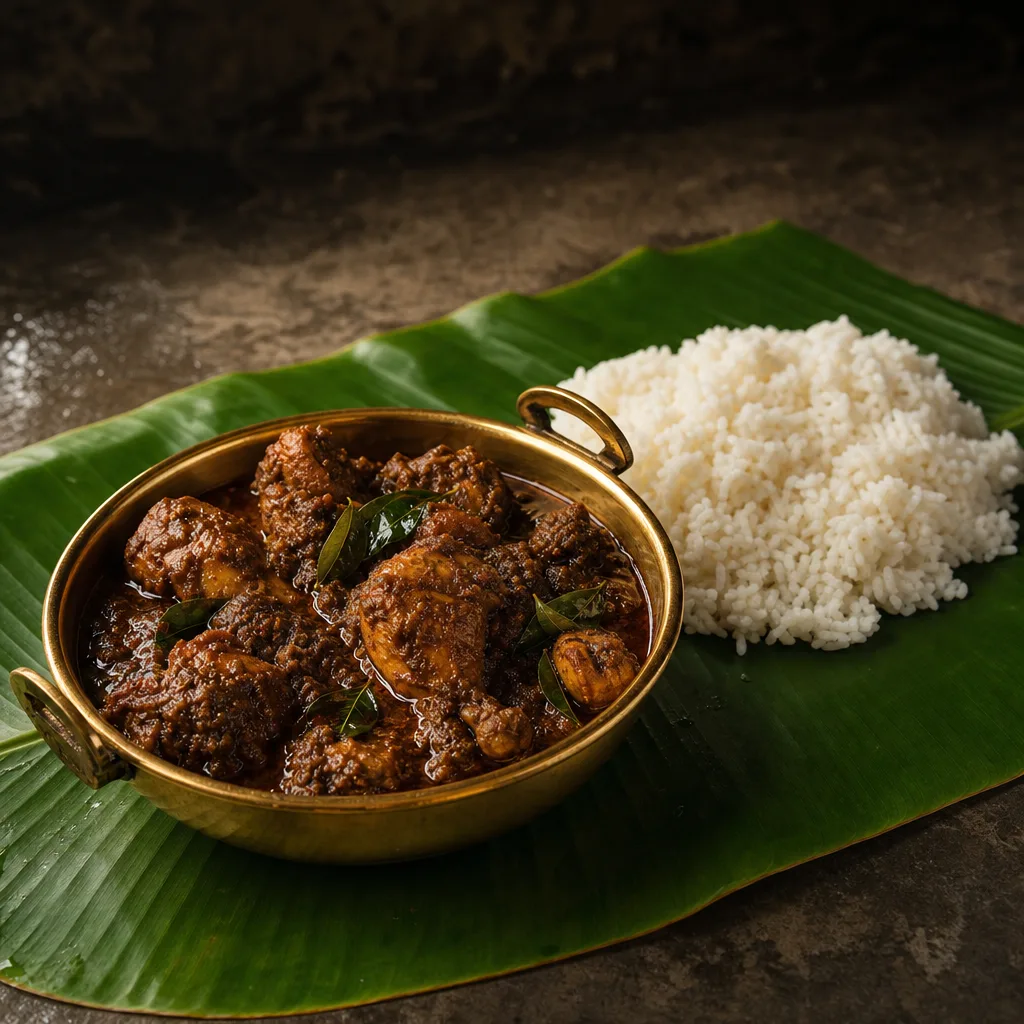
Chettinad chicken is the everyday curry of Nagarathar households in the Sivaganga district of Tamil Nadu. The community were traders who travelled across Southeast Asia, and their cooking shows it: spices that rarely appear together in one pot, dried kalpasi and marathi mokku giving a perfume that is particular to this kitchen and no other. The masala is always ground fresh, on the same day, from whole spices dry-roasted minutes before grinding.
The curry is cooked in gingelly oil, not coconut oil, and it carries real heat from black pepper and red chillies together. It is not a dish you soften. The consistency is a thick, clinging gravy that coats the chicken rather than pooling beneath it. Small country chicken (naatu kozhi) is what Chettiar households use whenever they can get it, because it holds together through the long cooking. Broiler chicken works but needs less time on the heat or it falls apart.
Households differ mainly on the ratio of black pepper to dried red chilli and on whether coconut is added at all. Some families grind a little fresh coconut into the masala; others keep the masala entirely dry. Both are genuine. This recipe follows the version with a small amount of coconut ground into the masala, which gives the gravy its body without making it a coconut curry.
Ingredients (serves 4)
Chicken
For the Chettinad masala (dry roast and grind fresh)
For the marinade
For the base
Method
Make the Chettinad masala
Place a dry iron kadai or heavy pan over medium heat. Add the coriander seeds, black peppercorns, cumin, fennel, dried red chillies, kalpasi, marathi mokku, star anise, cinnamon, cardamom and cloves. Roast, stirring constantly, for 3 to 4 minutes until the coriander seeds deepen by a shade and the spices smell toasted but not burnt. Tip onto a plate immediately; they continue to cook in their own heat if left in the pan. Let them cool completely, then grind to a fine powder with the grated fresh coconut, adding a tablespoon of water if needed to bring the coconut into the paste. The masala should be deeply fragrant, coarse-fine, not silky smooth.
Marinate the chicken
In a large bowl, mix the chicken pieces with turmeric, salt and 2 tablespoons of the fresh masala. Turn each piece so the coating is even. Leave at room temperature for at least 30 minutes while you prepare the base. An hour is better for country chicken, which is denser. Do not refrigerate during this short marination; a cold chicken added to hot oil cools the pan and the pieces will stew rather than fry.
Fry the shallots and aromatics
Heat the gingelly oil in a wide, heavy-bottomed vessel, ideally a brass or thick-bottomed aluminium pan, over medium-high heat. Add the curry leaves first; they will splutter loudly. Add the shallots and fry, stirring often, for 10 to 12 minutes until they are soft, translucent and beginning to colour at the edges. Do not hurry this step. Undercooked shallots leave the gravy with a raw sweetness that never cooks out. Add the crushed garlic and ginger matchsticks and fry another 4 minutes until the raw smell is gone.
Add the tomatoes
Add the chopped tomatoes with a pinch of salt. Cook on medium heat, pressing the tomatoes down with the back of the spoon, for 8 to 10 minutes until they break down completely and the oil begins to separate and pool at the edges. The base should look thick and jammy, not watery. If it still looks loose after 10 minutes, raise the heat slightly and cook another few minutes.
Add the masala
Lower the heat to medium-low. Add the remaining Chettinad masala to the pan. Stir it into the base and fry for 3 to 4 minutes, stirring constantly so the masala does not scorch on the bottom. You are cooking out the raw edge of the spices here. The mixture will darken and become very fragrant. If it sticks, add a splash of water, about 2 tablespoons, and scrape the bottom.
Seal the chicken
Raise the heat to high. Add the marinated chicken pieces and stir to coat them thoroughly in the masala base. Fry on high heat for 5 to 6 minutes, turning the pieces, until the chicken has sealed on all sides and the surface is no longer pink. The masala will cling to the chicken and the pan will look quite dry. This initial high-heat frying gives the curry its depth; do not add water yet.
Cook through with water
Add 200 ml of hot water (not cold), stir to lift any fond from the bottom of the pan, cover tightly and cook on medium-low heat for 25 to 30 minutes for country chicken, or 15 to 18 minutes for broiler. Check after 15 minutes and turn the pieces once. Country chicken is ready when the meat pulls slightly from the bone but does not fall off; broiler is ready when a piece at the thickest point shows no pink at the bone. If the gravy is too thin when the chicken is cooked, remove the lid and reduce on medium heat for a few minutes.
Finish and rest
Taste for salt. The gravy should be thick, dark, and coat the back of a spoon. Turn off the heat and let the curry rest uncovered for 10 minutes before serving. The oil will rise to the surface during resting, which is correct. Skim it only if you must; in a Chettiar household it is left, because the gingelly oil carries the perfume of all the spices.
How to serve
Plain boiled matta rice or seeraga samba rice. Parotta from a roadside kadai is the other traditional pairing. Appam is served with it in households that have absorbed Kerala influence along the border. A simple onion raita sometimes appears alongside but is not traditional to the Chettiar table.
Served with: Plain boiled matta rice or seeraga samba rice. Parotta from a roadside kadai is the other traditional pairing. Appam is served with it in households that have absorbed Kerala influence along the border. A simple onion raita sometimes appears alongside but is not traditional to the Chettiar table.
Cook's tips
Kalpasi and marathi mokku
These two spices are what make this curry immediately identifiable as Chettinad and not simply a spiced chicken. Kalpasi is a lichen, dark grey-green and papery; marathi mokku are small dried flower pods. Both are sold loose in Tamil Nadu spice shops and increasingly online. If you cannot find them, the curry is still good but it is no longer Chettinad in character. Do not substitute anything.
Country chicken versus broiler
Country chicken (naatu kozhi) takes longer to cook but does not disintegrate. Its firmer flesh holds the masala better. If you use broiler, watch the time carefully: 15 minutes covered is usually enough, and the meat will be done before you expect it. Overcooked broiler falls off the bone and the gravy becomes cloudy from the collagen breaking down too fast.
Gingelly oil
Use the pale cold-pressed South Indian gingelly oil, not the dark-roasted Chinese sesame oil. The flavour profiles are completely different. The South Indian kind has a mild, nutty background note that does not overpower the spices.
Making the masala ahead
The dry spices can be roasted and ground a day ahead and kept in an airtight container. Grind the coconut in fresh on the day you cook. The masala loses its top-note perfume quickly once ground, so a week-old batch will give a flat result.
Heat level
Eight Gundu chillies in the masala gives genuine Chettinad heat, which is considerable. Five chillies gives a dish that is spiced but not punishing. Do not try to reduce it further and still call it Chettinad; at that point it becomes a different curry.
Regional variations
Some households in Chettinad make a drier version (varuval) with less water; others add kalpasi (stone flower) in larger quantity for a more pronounced perfume.
Glossary
- Naatu kozhi நாட்டுக்கோழி
- Country or free-range chicken, smaller and firmer than broiler, preferred across South Indian regional cooking for curries.
- Kalpasi கல்பாசி
- Stone flower, a dried lichen (Parmotrema perlatum) used as a spice in Chettinad cooking; gives a distinctive earthy, mossy fragrance.
- Marathi mokku மராட்டி மொக்கு
- Dried flower pods of Randia dumetorum; used in Chettinad masala for their faintly bitter, floral depth.
- Sombu சோம்பு
- Fennel seeds; used in Chettinad cooking more than in many other South Indian regional cuisines.
- Nallennai நல்லெண்ணெய்
- Gingelly oil; cold-pressed pale sesame oil, the cooking fat of Tamil Nadu for non-vegetarian curries and pickles.
- Chinna vengayam சின்ன வெங்காயம்
- Small shallots, the allium used across Tamil Nadu cooking in place of the large onion.
- Pattai பட்டை
- Cinnamon bark; used in the whole form in Chettinad masala.
Two things decide this curry: the masala must be roasted and ground the same day, and the shallot base must be cooked down patiently until jammy before the spices go in. Rush either step and you will taste it, the first as flatness, the second as a raw edge that the long simmer never quite covers.
More Non-Vegetarian recipes
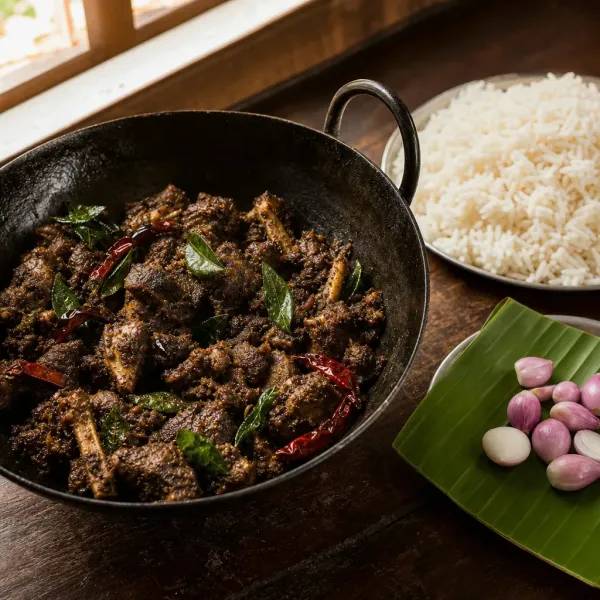
Mutton Chukka Varuval
Authentic Chettinad mutton chukka varuval with freshly ground kalpasi-marathi mokku masala, roasted dry in gingelly oil. Traditional household method.
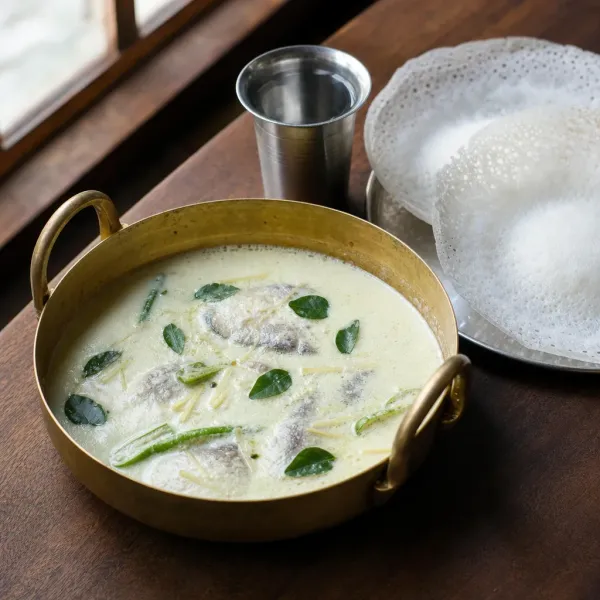
Meen Moilee
Traditional Nasrani Meen Moilee from Travancore: pale coconut-milk fish stew with green chilli, ginger and shallots. Served with appam or matta rice.
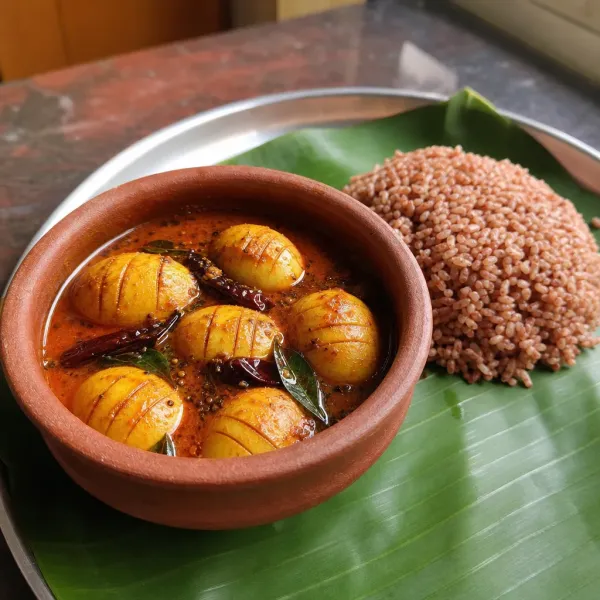
Mutta Curry
Traditional Kerala Nasrani mutta curry with kudampuli, shallots, and coconut milk. Step-by-step home recipe with exact quantities and cook's notes.
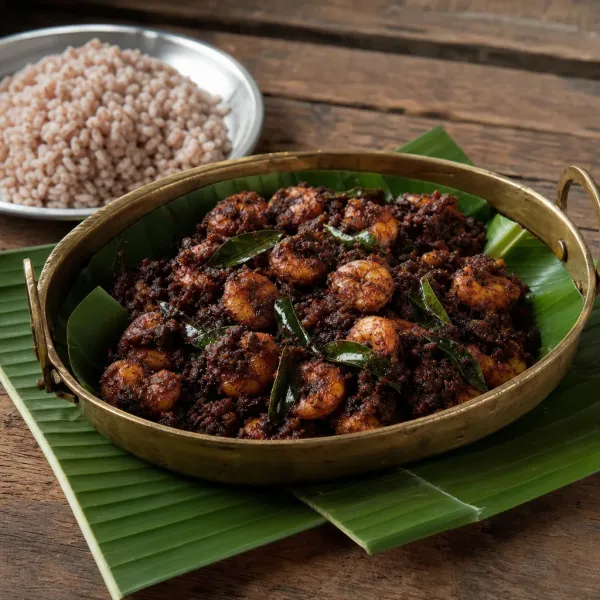
Chemmeen Roast
Traditional Kerala Nasrani chemmeen roast with shallots, kudampuli and coconut oil. Step-by-step method with the slow roasting technique that makes i…
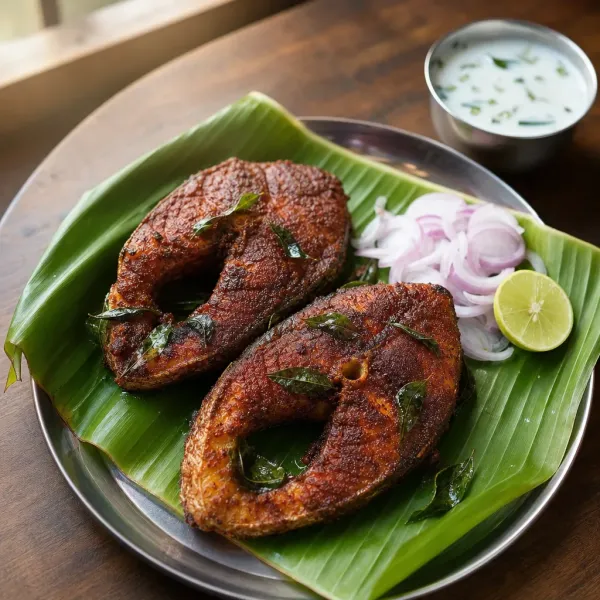
Kerala Fish Fry (Meen Varuthathu)
Authentic Malabar Mappila fish fry with chilli paste and kudampuli marinade, fried on a tawa in coconut oil. Traditional Kerala method.
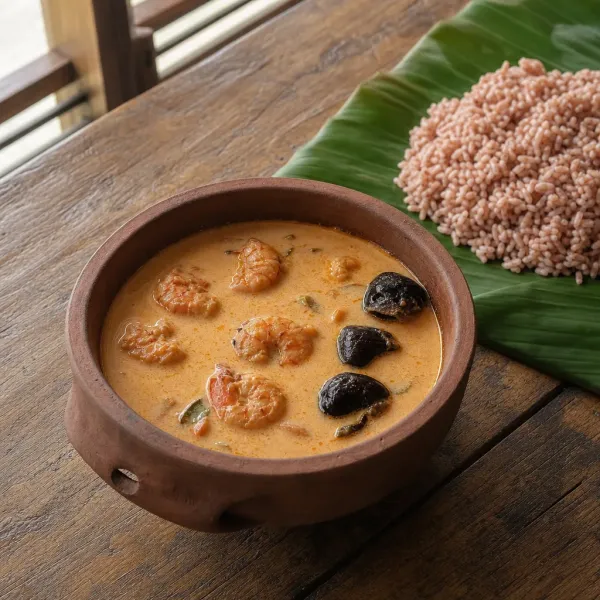
Kerala Prawn Curry with Coconut Milk
Traditional Travancore Nasrani prawn curry made with fresh coconut milk, kudampuli and shallots in an earthenware chatty. Step-by-step household reci…