

Pesarattu Recipe
Malayalam പേസരട്ടുTamil பேசரட்டுKannada ಪೇಸರಟ್ಟುTelugu పేసరట్టు
- Prep20 min
- Soak / ferment6 hr
- Cook40 min
- Serves4
- DifficultyEasy
- DietVegan
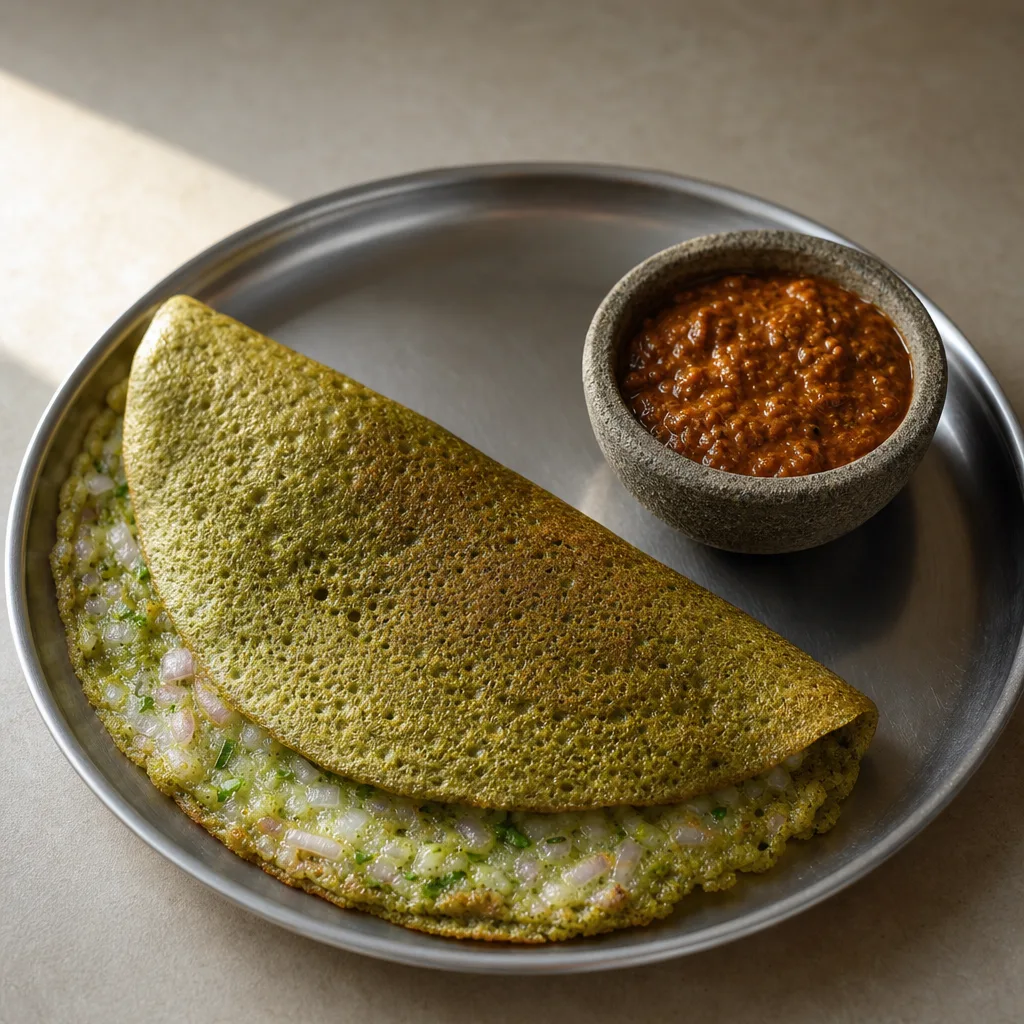
Pesarattu belongs entirely to Andhra Pradesh. It is made from whole green gram – moong with its green skin on – soaked, ground and spread thin on a hot tawa. No fermentation. No rice flour added in the plain household version. The batter goes from soaked dal to the pan in one step, which is part of why this is morning food: soak overnight, grind at dawn, eat within the hour.
In most Andhra homes it is eaten at breakfast with ginger chutney – a sharp, barely-sweet chutney made from fresh ginger, green chilli and tamarind – and sometimes alongside a thin allam pachadi. The combination of the slightly earthy, faintly grassy dosa and the fierce heat of the chutney is the point. It is not softened for other palates.
Household variation is modest. Some cooks add a handful of raw rice (about two tablespoons per cup of dal) to the soak for extra crispness; others keep it pure dal. The topping of chopped onion, green chilli and ginger pressed lightly onto the batter before spreading is standard in most homes, though a few skip it for a plainer version. The fat used is oil – groundnut oil or refined oil in most households, not ghee.
Ingredients (serves 4)
For the batter
For the topping (pressed onto each dosa)
For cooking
Method
Soak the green gram
Wash the whole green gram in two or three changes of water until the water runs clear. Cover with at least double the volume of cold water and leave to soak for a minimum of 6 hours; overnight works well in a cool kitchen. The dal is ready when the skins have softened and the gram splits easily when pressed between your fingers. Drain completely before grinding.
Grind the batter
Put the drained green gram into a wet grinder or a powerful blender along with the ginger, green chillies and cumin seeds. Add water in small additions – start with 100 ml – and grind to a batter that is smoother than a coarse paste but not as fine as idli batter; a little texture is correct here. Add more water until the batter pours off a ladle in a slow, thick stream, thinner than idli batter but not watery. This takes about 8 to 10 minutes in a wet grinder.
Season and rest the batter
Stir in salt. Taste the raw batter – it should be well seasoned because no additional salt goes on the tawa. Let the batter rest for 10 minutes while you prepare the topping ingredients and heat the pan. This short rest lets the cumin release into the batter.
Mix the topping
Combine the finely chopped shallots, green chillies, ginger and coriander in a small bowl. Keep it beside the tawa so you can work quickly once the batter is on the pan.
Heat the tawa
Place a cast iron or heavy iron tawa over medium-high heat. It is ready when a few drops of water flicked onto the surface evaporate in under two seconds. If you have a non-stick pan, heat it over medium heat only. A well-heated heavy tawa gives you the slightly crisp, speckled surface that is correct for pesarattu.
Spread the dosa
Pour a ladleful (about 80 ml) of batter onto the centre of the tawa. Using the back of the ladle, spread it outward in quick concentric circles to a thin round of about 22 to 24 cm. Work fast – the batter sets quickly on a hot pan. If it tears, your batter is too thick; add a tablespoon of water and try again.
Add the topping
Immediately scatter a tablespoon of the onion-chilli-ginger-coriander mixture evenly over the surface of the wet batter. Press it down lightly with the back of the ladle so it embeds into the dosa rather than sitting loose on top.
Drizzle oil and cook
Drizzle about 1 tsp of oil around the edges of the dosa, letting it run under the rim. Cook on medium-high heat until the underside is golden and the edges lift away from the pan cleanly – about 2 to 3 minutes. The surface will turn from shiny and wet to matte and set. Do not rush this; if you flip too early the topping will scatter.
Flip and finish
Flip the dosa once and cook the topping side for 30 to 45 seconds until the onion softens very slightly and picks up a little colour. Pesarattu is not cooked to the deep golden-brown of a rice dosa; it should be a warm green-gold on the first side, pale and speckled on the second. Fold in half or roll and serve immediately.
Wipe and repeat
Wipe the tawa with a damp cloth between each dosa to cool it slightly and remove any stuck bits. This keeps the surface even for the next spread. Repeat from step 6 with the remaining batter.
How to serve
Allam chutney (fresh ginger chutney made with ginger, green chilli, tamarind and jaggery); some households also serve a coconut chutney alongside, though allam chutney is the traditional pairing.
Served with: Allam chutney (fresh ginger chutney made with ginger, green chilli, tamarind and jaggery); some households also serve a coconut chutney alongside, though allam chutney is the traditional pairing.
Cook's tips
Why the batter turns dark
Whole green gram oxidises quickly once ground. The batter will turn from bright green to an olive or khaki green within an hour or two, and this is normal – it does not affect the taste. Use the batter within 4 hours for the best colour on the pan.
The rice question
Some Andhra households add 2 tablespoons of raw rice per cup of dal, soaked alongside the gram, for a crisper dosa. This is a genuine household variation, not a shortcut. The plain all-dal version is softer and more pliable; the rice version is crisper at the edges. Both are correct.
Tawa temperature matters most
If the tawa is not hot enough the batter sticks and tears when you try to spread it. If it is too hot the batter sets before you finish spreading and you get a thick uneven disc. Medium-high on a gas flame is the target. Test with a drop of water before every second dosa.
No fermentation needed
Unlike rice dosa, pesarattu batter does not ferment. Do not leave it in a warm place expecting it to rise. It is ready to use as soon as it is ground and rested.
Storing leftover batter
Refrigerate unused batter in a covered container for up to one day. Bring it back to room temperature before using and stir well; it will have settled and thickened slightly, so add a tablespoon of water if needed.
Regional variations
Upma pesarattu (MLA pesarattu) – a Vijayawada restaurant speciality where the dosa is filled with rava upma before folding; some households add a small quantity of raw rice to the batter for a crisper result.
Glossary
- Pesalu పేసలు
- Telugu word for whole green gram (moong) with its green skin intact; the defining ingredient of pesarattu.
- Allam అల్లం
- Telugu for fresh ginger; allam chutney is the traditional accompaniment to pesarattu.
- Pachadi పచ్చడి
- Telugu term for a chutney or relish, made fresh and served alongside a meal or tiffin.
- Tawa తవా
- Flat or slightly concave iron griddle used for making dosas and flatbreads across South India.
Two things decide whether this works: the consistency of the batter and the heat of the tawa. The batter must be thin enough to spread in a single smooth outward motion before it sets, and the tawa must be genuinely hot so the underside crisps and releases cleanly. Get those two right and the rest follows.
More Breakfast & Tiffin recipes
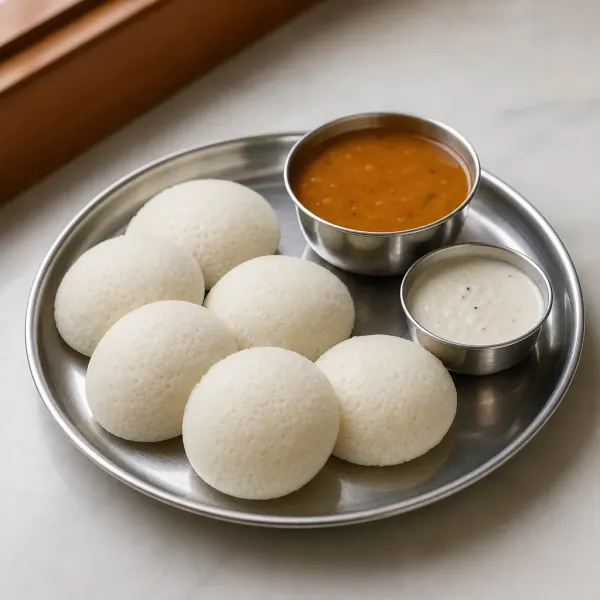
Idli
Authentic Tamil Iyer idli recipe with correct rice-to-urad ratio, wet-grinding method, and full fermentation guide. Soft, pale, and light every time.
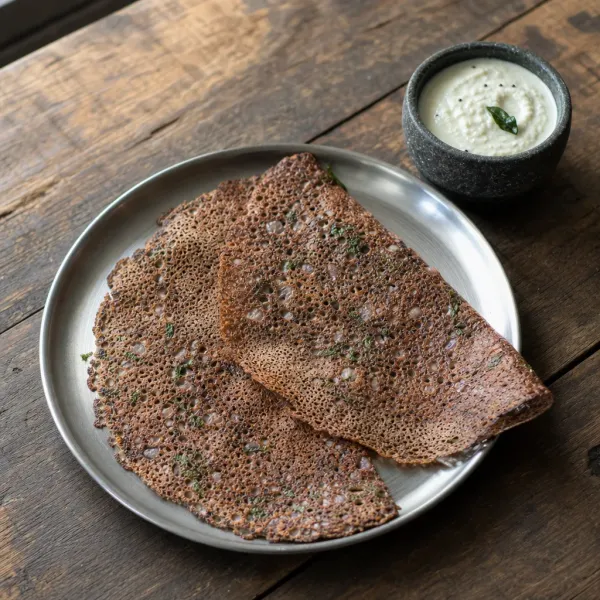
Ragi Dosa (Finger Millet Dosa)
Traditional Karnataka ragi dosa made with finger millet flour, rice flour, shallots and cumin. Quick, no-ferment, weekday breakfast recipe.
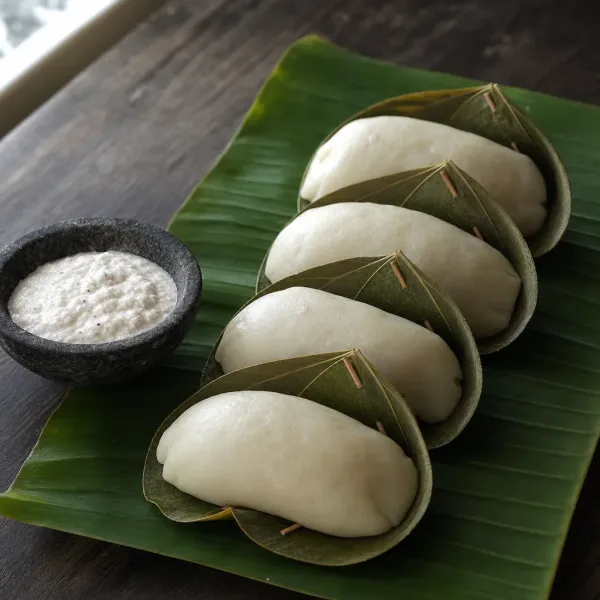
Kotte Kadubu
Traditional Tulu Nadu recipe for Kotte Kadubu: soft steamed rice dumplings cooked in pinned jackfruit leaf cones, eaten with coconut chutney.
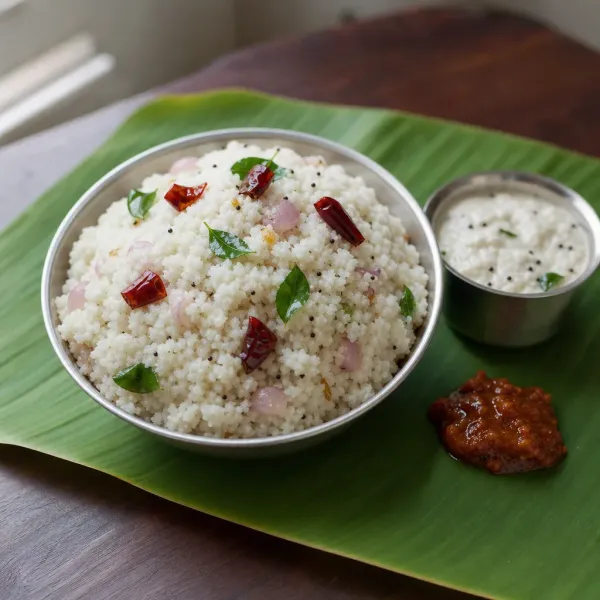
Arisi Upma (Broken Rice Upma)
Traditional Kongunad Iyer arisi upma made with dry-roasted broken raw rice, shallots, peppercorns and ghee. Step-by-step Tamil Nadu tiffin recipe.
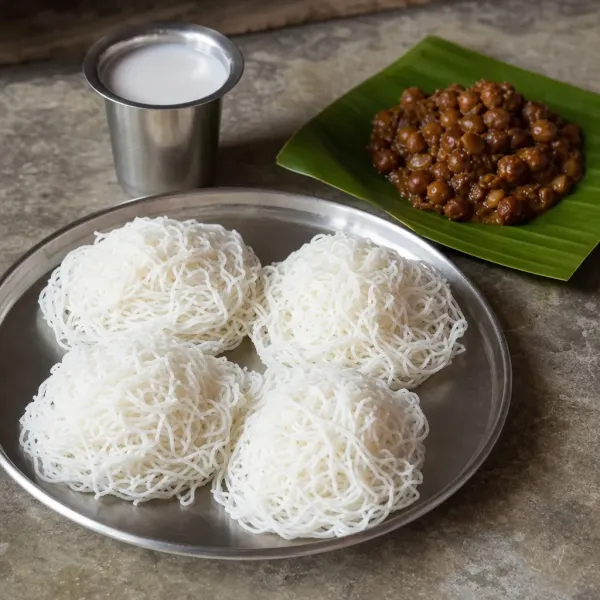
Idiyappam
Soft Kerala string hoppers made with fine rice flour and boiling water, pressed fresh and steamed. Traditional household method with cook's notes.
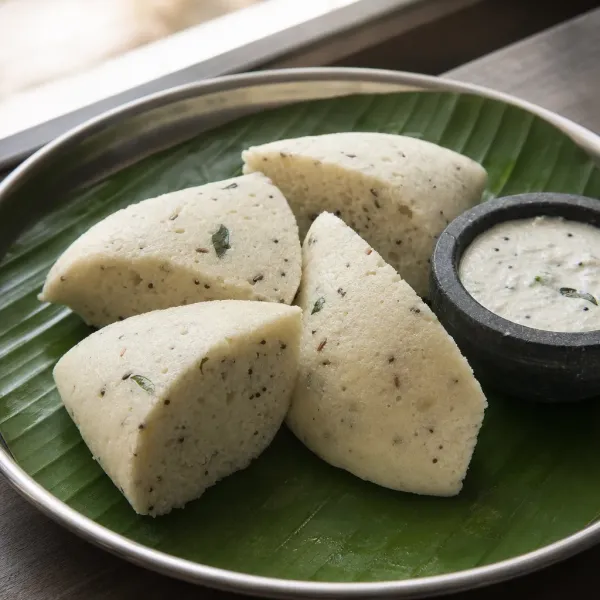
Kanchipuram Idli
Traditional Kanchipuram idli from the Iyer kitchen: fermented rice and urad dal batter tempered with ghee, black pepper, cumin and ginger, steamed fi…