

Kotte Kadubu Recipe
Malayalam കോട്ടെ കഡുബുTamil கொட்டே கடுபுKannada ಕೊಟ್ಟೆ ಕಡುಬುTelugu కొట్టే కడుబు
- Prep20 min
- Soak / ferment4 hr
- Cook35 min
- Serves4
- DifficultyMedium
- DietVegan
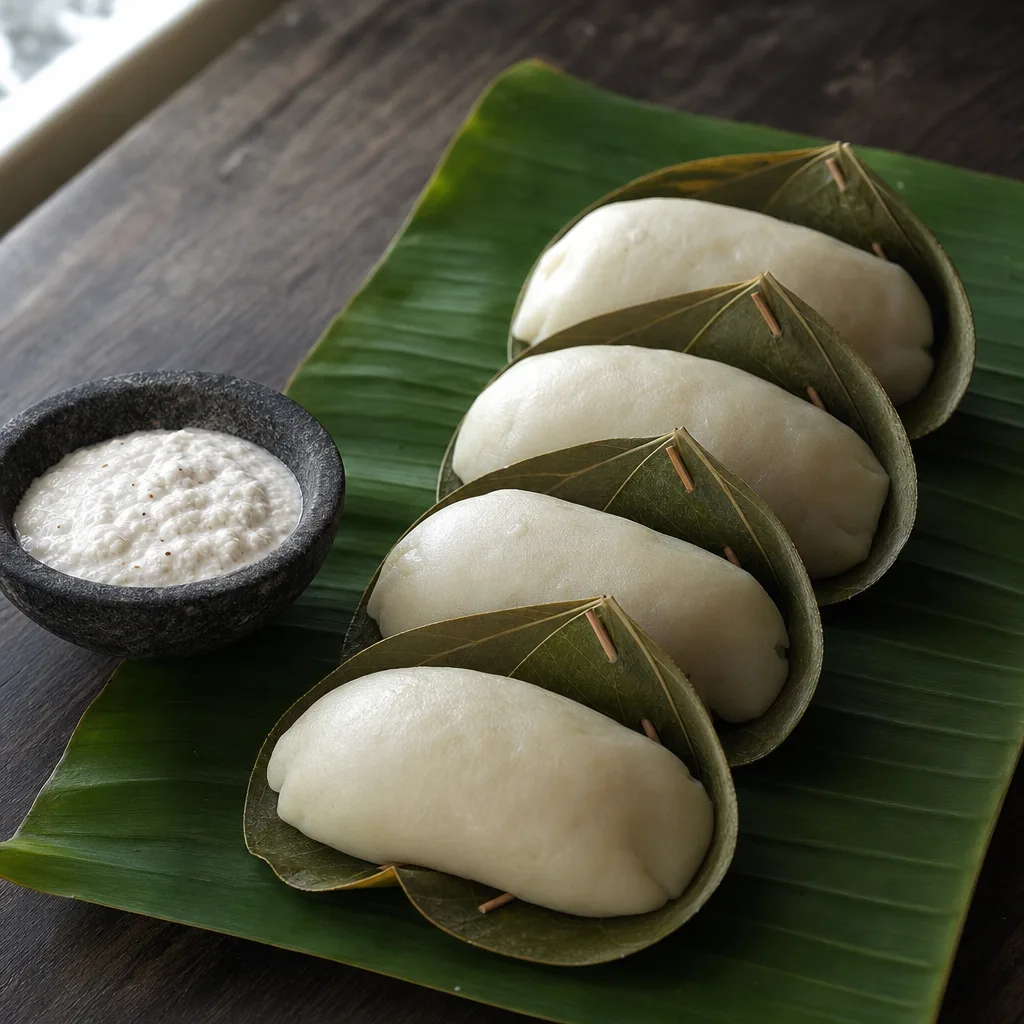
Kotte Kadubu are steamed rice dumplings cooked inside small cones pinned together from fresh jackfruit leaves. The leaf does most of the work: it holds the batter, perfumes it gently as it steams, and peels away cleanly when the dumpling is done. The result is a soft, pale, slightly dense cake with the faint green scent of the leaf pressed into its surface.
This is a Tulu Nadu breakfast and tiffin dish, made along the Karnataka coast from Udupi down through Mangaluru. In most households it is eaten with coconut chutney and sometimes a thin coconut milk preparation, though the kadubu itself contains neither. On festival days it appears alongside a chickpea or black-eyed pea curry.
The cones are the skill. Folding and pinning the jackfruit leaves into a watertight cup without a stapler or toothpick takes a few tries. Households that make this regularly keep a stock of thin coconut-leaf midrib slivers for pinning, though a toothpick works. Once the folding is learnt, the rest is straightforward.
Ingredients (serves 4)
For the batter
For the leaf cups
Method
Soak the rice
Rinse the rice twice in cold water, then cover with fresh cold water and leave to soak for 4 hours. The grains should be swollen and snap cleanly when pressed between your nails. Drain completely before grinding.
Grind the batter
Put the drained rice and grated coconut into a wet grinder or a heavy blender. Add water a little at a time, no more than ¾ cup (180 ml) in total, and grind to a smooth, thick batter. It should fall from a spoon in a slow, heavy ribbon, thicker than dosa batter. Add salt and stir. The batter does not ferment; use it immediately.
Fold the jackfruit leaf cones
Take one jackfruit leaf and curl it into a cone, bringing the tip of the leaf to form the pointed base and overlapping the sides so there is no gap. Pin the overlap firmly with a sliver of coconut midrib or a toothpick pushed through both layers. The cone should hold its shape and have no hole at the tip. Make all your cones before you begin filling.
Fill the cones
Stand each cone upright in a small cup or tuck it into a deep plate to hold it steady. Spoon batter into the cone until it is about three-quarters full, leaving room for the batter to expand as it steams. Do not overfill or the batter will push out and the dumpling will be misshapen.
Prepare the steamer
Bring water to a full boil in a wide steamer or a large pot with a tight lid. The water level should be well below the steamer rack. Arrange the filled cones upright on the rack, leaning them against each other or the sides so they do not tip.
Steam the kadubu
Cover tightly and steam over medium-high heat for 25 to 30 minutes. The kadubu are ready when a skewer pushed through the leaf into the centre comes out clean and the batter has pulled away slightly from the leaf. Do not open the lid in the first 20 minutes or the dumplings will be dense in the middle.
Rest and serve
Lift the cones out carefully and let them rest for 5 minutes before serving. The leaf peels away cleanly once the kadubu has set. Serve them in the leaf or peeled, as you prefer. They are best eaten hot.
How to serve
Fresh coconut chutney; thin sweetened coconut milk (paal); or a simple black-eyed pea or chickpea curry on festival days.
Served with: Fresh coconut chutney; thin sweetened coconut milk (paal); or a simple black-eyed pea or chickpea curry on festival days.
Cook's tips
Leaf freshness matters
Dry or brittle jackfruit leaves crack when folded and the cone leaks. Use leaves picked the same day. If the leaves are slightly stiff, wipe them with a damp cloth and leave them in the shade for 20 minutes before folding.
Batter thickness
If the batter is too thin it seeps through small gaps in the cone and the kadubu comes out flat. It should be thick enough to hold its shape in the spoon for a moment before sliding off. Add the water gradually and stop early.
No jackfruit leaves
Banana leaf squares folded into packets and tied with a strip of banana leaf are a practical substitute, though the shape and the faint leaf flavour differ. This is genuinely done in households when jackfruit leaves are out of season.
Storing leftovers
Kadubu firm up as they cool and become rubbery if refrigerated. Steam them again for 5 minutes to soften. They do not keep well beyond a day.
Coconut in the batter
Some households leave the coconut out entirely for a plainer, firmer kadubu. Both are traditional. The version with coconut is softer and slightly richer.
Regional variations
Sweet version with jaggery and grated coconut in the batter (Konkani Catholic and some Havyaka households); stuffed version with a spiced coconut-jaggery filling (Kadubu with poornam); banana-leaf wrapped version without the cone form.
Glossary
- Kotte ಕೊಟ್ಟೆ
- Tulu word for the jackfruit-leaf cone used as a mould for steaming.
- Kadubu ಕಡುಬು
- Kannada term for a steamed rice dumpling; the broader category to which this dish belongs.
- Khadbhat ಖಡ್ಬತ್
- A variety of short-grain raw rice grown in coastal Karnataka, preferred in Udupi cooking for its texture when ground.
- Pachari പച്ചരി
- Malayalam term for raw (unparboiled) rice; used here to clarify that parboiled rice is not used in this batter.
Two things decide whether this works: the batter must be thick enough not to leak through the cone, and the cones must be pinned without gaps at the tip. Get those right and the steaming is straightforward.
More Breakfast & Tiffin recipes
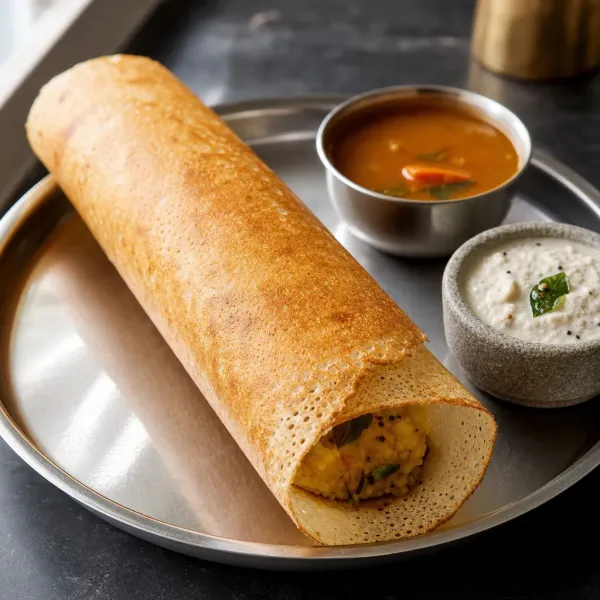
Masala Dosa with Potato Masala
Traditional Udupi-style masala dosa with a dry potato masala filling. Fermented rice and urad dal batter, cooked crisp on one side only.
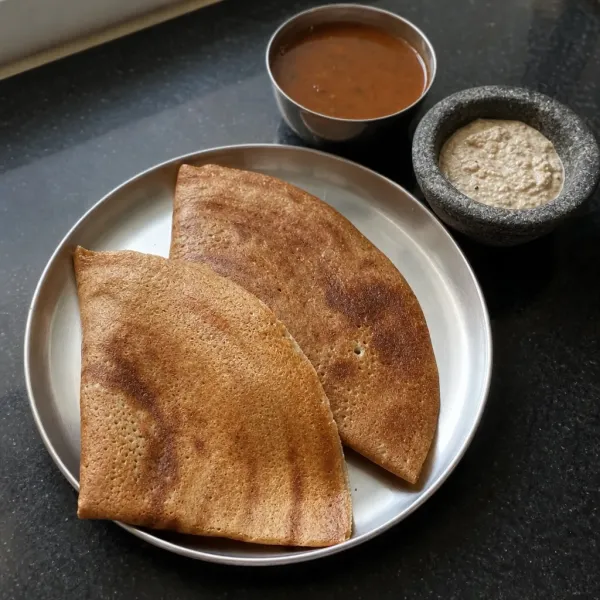
Kambu Dosai
Authentic Kongunad kambu dosai made with fermented pearl millet, raw rice and urad dal batter. Crisp, nutty and cooked in gingelly oil. Traditional h…
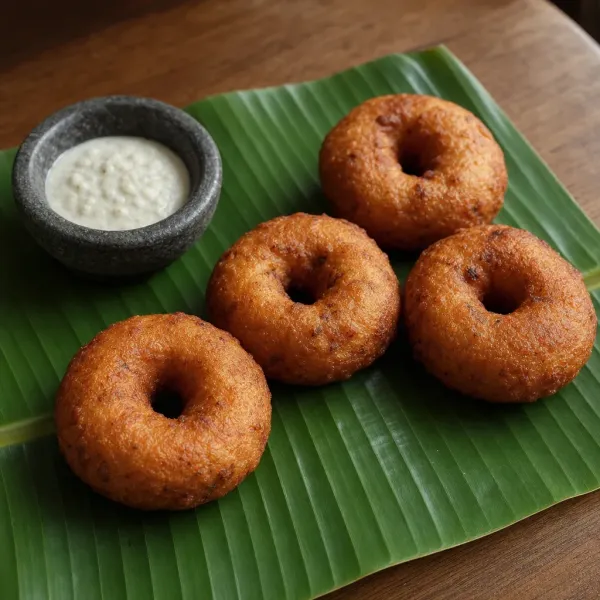
Uzhunnu Vada
Traditional Kerala uzhunnu vada made with urad dal, coconut oil, green chilli and curry leaf. Crisp outside, soft within. Step-by-step home recipe.
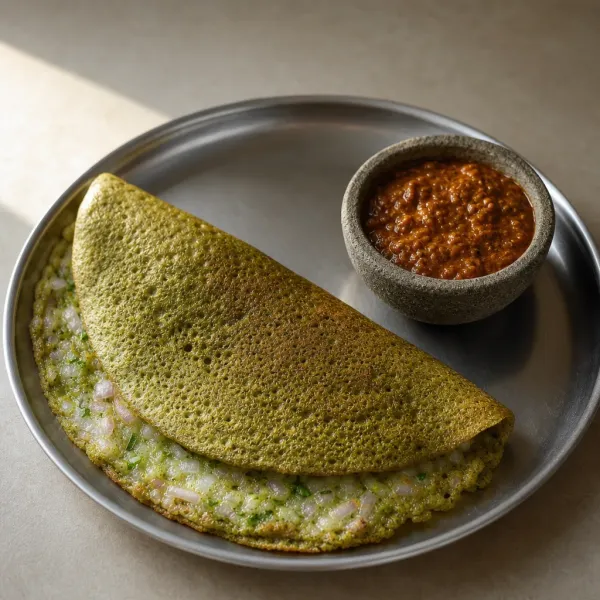
Pesarattu
Traditional Andhra pesarattu made with whole green gram, ginger and cumin. No fermentation, no rice flour. Served with allam chutney.
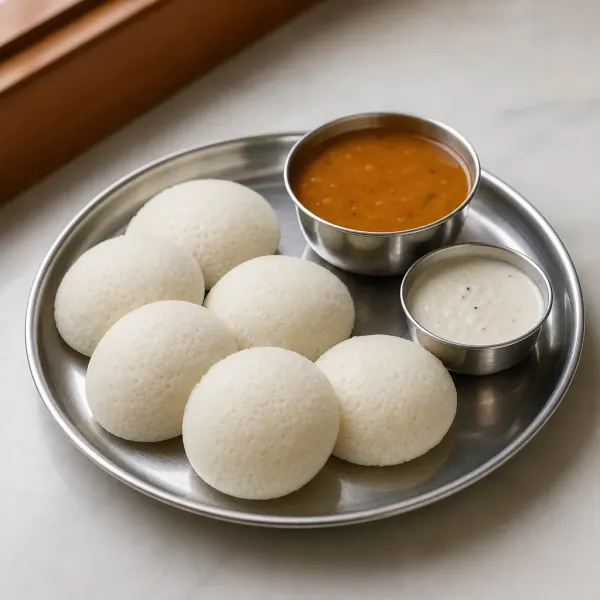
Idli
Authentic Tamil Iyer idli recipe with correct rice-to-urad ratio, wet-grinding method, and full fermentation guide. Soft, pale, and light every time.
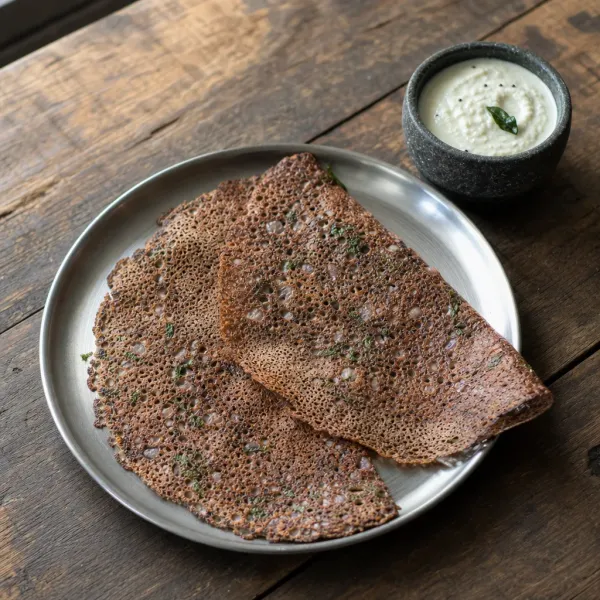
Ragi Dosa (Finger Millet Dosa)
Traditional Karnataka ragi dosa made with finger millet flour, rice flour, shallots and cumin. Quick, no-ferment, weekday breakfast recipe.