

Masala Dosa with Potato Masala Recipe
Malayalam മസാല ദോശTamil மசால தோசைKannada ಮಸಾಲೆ ದೋಸೆTelugu మసాల దోసె
- Prep30 min
- Soak / ferment16 hr
- Cook45 min
- Serves4
- DifficultyMedium
- DietVegetarian
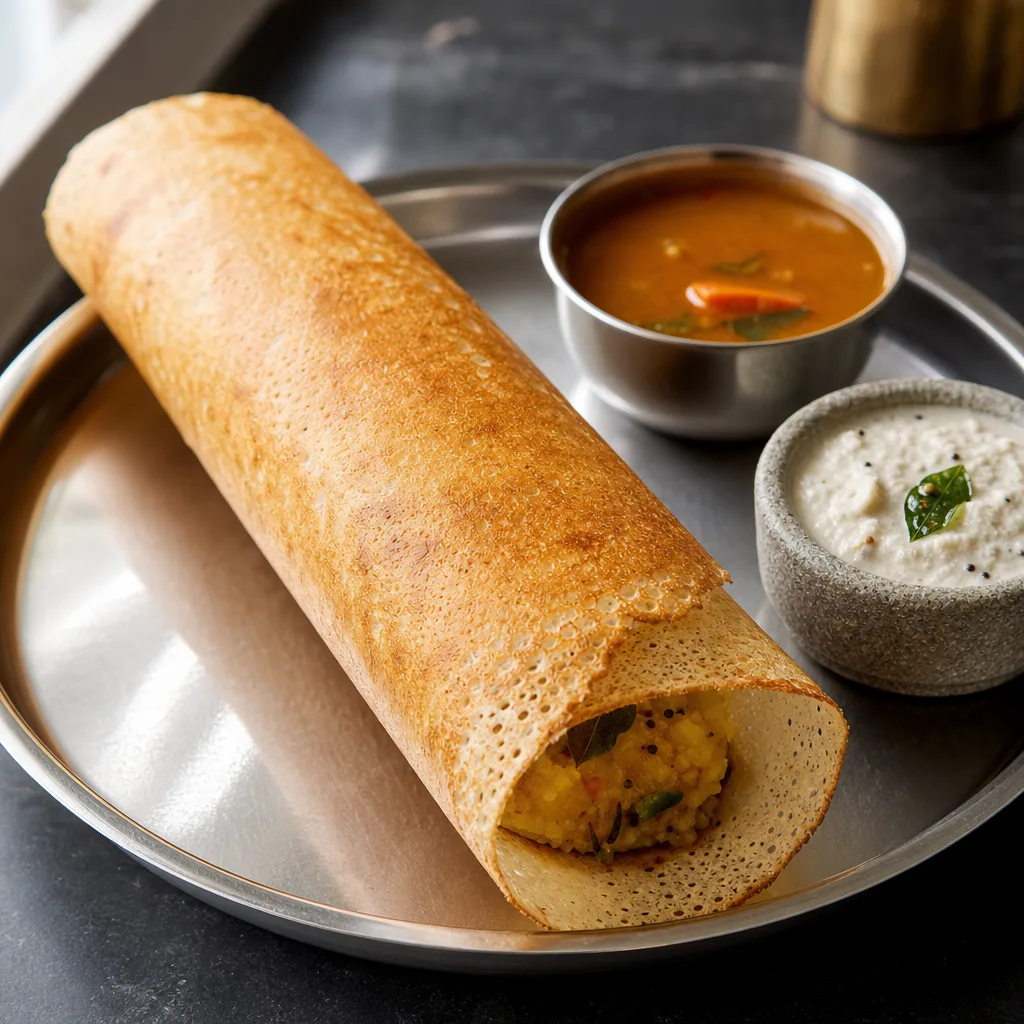
This is the dosa that spread from the Udupi and coastal Karnataka belt and gave South Indian food its most recognisable face. At home it is a breakfast or a tiffin, eaten mid-morning when the griddle is hot and the batter has fermented overnight. The dosa itself is golden and crisp at the rim, thinner at the centre where the filling sits, and it is folded or rolled over a dry potato masala before it comes off the pan.
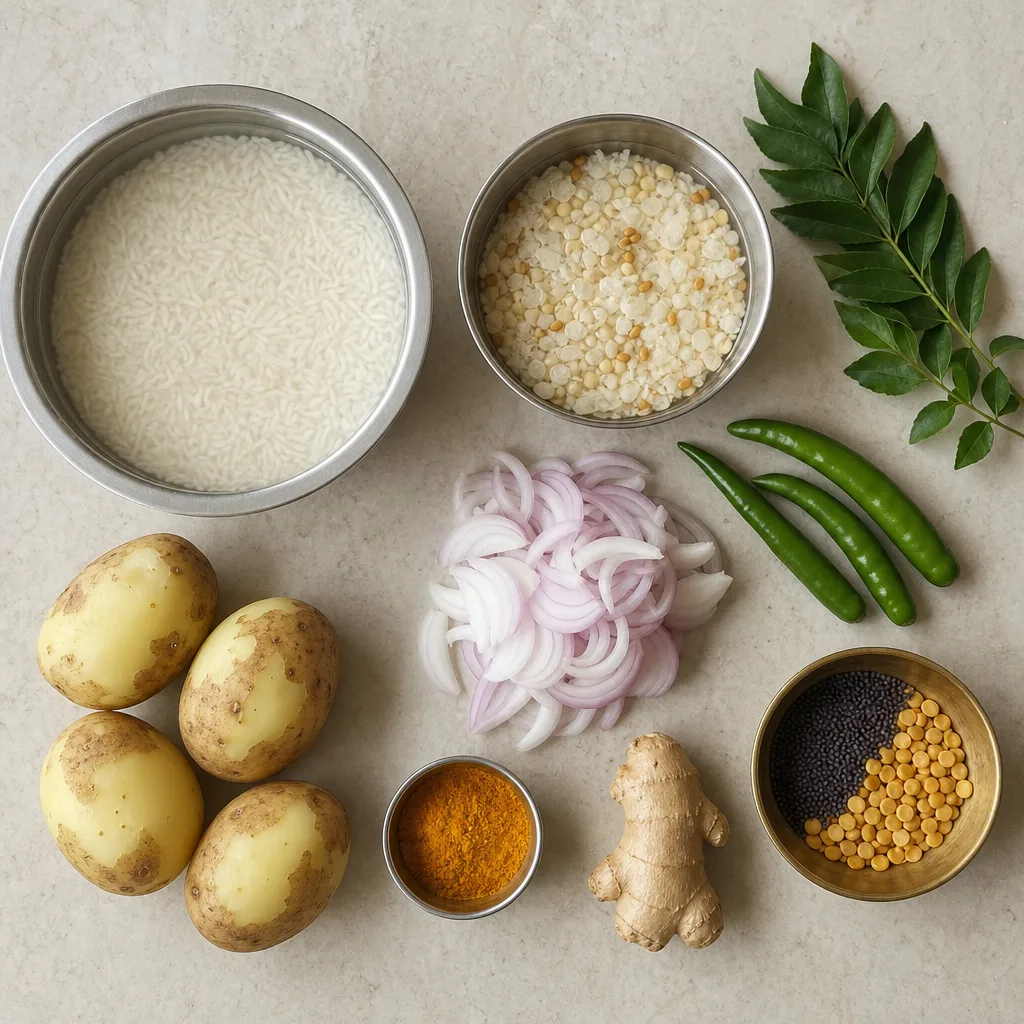
The batter is a mixture of raw rice and urad dal, with a small amount of poha (flattened rice) added to help the dosa spread thin and colour evenly. Fenugreek seeds go in with the dal; they aid fermentation and give the faint bitterness that balances the starchy potato. In a Udupi household the batter is ground on a wet grinder if one is available, which produces a smoother, airier result than a blender. Fermentation happens at room temperature overnight, and in a warm coastal kitchen eight to ten hours is usually enough; in a cooler inland kitchen it can take fourteen to sixteen hours.
The potato masala here is simple and dry: boiled potato broken by hand, tempered with mustard, curry leaf, green chilli and onion, coloured with turmeric. It should hold together when you spoon it onto the dosa but not be wet enough to make the dosa soggy. Households differ on whether to add ginger, and some add a pinch of asafoetida to the tempering. Both are acceptable. Tomato does not belong here.
Ingredients (serves 4)
For the batter
For the potato masala
Method
Soak the rice and dal
Put the urad dal, poha and fenugreek seeds together in one bowl and cover generously with cold water. Put the rice in a separate bowl with cold water. Soak both for at least 4 hours. The dal will swell noticeably; the poha will soften and almost dissolve into it. Keep them separate because they grind at different speeds.
Grind the batter
Drain the dal and grind it first with a little cold water, about 80 ml, until it is very smooth and light, almost fluffy. It should feel airy when you rub it between your fingers, not grainy. Transfer to a large vessel. Drain the rice and grind it with the remaining water, about 120 ml, to a slightly coarser texture than the dal — fine but with just a little body. Combine the two batters and mix well with your hand or a spoon. The combined batter should be thick enough to coat a spoon but pour off it in a slow, steady ribbon.
Ferment the batter
Cover the vessel loosely — a plate set slightly askew works well — and leave it in a warm spot for 8 to 16 hours depending on your kitchen temperature. In a warm coastal kitchen, 8 to 10 hours overnight is usually enough. In a cooler kitchen, 14 to 16 hours may be needed. The batter is ready when it has risen by roughly a third, smells pleasantly sour, and has a slightly bubbly surface. Do not ferment beyond this point or the dosa will be too sour and will not colour evenly. Add salt and stir gently; the batter will settle a little.
Boil the potatoes
Boil the potatoes whole in their skins in well-salted water until a knife passes through without resistance, about 20 to 25 minutes depending on size. Drain and peel while still warm. Break them into rough chunks by hand — do not mash them smooth. You want pieces of different sizes, some almost mashed, some still chunky. This gives the masala its texture.
Make the potato masala
Heat coconut oil in a wide pan over medium heat. Add the chana dal and let it turn pale gold, about 1 minute. Add mustard seeds and wait for them to pop. Add curry leaves — they will splutter, so stand back — then the green chillies and ginger. Stir for 30 seconds. Add the sliced onion and a pinch of salt and cook over medium heat until the onion is soft and translucent but not browned, about 6 to 8 minutes. Add turmeric and stir through. Add the broken potato, season with salt, and mix gently so the turmeric colours everything evenly. If the masala looks dry and crumbly, add 2 to 3 tablespoons of water and stir once. It should hold together when pressed but not be wet. Keep warm.
Heat the griddle
Place a cast-iron or heavy tawa over medium-high heat. It is ready when a few drops of water flicked onto the surface evaporate immediately with a sharp hiss. Rub the surface lightly with a cut onion half dipped in a little oil — this seasons the surface and prevents sticking. Do this before the first dosa only.
Spread the dosa
Pour a ladleful of batter (about 80 ml) onto the centre of the tawa and immediately use the back of the ladle to spread it in a thin, even spiral outward to a circle of about 22 to 24 cm. Work quickly and confidently — hesitating will tear the dosa. The batter should sizzle as it hits the pan. If the batter is too thick to spread easily, stir in a tablespoon or two of water.
Cook the dosa
Drizzle a few drops of coconut oil around the edges and a drop or two in the centre. Cook over medium-high heat. The dosa is ready to fill when the surface has turned from wet and white to dry and opaque, the edges have begun to lift away from the pan, and the underside is golden and crisp. This takes about 2 to 3 minutes. Do not flip it — a masala dosa is cooked on one side only.
Fill and fold
Place 2 to 3 tablespoons of potato masala along the centre of the dosa in a line. Fold or roll the dosa over the filling — a simple half-fold or a full cylinder roll both work. Slide it off the pan onto the plate with the crisp side facing up. Serve immediately; a dosa waits for no one.
Continue with remaining batter
Between dosas, lower the heat briefly if the tawa is getting too hot — a very hot pan will make the batter stick and tear before you can spread it. You do not need to re-season the pan between each dosa. If batter sticks and leaves marks, scrape the surface clean with a flat spatula before the next one.
How to serve
Fresh coconut chutney and sambar. In a Udupi household both are served alongside; the dosa is dipped into the chutney and the sambar is either poured over or served in a small bowl on the side.
Served with: Fresh coconut chutney and sambar. In a Udupi household both are served alongside; the dosa is dipped into the chutney and the sambar is either poured over or served in a small bowl on the side.
Cook's tips
Wet grinder vs blender
A wet grinder produces a lighter, airier batter because it aerates the dal as it grinds. A high-speed blender works but the dal batter will be denser. Grind in short pulses and keep the water cold to avoid overheating the batter.
The pan temperature is everything
If the pan is too cool the batter will spread thickly and not crisp. If it is too hot the batter sets before you can spread it. Medium-high heat, adjusted between dosas, is the right range. A new pan needs a few practice dosas before it behaves.
Storing the batter
Once fermented and salted, refrigerate leftover batter. It will keep for 2 to 3 days. Cold batter spreads less easily; bring it to room temperature for 30 minutes before using, and stir well.
The masala must be dry
A wet masala makes the dosa soggy within seconds of filling. If your masala looks too loose, cook it on the pan for another 2 minutes, stirring, to drive off the moisture before filling.
Poha in the batter
The small amount of poha (flattened rice) helps the dosa spread thin and colour evenly without becoming brittle. Do not skip it or increase it — too much poha makes the dosa pale and soft rather than crisp.
Regional variations
Mysore masala dosa (red chutney inside, Karnataka); Tamil Nadu Brahmin household version (softer, thinner batter, wetter masala); hotel-style Bengaluru masala dosa (very thin, very crisp, larger).
Glossary
- Urad dal உளுந்து (Tamil); ಉದ್ದಿನ ಬೇಳೆ (Kannada)
- Skinned black gram lentil, the dal that gives the dosa batter its lift and the characteristic slight sourness after fermentation.
- Poha ಅವಲಕ್ಕಿ (Kannada)
- Flattened rice, added in small quantity to the dal before grinding to help the dosa spread thinly and colour evenly.
- Tawa ತವಾ (Kannada)
- A flat or slightly concave griddle, ideally cast iron, used for cooking dosa and other flatbreads.
- Chana dal ಕಡಲೆ ಬೇಳೆ (Kannada)
- Split Bengal gram, added to the tempering of the potato masala for a small amount of crunch and nuttiness.
- Methi ಮೆಂತ್ಯ (Kannada)
- Fenugreek seeds; a small quantity soaked with the urad dal aids fermentation and adds a faint, pleasant bitterness to the batter.
Two things decide this dosa: the fermentation and the pan temperature. Batter that has fermented fully — risen, bubbly, smelling gently sour — will spread thin and crisp without effort. A pan at the right heat will let you spread the batter in one smooth motion before it sets. Get those two right and the rest follows.
More Breakfast & Tiffin recipes
Kambu Dosai
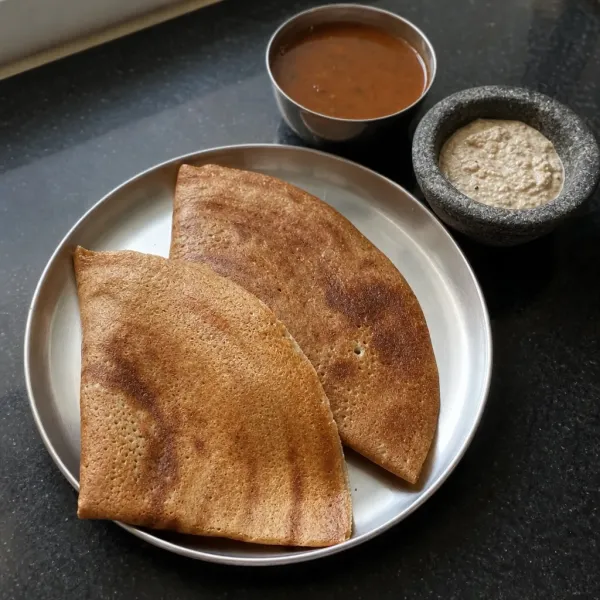
Authentic Kongunad kambu dosai made with fermented pearl millet, raw rice and urad dal batter. Crisp, nutty and cooked in gingelly oil. Traditional h…
Kotte Kadubu
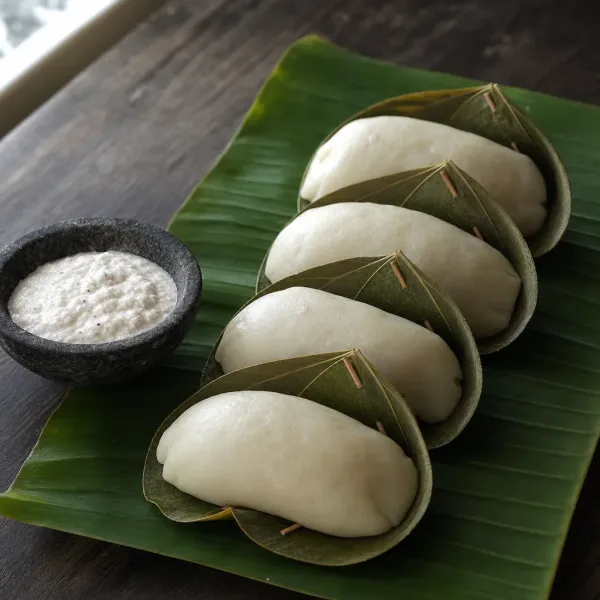
Traditional Tulu Nadu recipe for Kotte Kadubu: soft steamed rice dumplings cooked in pinned jackfruit leaf cones, eaten with coconut chutney.
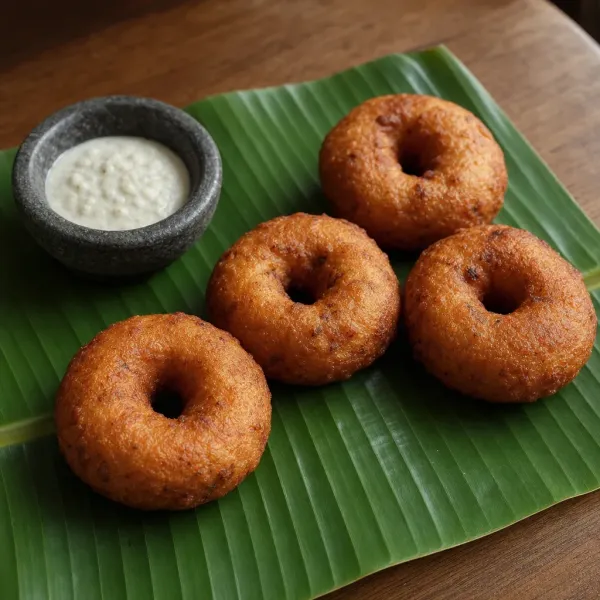
Uzhunnu Vada
Traditional Kerala uzhunnu vada made with urad dal, coconut oil, green chilli and curry leaf. Crisp outside, soft within. Step-by-step home recipe.
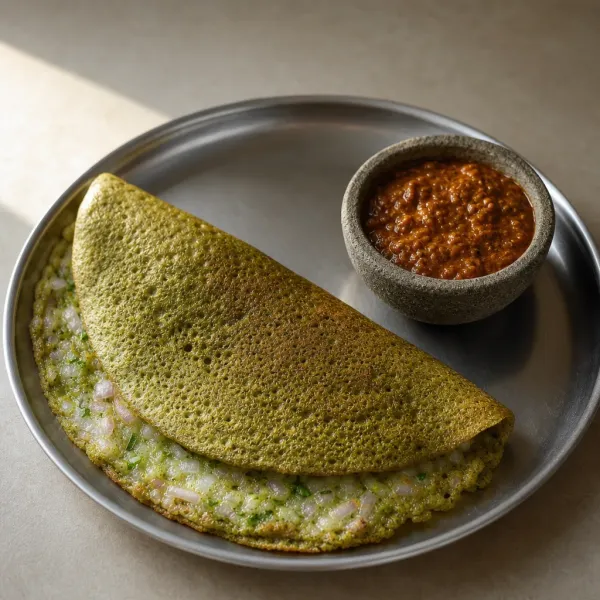
Pesarattu
Traditional Andhra pesarattu made with whole green gram, ginger and cumin. No fermentation, no rice flour. Served with allam chutney.
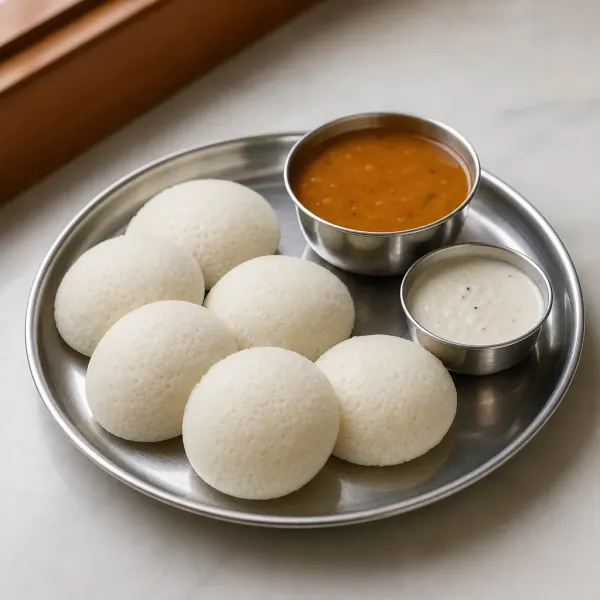
Idli
Authentic Tamil Iyer idli recipe with correct rice-to-urad ratio, wet-grinding method, and full fermentation guide. Soft, pale, and light every time.
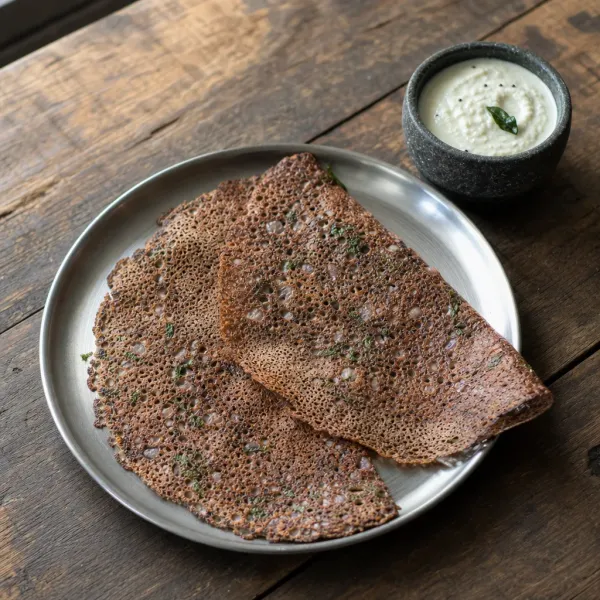
Ragi Dosa (Finger Millet Dosa)
Traditional Karnataka ragi dosa made with finger millet flour, rice flour, shallots and cumin. Quick, no-ferment, weekday breakfast recipe.