

Kambu Dosai Recipe
Malayalam കമ്പ് ദോശTamil கம்பு தோசைKannada ಕಂಬು ದೋಸೆTelugu కంబు దోసె
- Prep20 min
- Soak / ferment14 hr
- Cook40 min
- Serves4
- DifficultyMedium
- DietVegan
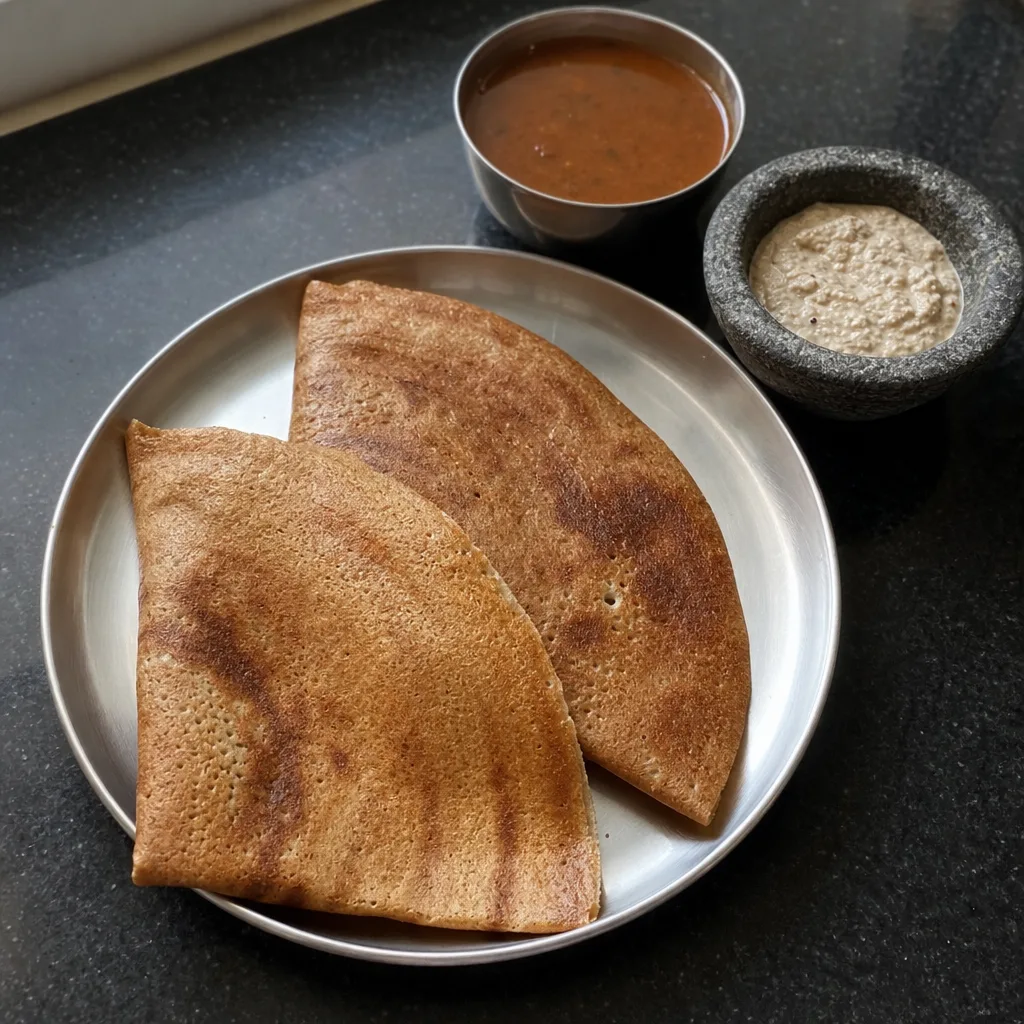
Kambu dosai belongs to the dry interior of Tamil Nadu, where pearl millet has been grown for centuries and forms the backbone of everyday cooking. In Kongunad households, this was the morning dosa long before rice dosa became universal. The batter is darker than rice dosa batter, the colour of pale slate when ground, and it deepens slightly as it ferments. The finished dosa is golden and crisp at the edges, softer at the centre, with a faint nuttiness that is entirely its own.
Most households soak the kambu and rice separately and grind them together, though some grind the kambu first and add the soaked rice after. The batter needs a full overnight ferment, and in the cooler months of December and January it may need a few extra hours. You know it is ready when it has risen perceptibly and smells pleasantly sour without being sharp. Gingelly oil is the fat of choice here; it gives the dosa a characteristic aroma that coconut oil cannot replicate.
At the table this is eaten with sambar or a simple onion chutney, and in many homes a small bowl of jaggery is set alongside for those who want a sweet contrast. The dosa itself is plain. It is spread thin and cooked on one side until the edges lift, then flipped briefly. It does not need a long second side.
Ingredients (serves 4)
For the batter
For cooking
Method
Soak the grains and dal
Rinse the kambu well and soak it in plenty of cold water for 6 hours. In a separate bowl, soak the raw rice together with the urad dal and fenugreek seeds for 4 hours. The kambu needs longer because the grain is dense at the centre and will not grind smoothly if under-soaked.
Drain and grind the urad dal
Drain the urad dal, rice and fenugreek seeds. Add them to a wet grinder or a powerful blender with about 100 ml of cold water, added gradually. Grind until the batter is very smooth and slightly fluffy, 10 to 15 minutes in a wet grinder. The batter should feel almost silky between your fingers, with no grit.
Grind the kambu
Drain the kambu and add it to the same grinder in batches. Add water gradually, no more than 150 ml in total, to keep the batter thick. Grind until smooth, though kambu will always retain a very faint graininess. This is normal and does not mean the batter is under-ground.
Combine and salt the batter
Scrape all the batter into a large vessel with room to rise. Add salt and mix thoroughly with your hand, which helps introduce warmth and encourage fermentation. The batter should be the consistency of pourable yoghurt, not watery. If it is too thick, add a little water and mix again.
Ferment overnight
Cover the vessel loosely and leave it in a warm spot for 8 to 10 hours, or overnight. In summer the batter will be ready in 8 hours; in cool weather it may need 12 to 14. It is ready when the batter has risen by roughly a third and smells pleasantly sour. Do not let it over-ferment or the dosa will be too sharp and will spread poorly.
Bring the batter to temperature
If the batter has been refrigerated after fermentation, take it out 30 minutes before cooking. Cold batter will not spread evenly on the pan and the dosa will tear at the edges.
Heat the tawa
Place a cast iron tawa or a heavy flat pan over medium-high heat. When a few drops of water flicked onto the surface evaporate immediately with a sharp sizzle, the tawa is ready. Rub the surface lightly with a piece of cut shallot dipped in gingelly oil to season it between dosas.
Pour and spread
Reduce the heat to medium. Pour one ladle of batter, about 80 ml, onto the centre of the tawa. Using the back of the ladle, spread it in quick concentric circles outward into a thin round, roughly 22 cm across. Work fast; the batter sets quickly. If it tears, your tawa is too hot or the batter is too thin.
Add oil and cook the first side
Drizzle about 1 tsp of gingelly oil around the edges and a few drops in the centre. Cook on medium heat until the edges turn golden and begin to lift from the surface, and the top of the dosa looks dry and set, about 2 minutes. The underside should be golden with darker patches, not pale.
Flip and finish
Flip the dosa gently using a flat spatula. Cook for 30 to 45 seconds on the second side until it is just cooked through. Do not press it down. Slide it off the tawa and serve immediately. Kambu dosai does not hold well; it becomes leathery if it sits.
Continue with remaining batter
Repeat with the remaining batter. If the tawa gets too hot between dosas and the batter sets before you can spread it, briefly wipe the surface with a damp cloth to bring the temperature down. Keep the heat steady at medium throughout.
How to serve
Sambar; onion chutney (vengaya chutney); a small piece of jaggery on the side is common in Kongunad homes.
Served with: Sambar; onion chutney (vengaya chutney); a small piece of jaggery on the side is common in Kongunad homes.
Cook's tips
Whole kambu versus dehusked
Whole pearl millet with the outer husk gives a slightly more robust, earthier dosa. Dehusked kambu produces a slightly lighter batter. Either works; what matters is that the grain is fresh, not rancid. Old kambu smells musty and will ruin the batter.
The batter should be thick
Kambu batter is naturally thicker than rice dosa batter. Resist the urge to thin it down too much. A thin batter will spread too easily and produce a fragile dosa that tears when you flip it.
Fermentation in cool weather
In cold months, place the vessel inside an unheated oven with just the oven light on, or wrap it in a thick cloth. If the batter has not risen after 10 hours, give it more time rather than cooking it under-fermented. An under-fermented batter produces a flat, dense dosa with no lift.
Storing the batter
Once fermented, the batter can be refrigerated for up to two days. It will continue to sour slowly in the fridge. By day two the flavour is sharper, which some households prefer. Beyond two days the dosa becomes unpleasantly acidic.
Cast iron is not optional
Non-stick pans do not retain heat evenly enough for this batter. The dosa will stick and tear. A well-seasoned cast iron tawa gives the best result.
Regional variations
All-kambu batter without rice (drier, more robust flavour); Karnataka version with ragi substituted or combined; some households in Madurai add cooked rice rather than raw rice to the batter.
Glossary
- Kambu கம்பு
- Pearl millet (Pennisetum glaucum), the grain used in this dosa.
- Pachari பச்சரிசி
- Raw, uncooked rice, as distinct from parboiled rice.
- Urad dal உளுந்து
- Black gram lentil; used whole with skin here to help the batter ferment and give it body.
- Tawa தவா
- Flat iron griddle used for cooking dosas and rotis.
- Gingelly oil நல்லெண்ணெய்
- Cold-pressed sesame oil used in Tamil Nadu cooking; distinct from the toasted sesame oil used in East Asian cooking.
- Kongunad கொங்குநாடு
- The inland western region of Tamil Nadu, covering Coimbatore, Erode, Salem and surrounding districts; historically a millet-growing area.
Two things decide whether this dosa works. The first is fermentation: the batter must have risen properly and smell pleasantly sour before it goes anywhere near the tawa. The second is heat management: the tawa must be hot enough that the batter sets quickly when it lands, but not so hot that it seizes before you can spread it. Get those two right and the rest follows.
More Breakfast & Tiffin recipes
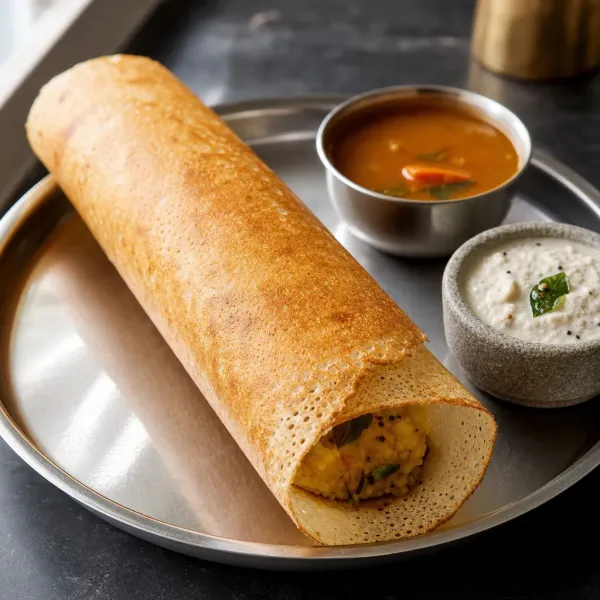
Masala Dosa with Potato Masala
Traditional Udupi-style masala dosa with a dry potato masala filling. Fermented rice and urad dal batter, cooked crisp on one side only.
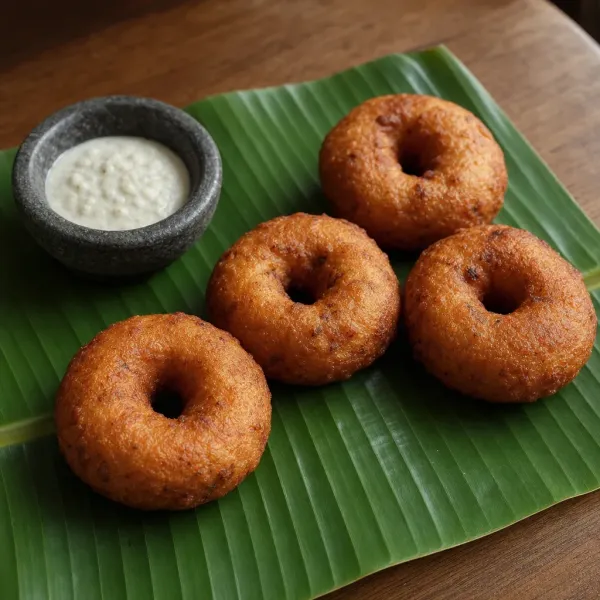
Uzhunnu Vada
Traditional Kerala uzhunnu vada made with urad dal, coconut oil, green chilli and curry leaf. Crisp outside, soft within. Step-by-step home recipe.
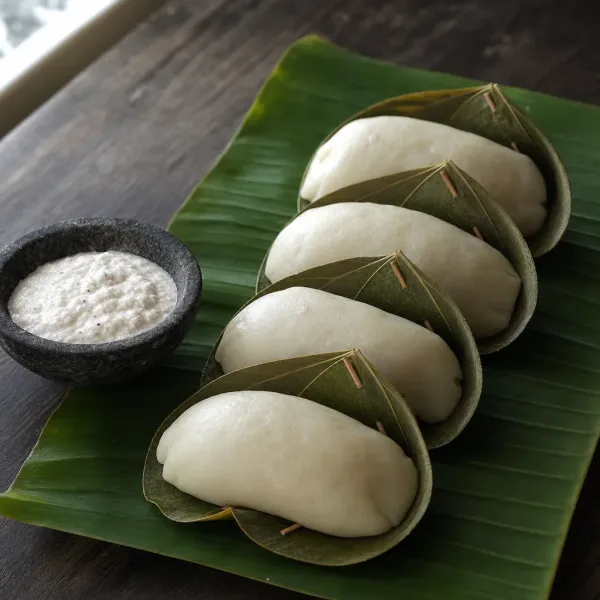
Kotte Kadubu
Traditional Tulu Nadu recipe for Kotte Kadubu: soft steamed rice dumplings cooked in pinned jackfruit leaf cones, eaten with coconut chutney.
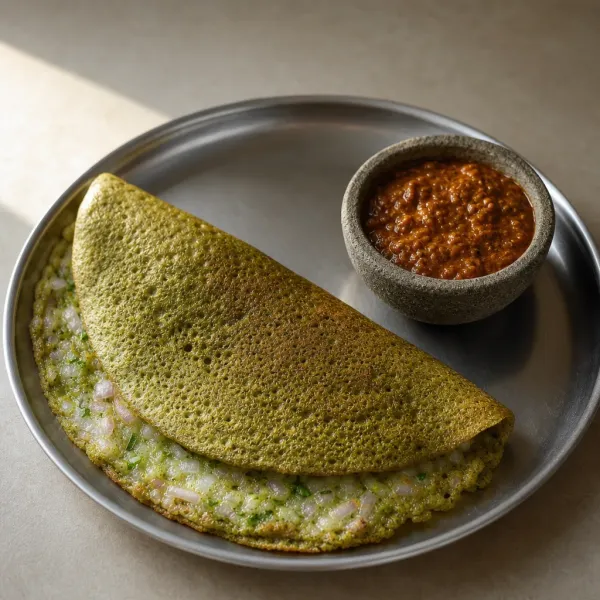
Pesarattu
Traditional Andhra pesarattu made with whole green gram, ginger and cumin. No fermentation, no rice flour. Served with allam chutney.
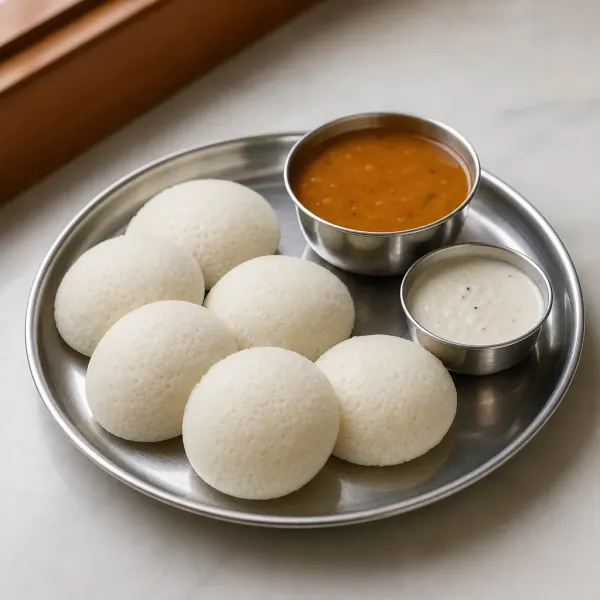
Idli
Authentic Tamil Iyer idli recipe with correct rice-to-urad ratio, wet-grinding method, and full fermentation guide. Soft, pale, and light every time.
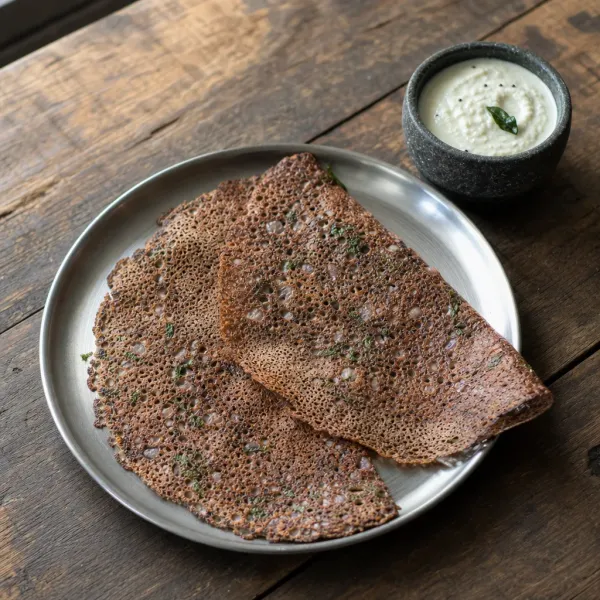
Ragi Dosa (Finger Millet Dosa)
Traditional Karnataka ragi dosa made with finger millet flour, rice flour, shallots and cumin. Quick, no-ferment, weekday breakfast recipe.