

Uzhunnu Vada Recipe
Malayalam ഉഴുന്ന് വടTamil உளுந்து வடைKannada ಉದ್ದಿನ ವಡೆTelugu మినప వడ
- Prep20 min
- Soak / ferment4 hr
- Cook40 min
- Serves4
- DifficultyMedium
- DietVegan
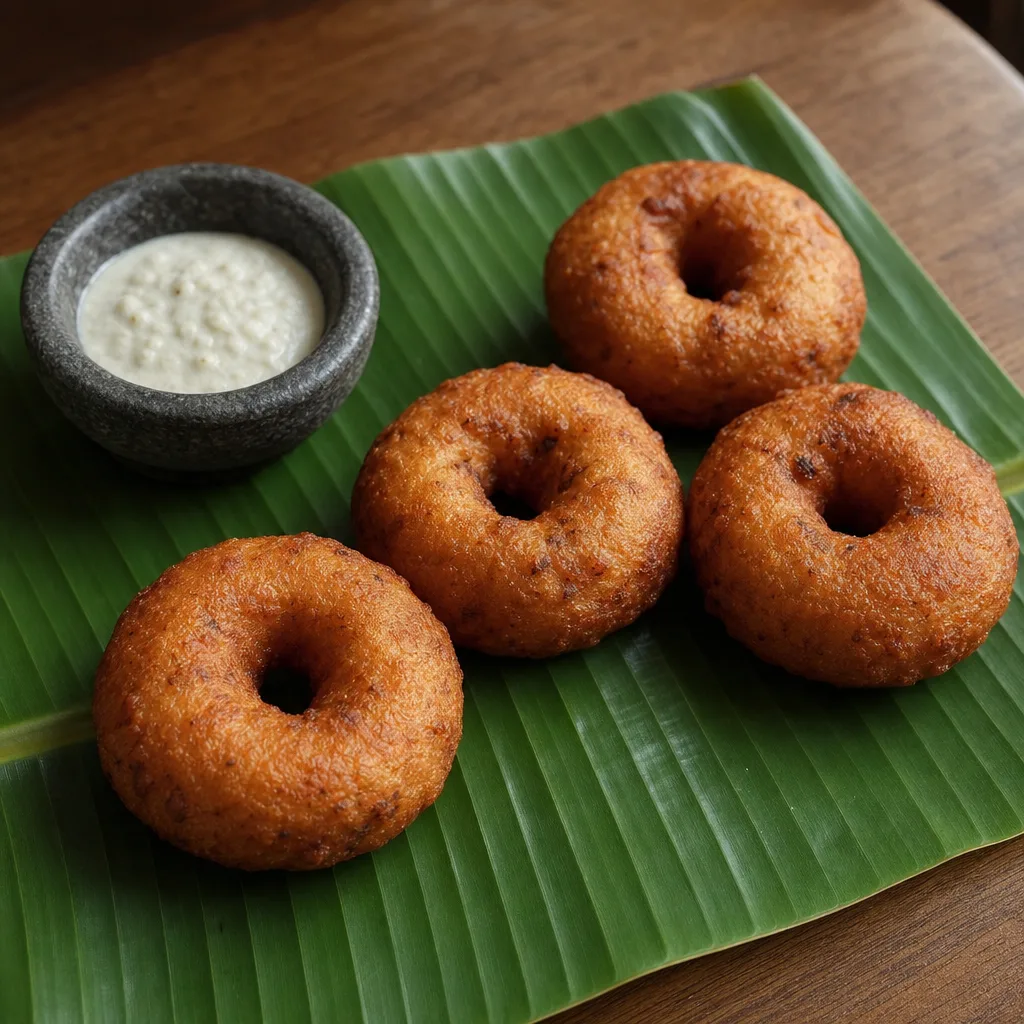
Uzhunnu vada is a breakfast and teatime staple across Kerala, eaten at home on weekends and on every temple and church festival morning. It is made from whole white urad dal soaked until the skin slips off easily, then ground to a light, airy batter and fried in coconut oil. The result is crisp and deeply golden on the outside, soft and almost cloud-like within, with a faint nuttiness from the dal and a clean heat from the green chilli and ginger.
In Kerala homes it is eaten at breakfast alongside coconut chutney and a thin sambar, though many households simply serve it with chutney alone. Some cooks add a few shallots finely chopped into the batter; others keep it plain except for the green chilli, ginger, curry leaf, and black pepper. Both are genuine. The shallot version is more common in central Kerala; the plain version appears more in northern and southern households.
The one non-negotiable is coconut oil for frying. The flavour is different in any other fat and a Kerala cook will notice immediately. The batter must be ground until it is genuinely light and fluffy, not merely smooth, and it must be fried the same day it is ground. There is no fermentation here.
Ingredients (serves 4)
For the batter
For frying
Method
Soak the dal
Rinse the urad dal in two or three changes of water until the water runs clear. Cover with plenty of cold water and soak for 4 hours at room temperature. In a warm Kerala kitchen this is enough; in a cooler climate allow up to 5 hours. The dal is ready when a grain splits cleanly between your fingers with no hard centre.
Drain and remove excess water
Drain the soaked dal through a colander and leave it for 5 minutes. Shake the colander once or twice. You want the dal moist but not dripping; too much water in the grinder will make the batter slack and the vada will absorb oil and turn heavy.
Grind the batter
Transfer the dal to a wet grinder or a powerful mixer-grinder. Add 2 tablespoons of cold water and grind, scraping down the sides every minute or so. Add water only a teaspoon at a time if the grinder struggles; the total water added should not exceed 4 to 5 tablespoons. Grind for 8 to 10 minutes in a wet grinder, or 5 to 6 minutes in a mixer, until the batter is very smooth, white, and genuinely fluffy. It should look almost like stiff whipped cream and hold a peak when you lift a spoonful. This aeration is what makes the inside soft.
Mix in the aromatics
Transfer the batter to a wide bowl. Add the chopped green chilli, grated ginger, shallots if using, torn curry leaves, crushed black pepper, and salt. Fold everything in with your hand or a spoon. Do not beat the batter at this stage; you want to keep the air you ground in.
Heat the oil
Pour the coconut oil into a deep kadai and heat over a medium flame. The oil is ready when a small drop of batter rises to the surface within 2 to 3 seconds of being dropped in. If it rises instantly the oil is too hot and the vada will brown before the inside cooks; if it sinks and sits for more than 4 seconds the oil is not hot enough and the vada will be greasy.
Shape the vada
Wet your right hand thoroughly with cold water. Take a ball of batter roughly the size of a large lime, about 40 to 45 g, and place it on your wet palm. Flatten it gently to a disc about 1.5 cm thick. Press your thumb through the centre to make a hole roughly 2 cm across. The hole tends to close during frying, so make it a little larger than you think necessary. Alternatively, shape the disc on a piece of wet banana leaf or a dampened plastic sheet and slide it off directly into the oil.
Fry the first batch
Slide two or three vadas into the oil, depending on the size of your kadai. Do not crowd them. Fry on medium heat for 2 minutes without touching them, until the underside is set and beginning to colour. Then turn them over carefully with a slotted spoon. Fry for another 2 to 3 minutes, turning once more if needed, until both sides are deep golden brown and the vada feels firm when you press it lightly. The whole fry takes 5 to 6 minutes per batch.
Drain and rest
Lift the vadas out with a slotted spoon and rest them on a plate lined with absorbent paper for 1 to 2 minutes. They crisp up a little more as they rest. Fry the remaining batter in batches, re-wetting your hand before shaping each one.
Serve immediately
Uzhunnu vada is best eaten within 10 to 15 minutes of frying, while the outside is still crisp. It softens as it sits, which is not unpleasant but is a different thing. Arrange on a plate or banana leaf and serve at once.
How to serve
Coconut chutney (thenga chutney) and thin sambar; many Kerala households serve it with chutney alone at breakfast.
Served with: Coconut chutney (thenga chutney) and thin sambar; many Kerala households serve it with chutney alone at breakfast.
Cook's tips
The batter must be cold
If your mixer heats up during grinding, stop, refrigerate the batter for 10 minutes, and continue. Warm batter loses its aeration and the vada turns dense.
Too much water is the common mistake
If the batter slides off your palm rather than holding its shape, it is too wet. You cannot fix this by adding more dal. Add a tablespoon of rice flour to stiffen it slightly, though this is a compromise, not the traditional fix.
Testing the batter before frying
Drop a small ball of batter into a bowl of water. If it floats, the batter has enough air and is ready to fry. If it sinks, return it to the grinder for another 2 minutes.
Mixer versus wet grinder
A wet grinder produces a noticeably lighter batter and is worth using if you have one. A mixer works but requires more care with water quantity and grinding time.
Frying temperature
Medium heat throughout is important. High heat gives a dark crust with an undercooked, doughy centre. Keep adjusting the flame between batches.
Leftover batter
Refrigerate unused batter and use within 24 hours. Bring it back to room temperature before frying. Do not ferment it; this is not a fermented batter and it will turn sour.
Regional variations
Tamil Nadu Iyer households make a thicker, denser medu vada with more black pepper and curry leaf; Udupi restaurants fry a very light, airy version; Andhra households sometimes add finely chopped green chilli and ginger in greater quantity.
Glossary
- Uzhunnu parippu ഉഴുന്ന് പരിപ്പ്
- Whole white urad dal, the husked and split or whole black gram used for this vada and for idli batter.
- Cheriya ulli ചെറിയ ഉള്ളി
- Small shallots, the red or pink variety used throughout Kerala cooking; sharper and more aromatic than large onions.
- Kadai കടാഹി
- A deep, wide, round-bottomed pan used for deep frying and stir-frying; the traditional Kerala version is made of iron or thick aluminium.
- Thenga chutney തേങ്ങ ചട്ണി
- Freshly ground coconut chutney, the standard accompaniment to vada and idli in Kerala households.
Two things decide this vada: how long and how carefully you grind the dal, and the temperature of the oil. Grind until the batter is genuinely fluffy and passes the float test, and fry at a steady medium heat so the outside colours slowly while the inside cooks through. Get those two right and the rest follows.
More Breakfast & Tiffin recipes
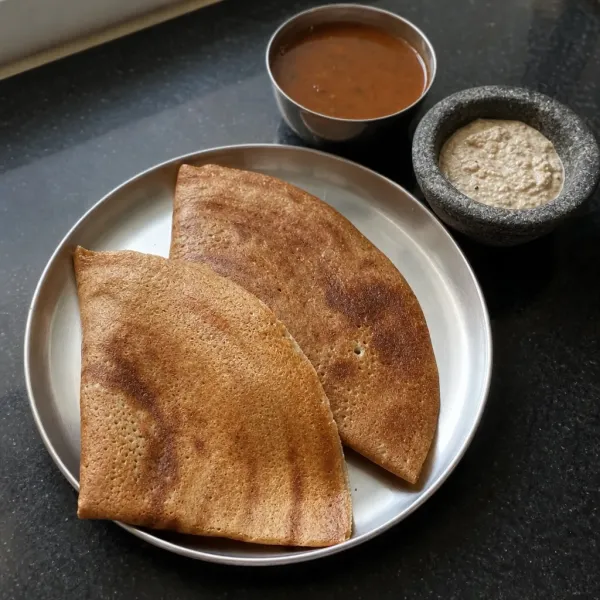
Kambu Dosai
Authentic Kongunad kambu dosai made with fermented pearl millet, raw rice and urad dal batter. Crisp, nutty and cooked in gingelly oil. Traditional h…
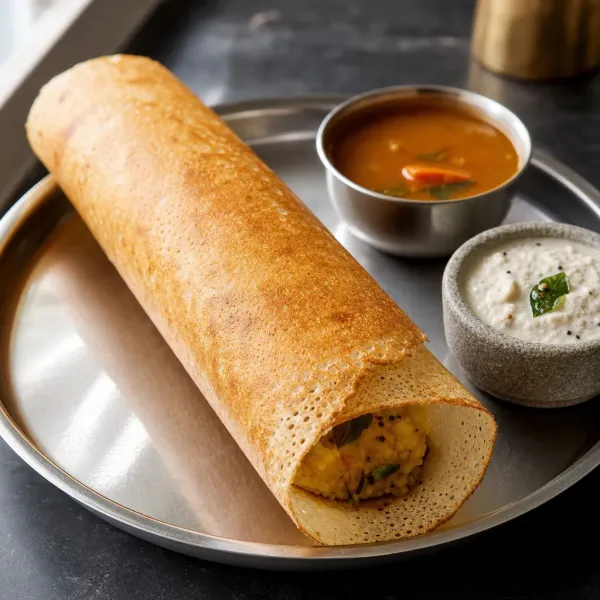
Masala Dosa with Potato Masala
Traditional Udupi-style masala dosa with a dry potato masala filling. Fermented rice and urad dal batter, cooked crisp on one side only.
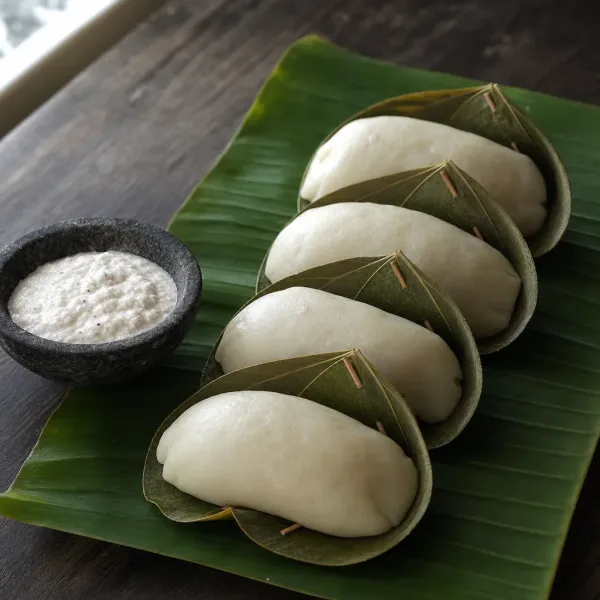
Kotte Kadubu
Traditional Tulu Nadu recipe for Kotte Kadubu: soft steamed rice dumplings cooked in pinned jackfruit leaf cones, eaten with coconut chutney.
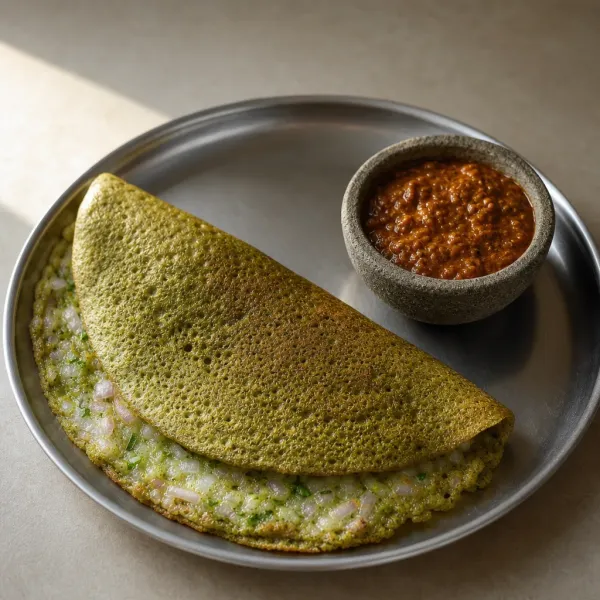
Pesarattu
Traditional Andhra pesarattu made with whole green gram, ginger and cumin. No fermentation, no rice flour. Served with allam chutney.
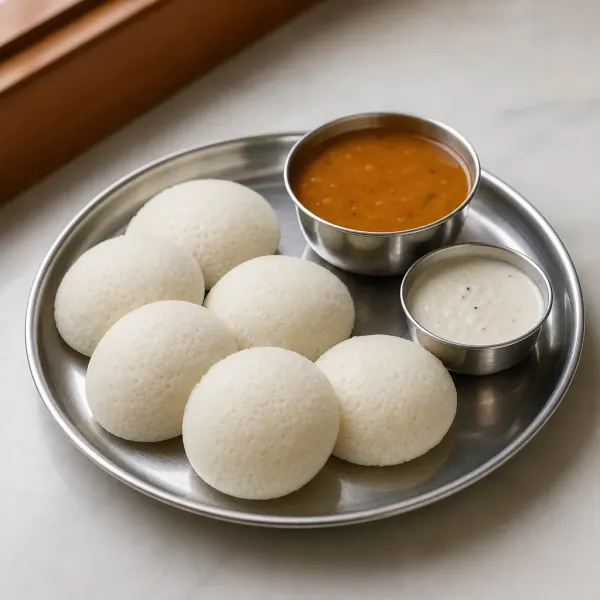
Idli
Authentic Tamil Iyer idli recipe with correct rice-to-urad ratio, wet-grinding method, and full fermentation guide. Soft, pale, and light every time.
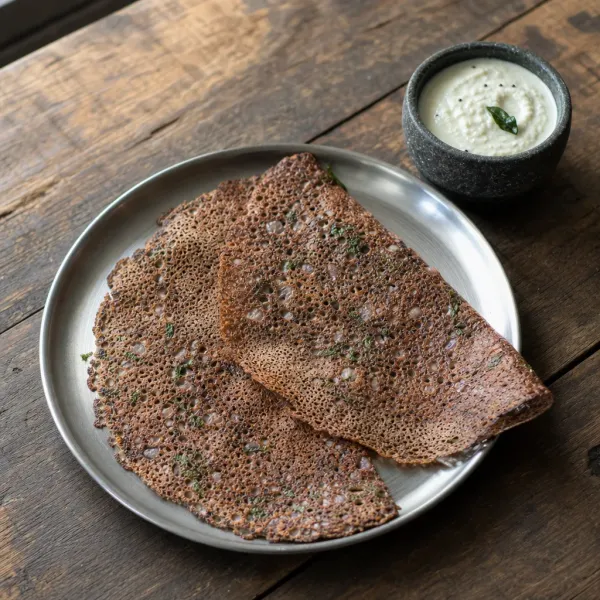
Ragi Dosa (Finger Millet Dosa)
Traditional Karnataka ragi dosa made with finger millet flour, rice flour, shallots and cumin. Quick, no-ferment, weekday breakfast recipe.