

Idli Recipe
Malayalam ഇഡ്ഡലിTamil இட்லிKannada ಇಡ್ಲಿTelugu ఇడ్లీ
- Prep20 min
- Soak / ferment20 hr
- Cook40 min
- Serves4
- DifficultyMedium
- DietVegan
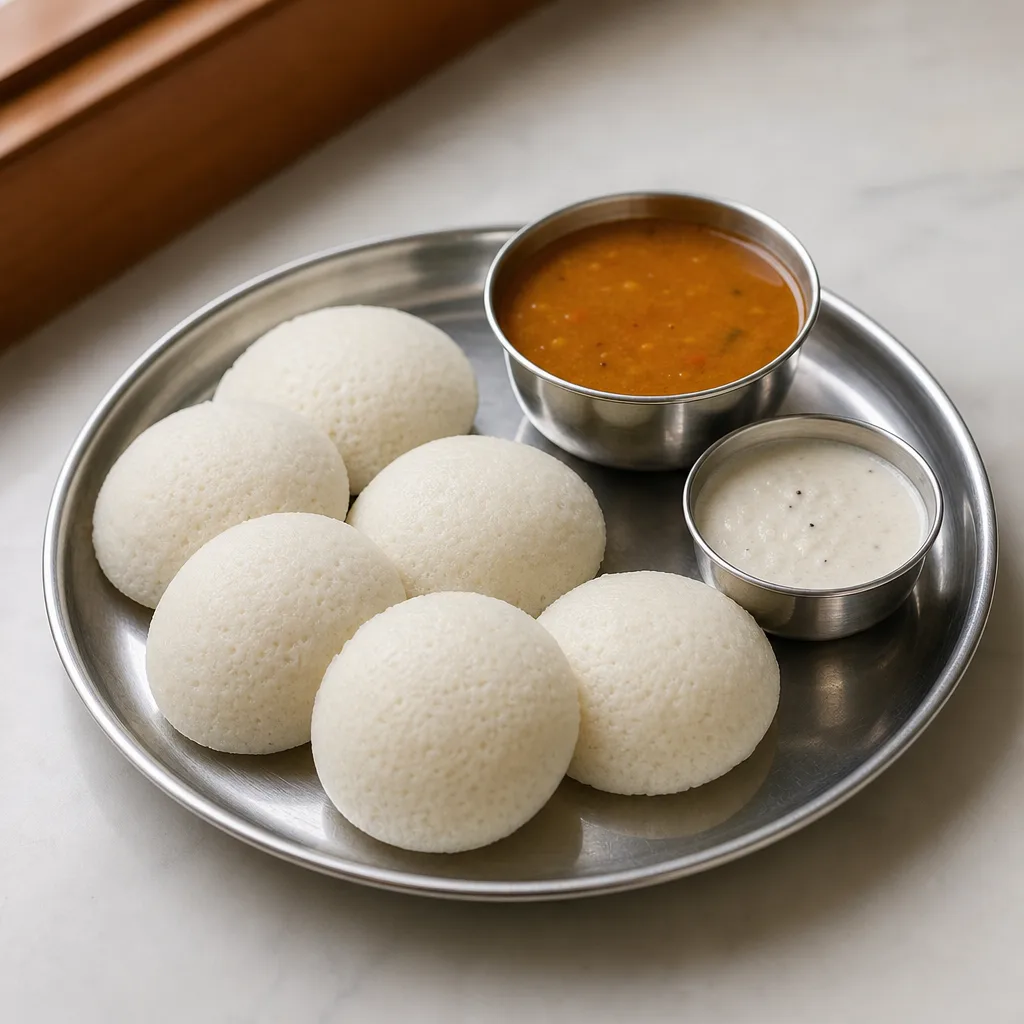
Idli belongs to the Tamil kitchen as firmly as anything can belong anywhere. In Iyer households it is the default breakfast, eaten most mornings without occasion or ceremony. The batter is ground the evening before or sometimes the morning before that, left to ferment overnight, and steamed fresh before anyone sits down to eat.
The ratio of rice to urad dal is the one thing households argue about. Many Iyer cooks use four parts idli rice to one part whole white urad dal, and they will tell you that is the only correct ratio. Others use three to one and get a slightly denser idli they prefer with sambar. What everyone agrees on is that the urad must be soaked separately from the rice, ground separately, and folded together only at the end. Grinding them together is the shortcut that costs you the texture.
Fermentation is the step that cannot be rushed. In Chennai in summer the batter is ready in eight hours. In a cold kitchen in the hill districts it can take eighteen. You know it is ready when it has roughly doubled, smells pleasantly sour, and has a web of small bubbles across the surface. An under-fermented batter gives flat, dense idlis that stick to the mould. An over-fermented one is too sour and collapses after steaming. Both are recognisable immediately.
Ingredients (serves 4)
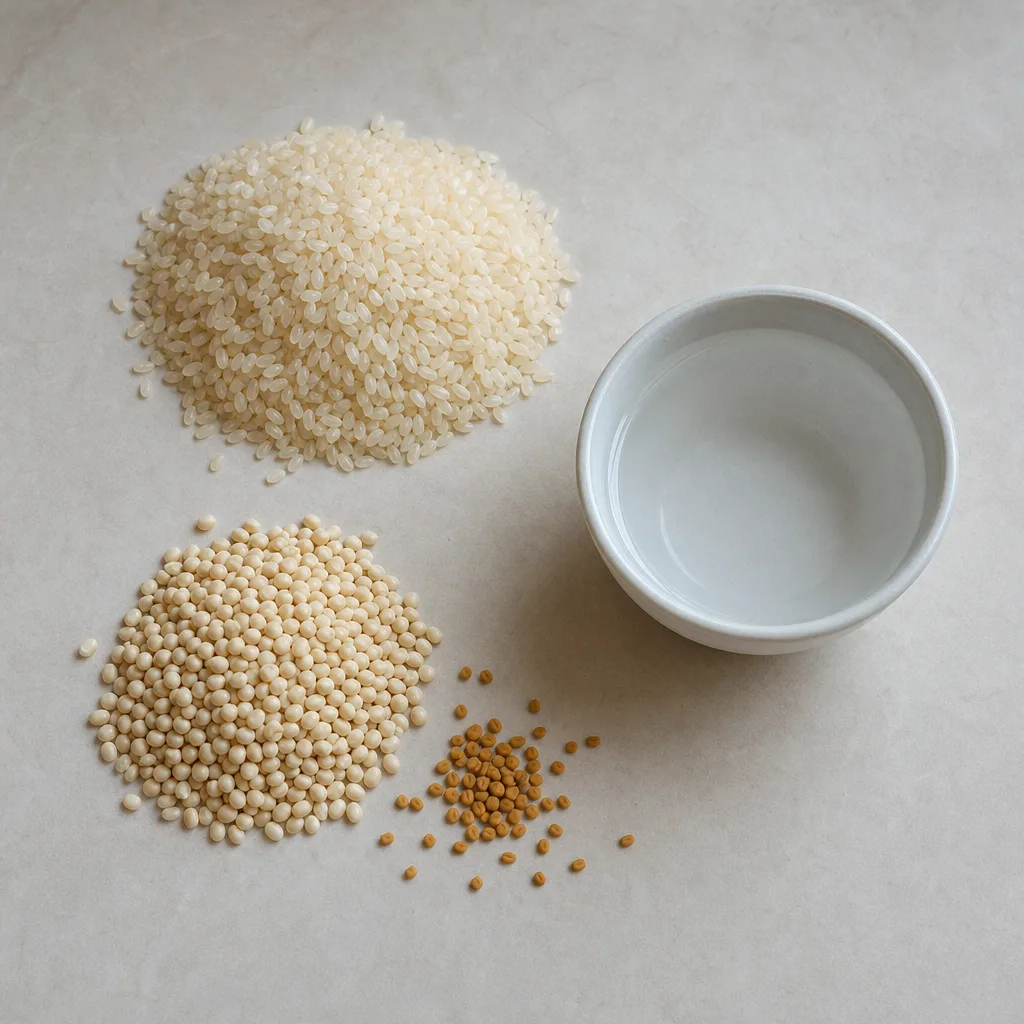
For the batter
Method
Soak the rice and dal separately
Rinse the idli rice two or three times until the water runs mostly clear, then cover with plenty of cold water and leave to soak for 4 to 5 hours. In a separate bowl, rinse the urad dal and fenugreek seeds together, then cover with cold water and soak for the same time. Keep the two bowls apart; they must not mix at this stage. The dal will swell noticeably and the water will turn slightly milky.
Grind the urad dal first
Drain the urad and fenugreek, reserving the soaking liquid. Transfer to a wet grinder or a powerful stone grinder and begin grinding with very little water, adding it a tablespoon at a time. Grind for 20 to 25 minutes, stopping to scrape down the sides. The finished batter should be very white, completely smooth, and light enough to float a small ball of it in a bowl of water. It will have increased in volume. This aeration is what makes idli soft; do not rush this step.
Grind the rice
Drain the soaked rice and grind it in the same grinder (rinsed quickly) with a little water. The rice batter should be smooth but with just the faintest graininess when you rub it between your fingers, coarser than the urad batter. This takes about 15 minutes. It should not be as fluffy as the urad batter; that is correct.
Combine the batters
Scrape both batters into a large vessel, at least twice the volume of the combined batter, because it will rise. Fold the two batters together with your clean hand or a large spoon until they are evenly combined. Do not beat or whisk; you want to keep the air in the urad batter. The combined batter should be thick enough to coat a ladle and fall off in a slow ribbon.
Ferment overnight
Cover the vessel loosely with a lid or a plate, leaving a gap for air. Leave it in the warmest part of your kitchen. In a South Indian summer, 8 to 10 hours is enough. In a cooler kitchen, allow 14 to 18 hours. The batter is ready when it has risen by at least half its original volume, smells gently sour, and has a bubbly, slightly domed surface. If you press it lightly with a finger, it should spring back slowly. Do not stir it yet.
Season the batter
Once fermentation is complete, add salt and fold it in gently. Taste the batter; it should be just slightly salty because it will dilute a little during steaming. Do not add water unless the batter has thickened overnight into something that will not pour; in that case add a few tablespoons of water and fold in.
Prepare the steamer and moulds
Fill the steamer pot with water to a depth of about 5 cm and bring it to a full boil over high heat. Grease the idli moulds lightly with a few drops of oil wiped across each cup with your finger or a small piece of cloth. Cold or dry moulds cause sticking.
Fill the moulds
Ladle the batter into each mould cup, filling to about three-quarters full. Do not fill to the top; the idli needs room to rise slightly during steaming. Tap the stand gently on the counter once to settle the batter.
Steam the idlis
Lower the filled idli stand into the steamer, cover with a tight lid, and steam over medium-high heat for 10 to 12 minutes. Do not lift the lid during this time. The idli is done when a wet knife or skewer inserted in the centre comes out clean. The surface will look set and matte, not shiny or wet. They will be uniformly pale throughout; there is no browning anywhere.
Rest and unmould
Turn off the heat and leave the idlis in the covered steamer for 2 minutes. Then remove the stand and let it sit for another minute before unmoulding. Dip a spoon or a blunt knife in water and run it around the edge of each idli. They should release cleanly. If they are sticking, the batter was under-fermented or the moulds were not oiled. Serve immediately; idli softens further as it cools but is best eaten hot.
How to serve
Coconut chutney, tomato chutney, and sambar. In Iyer households a small pool of ghee is sometimes placed in the hollow of each idli at the table. Idli podi (gun powder) mixed with sesame oil is another common accompaniment.
Served with: Coconut chutney, tomato chutney, and sambar. In Iyer households a small pool of ghee is sometimes placed in the hollow of each idli at the table. Idli podi (gun powder) mixed with sesame oil is another common accompaniment.
Cook's tips
Wet grinder versus mixer-grinder
A traditional wet grinder with stone rollers gives a far better urad batter than a mixer-grinder because the stones aerate the dal without heating it. A mixer-grinder works but grinds in shorter bursts to prevent the motor from heating the batter, which kills fermentation. Grind in 30-second bursts with pauses.
Cold-climate fermentation
In a cold kitchen, place the covered vessel inside your oven with only the oven light on, or wrap it in a thick towel. Some cooks add a tablespoon of cooked rice while grinding the rice batter to help fermentation in cold weather; this is a genuine household practice, not a shortcut.
The rice to use
Idli rice is a specific short-grain parboiled rice sold by that name. Raw rice (pachari) gives a different texture and is used in some Kerala versions. Do not use basmati or regular long-grain rice; they will not ferment or steam the same way.
Storing leftover batter
Once fermented and salted, the batter keeps in the refrigerator for two days. After that it becomes too sour for idli but is still good for dosa. Bring it back to room temperature before steaming, otherwise the idlis will be dense.
Flat or dense idlis
The two most common causes are under-fermented batter and urad dal that has been stored too long and lost its ability to aerate. Fresh urad dal, bought within the season, makes a visible difference.
Regional variations
Udupi idli (Karnataka) uses a slightly different rice-to-urad ratio and is often steamed in a brass vessel; Kerala households sometimes add a small amount of cooked rice to soften the batter; Kanchipuram idli (Tamil Nadu) is seasoned with pepper, cumin and ghee before steaming.
Glossary
- Idli arisi இட்லி அரிசி
- Short-grain parboiled rice sold specifically for idli and dosa batter; different from raw rice or long-grain varieties.
- Urad dal உளுந்து
- Skinned whole black gram; the dal that aerates and binds the idli batter when ground fine.
- Vendhayam வெந்தயம்
- Fenugreek seeds; added to the urad soak to assist fermentation and add slight softness to the finished idli.
- Idli podi இட்லி பொடி
- A dry spiced lentil powder, also called gun powder, mixed with oil and eaten as a condiment alongside idli.
Two things decide whether these idlis succeed: the urad batter must be ground long enough to become genuinely white, airy, and light, and the batter must ferment fully before you salt and steam it. Get those two right and the rest follows.
More Breakfast & Tiffin recipes
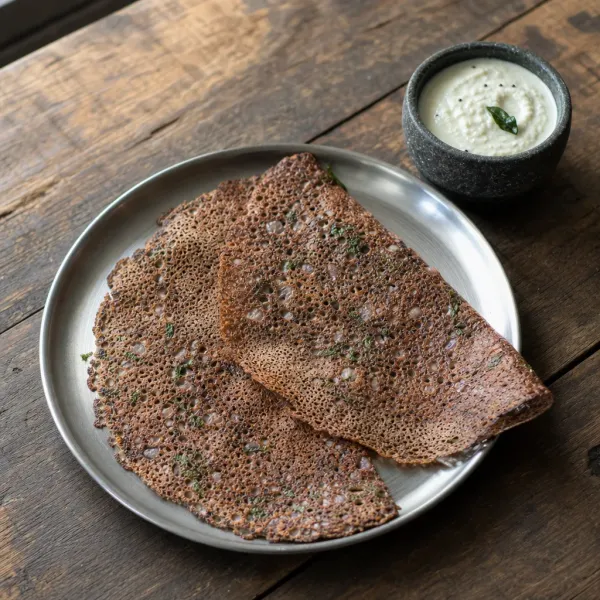
Ragi Dosa (Finger Millet Dosa)
Traditional Karnataka ragi dosa made with finger millet flour, rice flour, shallots and cumin. Quick, no-ferment, weekday breakfast recipe.
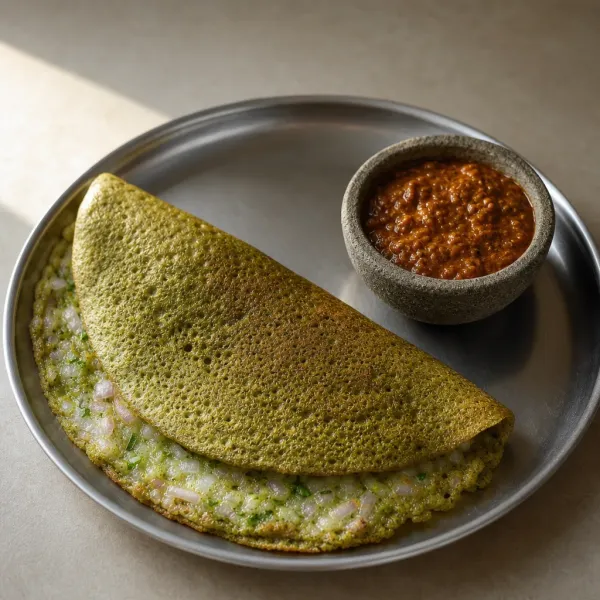
Pesarattu
Traditional Andhra pesarattu made with whole green gram, ginger and cumin. No fermentation, no rice flour. Served with allam chutney.
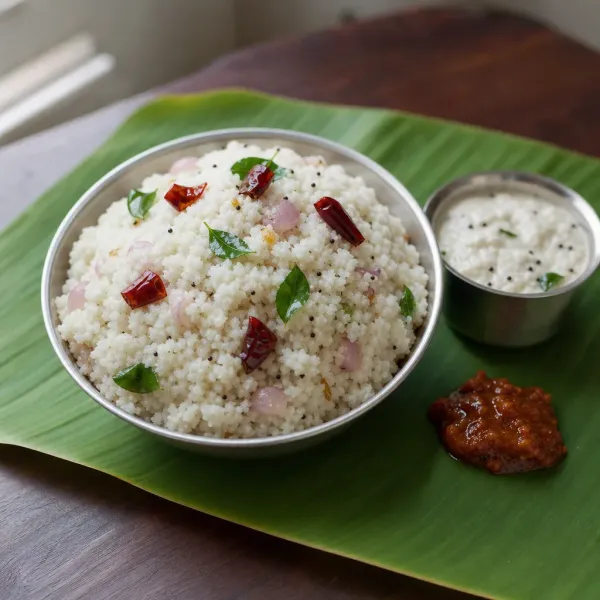
Arisi Upma (Broken Rice Upma)
Traditional Kongunad Iyer arisi upma made with dry-roasted broken raw rice, shallots, peppercorns and ghee. Step-by-step Tamil Nadu tiffin recipe.
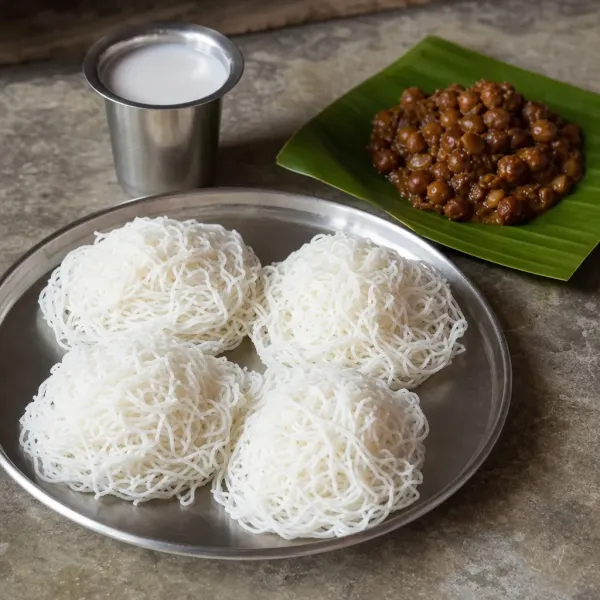
Idiyappam
Soft Kerala string hoppers made with fine rice flour and boiling water, pressed fresh and steamed. Traditional household method with cook's notes.
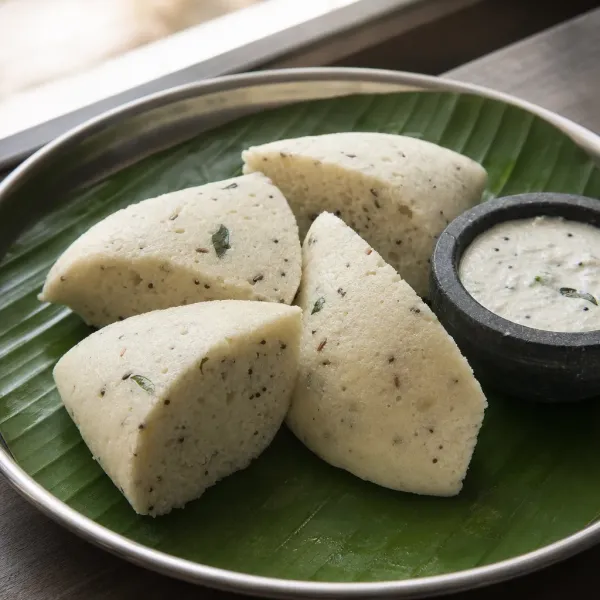
Kanchipuram Idli
Traditional Kanchipuram idli from the Iyer kitchen: fermented rice and urad dal batter tempered with ghee, black pepper, cumin and ginger, steamed fi…
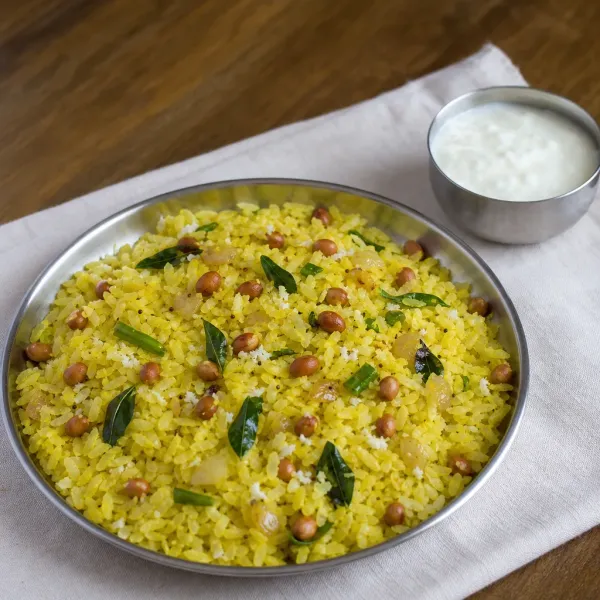
Avalakki Oggarane
Traditional Karnataka avalakki oggarane recipe — medium poha tempered with mustard, shallots, curry leaves and groundnuts. Ready in 20 minutes.