

Arisi Upma (Broken Rice Upma) Recipe
Malayalam അരിസി ഉപ്മTamil அரிசி உப்மாKannada ಅಕ್ಕಿ ಉಪ್ಮಾTelugu అరిసి ఉప్మా
- Prep15 min
- Cook35 min
- Serves4
- DifficultyEasy
- DietVegetarian
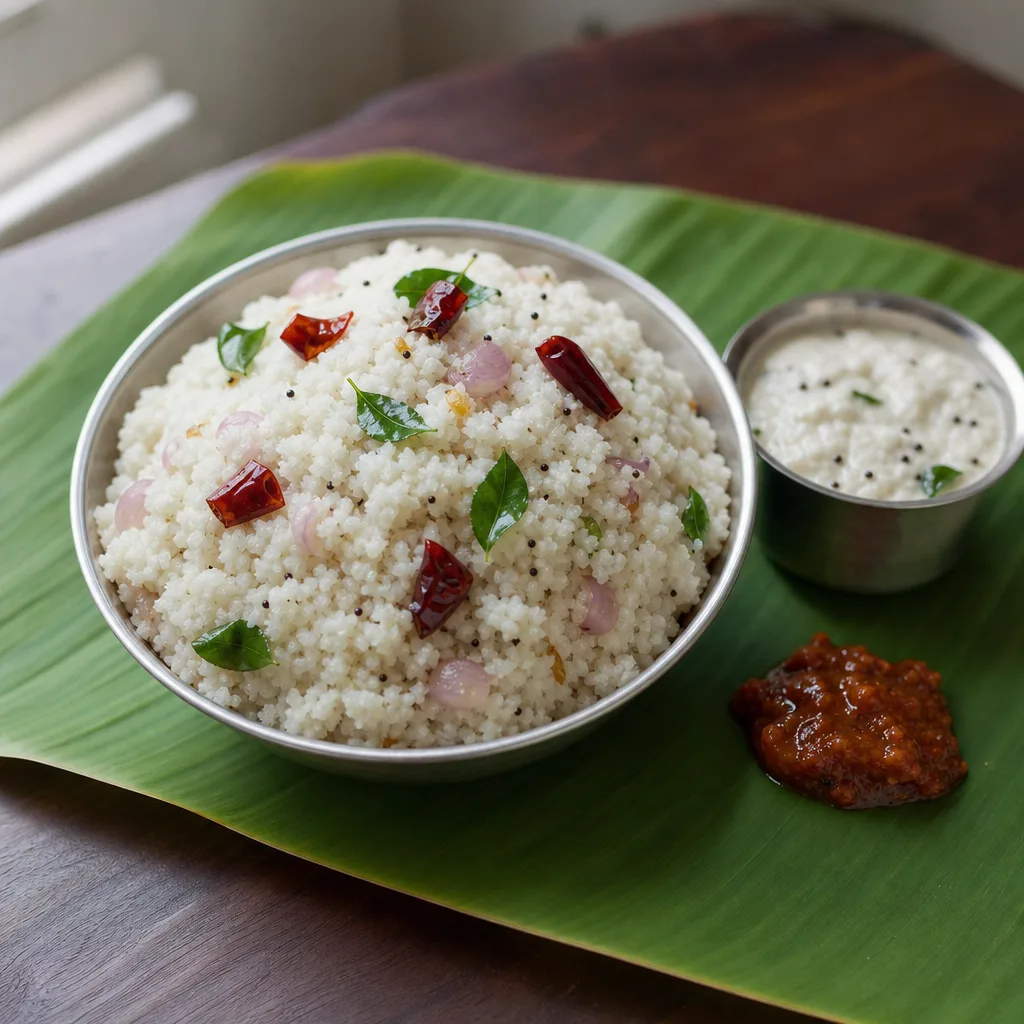
Arisi upma is made from raw rice that is dry-roasted and then coarsely broken, giving a porridge-like texture that is nothing like the semolina upma most people picture when they hear the name. The grain stays slightly separate and has a faint nuttiness from the roasting. It is thick enough to hold its shape on a banana leaf but soft enough to eat with a spoon.
In Kongunad Iyer homes this is a tiffin dish, eaten in the late morning or as an evening meal rather than at lunch. It is not a hurried dish. The rice is roasted slowly until it smells of warm grain, then cooled and broken in a stone grinder or a mixer to a coarse rava consistency. The tempering is simple: mustard, dried red chillies, curry leaves, a few whole peppercorns, and a generous knob of ghee or a pour of coconut oil depending on the household.
The water ratio is the one thing that trips people up. Too little and the centre stays hard; too much and it turns into a paste. The rice must be stirred in gradually and the flame kept low once the lid goes on. Households vary on whether they cover it fully or leave a crack; covering it fully and not lifting the lid for the first ten minutes gives the most even result.
Ingredients (serves 4)
For the broken rice
For the tempering and cooking
Method
Dry-roast the rice
Heat a heavy kadai or thick-bottomed pan over medium-low flame. Add the raw rice with nothing else and spread it in an even layer. Stir continuously with a flat ladle. After about 8 to 10 minutes the rice will turn from white to a pale cream colour and give off a warm, nutty smell, like toasted grain. A few grains may just begin to colour at the edges; that is correct. Do not let it brown. Take it off the heat and spread it on a plate to cool completely.
Break the rice to a coarse rava
Once the rice is fully cool, transfer it to a mixer jar. Pulse in short 2-second bursts, four or five times. You want a coarse, uneven texture — some grains broken into thirds, some into halves, a little fine dust. It should look like coarse semolina with visible broken pieces. Do not run the mixer continuously or it will become flour. Tip it into a bowl and check: if you press a pinch between your fingers it should feel gritty, not powdery.
Bring the water to a full boil
Measure 750 ml of water into a separate vessel and bring it to a rolling boil. Keep it on the back burner so it is ready the moment you need it. Adding cold water to the tempered pan will drop the temperature unevenly and can make the upma lumpy.
Make the tempering
In the same kadai, heat the ghee over medium flame. When it is hot but not smoking, add the mustard seeds and let them pop fully — this takes about 30 seconds. Add the dried red chillies and whole peppercorns and let them sizzle for 15 seconds. The peppercorns will puff very slightly. Add the curry leaves carefully as they will splutter.
Cook the shallots and aromatics
Add the halved shallots, slit green chillies and grated ginger to the tempering. Stir and cook over medium flame for 3 to 4 minutes until the shallots are translucent and softened at the edges. They should not brown. The ginger should lose its raw smell.
Add the boiling water and salt
Pour the 750 ml of boiling water into the kadai carefully. Add salt now and stir. Bring the water back to a full boil over high flame. Taste the water — it should be slightly more salty than you want the finished dish to be, because the rice will absorb the salt as it cooks.
Stream in the broken rice
Reduce the flame to medium-low. Add the broken rice in a slow, steady stream with one hand while stirring continuously with the other. Do not dump it all in at once or lumps will form immediately. Keep stirring as you pour so every grain is moistened. The mixture will thicken quickly once all the rice is in.
Cover and cook on a low flame
Once all the rice is in and stirred through, reduce the flame to its lowest setting. Cover the kadai with a lid. Do not lift it for the first 10 minutes. The steam inside is doing the work. If your stove runs hot, slide a tawa under the kadai as a heat diffuser.
Check and finish
After 10 minutes, lift the lid and check. The surface should look dry and the rice should have swollen and softened. Press a small amount between your fingers — it should feel cooked through with no hard centre. If it still feels gritty in the middle, add 2 to 3 tbsp of hot water, stir once, cover again and cook for another 5 minutes. When it is done, the upma will leave the sides of the pan cleanly.
Rest before serving
Turn off the flame and let the upma sit, covered, for 5 minutes. This resting time lets the grains settle and makes it easier to serve in a clean mound. Serve hot directly from the pan.
How to serve
Coconut chutney and a small mound of pickle (manga oorugai or lime pickle). In many Iyer homes a ripe banana is placed alongside. Some households serve it with a thin sambar poured over the top.
Served with: Coconut chutney and a small mound of pickle (manga oorugai or lime pickle). In many Iyer homes a ripe banana is placed alongside. Some households serve it with a thin sambar poured over the top.
Cook's tips
Grinding ahead
You can roast and grind the rice in a larger batch and store the broken rice in an airtight tin for up to two weeks. This makes weekday morning cooking much faster. Make sure the rice is completely cool before storing or moisture will make it clump.
The water ratio
The 1:2.5 ratio (rice to water by volume) gives a firm, slightly grainy texture. If your family prefers a softer, more porridge-like consistency, go up to 1:3. Do not go below 1:2 or the centre will stay hard.
Ghee versus coconut oil
Ghee gives a richer flavour and is the Iyer preference. Coconut oil gives a lighter result with a faint coconut note. Do not use refined vegetable oil — the tempering will taste flat.
Lumps forming
Lumps happen when the rice is added too quickly or the water is not at a full boil. If lumps form, press them against the side of the pan with the back of the ladle while stirring. They will break down as long as the flame is low and there is enough moisture.
Parboiled rice
Do not use parboiled (puzhungal) rice here. It behaves differently when roasted and broken, and the texture of the finished dish will be gluey rather than grainy. Only raw white rice gives the correct result.
Regional variations
Vellalar and Mudaliar versions often add a small measure of chana dal to the tempering; some households in the Kaveri delta use raw rice soaked only briefly and ground coarser; a Thanjavur variant finishes with grated fresh coconut stirred in at the end.
Glossary
- Pacharisi பச்சரிசி
- Raw white rice, as opposed to parboiled rice; used in Tamil Nadu for certain tiffin dishes, batters and sweets.
- Chinna vengayam சின்ன வெங்காயம்
- Small shallots; the standard allium in Tamil cooking, sharper and more fragrant than large onions.
- Kadai கடாய்
- A deep, round-bottomed or flat-bottomed iron or steel wok used across South India for frying and cooking.
- Tawa தவா
- A flat iron griddle; placed under a pan to diffuse heat on a gas flame that runs too hot.
- Manga oorugai மாங்காய் ஊறுகாய்
- Raw green mango pickle, typically made with gingelly oil and mustard; a common accompaniment to Tamil tiffin dishes.
Two things decide this dish: the coarseness of the broken rice, and the water temperature when it goes in. Grind the rice too fine and you get a paste; add cold water and you get lumps. Get both of those right and the upma will be grainy, fragrant from the roasting, and firm enough to serve in a clean mound.
More Breakfast & Tiffin recipes
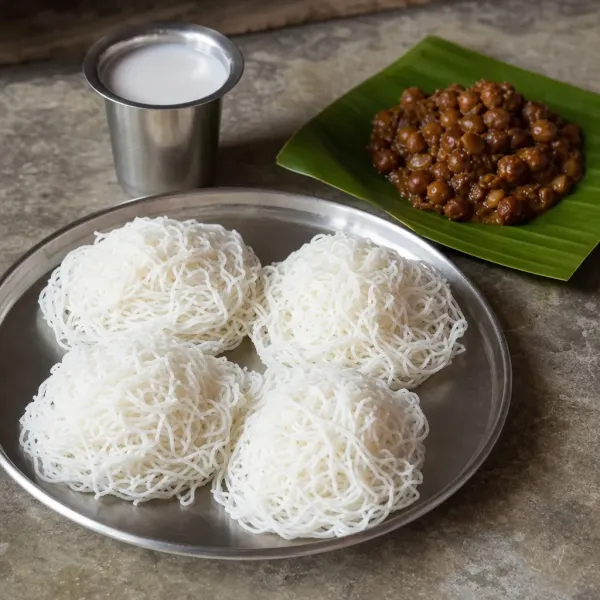
Idiyappam
Soft Kerala string hoppers made with fine rice flour and boiling water, pressed fresh and steamed. Traditional household method with cook's notes.
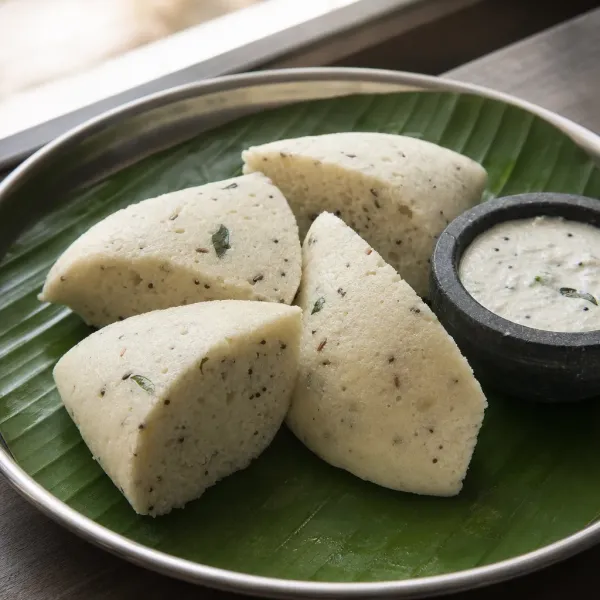
Kanchipuram Idli
Traditional Kanchipuram idli from the Iyer kitchen: fermented rice and urad dal batter tempered with ghee, black pepper, cumin and ginger, steamed fi…
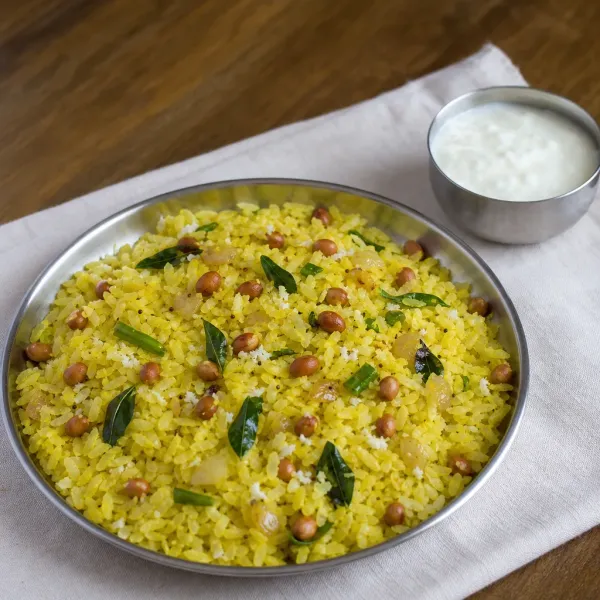
Avalakki Oggarane
Traditional Karnataka avalakki oggarane recipe — medium poha tempered with mustard, shallots, curry leaves and groundnuts. Ready in 20 minutes.
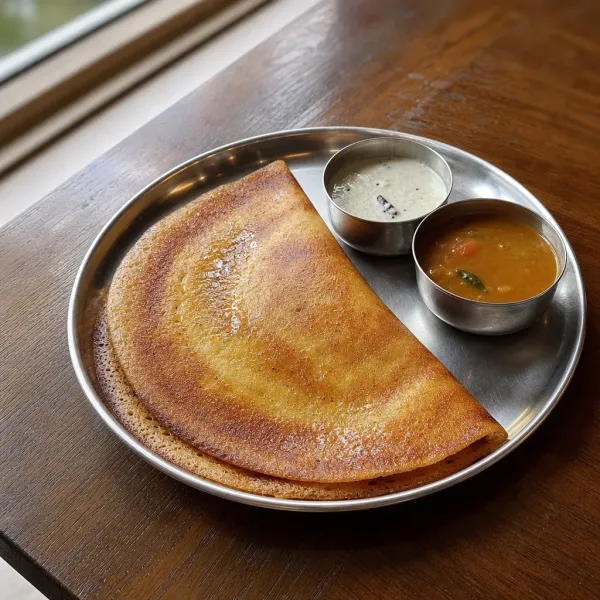
Ghee Roast Dosa
Traditional Udupi ghee roast dosa with fermented rice-urad batter, cooked on one side on a hot iron tawa with generous cow's ghee until deep golden.
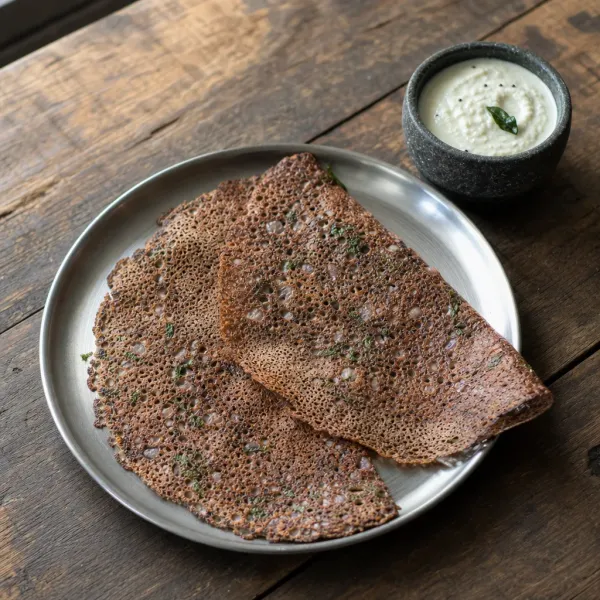
Ragi Dosa (Finger Millet Dosa)
Traditional Karnataka ragi dosa made with finger millet flour, rice flour, shallots and cumin. Quick, no-ferment, weekday breakfast recipe.
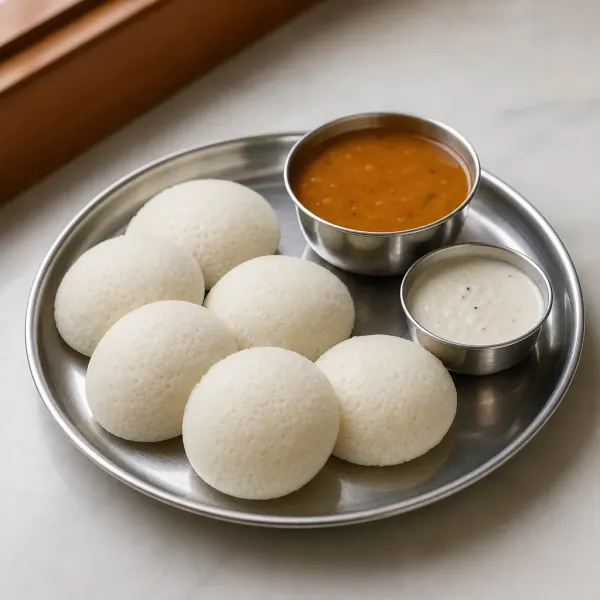
Idli
Authentic Tamil Iyer idli recipe with correct rice-to-urad ratio, wet-grinding method, and full fermentation guide. Soft, pale, and light every time.