

Idiyappam Recipe
Malayalam ഇടിയപ്പംTamil இடியாப்பம்Kannada ಇಡಿಯಾಪ್ಪಂTelugu ఇడియాప్పం
- Prep20 min
- Cook40 min
- Serves4
- DifficultyMedium
- DietVegan
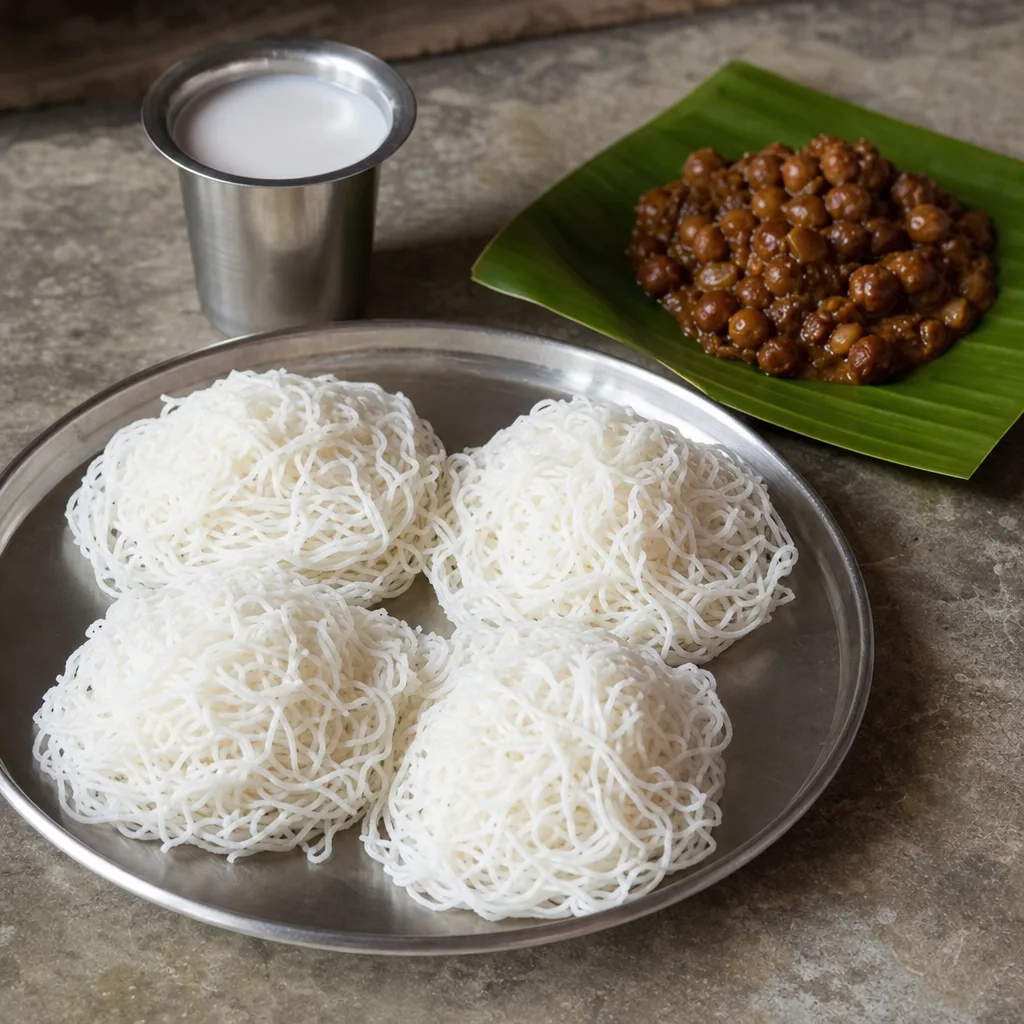
Idiyappam is a morning dish across Kerala, pressed fresh every day and eaten almost immediately after steaming. The name comes from the pressing action — idikka, to press — and the result is a nest of fine white rice threads, soft all the way through, with no colour and no crust anywhere. It is as pale after steaming as it was going into the steamer.
In Travancore households the flour is usually made at home from raw rice (pachari) that is soaked, dried and then dry-roasted to a very faint warmth before grinding. Bought rice flour works and most households now use it on weekday mornings, but the texture from home-ground flour is noticeably finer. The water used to bind the flour is always boiling, and that is the step that cannot be rushed.
How many nests per person varies by appetite and by what is served alongside. Four to five nests is a normal serving. The press itself — the idiyappam nazhi — is a brass or steel cylinder with a plate of fine holes. Some families have used the same brass press for three generations. The size of the hole plate determines how fine the threads are; finer threads cook faster and feel softer.
Ingredients (serves 4)
For the dough
Method
Prepare the steamer
Fill a large steamer or idli pot with enough water to steam for 20 to 25 minutes without running dry. Bring it to a full boil over high heat. Grease the idiyappam plates or idli plates lightly with a very thin smear of coconut oil so the nests lift off cleanly. Have them ready before you mix the dough, because the dough must be pressed while it is still warm.
Boil the water
Measure 350 ml of water into a small saucepan. Add the salt and the teaspoon of coconut oil. Bring it to a rolling boil. The oil keeps the dough from sticking to the press and gives the finished idiyappam a faint richness without making it heavy.
Mix the dough
Put the rice flour in a wide, deep vessel — a large uruli or a heavy-bottomed bowl. Pour the boiling water over the flour in a slow, steady stream, stirring constantly with a wooden spoon or the back of a ladle. Stop when the dough comes together into a soft, non-sticky mass. It should not crumble and it should not be wet enough to stick to your palm. You may not need all the water, or you may need a few extra spoonfuls — this depends on the flour. Let it cool just enough to handle, two or three minutes at most. Do not let it cool completely or it will stiffen and tear when pressed.
Test the dough
Pinch off a small piece and roll it between your palms. It should form a smooth cylinder without cracking at the edges. If it cracks, the dough is too dry — wet your hands very lightly and knead for a minute. If it sticks, dust with a pinch of dry flour and knead again. The right dough feels like soft, warm clay.
Load the press
Fit the fine-hole plate onto the idiyappam nazhi. Tear off a piece of dough roughly the size of a lime and press it firmly into the cylinder, packing it down so there are no air pockets. Air pockets cause the threads to break mid-press. Fill the cylinder about two-thirds full.
Press the nests
Hold the press over a greased plate and squeeze or turn the handle in steady, even circles to form a loose nest of threads, roughly 8 to 9 cm across. Do not press too fast or the threads pile up in the centre and steam unevenly. Aim for an even, open nest with threads that are not matted together. Fill each plate with as many nests as will fit without touching.
Steam the first batch
Place the plates in the steamer over the already-boiling water. Cover tightly and steam on high heat for 5 to 7 minutes. The nests are ready when they turn from chalky white to a translucent, bright white and no longer look raw in the centre. Do not lift the lid before 5 minutes or steam escapes and the nests cook unevenly.
Remove and continue
Lift the plates out carefully — the steam is fierce. Let them sit for 30 seconds before you try to lift the nests with a thin spatula or your fingers. They release cleanly from a well-greased plate. Transfer to a serving vessel and cover with a clean cloth to keep them warm and moist while you press and steam the remaining batches.
Press while the dough is warm
Work through all the dough while it is still warm. If the dough in the press cools and stiffens between batches, wrap the cylinder briefly in a warm damp cloth for a minute, or knead the remaining dough with a few drops of warm water. Cold dough tears and produces uneven threads.
How to serve
Sweetened coconut milk (thenga paal, made thin and poured over the nests at the table); kadala curry (black chickpea curry); ripe banana; or egg curry in households that eat eggs. In Malabar, it is sometimes eaten with a thin chicken or mutton stew. The coconut milk, curry, and banana are accompaniments and are not part of this recipe.
Served with: Sweetened coconut milk (thenga paal, made thin and poured over the nests at the table); kadala curry (black chickpea curry); ripe banana; or egg curry in households that eat eggs. In Malabar, it is sometimes eaten with a thin chicken or mutton stew. The coconut milk, curry, and banana are accompaniments and are not part of this recipe.
Cook's tips
Home-ground flour
Soak raw pachari for 4 hours, drain and spread on a clean cloth to dry for an hour — not bone dry, just surface dry. Dry-roast in a heavy pan on low heat, stirring constantly, until the grains feel warm to the touch and smell faintly of toasted rice but have not coloured at all. Cool completely, then grind to a fine powder. Sieve before use. The texture is noticeably smoother than most shop-bought flour.
Flour matters more than anything
Coarse rice flour produces threads that feel grainy and break easily. If your flour feels gritty between your fingers, pass it through a fine sieve or grind it briefly in a dry blender before using.
Water temperature is not negotiable
Lukewarm or room-temperature water does not gelatinise the starch properly. The dough will feel right but the steamed threads will be gummy in the centre and rubbery at the edge. The water must be at a full boil when it hits the flour.
Storing leftover dough
Idiyappam dough does not keep well. Press and steam all of it in one session. Steamed nests can be covered and kept at room temperature for two to three hours without drying out, but they are best eaten within 30 minutes of steaming.
Cleaning the press
Soak the press in warm water immediately after use. Dried rice dough in the fine holes is very hard to remove. Do not use soap on a brass press; rinse with hot water and dry thoroughly to prevent rust on steel parts.
Regional variations
Tamil Nadu version (especially Kongunad and Tirunelveli) uses a similar press but the rice flour is sometimes roasted differently and the nests are slightly thicker; Sri Lankan string hoppers (indi appa) are a close cousin made with red or white rice flour and eaten with coconut sambol and dhal.
Glossary
- Pachari പച്ചരി
- Raw (unparboiled) white rice, the everyday rice used for batters and flour in Kerala.
- Idiyappam nazhi ഇടിയപ്പം നാഴി
- The cylindrical press with a perforated disc used to extrude string hopper nests; made in brass or steel.
- Thenga paal തേങ്ങാപ്പാൽ
- Coconut milk; the thin second extraction is poured over idiyappam as an accompaniment.
- Kadala curry കടലക്കറി
- A spiced curry of black chickpeas (kala chana), the most common savoury accompaniment to idiyappam in Kerala.
- Uruli ഉരുളി
- A wide, shallow brass or bell-metal vessel used for cooking and mixing in Kerala kitchens.
Two things decide whether idiyappam works: the fineness of the flour and the temperature of the water. Get both right and the dough presses smoothly, the threads hold their shape in the steamer, and the finished nests are tender all the way through. Rush the water temperature or use coarse flour and no amount of care with the press will rescue the result.
More Breakfast & Tiffin recipes
Kanchipuram Idli
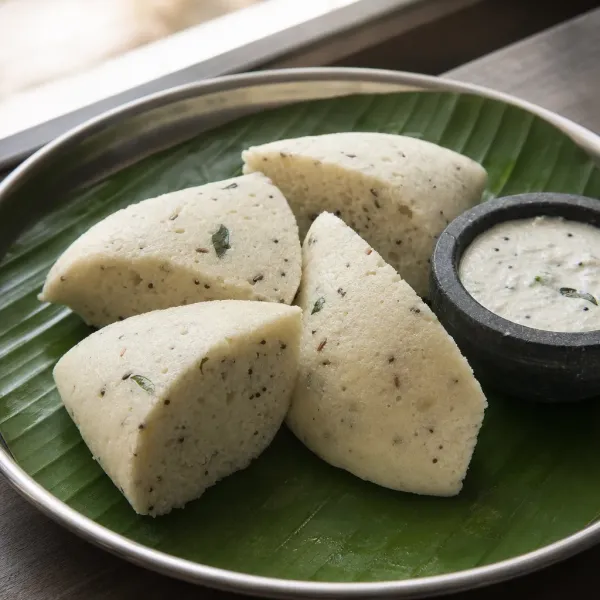
Traditional Kanchipuram idli from the Iyer kitchen: fermented rice and urad dal batter tempered with ghee, black pepper, cumin and ginger, steamed fi…
Avalakki Oggarane
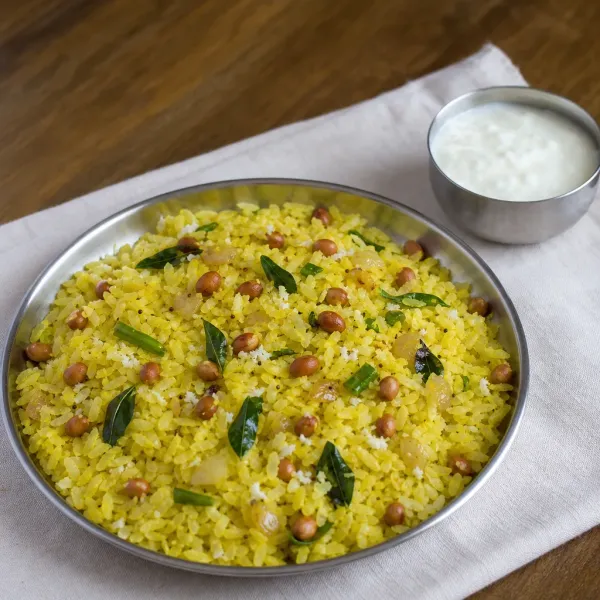
Traditional Karnataka avalakki oggarane recipe — medium poha tempered with mustard, shallots, curry leaves and groundnuts. Ready in 20 minutes.
Arisi Upma (Broken Rice Upma)
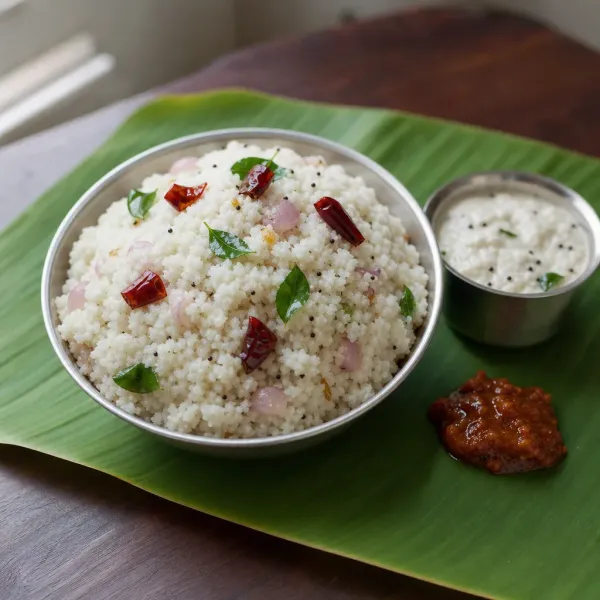
Traditional Kongunad Iyer arisi upma made with dry-roasted broken raw rice, shallots, peppercorns and ghee. Step-by-step Tamil Nadu tiffin recipe.
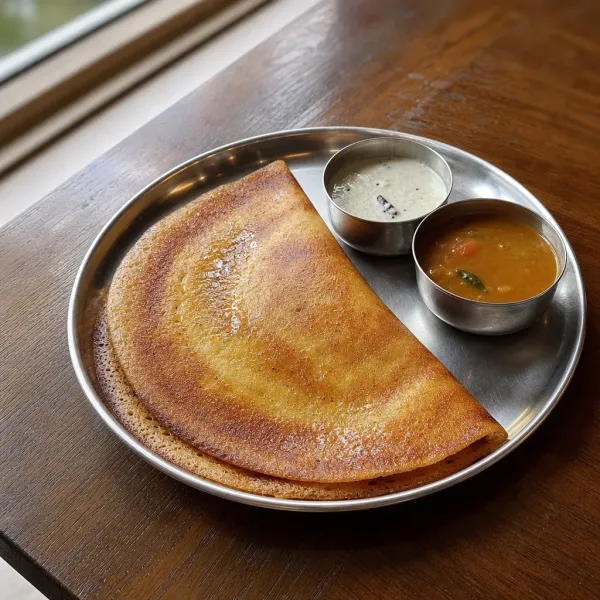
Ghee Roast Dosa
Traditional Udupi ghee roast dosa with fermented rice-urad batter, cooked on one side on a hot iron tawa with generous cow's ghee until deep golden.
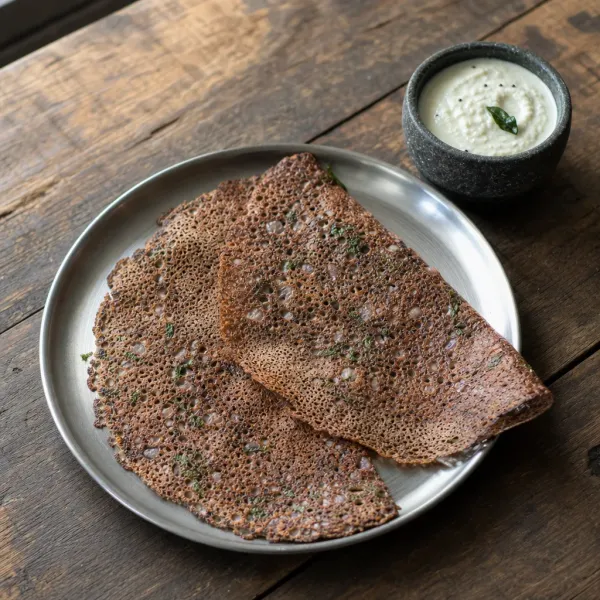
Ragi Dosa (Finger Millet Dosa)
Traditional Karnataka ragi dosa made with finger millet flour, rice flour, shallots and cumin. Quick, no-ferment, weekday breakfast recipe.
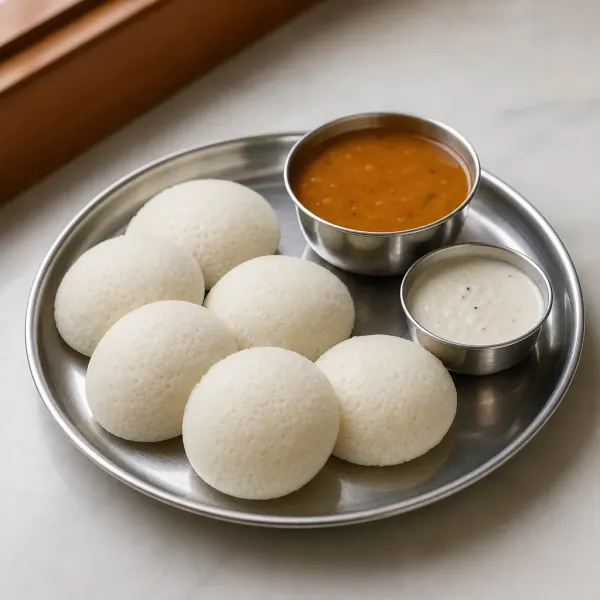
Idli
Authentic Tamil Iyer idli recipe with correct rice-to-urad ratio, wet-grinding method, and full fermentation guide. Soft, pale, and light every time.