

Ragi Dosa (Finger Millet Dosa) Recipe
Malayalam റാഗി ദോശTamil ராகி தோசைKannada ರಾಗಿ ದೋಸೆTelugu రాగి దోసె
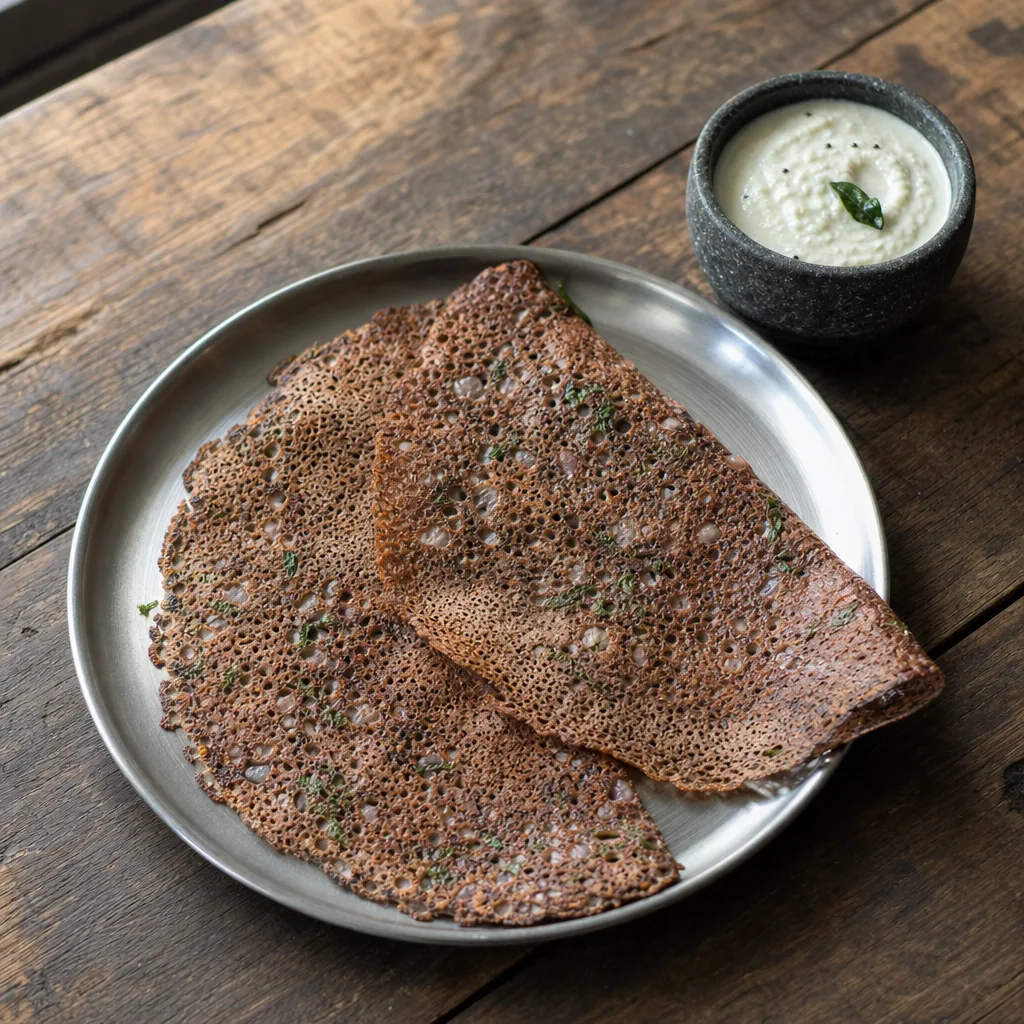
- Prep15 min
- Cook30 min
- Serves4
- DifficultyEasy
- DietVegan
In the Old Mysore belt, ragi is not a health-food trend. It is the grain that fed the region for centuries, grown on the red laterite soil of Mandya, Hassan and Tumakuru districts. This dosa is a weekday breakfast or a light supper, made quickly without soaking or fermentation. The batter comes together in minutes and the dosas go straight onto the pan.
The texture is different from a rice dosa. Ragi gives a slightly earthy, nutty flavour and a dosa that is more fragile when hot but firms up as it cools. It is thinner than a wheat dosa, not as thin as neer dosa. The edges will be lacy and brown; the centre will be cooked through but not as crisp as a plain rice dosa. Shallots, green chilli and cumin are mixed directly into the batter — this is not a plain dosa.
Households differ on the ratio of ragi flour to rice flour. Some use only ragi flour and water, which gives a darker, more intensely flavoured dosa. Adding rice flour lightens the colour to a warm reddish-brown and makes it easier to spread. The version here uses both, which is the more common household approach.
Ingredients (serves 4)
For the batter
To mix into the batter
For cooking
Method
Sift and combine the flours
Sift the ragi flour into a wide mixing bowl. Add the rice flour and salt. Stir them together dry so the salt is evenly distributed before any liquid goes in. This prevents lumps from forming around pockets of salt later.
Mix the batter
Add water a little at a time, whisking as you go. You are aiming for a batter thinner than idli batter — it should flow off a ladle in a thin, steady stream, not fall in drops. Ragi absorbs water differently than rice flour, so add the last 50 ml slowly and check the consistency. Let the batter rest for 10 minutes so the ragi flour hydrates fully.
Add the aromatics
Stir in the chopped shallots, green chillies, ginger, cumin seeds and coriander leaves. Mix well. The shallots will sink; stir again before ladling each dosa.
Heat the pan
Place a cast iron tawa or a heavy flat pan over medium-high heat. Let it heat until a drop of water flicked onto the surface evaporates immediately with a sharp sizzle. Ragi dosa needs a properly hot pan; if the pan is too cool the batter will stick and tear.
Season the pan
Rub the surface lightly with a cut shallot dipped in a few drops of oil. This helps the first dosa release cleanly. Do this only for the first dosa; after that the pan is seasoned.
Pour and spread
Reduce the heat to medium. Stir the batter, then pour one ladle (approximately 75 to 80 ml) onto the centre of the pan. Quickly spread it outward in concentric circles using the back of the ladle. Work fast — ragi batter sets faster than rice batter and you have only a few seconds to spread it. Aim for a dosa about 20 to 22 cm across.
Add oil and cook the first side
Drizzle ½ to 1 tsp of oil around the edges and a few drops in the centre. Cook on medium heat for about 90 seconds. The edges will lift from the pan and turn brown; the surface will look dry and no longer shiny. These are the signs it is ready to turn.
Turn and finish
Slide a flat spatula under the dosa and flip it in one confident movement. Ragi dosa is more fragile than a plain rice dosa, especially while hot. Cook the second side for 30 to 45 seconds — it will not colour as much as the first side. Slide off onto a plate.
Continue with the remaining batter
Between dosas, increase the heat briefly to bring the pan back to temperature, then reduce to medium before pouring the next one. Stir the batter each time as the shallots and cumin settle to the bottom. If the batter thickens as it stands, add a tablespoon of water and stir.
How to serve
Coconut chutney, tomato chutney, or sambar. In many Old Mysore households it is eaten with a small bowl of plain yoghurt on the side.
Served with: Coconut chutney, tomato chutney, or sambar. In many Old Mysore households it is eaten with a small bowl of plain yoghurt on the side.
Cook's tips
Why it tears when you spread
Two reasons: the pan was not hot enough when the batter went in, or you tried to spread too slowly. Ragi batter sets quickly. Have the pan properly hot, reduce the heat just before pouring, and spread in one continuous outward motion.
Batter thickness is everything
If the batter is too thick the dosa will be dense and doughy in the centre. If it is too thin it will not hold together when you flip. The right consistency is like thin buttermilk — it should coat a ladle lightly and flow off in a stream.
Only ragi flour version
Some households skip the rice flour entirely and use only ragi flour. The dosa will be darker, more intensely earthy, and more fragile. Increase the water slightly and handle with care when flipping.
Pan choice matters
A well-seasoned cast iron tawa gives the best results. Non-stick pans work but tend to give a softer, less defined edge. Avoid stainless steel — the batter will stick.
Batter does not keep well
Unlike a fermented dosa batter, this batter is best used within a few hours of mixing. The shallots will soften and the batter can turn slightly sour by the next day. Mix only as much as you need.
Regional variations
Kongunad (Tamil Nadu) ragi dosa uses more buttermilk and is spread thinner; some Karnataka households ferment a ragi-urad batter overnight for a softer, slightly sour dosa.
Glossary
- Ragi ರಾಗಿ
- Finger millet (Eleusine coracana), a small dark-brown grain widely cultivated in Karnataka and used as flour, porridge and flatbreads.
- Tawa ತವಾ
- A flat or slightly concave griddle, usually cast iron, used for making dosas, rotis and flatbreads.
- Sambar onion ಸಾಂಬಾರ್ ಈರುಳ್ಳಿ
- Small shallots, sharper and more aromatic than large onions, used throughout South Indian cooking.
- Gingelly oil ಎಳ್ಳೆಣ್ಣೆ
- Cold-pressed sesame oil used as a cooking fat in Tamil Nadu and parts of Karnataka; lighter in flavour than toasted sesame oil.
Two things decide whether this dosa works: the batter must be genuinely thin, and the pan must be properly hot before the batter goes in. Get those right and the rest follows. Rush either one and the dosa will stick, tear or sit heavy on the plate.
More Breakfast & Tiffin recipes
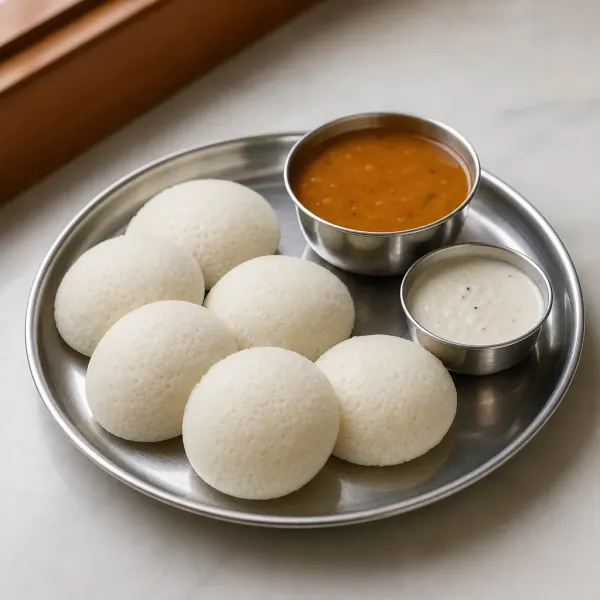
Idli
Authentic Tamil Iyer idli recipe with correct rice-to-urad ratio, wet-grinding method, and full fermentation guide. Soft, pale, and light every time.
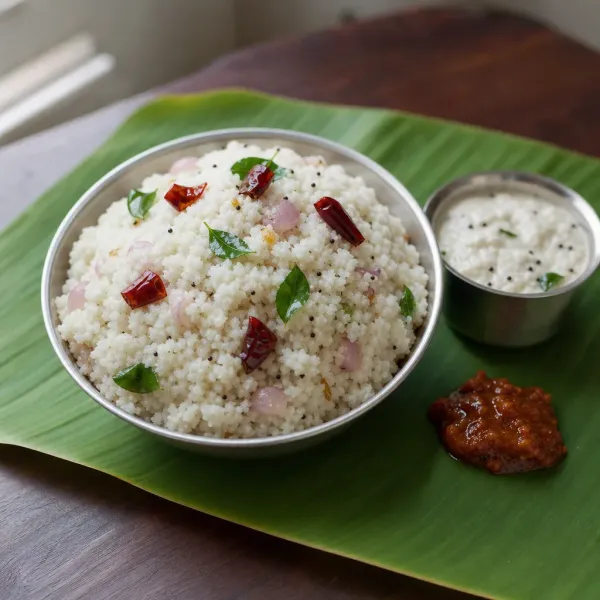
Arisi Upma (Broken Rice Upma)
Traditional Kongunad Iyer arisi upma made with dry-roasted broken raw rice, shallots, peppercorns and ghee. Step-by-step Tamil Nadu tiffin recipe.
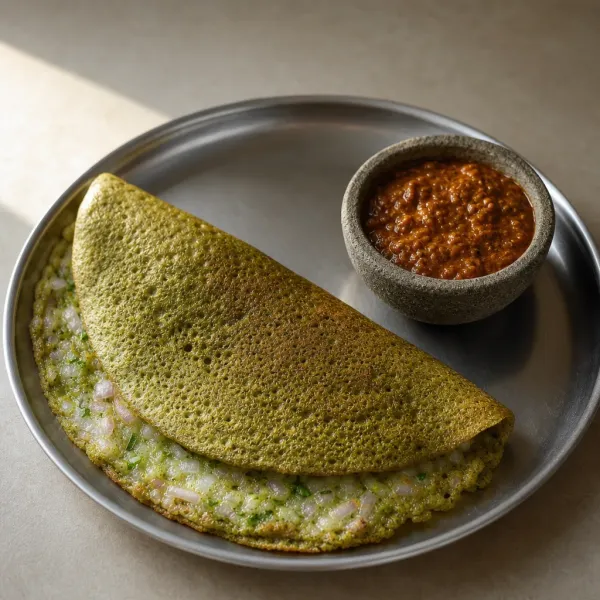
Pesarattu
Traditional Andhra pesarattu made with whole green gram, ginger and cumin. No fermentation, no rice flour. Served with allam chutney.
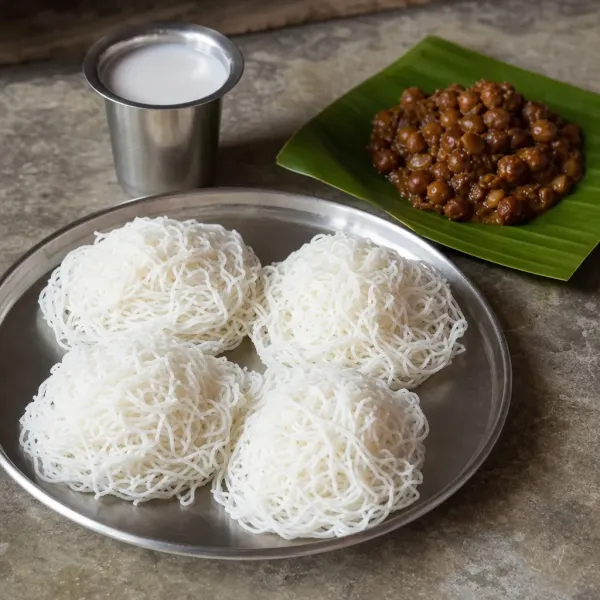
Idiyappam
Soft Kerala string hoppers made with fine rice flour and boiling water, pressed fresh and steamed. Traditional household method with cook's notes.
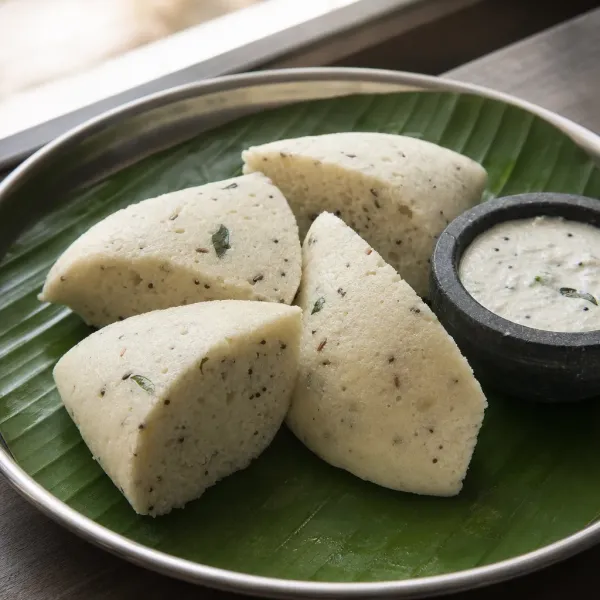
Kanchipuram Idli
Traditional Kanchipuram idli from the Iyer kitchen: fermented rice and urad dal batter tempered with ghee, black pepper, cumin and ginger, steamed fi…
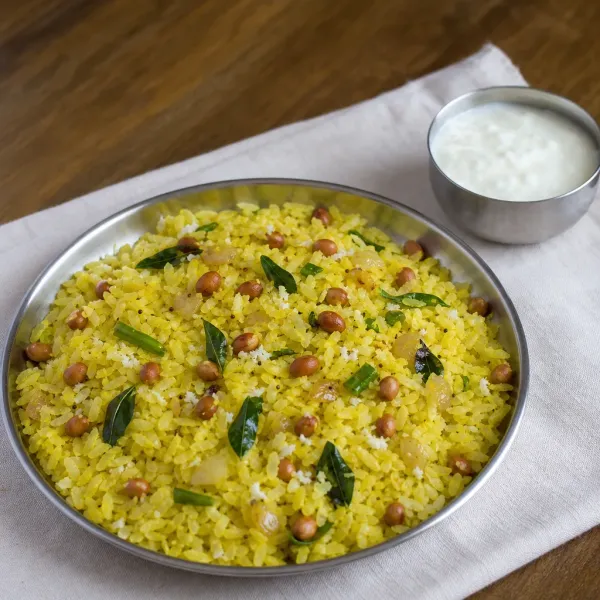
Avalakki Oggarane
Traditional Karnataka avalakki oggarane recipe — medium poha tempered with mustard, shallots, curry leaves and groundnuts. Ready in 20 minutes.