

Coconut Chutney (Thengai Chutney) Recipe
Malayalam തേങ്ങ ചട്നിTamil தேங்காய் சட்னிKannada ತೆಂಗಿನಕಾಯಿ ಚಟ್ನಿTelugu కొబ్బరి చట్నీ
- Prep10 min
- Cook5 min
- Serves4
- DifficultyEasy
- DietVegan
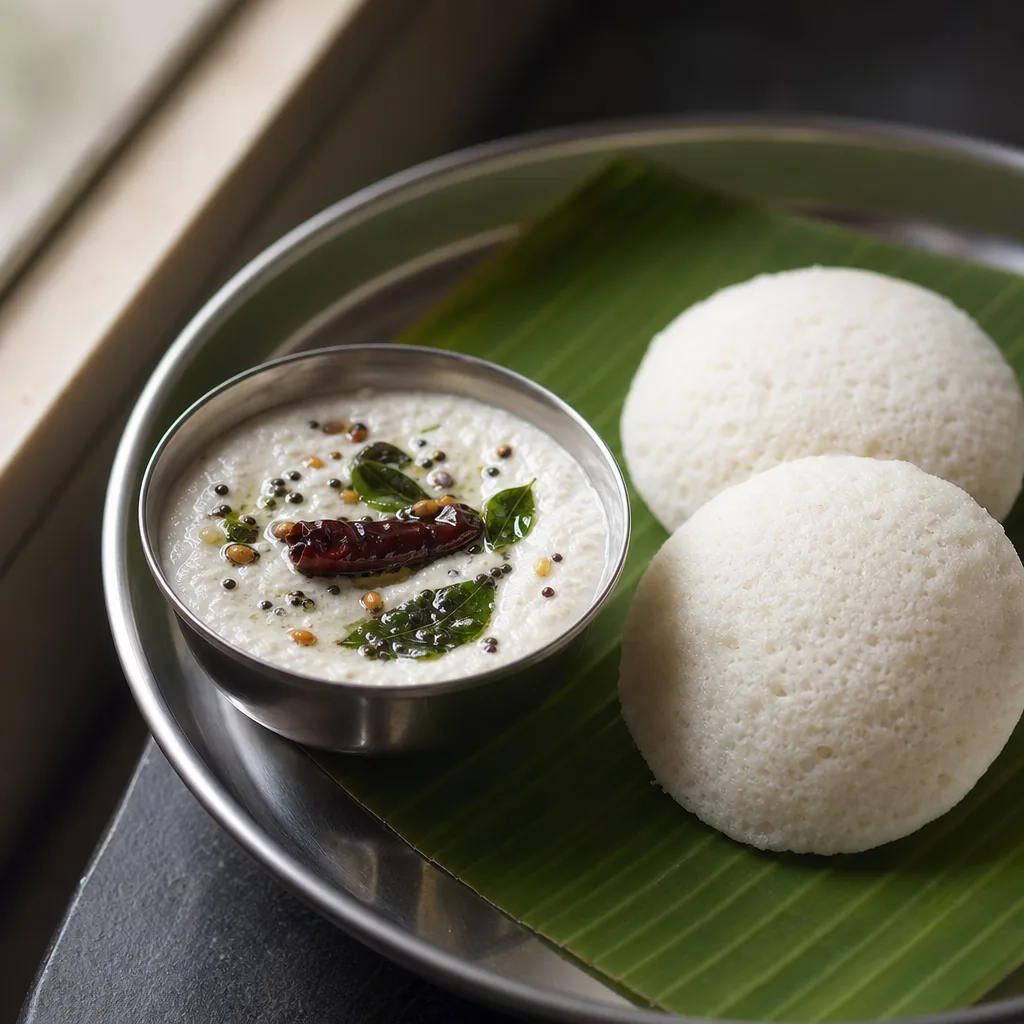
In a Tamil Brahmin household, coconut chutney is not an afterthought. It is the primary accompaniment that holds a breakfast plate together, eaten every morning alongside idli or dosa. The grinding is done fresh, usually while the idlis are still in the steamer, so the chutney reaches the table cool and fragrant rather than refrigerator-cold.
The base is always freshly grated coconut, never desiccated, never frozen if it can be helped. Roasted chana dal, called pottukadalai, is ground with it. This gives the chutney its pale, slightly thick body and a gentle nuttiness that raw coconut alone does not have. A small piece of green chilli and a little ginger go in. Some cooks add a fragment of coconut flesh that has been lightly dry-roasted, though this is household variation rather than a rule.
The tempering, called tadka or thalippu, is done in gingelly oil in many households, though some use refined oil. The mustard seeds, dried red chilli, curry leaf, and a pinch of asafoetida go in at the very end, poured sizzling over the ground chutney. The ratio of coconut to pottukadalai is the thing households argue over most; more dal gives a thicker, sturdier chutney, more coconut gives something lighter and wetter. Both are correct.
Ingredients (serves 4)
For grinding
For the tempering
Method
Prepare the coconut
Grate the fresh coconut on the fine side of a box grater or use a coconut scraper. You want 150 g of loosely packed, moist gratings. If the coconut is very dry or old, the chutney will taste dull; a freshly cracked coconut makes a noticeable difference.
Grind the base
Put the grated coconut, pottukadalai, green chilli, ginger, and salt into a small wet grinder or mixer-grinder jar. Add 60 ml of cool water. Grind to a smooth, cohesive paste. Stop and scrape down the sides once. The texture should be thick enough to hold a soft peak when you lift a spoonful; if it is too stiff, add water one tablespoon at a time and grind again.
Taste and adjust
Taste the ground paste before tempering. Adjust salt. If you want more heat, add a second green chilli and grind again briefly. The chutney at this stage should taste clean and slightly rich from the coconut, with the pottukadalai giving a mild, toasty background note.
Transfer to a bowl
Scrape the ground chutney into a wide serving bowl. Spread it out slightly so the tempering can be poured over the top and stirred through evenly. Set it near the stove.
Heat the oil for tempering
Set a small kadai or tempering ladle over medium heat. Add the gingelly oil and let it warm for about 30 seconds until it shimmers. Do not let it smoke.
Add mustard seeds
Drop in the mustard seeds. Keep the heat at medium. They will sputter and pop within 20 to 30 seconds. Wait until the popping slows before adding anything else; if you rush this step, the mustard seeds will be half-cooked and taste raw.
Add chilli, curry leaves, and asafoetida
Add the broken dried red chilli and let it darken for about 10 seconds. Then add the curry leaves (stand back; they spit in hot oil) and the asafoetida. The leaves will crisp in 5 to 10 seconds and the asafoetida will bloom immediately. The whole tempering from this point takes less than 20 seconds.
Pour the tempering over the chutney
Pour the entire contents of the kadai directly over the ground chutney in the bowl. You will hear a brief sizzle. Stir it through gently so the oil and aromatics are evenly distributed. Serve at once or within 30 minutes. The chutney softens and loses its freshness if it sits for hours.
How to serve
Idli, plain dosa, or ven pongal. In the same breakfast spread, a small portion of sambar is usually set alongside but is a separate preparation entirely.
Served with: Idli, plain dosa, or ven pongal. In the same breakfast spread, a small portion of sambar is usually set alongside but is a separate preparation entirely.
Cook's tips
Pottukadalai is not optional
Some recipes substitute raw chana dal or skip it. Raw dal will taste chalky and starchy here. Pottukadalai is already roasted, which is why it binds and flavours the chutney without any cooking. Do not replace it.
Wet grinder versus mixer
A stone wet grinder gives a smoother, more cohesive chutney. A mixer-grinder works well but tends to warm the paste and can make it slightly grainy if the jar is small. Grind in short pulses and let the jar cool between rounds if needed.
Storage
Fresh coconut chutney keeps for one day refrigerated. After that the coconut oxidises and it tastes stale. Do not freeze it; the texture turns grainy and the flavour is lost. It is always worth making a fresh batch.
Gingelly oil in the tempering
Unrefined gingelly oil (cold-pressed nallennai) has a mild sesame fragrance that belongs here. Refined gingelly oil is neutral and acceptable if that is what the household uses. Coconut oil changes the flavour profile toward a Kerala register, which is a different chutney.
Consistency is a household decision
For idli, a slightly thicker chutney clings well. For dosa, many cooks thin it a little more. Both are correct; adjust the water at the grinding stage, not after the tempering is done.
Regional variations
Kerala households make a looser version with more water and sometimes a green chilli tempered in coconut oil; Udupi Brahmin kitchens add a small piece of tamarind and use less chilli; Andhra versions often include roasted chana dal ground into the base.
Glossary
- Pottukadalai பொட்டுக்கடலை
- Roasted chana dal; pale yellow split gram that has been dry-roasted until crisp and light. Sold as a snack and used as a grinding ingredient in South Indian chutneys.
- Thalippu தாளிப்பு
- The Tamil word for tempering: whole spices and aromatics briefly fried in hot oil and poured over a dish to finish it.
- Nallennai நல்லெண்ணெய்
- Literally 'good oil'; unrefined cold-pressed gingelly (sesame) oil, the traditional cooking and finishing fat in Tamil Nadu.
- Perungayam பெருங்காயம்
- Asafoetida; dried resin used in a tiny pinch for its pungent, savoury aroma. Blooms immediately in hot oil.
- Karuveppilai கறிவேப்பிலை
- Curry leaves; the fresh aromatic leaf used whole in tempering throughout South India. Not the same as bay leaf.
Two things decide this chutney: the freshness of the coconut, and getting the mustard seeds fully popped before the rest of the tempering goes in. Everything else, the exact ratio of coconut to pottukadalai, the number of chillies, the thickness, is household territory.
More Chutneys, Podis & Pickles recipes
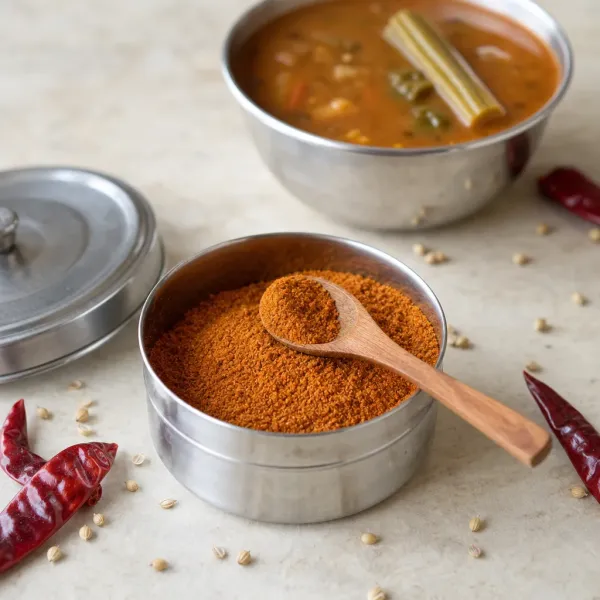
Homemade Sambar Podi
Traditional Tamil Brahmin sambar podi made by dry-roasting coriander, red chillies, chana dal and urad dal. No onion, no garlic. Step-by-step home me…
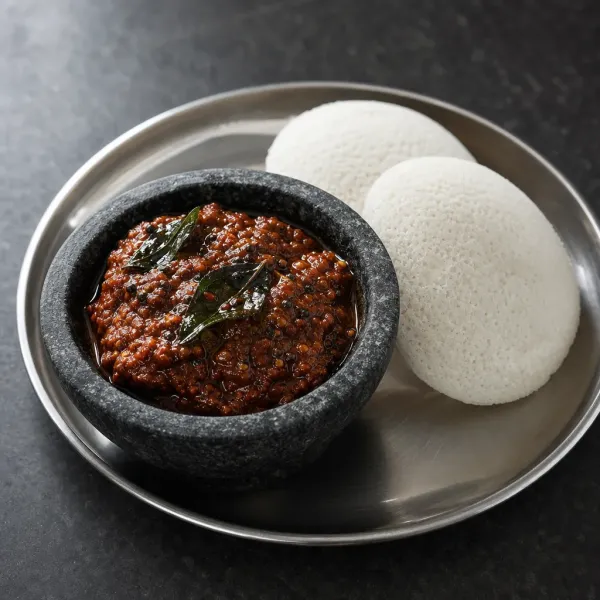
Vengaya Chutney
Traditional Tamil Iyer onion chutney made with slow-fried shallots, roasted chana dal, dried red chillies, and gingelly oil. Served with idli and dos…
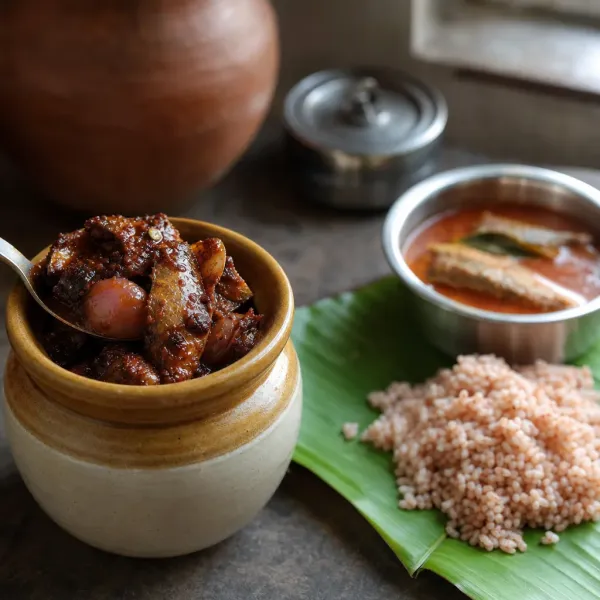
Meen Achar
Traditional Kerala Nasrani fish pickle with seer fish, kudampuli, and vinegar in coconut oil. A Travancore household recipe that keeps for weeks.
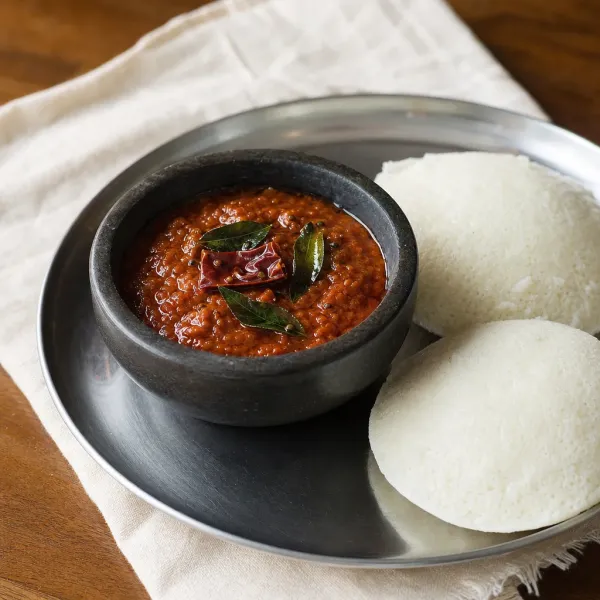
Thakkali Chutney
Authentic Tamil Iyer thakkali chutney made without onion or garlic in gingelly oil. Ready in 30 minutes, served with idli and dosa.
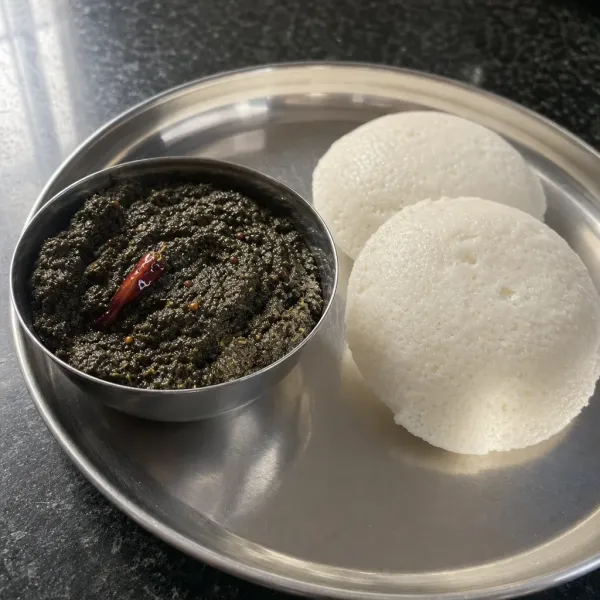
Curry Leaf Chutney (Karivepaku Pachadi)
Traditional Andhra Telugu karivepaku pachadi: curry leaves dry-roasted and ground with tamarind, urad dal, and red chillies into a thick, aromatic ch…
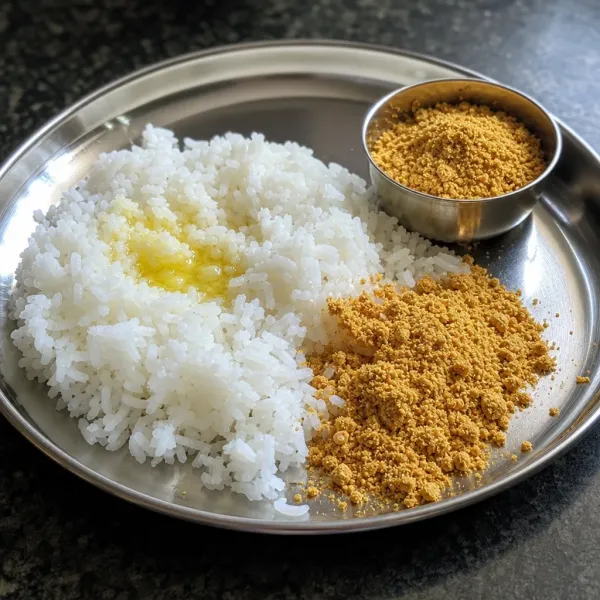
Paruppu Podi
Traditional Tamil Brahmin paruppu podi made with dry-roasted toor dal, black pepper, and asafoetida. Mixed with ghee and rice for a simple, satisfyin…