

Meen Achar Recipe
Malayalam മീൻ അച്ചാർTamil மீன் ஊறுகாய்Kannada ಮೀನು ಉಪ್ಪಿನಕಾಯಿTelugu చేప ఊరగాయ
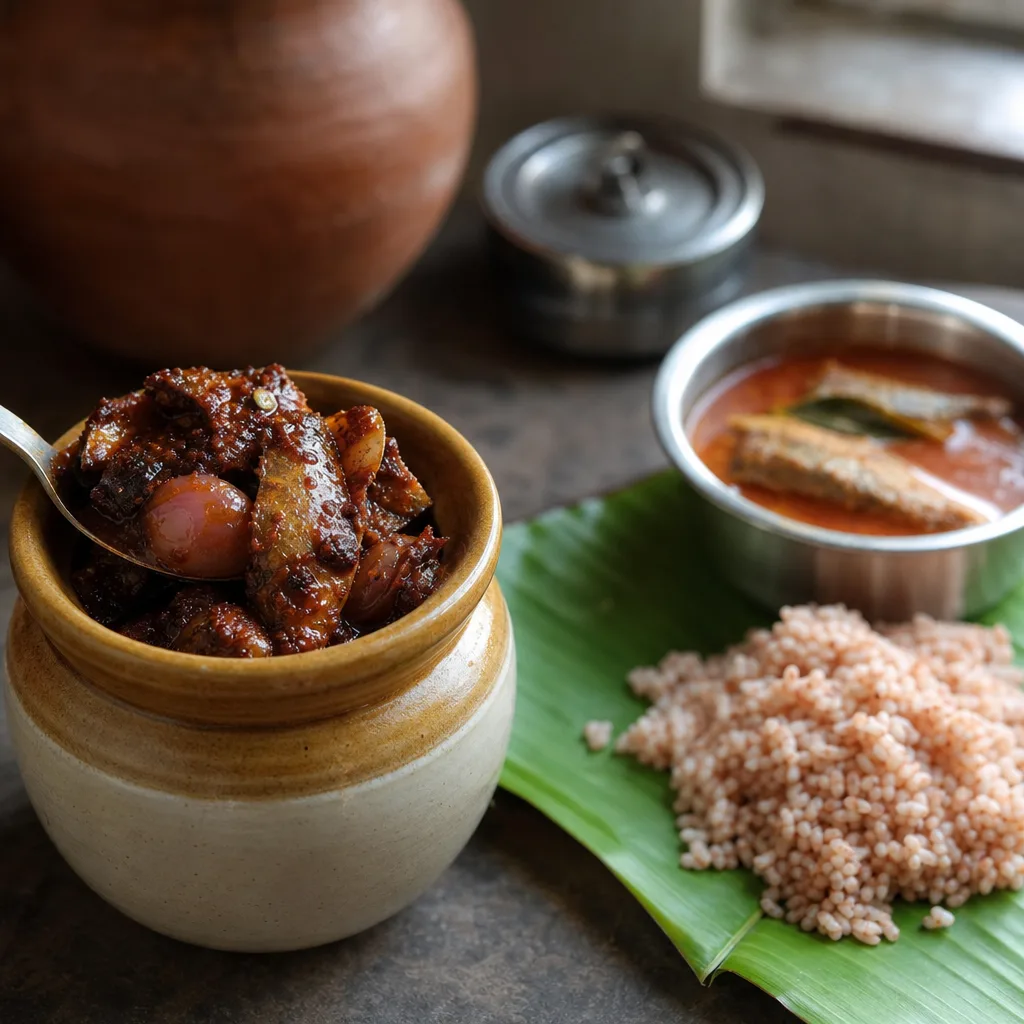
- Prep30 min
- Cook45 min
- ServesMakes one 500 ml jar, serves roughly 8 t
- DifficultyMedium
- DietNon-vegetarian
Meen achar is a Nasrani household staple, made most often with seer fish (king fish, called neymeen) or tuna, and kept in a ceramic or glass jar on the kitchen shelf. It is not a quick pickle. The fish is first salted and dried briefly, then fried in coconut oil until firm, and finally cooked down in a sharp, spiced vinegar base. The result is intensely flavoured, oily, and sour in the way that kudampuli and vinegar together produce.
In Travancore Nasrani homes this pickle appears at rice meals as a small side, not a main dish. A teaspoon alongside rice and fish curry is enough. It keeps well at room temperature for two to three weeks if the fish stays submerged in oil, and improves over the first three or four days as the vinegar mellows into the flesh.
Households differ mainly in the ratio of vinegar to kudampuli. Some cooks use only vinegar; others use only kudampuli; the version here uses both, which is the most common middle ground in central Travancore. The heat level is firmly hot. Reducing the dried red chillies will make it milder, but a timid meen achar is not quite itself.
Ingredients (serves Makes one 500 ml jar, serves roughly 8 t)
For the fish
For the pickle masala
Method
Salt and rest the fish
Toss the fish cubes with ½ tsp turmeric and salt. Spread on a plate and leave uncovered for 20 minutes. The salt draws out surface moisture, which helps the fish fry without steaming. Pat the pieces dry with a clean cloth before frying.
Fry the fish until firm
Heat 100 ml coconut oil in a wide, heavy pan over medium-high heat. Fry the fish cubes in a single layer, without crowding, for about 3 to 4 minutes per side. You want the exterior firm and lightly coloured, not deeply browned. The fish must hold its shape when stirred into the pickle later. Lift out with a slotted spoon and set aside. Do not discard the frying oil.
Soak the kudampuli
Place the kudampuli pieces in 4 tbsp warm water and soak for 10 minutes while you prepare the masala. This softens them so they release their sourness evenly into the pickle.
Temper mustard and fenugreek
In the same pan (with the remaining frying oil), add the 80 ml fresh coconut oil and heat over medium flame. Add the mustard seeds and wait for them to pop completely. Add the fenugreek seeds and stir for 20 seconds; they should turn just barely golden. Fenugreek burns fast and turns bitter, so watch the heat.
Fry the aromatics
Add the curry leaves and stand back as they splutter. Add the sliced shallots and fry, stirring often, over medium heat for 8 to 10 minutes until they are soft and beginning to colour at the edges. Add the garlic and ginger and fry for another 3 minutes until fragrant.
Add the dry chillies
Add the broken dried red chillies and stir them into the oil for 1 to 2 minutes. They should darken slightly and become fragrant. If they are scorching, lower the heat. This step builds the deep, smoky base of the pickle.
Add the powdered spices
Lower the heat. Add the turmeric and red chilli powder and stir constantly for 30 seconds. The spices cook in the oil rather than in water here, which concentrates their flavour. If the pan is too dry, add a splash of vinegar to prevent burning.
Add kudampuli, vinegar and salt
Add the soaked kudampuli along with its soaking water and the 60 ml vinegar. Stir well and taste for salt. The base should be sharply sour at this point; it will mellow once the fish is in. Let it bubble on low heat for 3 minutes.
Return the fish and cook down
Add the fried fish cubes and fold them in gently so each piece is coated. Cook on low heat, uncovered, for 8 to 10 minutes, stirring occasionally. The gravy will thicken and cling to the fish. You want very little free liquid remaining; this is what gives the pickle its shelf life.
Cool completely before jarring
Take the pan off the heat and let the pickle cool to room temperature. This is important: jarring it warm creates condensation inside the jar, which can cause spoilage. The oil will rise to the surface as it cools, which is correct.
Pack into a clean jar
Spoon the pickle into a dry, sterilised glass or ceramic jar. Press the fish down so the oil covers it. If the oil does not fully cover the fish, heat a little extra coconut oil, cool it, and pour it over the top. Seal and store at room temperature.
How to serve
Steamed matta rice and a fish or vegetable curry at a full Kerala meal. Also eaten with kanji (rice porridge) for breakfast or as a strong accompaniment to appam.
Served with: Steamed matta rice and a fish or vegetable curry at a full Kerala meal. Also eaten with kanji (rice porridge) for breakfast or as a strong accompaniment to appam.
Cook's tips
Choice of fish
Seer fish (neymeen) is the most common choice because it is firm and does not fall apart during frying. Tuna (choora) works well too. Avoid soft fish like pearl spot (karimeen) for this pickle; they break up in the vinegar.
Keeping the pickle
At room temperature in a sealed jar with fish fully submerged in oil, it keeps for 2 to 3 weeks in Kerala's climate. Refrigeration extends this but the coconut oil solidifies; bring to room temperature before serving. Always use a dry spoon.
The vinegar-kudampuli balance
If you want a sharper, more pungent pickle, increase the vinegar to 80 ml and reduce the kudampuli to 2 pieces. If you prefer a rounder, fruitier sourness, drop the vinegar to 30 ml and add a fourth piece of kudampuli.
Oil quantity matters
Do not reduce the oil. In a pickle, oil is a preservative as much as a cooking medium. A lean meen achar will not keep and the fish will taste dry.
Sterilising the jar
Wash the jar in hot soapy water, rinse well, and dry in a low oven (100°C) for 10 minutes. Let it cool before filling. Any moisture in the jar will spoil the pickle.
Regional variations
Mappila households in Malabar make a similar pickle with more vinegar and sometimes add curry leaves fried in coconut oil at the end; Kochi Jewish community made a version with turmeric-heavy brine that is now rarely documented.
Glossary
- Neymeen നെയ്മീൻ
- Seer fish (king fish), a firm-fleshed sea fish widely used in Kerala cooking.
- Kudampuli കുടംപുളി
- Dried rind of Garcinia cambogia, called Malabar tamarind; gives a distinctive fruity sourness used in Kerala fish dishes and pickles.
- Kanthari കാന്താരി
- Small, very hot bird's eye chilli grown in Kerala; used fresh or dried.
- Matta rice മട്ട അരി
- Red parboiled rice from Palakkad, the everyday rice of Kerala households.
- Kanji കഞ്ഞി
- Rice porridge, eaten as a light meal, especially for breakfast or when unwell.
Two things decide whether this pickle works: frying the fish until it is genuinely firm before it goes into the vinegar, and making sure the finished pickle is almost dry of free liquid before it goes into the jar. Rush either step and you get soft, waterlogged fish that will not keep.
More Chutneys, Podis & Pickles recipes
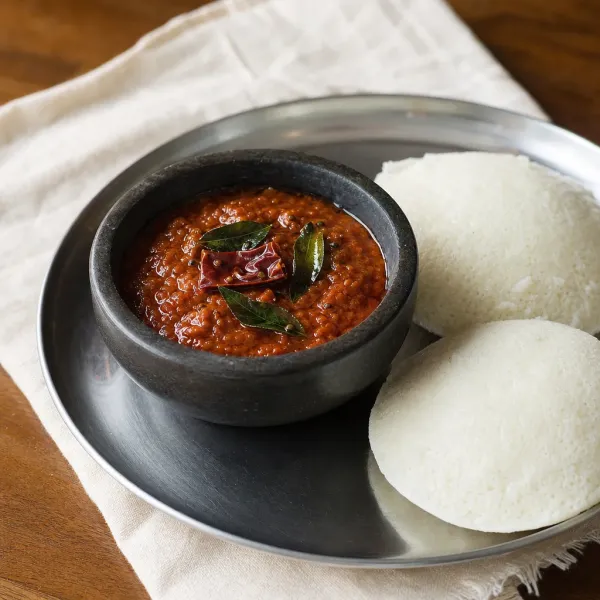
Thakkali Chutney
Authentic Tamil Iyer thakkali chutney made without onion or garlic in gingelly oil. Ready in 30 minutes, served with idli and dosa.
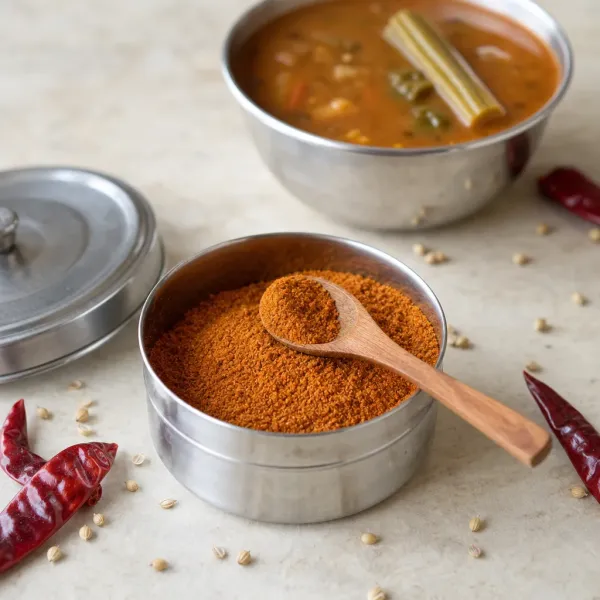
Homemade Sambar Podi
Traditional Tamil Brahmin sambar podi made by dry-roasting coriander, red chillies, chana dal and urad dal. No onion, no garlic. Step-by-step home me…
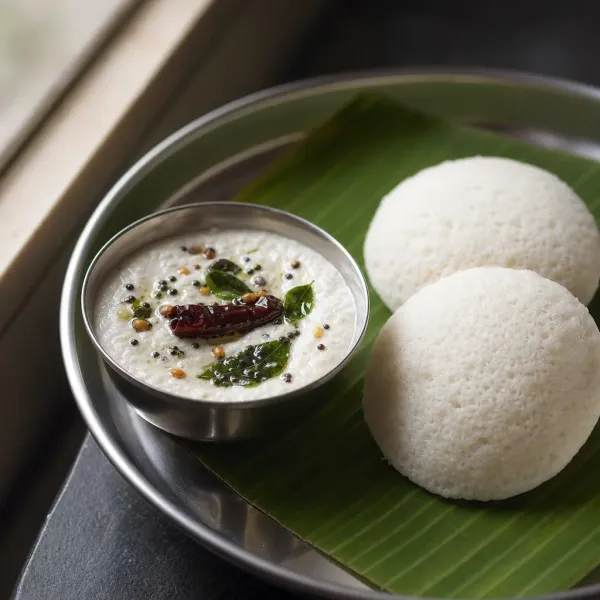
Coconut Chutney (Thengai Chutney)
Freshly ground coconut chutney from a Tamil Brahmin kitchen: coconut, pottukadalai, green chilli, and a gingelly oil tempering. Ready in 15 minutes.
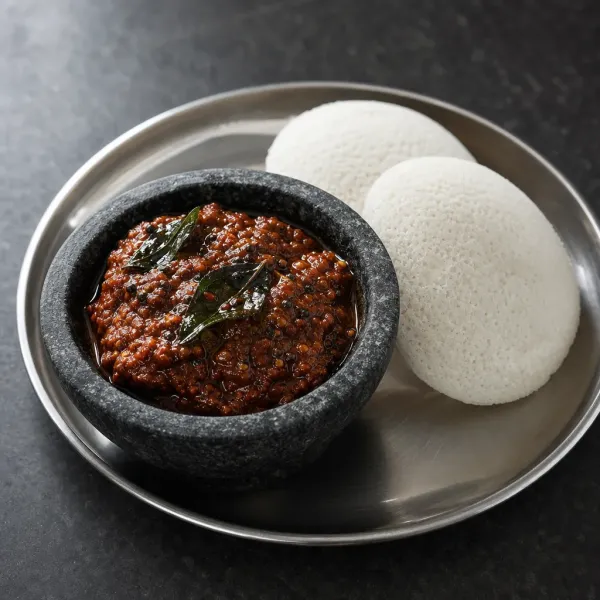
Vengaya Chutney
Traditional Tamil Iyer onion chutney made with slow-fried shallots, roasted chana dal, dried red chillies, and gingelly oil. Served with idli and dos…
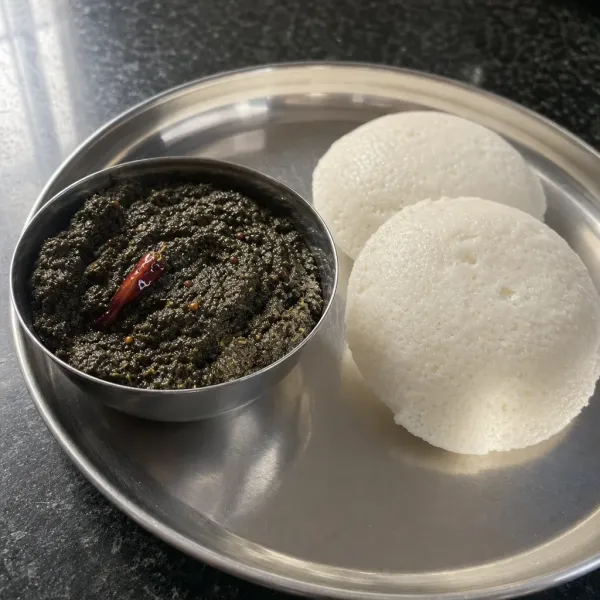
Curry Leaf Chutney (Karivepaku Pachadi)
Traditional Andhra Telugu karivepaku pachadi: curry leaves dry-roasted and ground with tamarind, urad dal, and red chillies into a thick, aromatic ch…
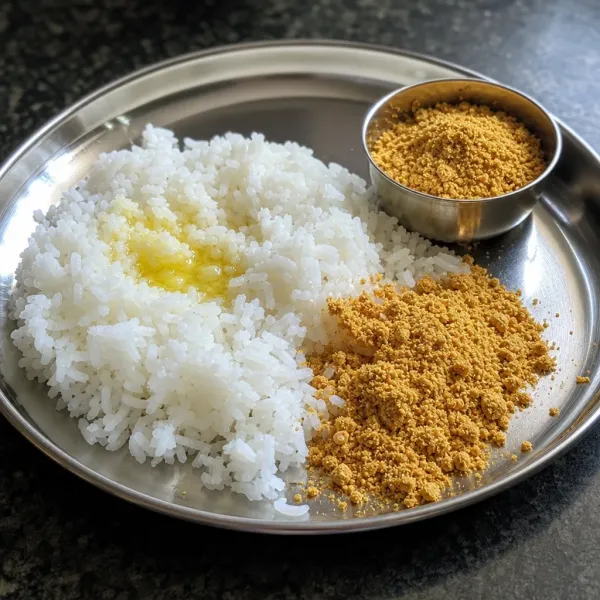
Paruppu Podi
Traditional Tamil Brahmin paruppu podi made with dry-roasted toor dal, black pepper, and asafoetida. Mixed with ghee and rice for a simple, satisfyin…