

Muttai Kuzhambu Recipe
Malayalam മുട്ട കുഴമ്പ്Tamil முட்டை குழம்புKannada ಮೊಟ್ಟೆ ಕುಳಂಬುTelugu గుడ్డు కుళంబు
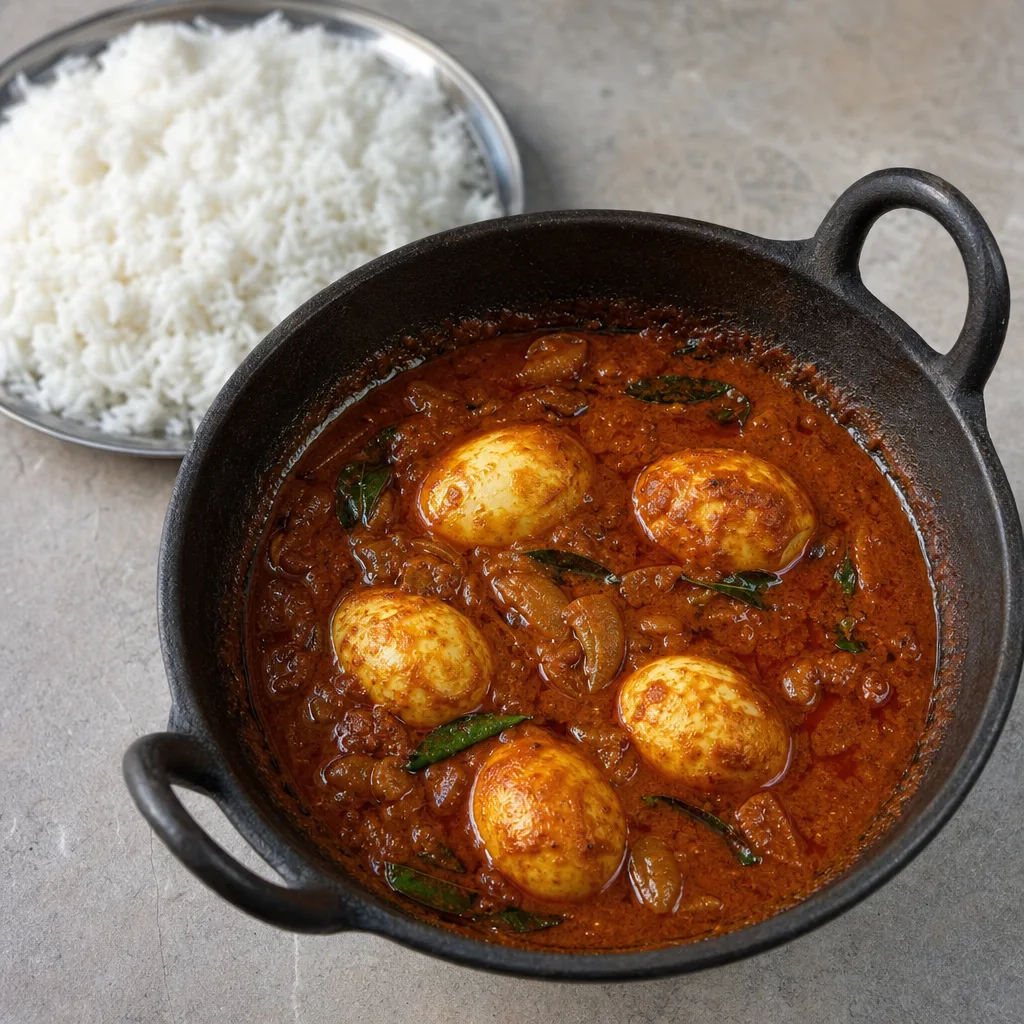
- Prep20 min
- Cook40 min
- Serves4
- DifficultyMedium
- DietEgg
Muttai Kuzhambu is a thick, deeply spiced egg gravy that belongs to the everyday cooking of Tamil Nadu households. In the Kongunad tradition, the gravy is built on shallots, a tamarind base, and a freshly ground coconut paste that thickens everything to the consistency of a good kuzhambu — not a soup, not a dry dish, but something that holds its shape on rice. The eggs go in whole and unfried, poached gently in the simmering gravy until the whites are just set and the yolks are still a little soft at the centre. The fat is gingelly oil throughout.
This is a weekday dish. Most households make it when there is nothing else to cook alongside rice, because the kuzhambu is rich enough to serve as the main accompaniment. It is also made for the midday meal when children come home from school. The gravy is always made a little more than you need, because it tastes better the next morning reheated with idli.
Household variation is real but small. Some cooks add one small tomato to balance the tamarind; others use only tamarind and say tomato makes it too thin. Some grind the coconut with a little roasted coriander seed added to the paste; others keep the paste plain. Both are correct. The heat level varies: Kongunad cooking is not timid with dried red chillies, but you can reduce the count without losing the character of the dish.
Ingredients (serves 4)
For the gravy base
For the coconut paste
Eggs
Method
Soak the tamarind and poppy seeds
Break the tamarind into pieces and soak in 300 ml warm water for 15 minutes. Squeeze and strain through your fingers, discarding the fibres and seeds. You want a thin but sour extract. At the same time, soak the poppy seeds in 2 tbsp warm water so they soften before grinding.
Grind the coconut paste
Put the fresh grated coconut, drained soaked poppy seeds, and whole black pepper into a wet grinder or mixer jar. Add 4 tbsp water and grind to a very smooth paste. It should feel like thick cream with no grit when you rub it between your fingers. Set aside.
Build the shallot base
Heat the gingelly oil in a heavy-bottomed kadai over medium heat. Add the mustard seeds and wait for them to pop fully. Add the fenugreek seeds and let them turn just golden — about 20 seconds — then add the dried red chillies and curry leaves. The oil will splatter; stand back. Add the shallots and garlic, stir well, and cook over medium heat for 10 to 12 minutes, stirring every couple of minutes, until the shallots are soft, translucent, and beginning to colour at the edges. If you rush this step the raw shallot taste stays in the finished kuzhambu.
Add the dry spice powders
Lower the heat. Add the turmeric, coriander powder, and red chilli powder directly to the shallots. Stir continuously for 90 seconds, letting the powders cook in the oil. They should smell toasted, not raw. If the pan looks dry, add a splash of water to prevent burning.
Pour in the tamarind water
Add the strained tamarind extract to the kadai. Stir everything together and raise the heat to medium-high. Add salt. The gravy will look thin and unfinished at this point; that is correct. Let it come to a full boil, then reduce to a steady simmer.
Simmer the base
Cook the tamarind gravy uncovered for 12 to 15 minutes over medium heat, stirring occasionally. It should reduce by about a third and deepen in colour from pale orange-red to a darker brick red. The raw tamarind smell will cook off and the oil will begin to show at the surface. This is the sign the base is ready.
Add the coconut paste
Stir in the ground coconut paste and mix well so no lumps remain. The gravy will thicken immediately and turn a lighter, more opaque colour. Add 100 ml water to loosen it to a consistency that moves easily when you tilt the pan. Cook for 4 to 5 minutes on medium-low heat, stirring often, so the coconut paste cooks through and loses its raw taste.
Taste and adjust
Taste the gravy now for salt, sourness, and heat. Adjust salt if needed. If it is too sour, add a pinch of sugar or jaggery. If it is not sour enough, add a little more tamarind water. The gravy should be bold and balanced before the eggs go in, because the eggs will not add flavour to the kuzhambu, only absorb it.
Add the eggs
Make four small wells in the simmering gravy with the back of a spoon. Crack each egg directly into a well, spacing them apart so they do not merge. Spoon a little gravy gently over the whites of each egg. Do not stir. Cover the kadai with a lid and cook on low heat for 6 to 8 minutes. The whites should be fully set and opaque; the yolks should be just set but still a little soft when you press them lightly with a spoon. If you prefer firm yolks, cook for 10 minutes.
Rest and serve
Turn off the heat and leave the kuzhambu covered for 2 minutes. The residual heat finishes the eggs without overcooking them. Serve from the kadai, lifting each egg out carefully with a ladle and spooning plenty of gravy over the rice.
How to serve
Steamed matta rice or plain white rice. A dry vegetable poriyal alongside balances the richness. The next day's leftovers are excellent with idli.
Served with: Steamed matta rice or plain white rice. A dry vegetable poriyal alongside balances the richness. The next day's leftovers are excellent with idli.
Cook's tips
Room-temperature eggs
Cold eggs cracked into hot gravy cook unevenly — the white sets before the yolk has time to warm. Take the eggs out of the refrigerator 20 minutes before you cook.
Fenugreek quantity
One quarter teaspoon is the limit. More fenugreek makes the kuzhambu bitter, especially as it sits and the bitterness deepens. If you have accidentally added too much, a small piece of jaggery can help, but it will not fully correct it.
Gingelly oil cannot be swapped
The nutty, slightly bitter flavour of unrefined gingelly oil is part of what makes this taste like a Tamil kuzhambu and not a generic egg curry. Refined sunflower oil produces a flat result. If you genuinely cannot find unrefined gingelly oil, use refined gingelly oil rather than a different oil entirely.
Reheating
Reheat gently over low heat with a splash of water. The coconut paste in the gravy can split and turn grainy if you boil it hard. Do not microwave on high.
If you prefer fried eggs
Some households fry the eggs first in a little gingelly oil until the edges are just set, then add them to the finished gravy for the last two minutes. This gives the eggs a slightly firmer texture and a faint golden edge. It is a common shortcut but not the traditional Kongunad method.
Regional variations
Chettinad muttai kuzhambu with kalpasi and marathi mokku; Brahmin muttai kuzhambu with no shallots and a tomato-tamarind base; coastal versions with a thinner coconut milk gravy.
Glossary
- kuzhambu குழம்பு
- A thick, spiced Tamil gravy made with tamarind, used as a main accompaniment to rice; distinct from a thin rasam and from a coconut milk-based molee.
- nallennai நல்லெண்ணெய்
- Unrefined gingelly (sesame) oil, the traditional cooking fat for Tamil kuzhambu and pickles.
- vendhayam வெந்தயம்
- Fenugreek seeds; used in small quantities in kuzhambu tempering for a slightly bitter, complex note.
- kasa kasa கசகசா
- Poppy seeds, used ground into gravies in Kongunad cooking to thicken and add a mild, creamy body.
- chinna vengayam சின்ன வெங்காயம்
- Small shallots, the standard allium in Tamil cooking; sweeter and more aromatic than large onions and preferred in kuzhambu.
- kudampuli കുടംപുളി
- Gamboge or Malabar tamarind, used in Kerala fish curries; not used here — this recipe uses ordinary tamarind (puli).
Two things decide whether this kuzhambu works. The first is the shallot base: if you do not cook the shallots long enough, the raw allium taste sits in the finished dish and no amount of tamarind or spice will cover it. The second is the eggs: they must be poached in the gravy at a low simmer, not a boil, and they must rest off the heat for two minutes before you serve. Both steps ask for patience, and both reward it.
More Egg recipes
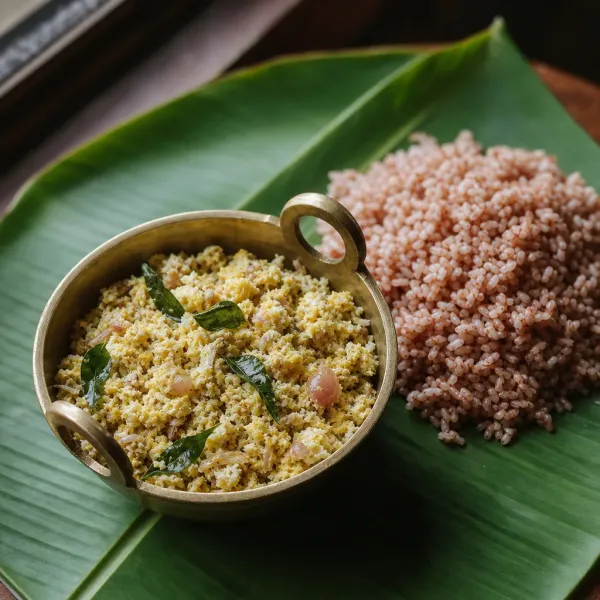
Nadan Mutta Thoran
Traditional Kerala egg thoran with shallots, fresh coconut and curry leaves. A dry, homestyle scramble cooked in coconut oil — ready in 20 minutes.
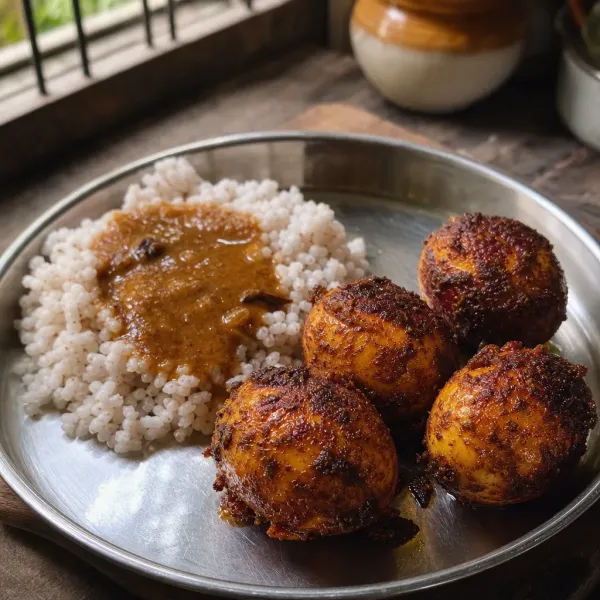
Mutta Porichathu
Traditional Kerala hard-boiled egg fried in coconut oil with a Kashmiri chilli and pepper masala coating. Ready in 25 minutes, perfect with matta ric…
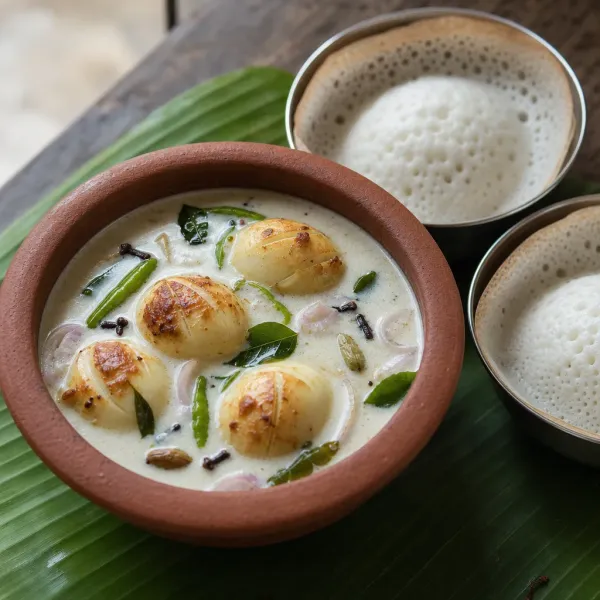
Mutta Mappas
Traditional Kerala Mappila egg curry in coconut milk with whole spices and shallots. Cooked the Malabar way, served with appam. Step-by-step recipe.
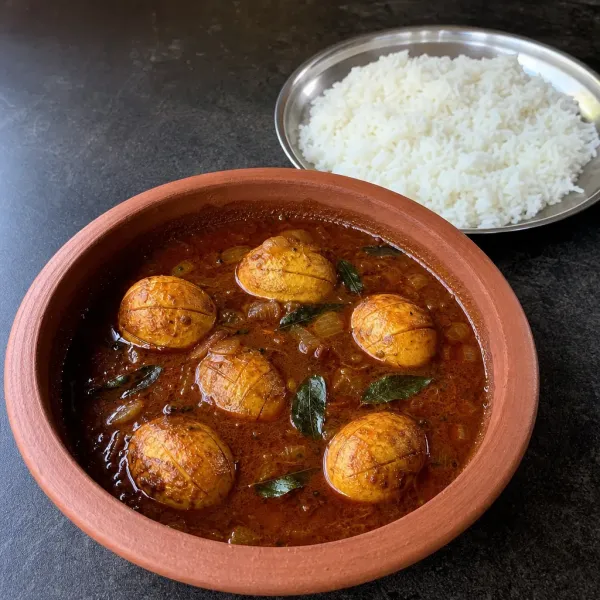
Kodi Guddu Pulusu
Traditional Rayalaseema-style Kodi Guddu Pulusu: hard-boiled eggs simmered in a hot, sour tamarind gravy with Guntur chillies and gingelly oil.
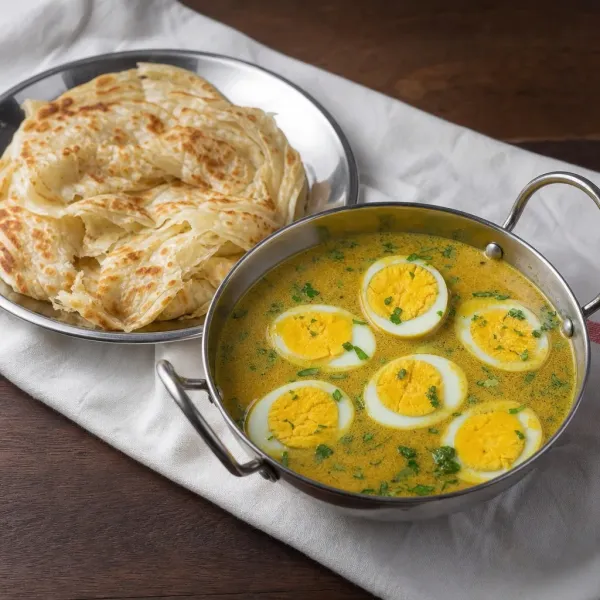
Egg Kurma for Parotta
Traditional Tamil Nadu egg kurma with fresh coconut paste, poppy seeds and whole spices. The classic pairing for layered parotta, cooked the home kit…