

Kodi Guddu Pulusu Recipe
Malayalam കോഡി ഗുഡ്ഡു പులുസുTamil கோடி குட்டு புளுசுKannada ಕೋಡಿ ಗುಡ್ಡು ಪುಲುಸುTelugu కోడి గుడ్డు పులుసు
- Prep20 min
- Cook40 min
- Serves4
- DifficultyEasy
- DietEgg
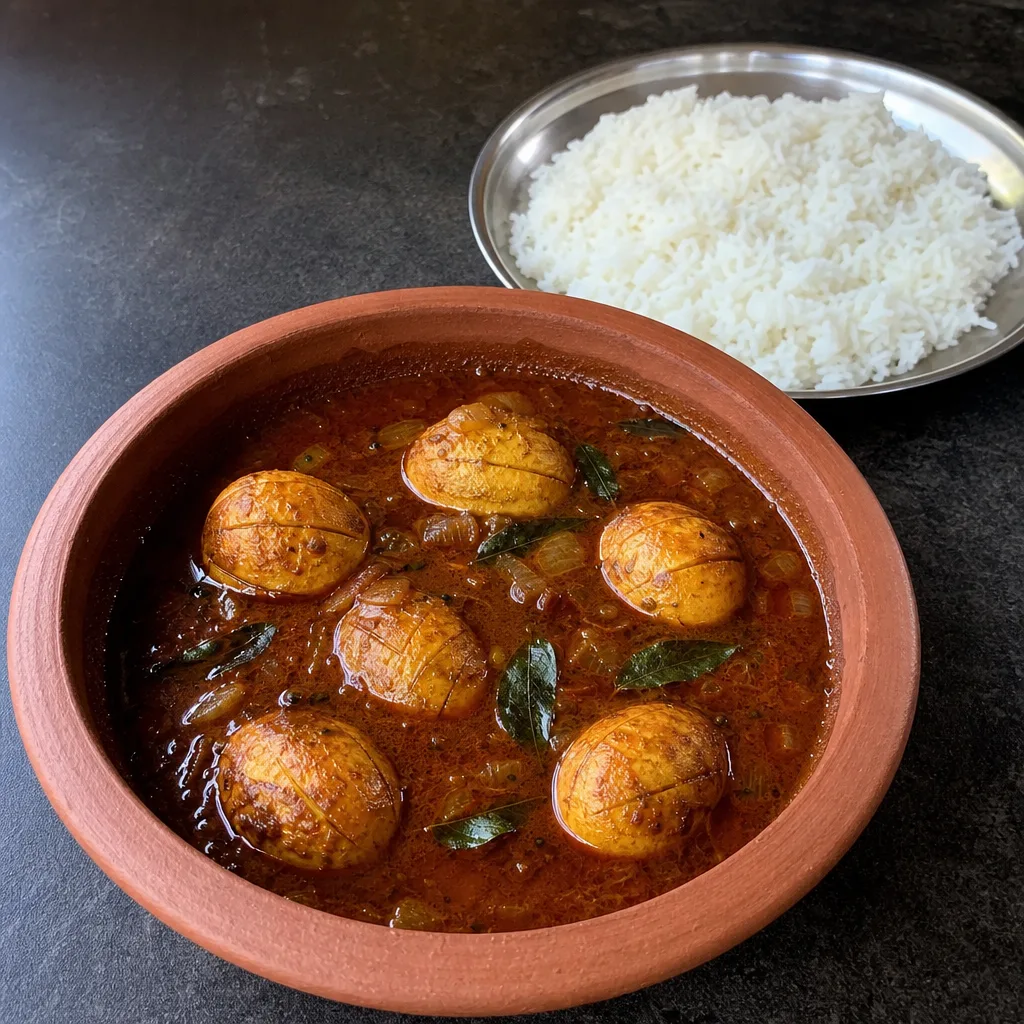
Kodi Guddu Pulusu is a tamarind-based egg curry that sits at the sharper, more sour end of Andhra cooking. The word pulusu means a sour gravy, and the sourness here is not a background note — it defines the dish. Hard-boiled eggs are fried briefly until the skin blisters, then simmered in a gravy built on shallots, tomato, tamarind water and a spice paste ground from coriander, cumin and dried red chillies. The gravy is thin enough to pool under rice but thick enough to coat the eggs.
In Rayalaseema households this is weekday cooking. It comes together in under an hour and most of the work is the tamarind soaking and the frying of the eggs. The heat level is assertive — Guntur chillies are the default in this belt, and the dish is not softened for guests. Some cooks add a small piece of jaggery at the end to round the sourness; others consider that a corruption. Both positions are held firmly.
The curry is eaten with hot rice, and nothing else is strictly needed. On a fuller table it sits alongside a dry vegetable fry and a pappad.
Ingredients (serves 4)
Eggs and initial fry
Tamarind base
Spice paste (ground together)
Gravy
Tempering
Method
Score and season the eggs
Pat the peeled hard-boiled eggs dry with a cloth. Using a sharp knife, make three or four shallow lengthwise cuts through the white of each egg, stopping before you reach the yolk. Rub each egg all over with a pinch of salt and the ¼ tsp of turmeric. This seasoning helps the eggs colour in the pan and lets the gravy enter the cuts later.
Fry the eggs until blistered
Heat 2 tablespoons of the gingelly oil in a wide, heavy pan over medium-high heat. When the oil shimmers, add the eggs and roll them gently with a spoon. Fry for 3 to 4 minutes until the skin is golden and slightly blistered in patches. Do not walk away — they colour fast. Lift them out and set aside. The blistering is not decoration; it gives the egg surface something for the gravy to cling to.
Grind the spice paste
Dry-roast the coriander seeds, cumin seeds, peppercorns and dried red chillies in a small pan over low heat for 90 seconds, stirring constantly, until fragrant. Do not let them darken. Cool completely, then grind with 3 tablespoons of water to a smooth, thick paste. A wet grinder gives the smoothest result; a small blender jar also works.
Build the shallot base
Add the remaining 2 tablespoons of gingelly oil to the same pan over medium heat. Add the mustard seeds and wait for them to pop. Add the dried red chillies and curry leaves and let them crackle for 20 seconds. Add the sliced shallots and fry, stirring often, for 8 to 10 minutes until they are deep golden and beginning to catch at the edges. Do not rush this step; under-fried shallots make the gravy taste raw.
Add ginger, garlic and tomato
Add the grated ginger and crushed garlic to the shallots and fry for 2 minutes until the raw smell is gone. Add the chopped tomatoes and the ½ tsp of turmeric. Cook over medium heat, pressing the tomatoes down with the back of the spoon, for 6 to 8 minutes until they collapse completely and the oil begins to separate at the edges of the pan.
Fry the spice paste
Add the ground spice paste to the pan and fry, stirring continuously, for 3 to 4 minutes over medium heat. The paste will darken slightly and smell toasty rather than raw. If it sticks, splash in a tablespoon of water and keep stirring. This frying step is what separates a flat gravy from a deep one — do not skip it.
Add tamarind water and simmer
Pour in the strained tamarind water and the additional 200 ml of water. Stir well, scraping up any caramelised bits from the base of the pan. Add salt. Bring to a boil, then lower the heat and simmer uncovered for 10 minutes. The gravy will deepen in colour and the raw tamarind edge will soften into a rounder sourness.
Add the eggs and finish
Slide the fried eggs gently into the simmering gravy. Spoon the gravy over them. Simmer on low heat for 8 to 10 minutes, turning the eggs once halfway through, until the gravy has thickened to a consistency that coats a spoon and the eggs are warmed through and stained by the gravy. Taste and adjust salt. If the sourness is sharper than you like, add a small piece of jaggery — no more than 5 g — and stir until dissolved.
Rest before serving
Take the pan off the heat and leave it covered for 5 minutes before serving. The eggs continue to absorb the gravy during this rest and the flavours settle. Serve hot.
How to serve
Hot plain rice (sona masoori or raw rice); a dry vegetable fry such as brinjal fry or raw banana fry alongside; pappad if available.
Served with: Hot plain rice (sona masoori or raw rice); a dry vegetable fry such as brinjal fry or raw banana fry alongside; pappad if available.
Cook's tips
Guntur chillies vs. other varieties
Guntur dried red chillies are hotter and more pungent than Kashmiri chillies. If you use Kashmiri chillies the gravy will be milder and the colour more orange-red. That is a different dish. If Guntur chillies are unavailable, use any hot Indian dried red chilli and accept that the heat profile will differ.
Tamarind quantity
40 g of tamarind gives a clearly sour gravy, which is correct for Rayalaseema. If your tamarind block is very dry and old it may be less potent; taste the strained water before adding and increase to 50 g if needed. Fresh tamarind pulp from a packet can be used — start with 2 tablespoons and taste.
Gingelly oil
Cold-pressed gingelly oil (sesame oil) is the correct fat for Andhra pulusu. Refined sunflower oil is a common household shortcut and will not ruin the dish, but the characteristic nutty undertone is lost. Do not use coconut oil — it is not part of this kitchen.
Scoring the eggs
If you skip the scoring, the gravy sits on the surface of the egg white and does not penetrate. The cuts must go through the white but not break the yolk, or the yolk will crumble into the gravy.
Storage
The curry keeps well for a day at room temperature in a cool kitchen, and for two days refrigerated. The eggs absorb more gravy overnight and the flavour deepens. Reheat gently over low heat with a splash of water.
Regional variations
Coastal Andhra version uses less tamarind and more coconut; Telangana version sometimes includes gongura leaves or a dry coconut paste; some households in Guntur add extra dried red chillies for a fiercer heat.
Glossary
- Pulusu పులుసు
- Telugu word for a sour tamarind-based gravy; the defining characteristic is the sourness from tamarind.
- Kodi Guddu కోడి గుడ్డు
- Telugu for hen's egg; kodi means hen or chicken, guddu means egg.
- Gingelly oil నువ్వుల నూనె
- Cold-pressed sesame oil used as the cooking fat in Tamil Nadu and Andhra kitchens for gravies and pickles.
- Sambar onion / shallot నిల్లి
- Small red shallots used across South Indian cooking; sharper and more aromatic than large onions.
- Guntur chilli గుంటూరు మిర్చి
- A variety of dried red chilli from Guntur district, Andhra Pradesh, known for high pungency and heat.
Two things decide this curry. The first is the frying of the shallots — they must be genuinely golden and sweet before anything else goes in, or the gravy will taste thin and raw no matter how long you simmer it. The second is the tamarind: it must be enough to make the gravy clearly sour, because that sourness is not a flaw to be corrected but the whole point of a pulusu.
More Egg recipes
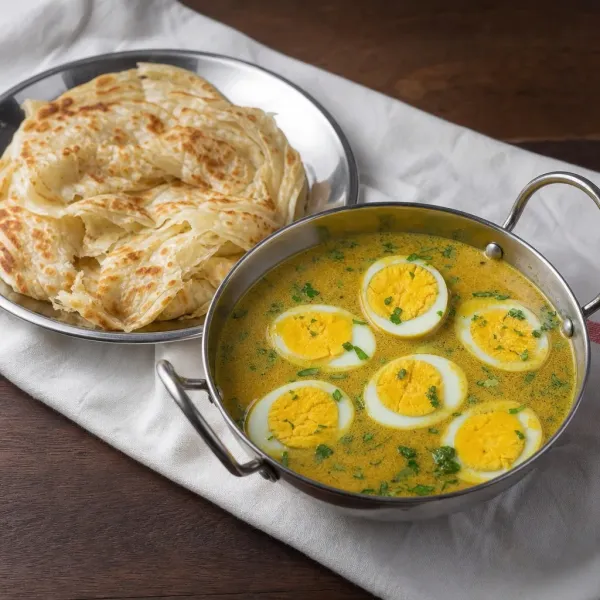
Egg Kurma for Parotta
Traditional Tamil Nadu egg kurma with fresh coconut paste, poppy seeds and whole spices. The classic pairing for layered parotta, cooked the home kit…
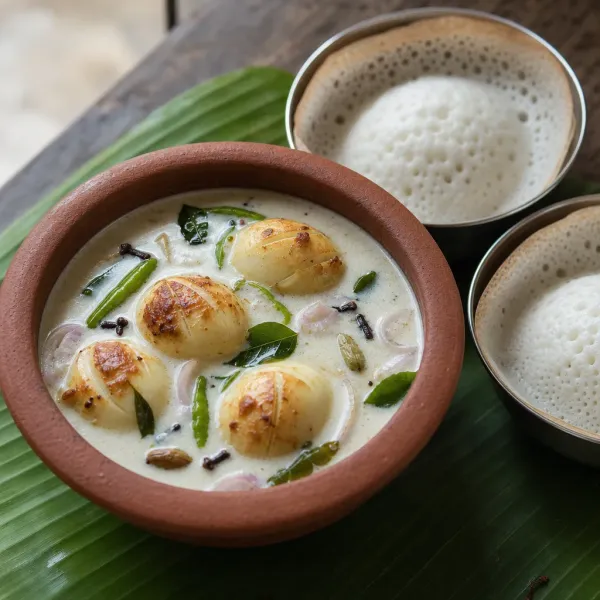
Mutta Mappas
Traditional Kerala Mappila egg curry in coconut milk with whole spices and shallots. Cooked the Malabar way, served with appam. Step-by-step recipe.
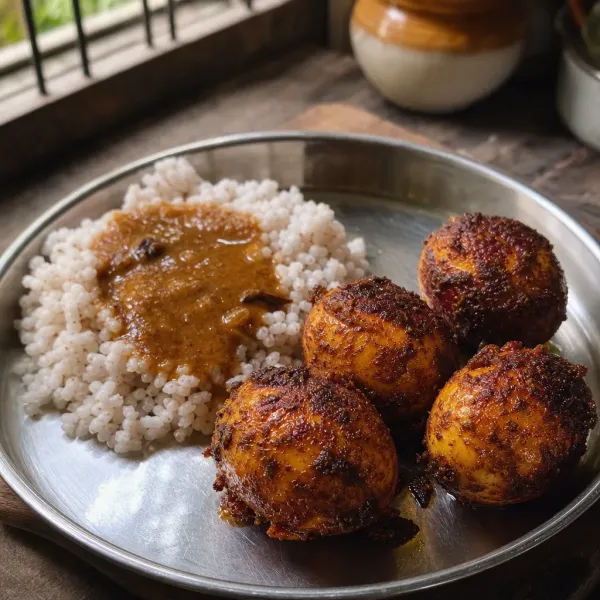
Mutta Porichathu
Traditional Kerala hard-boiled egg fried in coconut oil with a Kashmiri chilli and pepper masala coating. Ready in 25 minutes, perfect with matta ric…
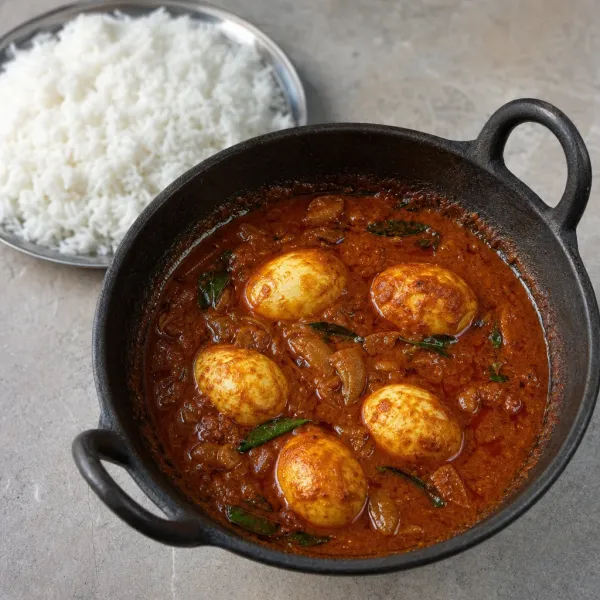
Muttai Kuzhambu
Traditional Kongunad muttai kuzhambu: eggs poached in a tamarind, shallot and fresh coconut gravy cooked in gingelly oil. Step-by-step Tamil home rec…
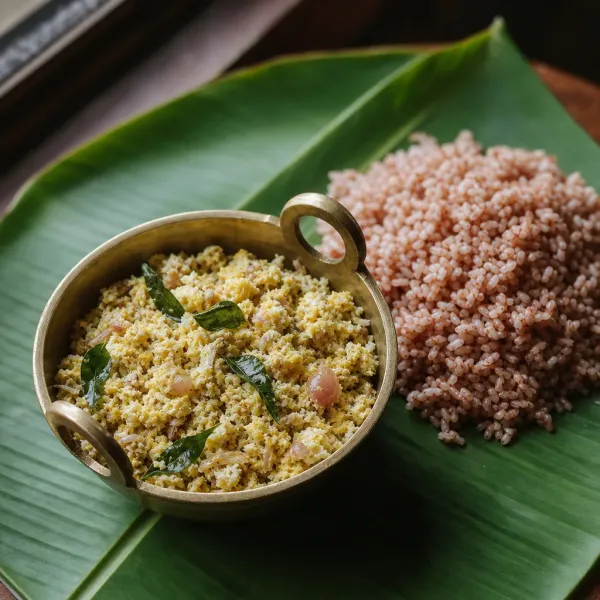
Nadan Mutta Thoran
Traditional Kerala egg thoran with shallots, fresh coconut and curry leaves. A dry, homestyle scramble cooked in coconut oil — ready in 20 minutes.