

Paruppu Thogayal Recipe
Malayalam പരിപ്പ് തൊഗൈയൽTamil பருப்பு தொகையல்Kannada ಪರುಪ್ಪು ತೊಗೆಯಲ್Telugu పప్పు తొగయల్
- Prep5 min
- Cook10 min
- Serves4
- DifficultyEasy
- DietVegan
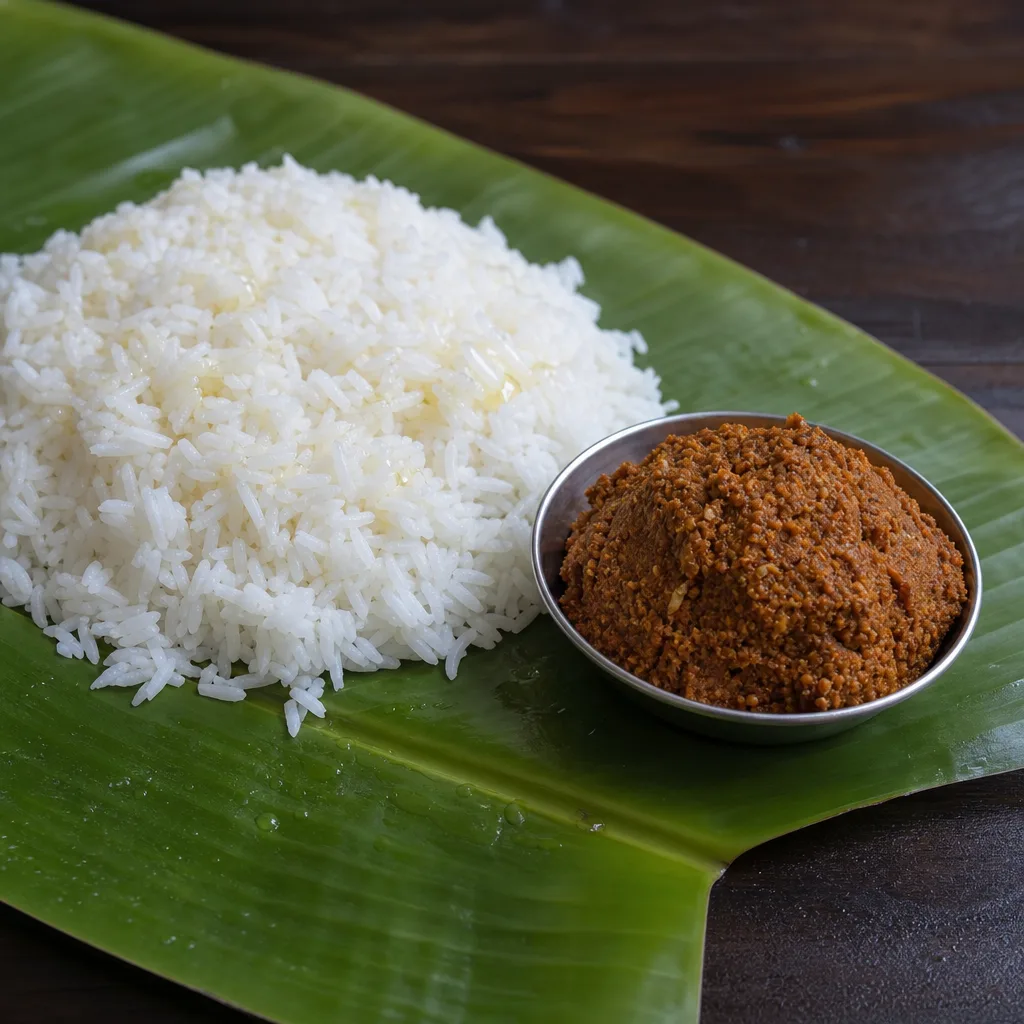
Paruppu thogayal is a thick, coarse-ground paste made from roasted toor dal, dried red chillies, and fresh coconut, brought together with a little water into something that sits firmly on a spoon. It belongs to the Brahmin kitchens of Tamil Nadu, where it appears most often on days when a simple, sustaining meal is wanted. It is not a chutney and not a sambar; it is its own thing, eaten mixed directly into hot rice with a pour of gingelly oil or ghee.
In Iyer households it is a regular weekday preparation, made quickly while the rice cooks. The dal is dry-roasted in a heavy pan until it smells nutty and turns a shade darker, then ground with coconut, red chilli, and a small piece of asafoetida-fried in the same pan. Some grandmothers add a sliver of tamarind for sharpness; others rely entirely on the roasted dal for depth. The texture should be coarse, not smooth, and the paste should hold its shape on the plate.
The amount of coconut varies by household. A little coconut softens the bitterness of the roasted dal and gives the thogayal body; too much and it becomes a coconut chutney. The ratio here, one part coconut to roughly two parts dal, is what most households settle on.
Ingredients (serves 4)
For the thogayal
Method
Heat the pan
Set a heavy iron or thick-bottomed kadai over medium-low heat. Let it warm for a minute before you add anything. A cool pan will steam the dal rather than roast it.
Roast the asafoetida and chillies
Add 1 tsp of the gingelly oil to the warm pan. Drop in the lump of asafoetida and the dried red chillies. Stir continuously for about 30 seconds until the asafoetida puffs slightly and the chillies darken a shade and smell fragrant. Remove them immediately and set aside on a plate. The chillies burn fast; do not walk away.
Dry-roast the toor dal
Add the remaining 1 tsp of gingelly oil to the same pan and tip in the toor dal. Keep the heat at medium-low and stir almost constantly. After 5 to 7 minutes the dal will turn a reddish-gold, smell deeply nutty, and a few grains will begin to crackle. That is when it is ready. Tip it onto the same plate as the chillies and let everything cool completely before grinding. Grinding warm dal makes the paste gummy.
Grind to a coarse paste
Put the cooled dal, roasted chillies, puffed asafoetida, and grated coconut into a stone grinder or a small mixer-grinder jar. Add salt. Begin grinding without any water for the first few pulses so the dry ingredients break down. Then add water one tablespoon at a time, grinding between additions. Stop when the mixture forms a thick, coarse paste that holds its shape. Three tablespoons is usually enough; four at most. The texture should be noticeably grainy, not silky.
Taste and adjust
Taste for salt and heat. If you want more sharpness and do not have tamarind in the recipe, a few more seconds of grinding will release more bitterness from the dal skin, which some people prefer. Transfer to a small bowl and serve at room temperature.
How to serve
Hot plain rice (sona masoori or raw rice) with a pour of gingelly oil or a spoonful of ghee mixed in at the table. Often accompanied by a simple kootu or a vegetable poriyal and papad. Some households serve it alongside rasam rice as a first course.
Served with: Hot plain rice (sona masoori or raw rice) with a pour of gingelly oil or a spoonful of ghee mixed in at the table. Often accompanied by a simple kootu or a vegetable poriyal and papad. Some households serve it alongside rasam rice as a first course.
Cook's tips
Why the dal must cool before grinding
Warm roasted dal releases starch quickly under the blade and the paste turns sticky and dense. Give it at least 10 minutes on the plate. In a hurry, spread it on a steel plate near a window.
Solid asafoetida, not powder
The recipe uses the resin lump (the kind sold wrapped in a leaf or in a small tin). Powdered asafoetida contains flour and behaves differently; if you must use it, use a pinch and add it directly to the grinder rather than frying it in oil.
Coconut freshness matters
Stale or refrigerated coconut that has begun to dry out makes the thogayal taste flat. Use coconut grated the same day. Desiccated coconut is not a substitute here; it changes both the texture and the flavour.
Storage
This keeps at room temperature for the length of a meal. Refrigerate leftovers and use within one day; the coconut turns sour quickly. Do not freeze.
Tamarind variation
Many Iyer households add a very small piece of tamarind (about the size of a chickpea, soaked briefly to soften) to the grinder. It adds a mild sourness that balances the roasted bitterness. This is genuine and common; it is a household choice, not a mistake.
Regional variations
Some Iyengar households add a small piece of tamarind and skip the water entirely, making a drier, more pungent paste; Mudaliar kitchens sometimes include a few peppercorns alongside the red chillies.
Glossary
- Thogayal தொகையல்
- A thick, coarse-ground paste from Tamil Nadu, distinct from a smooth chutney; meant to be mixed into rice.
- Toor dal தூவரம் பருப்பு
- Split and husked pigeon peas; the most common lentil in South Indian cooking.
- Perungayam பெருங்காயம்
- Asafoetida; the dried resin of Ferula species, used in small quantities as a digestive and flavouring in Brahmin cooking where onion and garlic are avoided.
- Gingelly oil நல்லெண்ணெய்
- Cold-pressed sesame oil used in Tamil Nadu cooking, especially for chutneys, thogayals, and kuzhambu; lighter in colour and flavour than the toasted sesame oil used in East Asian cooking.
Two things decide this thogayal: how far you take the roasting of the dal, and how little water you add when grinding. Roast until the dal is genuinely golden-red and smells like toasted nuts; anything less and the paste tastes raw and heavy. Then add water with restraint, a tablespoon at a time, stopping the moment the paste coheres. Those two decisions give you something that holds its own against plain rice rather than disappearing into it.
More Chutneys, Podis & Pickles recipes
Homemade Rasam Podi (Iyer-Style Tamil Brahmin Rasam Powder)
Traditional Tamil Brahmin rasam powder, dry-roasted spice by spice. Peppery, fragrant, made fresh at home. Keeps 4 to 6 weeks.
Gongura Pachadi
Traditional Rayalaseema gongura pachadi made with red sorrel leaves, Guntur chillies and gingelly oil. Coarse-ground, fiery and sharply sour.
Ellu Podi (Sesame Seed Powder)
Traditional Tamil Iyer ellu podi made with white sesame, dried red chillies, urad dal and asafoetida. Dry-roasted and coarsely ground. Ready in 20 mi…
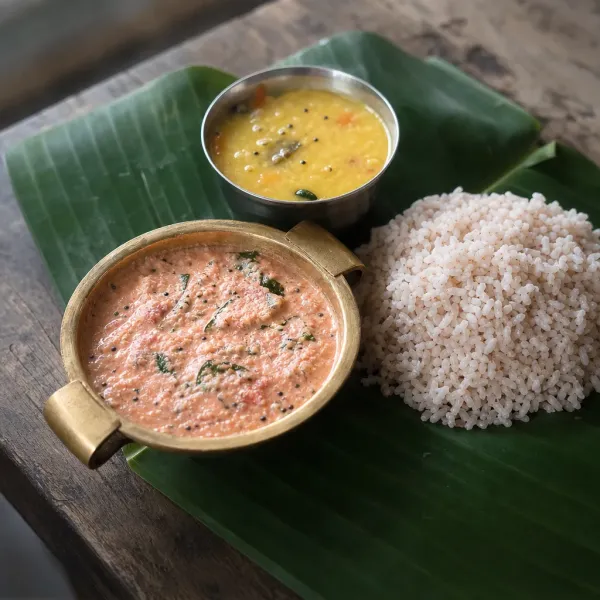
Tomato Pachadi
Traditional Kerala tomato pachadi with fresh coconut paste and curd. A Travancore sadya side dish ready in 30 minutes. Step-by-step recipe.
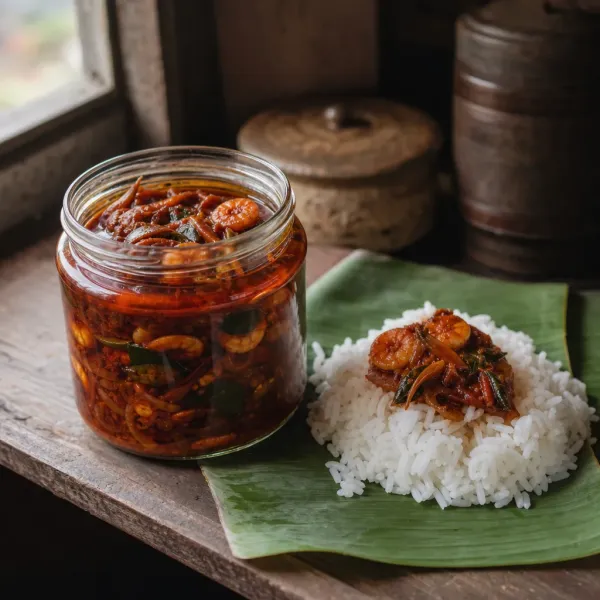
Chemmeen Achar
Traditional Kerala Mappila prawn pickle with coconut oil, shallots, vinegar and whole spices. Keeps for weeks. Step-by-step household recipe.
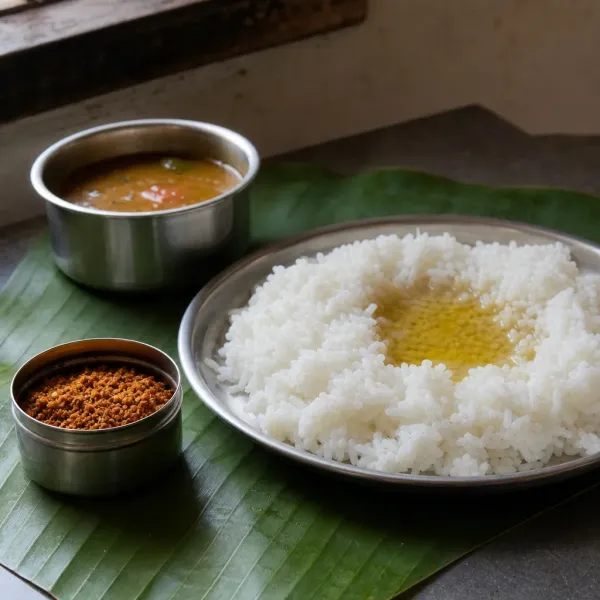
Poondu Podi
Traditional Kongunad poondu podi recipe: garlic, urad dal, chana dal and dry red chillies roasted in gingelly oil and ground to a coarse spice powder…