

Tomato Pachadi Recipe
Malayalam തക്കാളി പച്ചടിTamil தக்காளி பச்சடிKannada ಟೊಮೆಟೊ ಪಚ್ಚಡಿTelugu టమాటా పచ్చడి
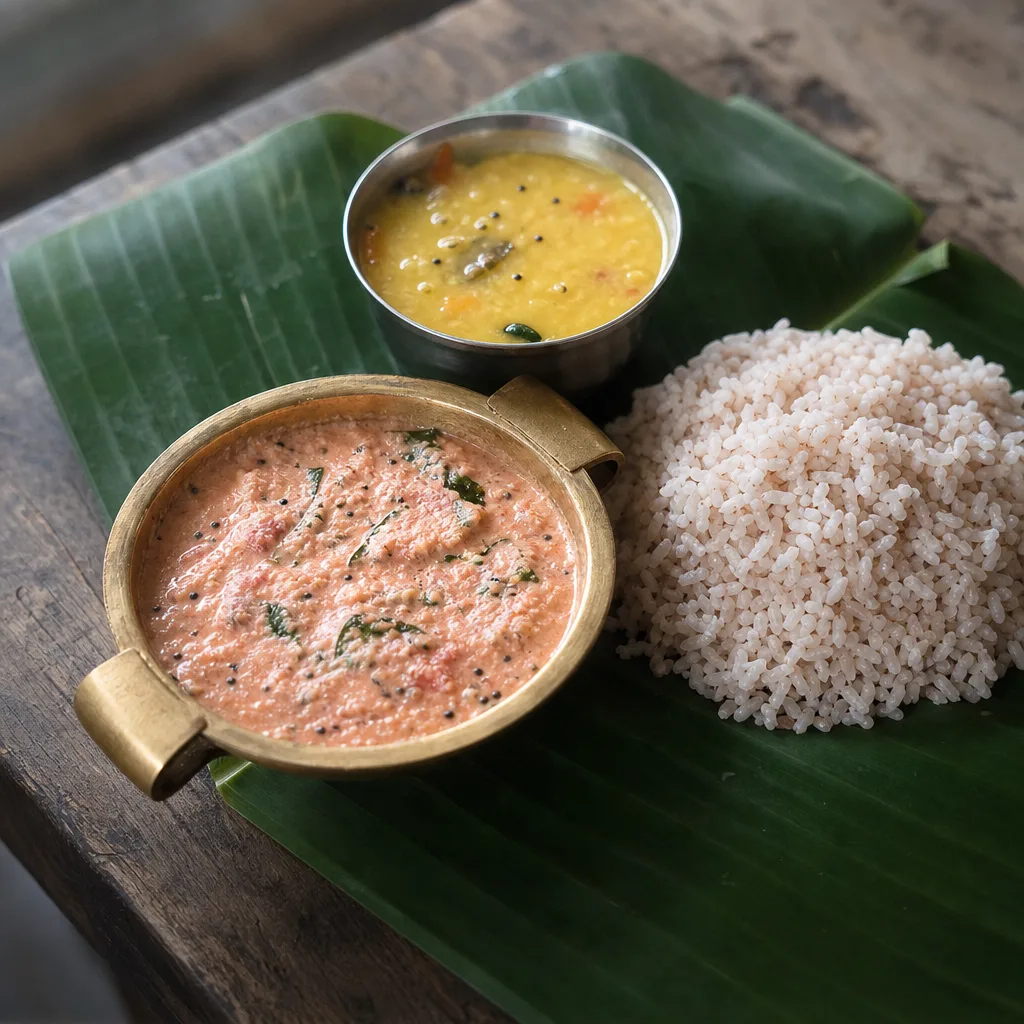
- Prep10 min
- Cook20 min
- Serves4
- DifficultyEasy
- DietVegetarian
Tomato pachadi belongs to the Kerala sadya table and to everyday meals alike. It is a cooked, lightly soured dish in a coconut-yoghurt base, sitting somewhere between a raita and a curry in texture. The tomatoes are cooked down until their rawness is completely gone, then folded into freshly ground coconut and stirred through beaten curd just before serving. The result is pale orange-pink with specks of green, cooling and mildly tangy.
On a sadya banana leaf it is placed in the upper row alongside inji puli and kichadi. On ordinary days it comes alongside rice and a simple dal. The amount of curd varies by household: some keep it quite thick, almost like a relish; others add more curd and serve it almost pourable. What does not vary is the fresh coconut, the mustard seed tempering done last, and the fact that the curd goes in only after the heat is off.
Some cooks add a single green chilli to the coconut when grinding; others keep the heat only in the tempering. Both are genuine. A small amount of sugar is sometimes added in Travancore homes to balance the tomato's acidity, but it should be barely perceptible, not sweet.
Ingredients (serves 4)
For the cooked tomato base
For the ground coconut paste
For the curd base
For the tempering (tadka)
Method
Soften the shallots
Heat 1 tbsp coconut oil in a wide, heavy pan over medium heat. Add the sliced shallots and slit green chilli. Cook, stirring occasionally, for 4 to 5 minutes until the shallots are translucent and beginning to turn golden at the edges. Do not rush this; under-cooked shallots will taste sharp in the finished dish.
Cook the tomatoes down
Add the chopped tomatoes, turmeric, and salt. Stir well, then cover and cook on medium-low heat for 10 to 12 minutes, stirring twice in between. The tomatoes should completely collapse and lose all their raw smell. Uncover, raise the heat briefly, and stir until any excess water evaporates and the mixture looks like a thick, jammy paste. Set aside to cool to room temperature.
Grind the coconut paste
Grind the fresh coconut, green chilli (if using), and cumin seeds in a small wet grinder or heavy stone grinder with 2 to 3 tbsp of water. Grind to a very smooth, fine paste. Coarse coconut will give the pachadi a gritty texture rather than a creamy one. Taste the paste; it should be mildly fragrant of cumin.
Combine tomato and coconut
Once the tomato mixture is fully cool, stir in the ground coconut paste. Mix thoroughly so there are no streaks of white. Taste for salt at this stage.
Fold in the curd
Beat the curd smooth before adding it. Stir it gently into the tomato-coconut mixture. Do this with the pan completely off the heat; if the curd meets even residual heat it will split and turn grainy. The finished base should be a pale salmon-pink, thick enough to mound slightly on a spoon.
Temper and finish
Heat 1½ tsp coconut oil in a small tempering ladle or very small pan until it shimmers. Add the mustard seeds and keep the heat at medium; they will splutter in about 30 seconds. Add the broken dried red chillies and curry leaves immediately, stand back as the leaves will spit, and let them crackle for 10 seconds. Pour the entire tempering over the pachadi, stir once, and serve.
How to serve
Steamed matta rice and a simple parippu curry (moong or toor dal) on ordinary days; on a sadya banana leaf alongside rice, parippu, sambar, rasam, avial, and inji puli.
Served with: Steamed matta rice and a simple parippu curry (moong or toor dal) on ordinary days; on a sadya banana leaf alongside rice, parippu, sambar, rasam, avial, and inji puli.
Cook's tips
Curd temperature matters
Take the curd out of the refrigerator 20 minutes before you need it. Cold curd added to even a warm mixture is more likely to curdle. Room temperature curd blends smoothly.
Tomato variety
Very watery hybrid tomatoes make the pachadi thin and pale. If that is all you have, cook the tomatoes a little longer to drive off more water before proceeding.
The small amount of sugar
If your tomatoes are quite sharp, a pinch of sugar (no more than ¼ tsp) added while cooking them is a common Travancore adjustment. It should not make the dish sweet; it only rounds out the acidity.
Storage
Pachadi does not keep well. Make it on the day, and serve it within a few hours. The curd will sour and the coconut paste will turn the texture grainy overnight.
Grinding shortcut
A small mixer-grinder jar works for the coconut paste if you do not have a wet grinder. Add water one tablespoon at a time and run the grinder in long pulses. Stop and scrape down the sides often. It will not be as perfectly smooth as a wet grinder produces, but it is acceptable for everyday cooking.
Regional variations
Tamil Nadu Brahmin households make a version with tamarind and no coconut; Andhra kitchens make a raw tomato pachadi closer to a chutney, tempered with mustard and dried red chilli.
Glossary
- Pachadi പച്ചടി
- A Kerala side dish made with cooked or raw vegetables in a coconut-curd base, finished with a mustard tempering.
- Cheriya ulli ചെറിയ ഉള്ളി
- Small South Indian shallots, sharper and more aromatic than large onions; used throughout Kerala cooking.
- Kaduku കടുക്
- Mustard seeds; the tempering agent that finishes most Kerala vegetable dishes and pachadis.
- Kollamulaku കൊല്ലമുളക്
- Dried red chilli used in tempering; gives mild heat and colour to the oil without dominating the dish.
- Jeerakam ജീരകം
- Cumin seeds; ground here with the coconut to give the paste its faint warm fragrance.
Two things decide whether this works: the tomatoes must be cooked until every trace of rawness is gone and the mixture is genuinely thick, and the curd must go in only after the heat is completely off. Get those two right and the rest follows.
More Chutneys, Podis & Pickles recipes
Poondu Podi
Traditional Kongunad poondu podi recipe: garlic, urad dal, chana dal and dry red chillies roasted in gingelly oil and ground to a coarse spice powder…
Homemade Rasam Podi (Iyer-Style Tamil Brahmin Rasam Powder)
Traditional Tamil Brahmin rasam powder, dry-roasted spice by spice. Peppery, fragrant, made fresh at home. Keeps 4 to 6 weeks.
Nellikka Achar
Traditional Kerala gooseberry pickle made with coconut oil, curry leaves and whole spices. Keeps for weeks. A classic sadya condiment.
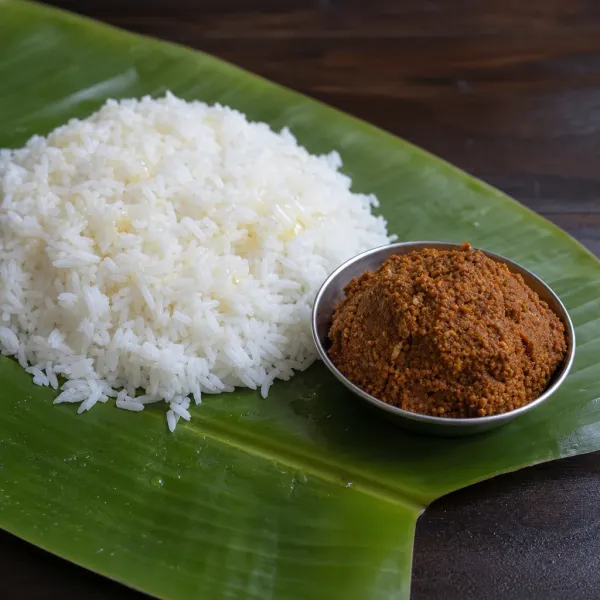
Paruppu Thogayal
Traditional Tamil Iyer paruppu thogayal: roasted toor dal, dried red chilli, fresh coconut and asafoetida ground coarse. Mixed into hot rice with gin…
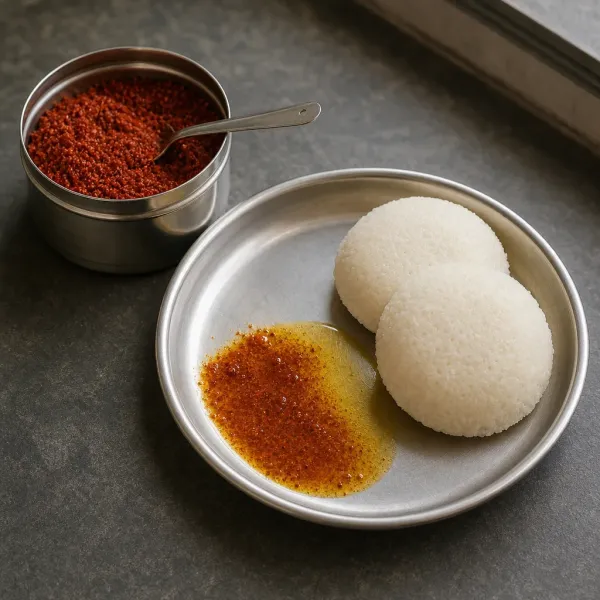
Idli Milagai Podi (Gunpowder)
Authentic Tamil Iyer milagai podi made with urad dal, chana dal, and dry red chillies. Coarse, nutty, properly hot. Traditional household recipe.
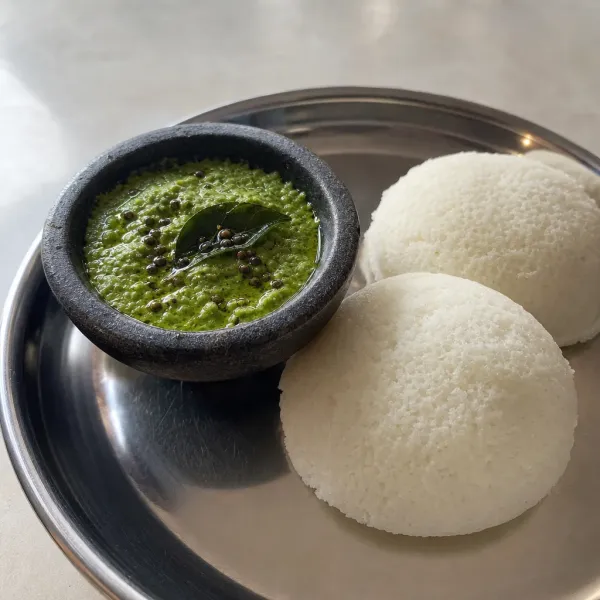
Kothamalli Chutney
Fresh coriander chutney from a Tamil Iyer kitchen: ground with coconut and tamarind, tempered in gingelly oil. Ready in 15 minutes. Bright green and…