

Cabbage Palya Recipe
Malayalam കാബേജ് പല്യTamil கோஸ் பல்யKannada ಎಲೆಕೋಸು ಪಲ್ಯTelugu క్యాబేజీ పల్య
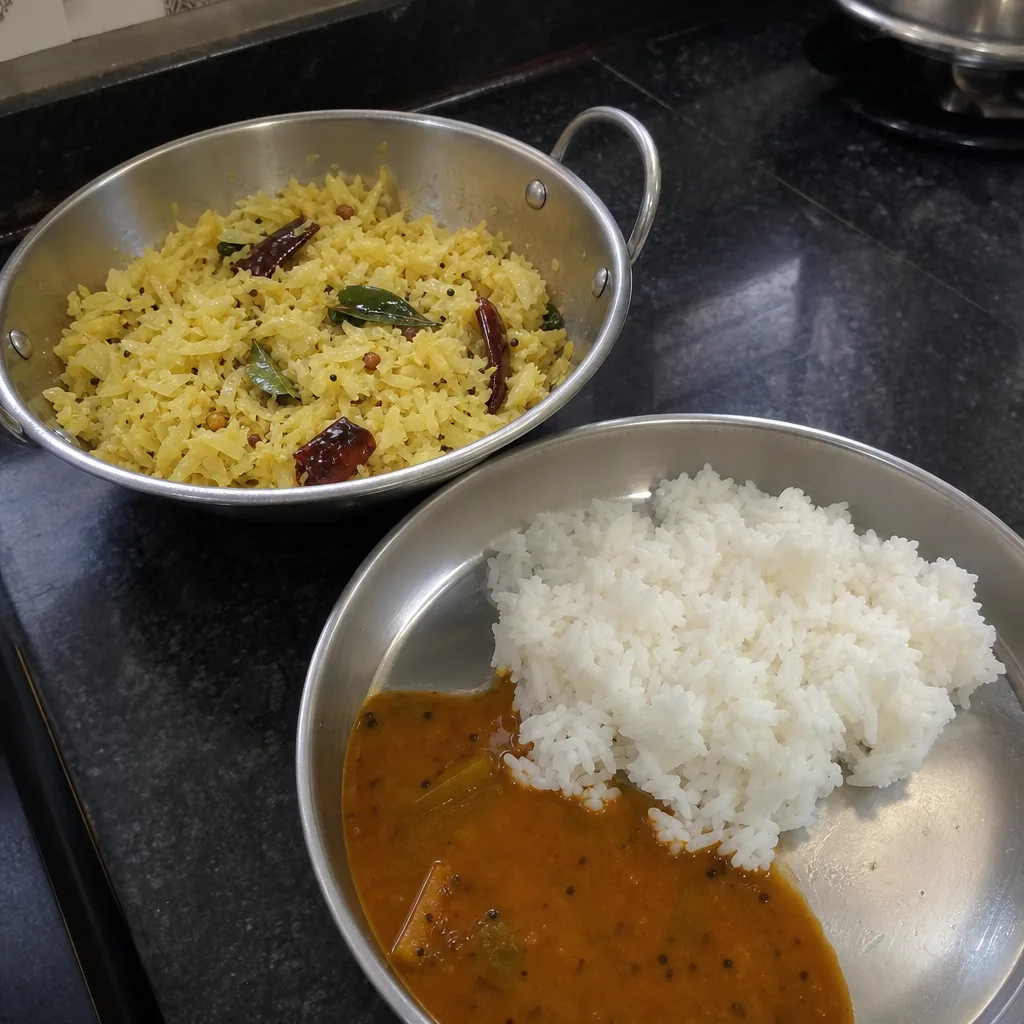
- Prep15 min
- Cook15 min
- Serves4
- DifficultyEasy
- DietVegan
Cabbage palya is the everyday dry vegetable dish of Karnataka homes, eaten at nearly every lunch alongside rice and sambar or rasam. It is quick, unfussy, and relies on a tempering of mustard, curry leaves and dried red chilli to carry the dish. The cabbage is cooked just enough to lose its raw edge but still has a little bite — it should not be soft and wet.
Most households add a small quantity of chana dal and urad dal to the tempering. These are not there for protein; they toast in the oil and give a gentle crunch that runs through every mouthful. Fresh grated coconut stirred in at the end is common in southern Karnataka and coastal districts. In Bangalore and Mysuru homes it appears sometimes and sometimes not, depending on what is in the kitchen that day.
The fat is always refined coconut oil or plain vegetable oil in most urban Karnataka kitchens. This is one of the few Karnataka dishes where gingelly oil is not traditional. The turmeric is small — just enough to colour the cabbage a pale yellow — and the heat comes only from the dried red chillies in the tempering, not from green chilli or chilli powder added to the vegetable itself.
Ingredients (serves 4)
For the palya
For the tempering
Method
Shred the cabbage
Quarter the cabbage, remove the core, and shred the leaves finely — about 3 mm wide. Thicker shreds take longer to cook and stay chewy in a way that does not suit this dish. Set aside.
Heat the oil and pop the mustard
Set a wide, heavy pan — a kadai or a flat-bottomed steel pan — over medium heat. Add the oil and let it warm for about 30 seconds. Add the mustard seeds and keep the lid close at hand. When they splutter and pop, move quickly to the next step; if you wait too long they will burn.
Toast the dals and red chilli
Add the urad dal and chana dal together. Stir constantly over medium heat for about 45 seconds until they turn a pale golden colour. They should smell nutty, not sharp. Add the broken dried red chillies and stir for another 15 seconds.
Add the curry leaves and shallots
Add the curry leaves — stand back, they will splutter in the hot oil. Stir once, then add the sliced shallots. Cook over medium heat, stirring occasionally, for 2 to 3 minutes until the shallots soften and turn translucent at the edges. They do not need to brown.
Add the cabbage and turmeric
Tip in all the shredded cabbage. Sprinkle the turmeric over it and add salt. Toss everything together well so the turmeric and oil coat the cabbage evenly. The pan will look very full; it will reduce quickly.
Cook the cabbage
Cover the pan and cook on medium-low heat for 4 to 5 minutes. The cabbage will release a little moisture — this is what cooks it through without adding water. Remove the lid, increase the heat to medium, and stir-fry for another 3 to 4 minutes until any liquid has evaporated and the cabbage looks dry. It should be tender but still have a slight bite, and pale yellow throughout. If it looks wet, keep stirring on medium heat until the moisture is gone.
Finish with coconut
If you are using fresh grated coconut, take the pan off the heat and stir it in now. The residual heat is enough; cooking the coconut further will dry it out and make it grainy. Taste for salt and serve immediately.
How to serve
Steamed rice with sambar and rasam; or as part of a Karnataka oota (meal) on a banana leaf alongside rice, sambar, rasam, a pickle, and papad.
Served with: Steamed rice with sambar and rasam; or as part of a Karnataka oota (meal) on a banana leaf alongside rice, sambar, rasam, a pickle, and papad.
Cook's tips
Do not add water
Cabbage holds enough moisture to cook itself. Adding water makes the palya wet and the dal in the tempering goes soft and loses its crunch. Trust the covered pan and the vegetable's own liquid.
The coconut question
Grated coconut is genuinely optional here, not a compromise. Many Bangalore households make it without coconut every day. If you add it, use fresh; desiccated coconut has a completely different texture and does not belong in this dish.
Shallots versus onion
Shallots are traditional and sweeten quickly without dominating. A small regular onion works in a home kitchen, but use it sparingly — this is a tempering element, not a base.
Keeping and reheating
This palya is best eaten the day it is made. Cabbage releases more water as it sits. If you reheat it, do so in a dry pan on medium heat, stirring until any pooled liquid cooks off.
Regional variations
Udupi households sometimes add freshly grated coconut at the end and skip the dal entirely; some North Karnataka versions use more dried red chillies and no coconut.
Glossary
- Palya ಪಲ್ಯ
- The Kannada word for a dry vegetable side dish, equivalent to poriyal in Tamil or thoran in Malayalam.
- Urad dal ಉದ್ದಿನ ಬೇಳೆ
- Split black gram without the husk; used in small quantities in tempering to add a nutty crunch.
- Chana dal ಕಡಲೆ ಬೇಳೆ
- Split Bengal gram; toasted in oil at the start of tempering for texture and a mild nuttiness.
- Kadai ಕಡಾಯಿ
- A deep, round-bottomed or flat-bottomed iron or steel pan used for stir-frying and tempering.
What decides this palya is the dryness of the finished dish and the crunch of the toasted dal in the tempering. If the cabbage is wet, the texture is wrong; if the dal is not properly toasted before the cabbage goes in, the dish tastes flat. Get those two things right and everything else follows.
More Dry Vegetable Sides recipes
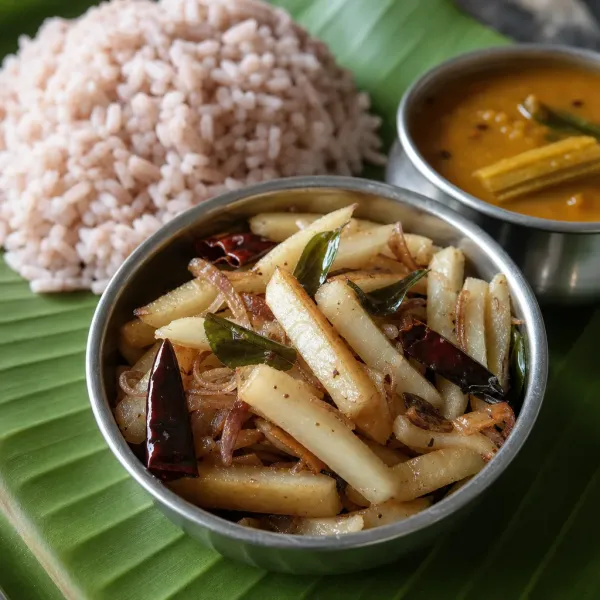
Yam Mezhukkupuratti (Chena Mezhukkupuratti)
Traditional Kerala chena mezhukkupuratti: elephant foot yam stir-fried in coconut oil with shallots, dried red chillies and curry leaves. Everyday Tr…
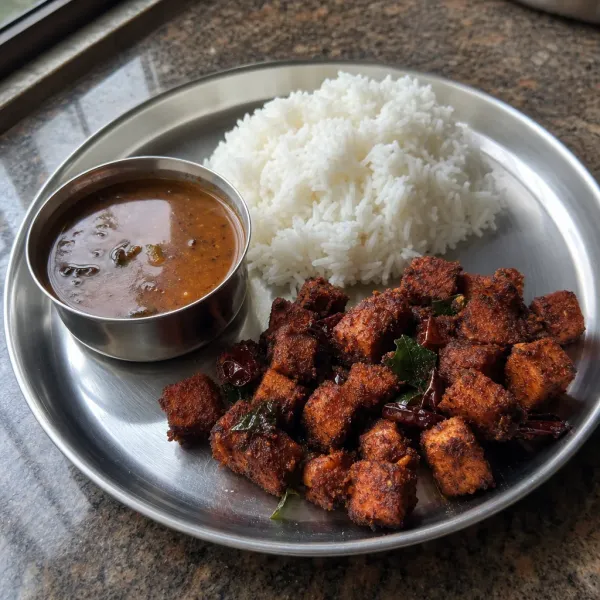
Senai Kizhangu Varuval
Traditional Tamil Iyer-style senai kizhangu varuval: elephant yam boiled, spice-coated and pan-fried in gingelly oil until deeply golden and dry.
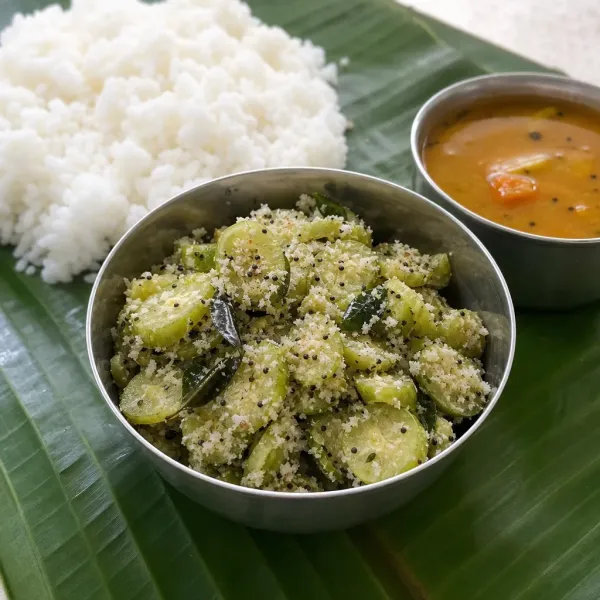
Kovakkai Poriyal
Traditional Tamil Brahmin kovakkai poriyal with gingelly oil, mustard-urad dal tempering, and fresh coconut. Dry, simple, made the right way.
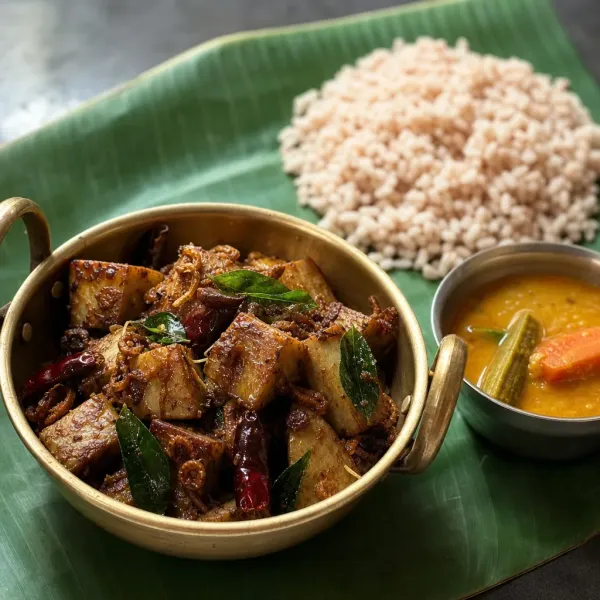
Chembu Mezhukkupuratti (Taro Root Stir-Fry)
Traditional Kerala chembu mezhukkupuratti: taro root stir-fried in coconut oil with shallots, dried red chillies and curry leaves. Step-by-step house…
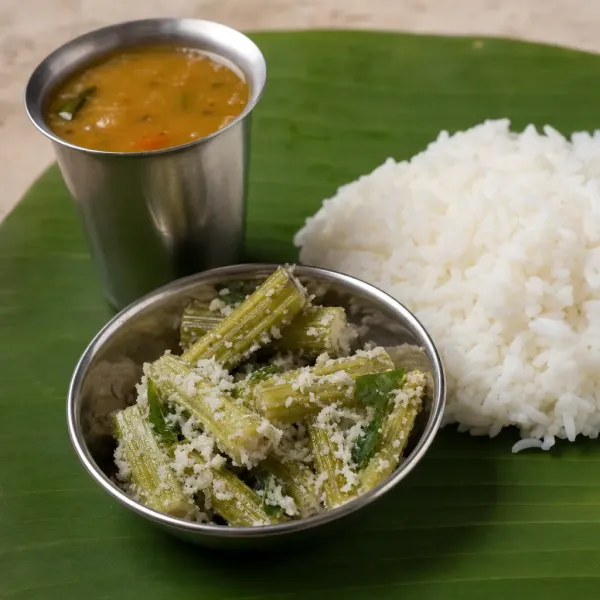
Murungakkai Poriyal
Authentic Tamil Iyer murungakkai poriyal: drumstick cooked dry with gingelly oil, shallots, and fresh coconut. Traditional household method, step by…
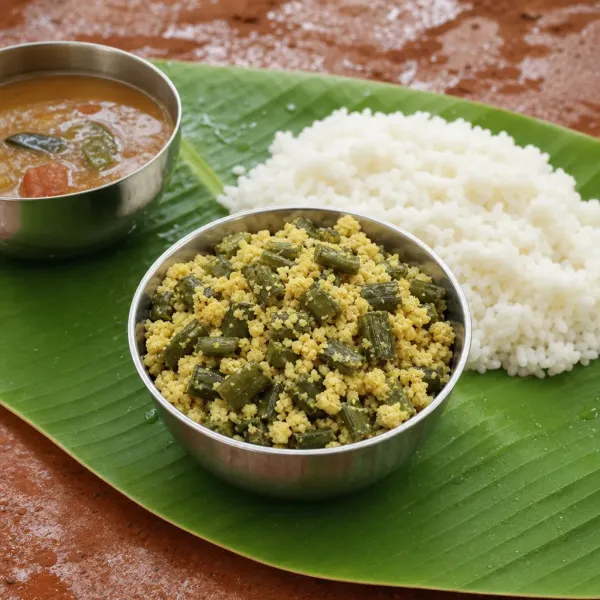
Paruppu Usili
Traditional Iyer-style paruppu usili with cluster beans: coarse dal paste steamed, crumbled, and fried in gingelly oil. Full method with tips.