

Chembu Mezhukkupuratti (Taro Root Stir-Fry) Recipe
Malayalam ചേമ്പ് മെഴുക്കുപുരട്ടിTamil சேம்பு மெழுக்குபுரட்டிKannada ಕೇಸವು ಮೆಳುಕ್ಕುಪುರಟ್ಟಿTelugu చేమడుంప మెళుక్కుపురట్టి
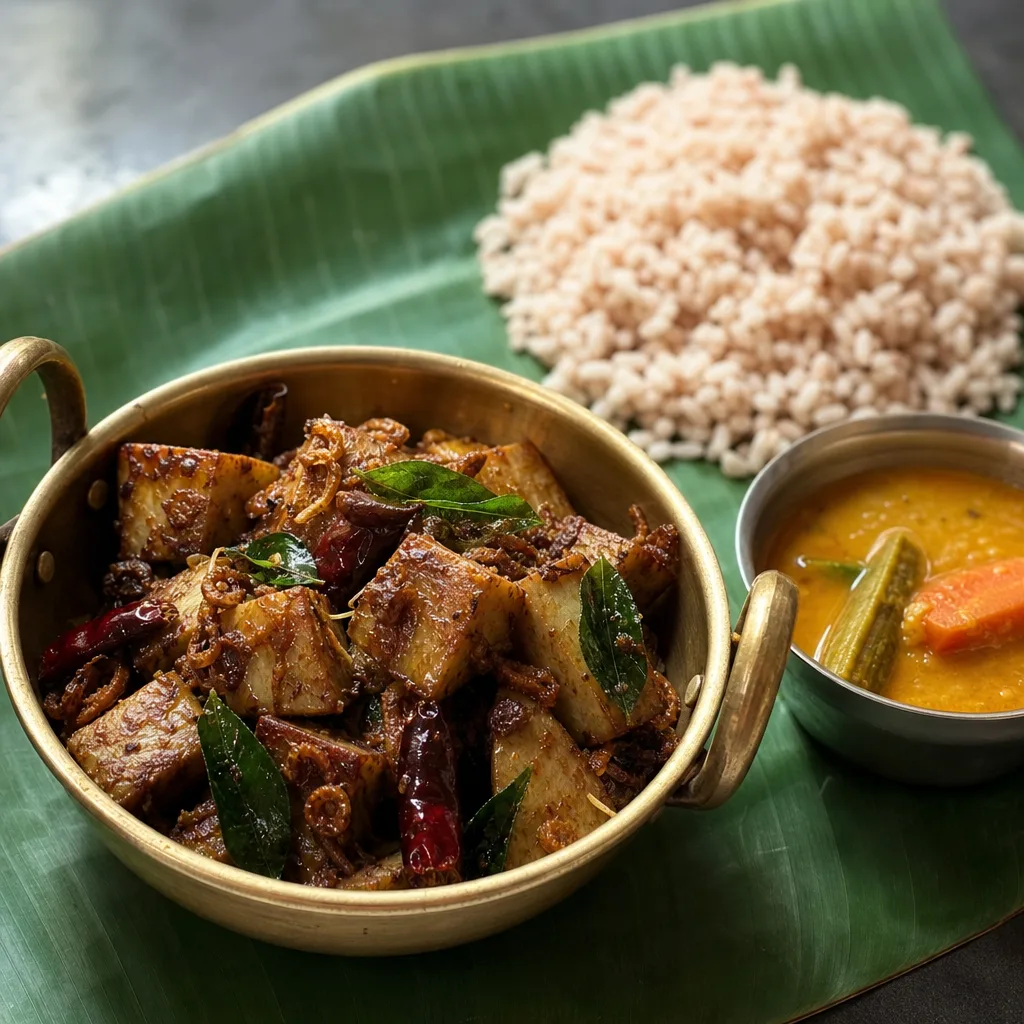
- Prep15 min
- Cook30 min
- Serves4
- DifficultyEasy
- DietVegan
Mezhukkupuratti is the everyday dry stir-fry that appears on a Kerala sadya plate and on the daily rice table in equal measure. The name describes exactly what happens: the vegetable is coated (puratti) in oil (mezhukku) until each piece is glossy and just yielding. Chembu — the small, rough-skinned taro corm — is one of the most traditional choices for this treatment. It has a slightly sticky, starchy quality when raw that cooks out into something dense and satisfying.
The method is simple but the sequencing matters. The chembu is always par-cooked first, either boiled or pressure-cooked, then finished in coconut oil with shallots, dried red chillies and curry leaves. The final stir-fry over a medium-high flame drives off the remaining moisture and gives the pieces a lightly dry, almost tacky surface. Rush this stage and the pieces stay soft and wet rather than picking up the slight resistance that makes them good with rice.
Households differ mainly in how much chilli they use and whether they peel the chembu before or after boiling. Peeling after boiling is easier — the skin slips off — but peeling before gives you cleaner pieces. Both are common. Some cooks add a little crushed garlic to the tempering; others keep it to shallots and chilli alone. Both are genuinely traditional.
Ingredients (serves 4)
Main
For the stir-fry
Method
Scrub and cut the chembu
Scrub the chembu under running water with a stiff brush to remove soil from the rough skin. Do not peel yet. Cut each corm into rounds about 2 cm thick, or halve them lengthwise if they are very small. Keeping the skin on during boiling prevents the starchy flesh from becoming waterlogged.
Boil until just cooked through
Place the chembu pieces in a wide pan and cover with water. Add ¼ tsp turmeric and enough salt to season the water lightly. Bring to a boil over high heat, then reduce to a steady simmer. Cook for 12 to 15 minutes until a knife goes in with just a little resistance — you want them cooked through but not falling apart. If they overcook they will crumble in the pan.
Drain and peel
Drain the chembu into a colander and let them cool for 5 minutes until you can handle them. Peel off the skin — it will come away easily now. If any pieces have broken, set them aside; they can still be used but keep them separate so you can add them last and handle them gently.
Heat the oil and temper the chillies
Heat a wide, heavy pan or a cheenachatti (iron wok) over medium flame. Add 3 tbsp coconut oil. When the oil is hot, add the broken dried red chillies. Let them darken slightly — about 20 seconds — so they release their flavour into the oil without burning. The oil will turn faintly reddish.
Add shallots and curry leaves
Add the sliced shallots and curry leaves together. Stir and cook over medium heat for 4 to 5 minutes until the shallots soften and begin to colour at the edges. They should be translucent and golden, not browned through.
Add turmeric and the boiled chembu
Sprinkle in the remaining ¼ tsp turmeric and stir it through the shallots for a few seconds. Add the peeled chembu pieces. Stir gently to coat them in the oil and shallot mixture without breaking the pieces. Check salt and adjust now.
Stir-fry until dry and coated
Increase the heat to medium-high. Stir and toss the chembu every minute or so, letting the pieces sit undisturbed between turns so they pick up a little colour on the cut surfaces. Cook for 8 to 10 minutes. You are looking for pieces that are dry on the outside, lightly golden in patches, and coated in a thin film of coconut oil. If you rush this stage and take the pan off while moisture is still visible, the dish will taste steamed rather than stir-fried.
Rest briefly and serve
Take the pan off the heat and let it sit for 2 minutes. The residual heat finishes the drying. Transfer to a serving dish. It should look glossy but not wet, with the shallots and curry leaves scattered through.
How to serve
Plain matta rice and sambar, or as part of a sadya spread alongside rice, parippu curry, rasam, and pickles. Also good with kanji (rice porridge) for a simple everyday meal.
Served with: Plain matta rice and sambar, or as part of a sadya spread alongside rice, parippu curry, rasam, and pickles. Also good with kanji (rice porridge) for a simple everyday meal.
Cook's tips
Itching from raw chembu
Raw taro contains calcium oxalate crystals that cause itching on the hands and throat. Applying a little coconut oil to your hands before peeling raw chembu reduces the irritation. Boiling before peeling, as in this recipe, largely avoids the problem.
Pressure cooker shortcut
Many households pressure-cook the chembu (unpeeled, 2 whistles on medium heat with a little water and salt) instead of boiling. It is faster and gives the same result. Let the pressure release naturally before opening.
Choosing the right chembu
Small, firm corms with no soft spots are best. Very large chembu can be fibrous in the centre. The small variety sold as 'cheru chembu' in Kerala markets is ideal for this dish.
Pan choice matters
A seasoned iron cheenachatti or a wide thick-bottomed pan gives better colour than a non-stick pan. Non-stick does not get hot enough to dry the pieces properly at the final stage.
Regional variations
In northern Kerala (Malabar), shallots are sometimes omitted and a small amount of grated coconut is added at the end; some Nasrani households in central Kerala add a pinch of turmeric and a slit green chilli rather than red chilli.
Glossary
- Chembu ചേമ്പ്
- Taro root (Colocasia esculenta), the starchy corm used widely in Kerala cooking.
- Mezhukkupuratti മെഴുക്കുപുരട്ടി
- A Kerala dry stir-fry style in which a cooked vegetable is tossed in oil with minimal spicing until coated and glossy.
- Cheenachatti ചീനച്ചട്ടി
- A traditional Kerala iron wok, shallow and wide, used for stir-frying and frying.
- Ulli ഉള്ളി
- Shallot; the small red shallot (kunjulli or cheriya ulli) is preferred in Kerala cooking over large onions.
- Matta rice മട്ട അരി
- Kerala's traditional red parboiled rice, also called Rosematta or Palakkadan matta, with a nutty flavour and firm texture.
Two things decide whether this dish works: not overcooking the chembu in the boiling stage, so the pieces hold together in the pan, and then giving the final stir-fry enough time over real heat so the moisture leaves and the coconut oil coats each piece properly. Get those two right and the dish takes care of itself.
More Dry Vegetable Sides recipes
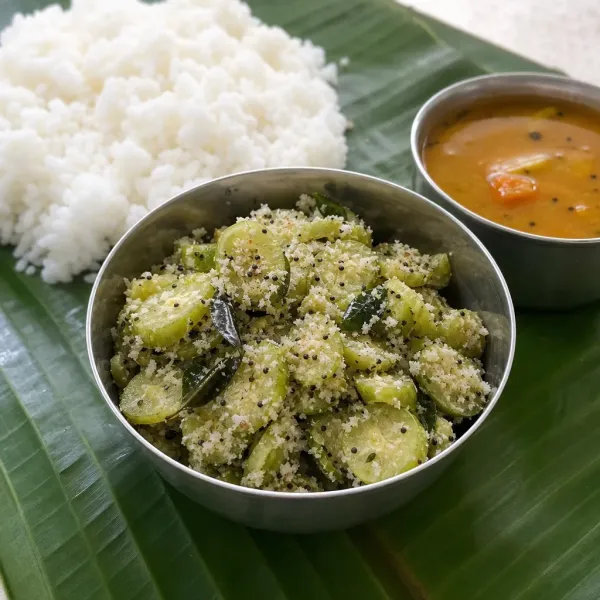
Kovakkai Poriyal
Traditional Tamil Brahmin kovakkai poriyal with gingelly oil, mustard-urad dal tempering, and fresh coconut. Dry, simple, made the right way.
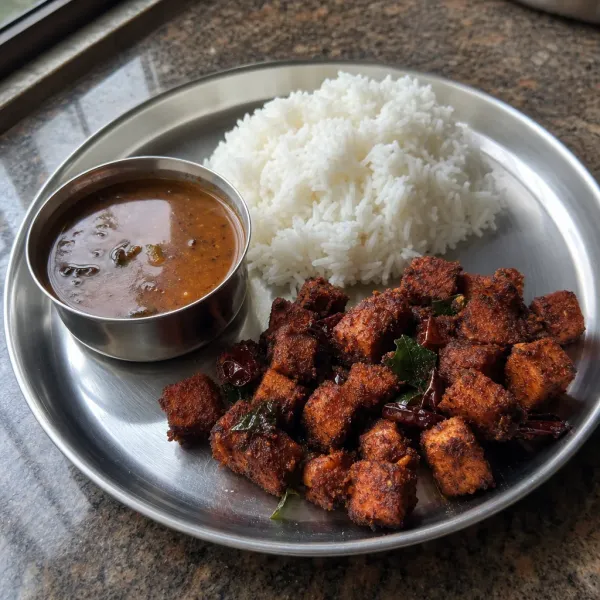
Senai Kizhangu Varuval
Traditional Tamil Iyer-style senai kizhangu varuval: elephant yam boiled, spice-coated and pan-fried in gingelly oil until deeply golden and dry.
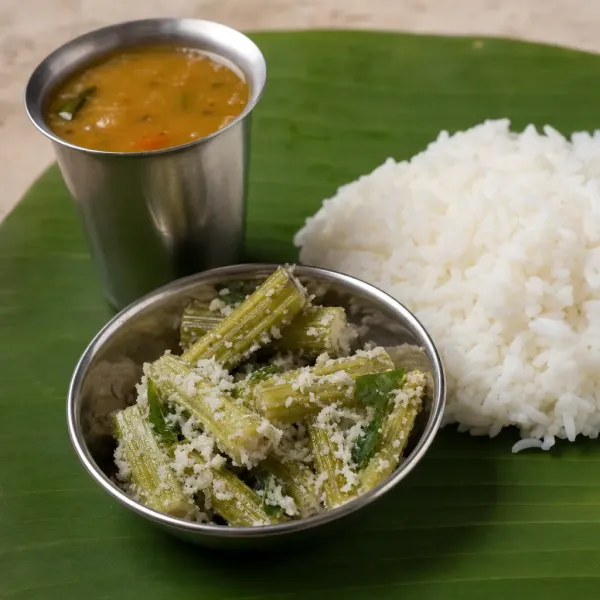
Murungakkai Poriyal
Authentic Tamil Iyer murungakkai poriyal: drumstick cooked dry with gingelly oil, shallots, and fresh coconut. Traditional household method, step by…
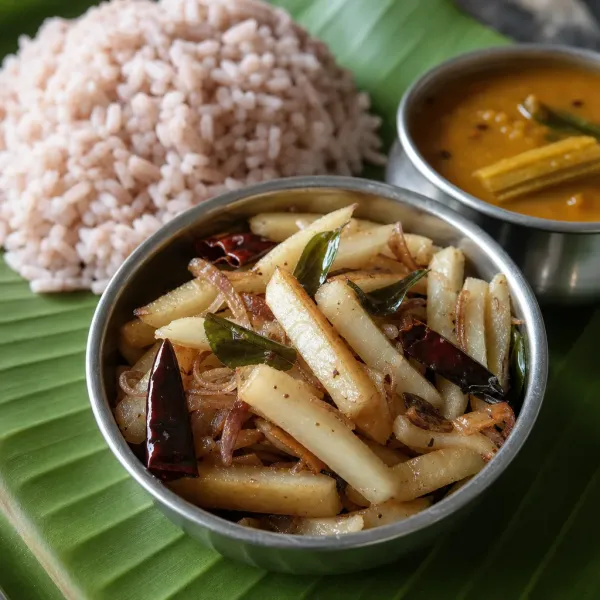
Yam Mezhukkupuratti (Chena Mezhukkupuratti)
Traditional Kerala chena mezhukkupuratti: elephant foot yam stir-fried in coconut oil with shallots, dried red chillies and curry leaves. Everyday Tr…
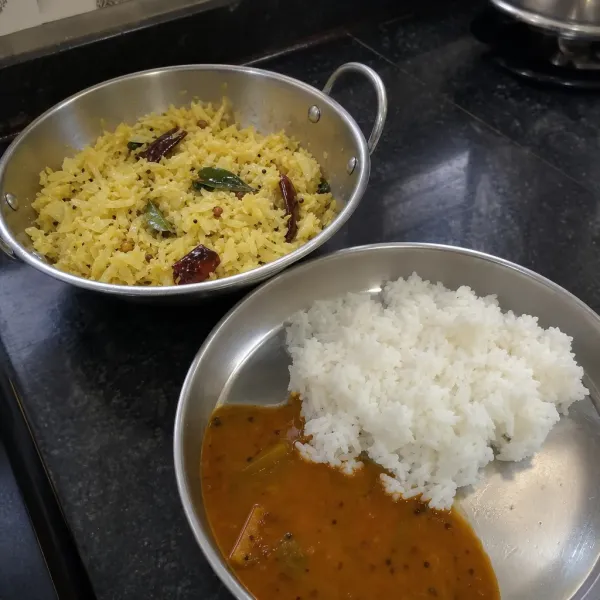
Cabbage Palya
Traditional Karnataka cabbage palya with mustard, curry leaves, toasted chana and urad dal. Dry, quick, and made without water. Everyday home recipe.
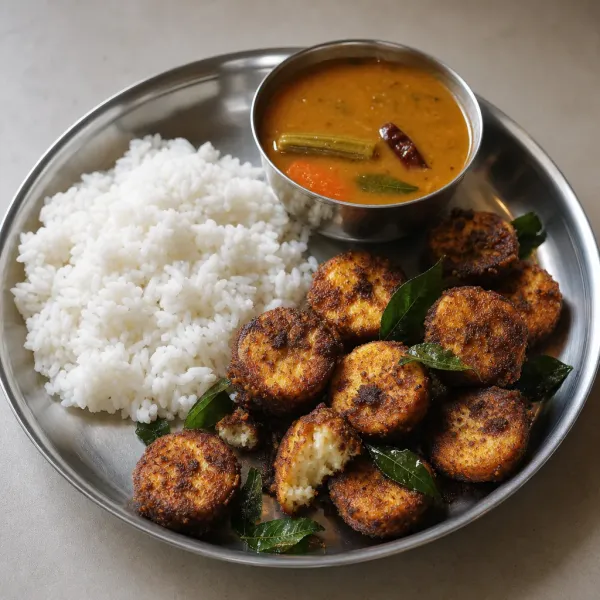
Vazhakkai Varuval
Traditional Tamil Nadu vazhakkai varuval: raw banana rounds fried in gingelly oil with turmeric, red chilli, and coriander until deeply golden.