

Senai Kizhangu Varuval Recipe
Malayalam ചേന കിഴങ്ങ് വറുവൽTamil சேனை கிழங்கு வறுவல்Kannada ಸೇನೈ ಕಿಳಂಗು ವರುವಲ್Telugu సేన కిళంగు వరువల్
- Prep20 min
- Cook40 min
- Serves4
- DifficultyEasy
- DietVegan
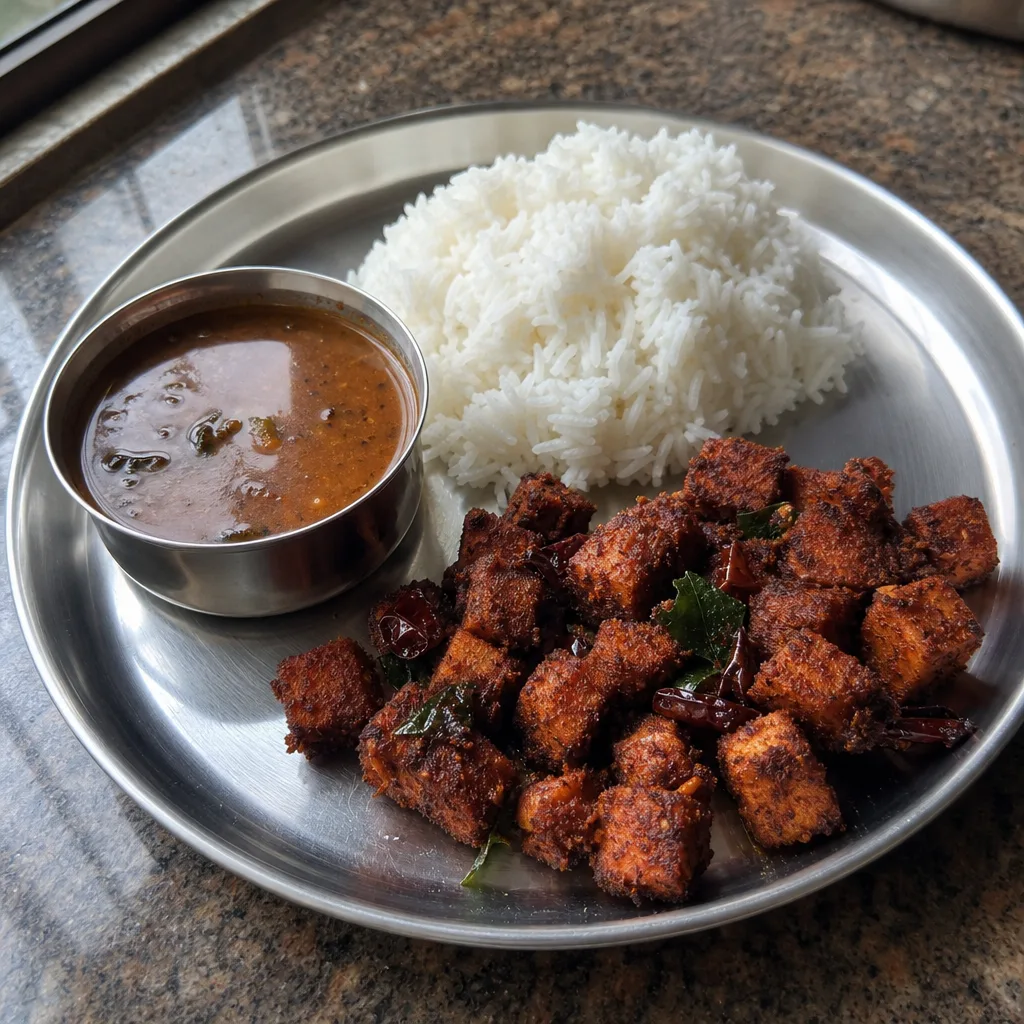
Senai kizhangu varuval is the dish that converts people who think yam is dull. The yam is first boiled until just cooked through, then sliced into pieces thick enough to hold their shape, coated in spiced rice flour, and fried in gingelly oil until the outside is dry and faintly crisp while the inside stays dense and earthy. It is not a batter fry — there is no coating that puffs or crackles. The spice clings directly to the cut surface and toasts against the hot pan.
In Iyer households this is a regular side dish at a rice meal, placed on the banana leaf or thali alongside sambar and a kootu. It is not festival food, not a snack — it is an everyday vegetable preparation that happens to be deeply satisfying. The gingelly oil is not optional here; it gives the finished pieces a particular nuttiness that coconut oil does not replicate.
Household variation exists mainly in heat level. Some cooks use only red chilli powder; others add a little black pepper. A few add a pinch of asafoetida to the coating. The rice flour quantity is small — just enough to help the spices adhere and to dry the surface slightly as it fries. Too much and it becomes a coating; too little and the spices slide off.
Ingredients (serves 4)
For boiling the yam
For the spice coating
For frying
Method
Peel and cut the yam
Oil your hands before you begin. Peel the yam and cut it into cubes roughly 2.5 cm on each side — thick enough that they will not crumble when boiled. If the pieces are uneven they will cook unevenly: some will be mushy before others are done. Set aside in a bowl of water to prevent discolouration.
Boil with turmeric and salt
Put the yam cubes into a pot, cover with fresh water, add the salt and the ½ tsp turmeric. Bring to a boil over medium-high heat, then reduce to a steady simmer. Cook for 12 to 15 minutes. The yam is ready when a knife slides in with just a little resistance — it should be cooked through but not falling apart. If it is too soft it will break in the pan.
Drain and dry
Drain the yam into a colander and leave it undisturbed for at least 10 minutes. Surface moisture is the enemy of a good varuval. If the pieces look wet, spread them on a clean cloth for a few minutes. Do not rinse them.
Mix the spice coating
In a wide bowl, combine the red chilli powder, coriander powder, the remaining ¼ tsp turmeric, black pepper powder, rice flour and salt. Mix them together dry before the yam goes in.
Coat the yam
Add the drained yam pieces to the spice bowl. Turn them gently with a spoon or your hands until every surface is coated. The coating will be thin — that is correct. If the yam is still slightly warm the spices will adhere better. Let the coated pieces sit for 5 minutes.
Heat the oil
Pour the gingelly oil into a wide, heavy iron or non-stick pan and set it over medium heat. The pan must be wide enough to hold the yam pieces in a single layer without crowding. When the oil shimmers and a curry leaf dropped in sizzles immediately, the oil is ready.
Temper the aromatics
Add the dried red chillies and curry leaves to the hot oil. Stand back — the curry leaves will sputter hard. Let them fry for 20 to 30 seconds until the leaves are crisp and the chillies have darkened slightly.
Add the yam and spread it out
Slide the coated yam pieces into the pan in a single layer. Do not stir immediately. Leave them undisturbed over medium heat for 4 to 5 minutes. You are waiting for the bottom surface to dry out and begin to colour to a deep golden brown. If you move them too soon they will stick and break.
Turn and fry the other sides
Using a flat spatula, turn the pieces carefully. Fry for another 4 to 5 minutes on the second side. Then turn once or twice more, letting each surface spend time against the hot pan. The total frying time is around 15 to 18 minutes. The finished pieces should be a deep reddish-brown on the outside, dry to the touch, and hold their shape cleanly.
Check seasoning and serve
Taste one piece and adjust salt if needed. Serve immediately from the pan. Varuval loses its surface texture as it sits, so bring it to the table hot.
How to serve
Steamed rice (raw rice or matta rice), sambar, and a simple kootu or mor kuzhambu. A small amount of papad alongside is common in Iyer meals.
Served with: Steamed rice (raw rice or matta rice), sambar, and a simple kootu or mor kuzhambu. A small amount of papad alongside is common in Iyer meals.
Cook's tips
Handling raw yam
Raw elephant yam contains calcium oxalate crystals that cause intense itching on skin and in the throat. Oil your hands before peeling and cutting. Boiling with turmeric and salt neutralises most of this. Do not eat the yam raw or undercooked.
The drying step matters
If you rush the draining and coat wet yam, the spices will not adhere and the pieces will steam rather than fry in the pan. Ten minutes in the colander is the minimum; longer is better.
Pan choice
A seasoned cast-iron pan gives the best crust. A non-stick pan works but the surface will not be quite as dry and textured. Avoid stainless steel unless it is very well heated — the yam will stick badly.
Do not crowd the pan
If you pile the pieces on top of each other they will steam and go soft. Work in two batches if your pan is small, adding a little more oil for the second batch.
Gingelly oil substitute
In a genuine Iyer kitchen, gingelly oil is not substituted. If it is unavailable, refined sunflower oil will fry the yam but the flavour will be noticeably different. Do not use toasted sesame oil — it is a different product entirely and will burn.
Regional variations
Chettinad version uses shallots, dried red chillies and kalpasi; Kerala home version uses coconut oil and curry leaves with shallots; Mappila version may include fennel.
Glossary
- Senai kizhangu சேனை கிழங்கு
- Elephant yam (Amorphophallus paeoniifolius); a large, starchy tuber with a dense, dry flesh and a slightly mucilaginous quality when raw.
- Varuval வறுவல்
- A Tamil dry-fry preparation; the word implies that the item is cooked in oil until dry and well-seasoned, without any sauce or gravy.
- Gingelly oil நல்லெண்ணெய்
- Cold-pressed sesame oil used widely in Tamil Nadu cooking; lighter in colour and flavour than toasted sesame oil and suitable for frying.
- Kuzhambu குழம்பு
- A Tamil gravy or sauce-based dish, often tamarind or yoghurt based, served with rice.
Two things decide whether this works: the yam must be drained thoroughly before it is coated, and it must be left alone in the pan long enough for each surface to form a dry crust before it is turned. Rush either of those and you get soft, spice-coated yam rather than a true varuval.
More Dry Vegetable Sides recipes
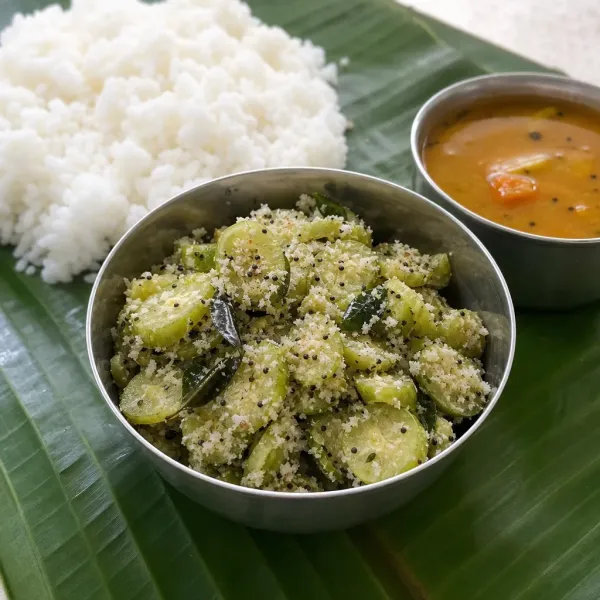
Kovakkai Poriyal
Traditional Tamil Brahmin kovakkai poriyal with gingelly oil, mustard-urad dal tempering, and fresh coconut. Dry, simple, made the right way.
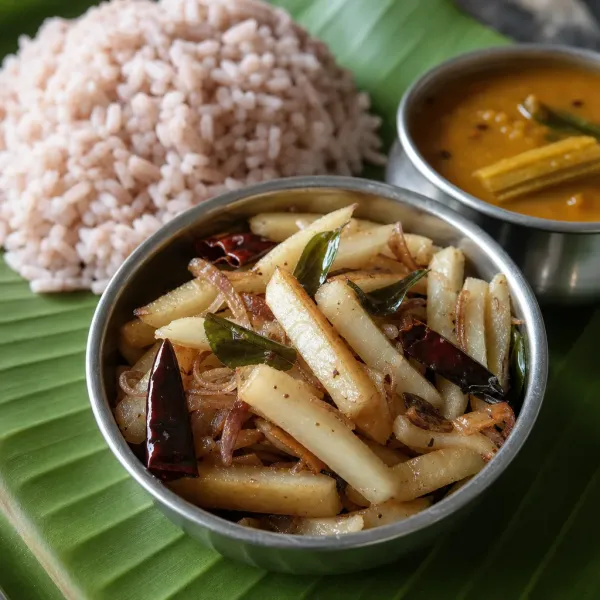
Yam Mezhukkupuratti (Chena Mezhukkupuratti)
Traditional Kerala chena mezhukkupuratti: elephant foot yam stir-fried in coconut oil with shallots, dried red chillies and curry leaves. Everyday Tr…
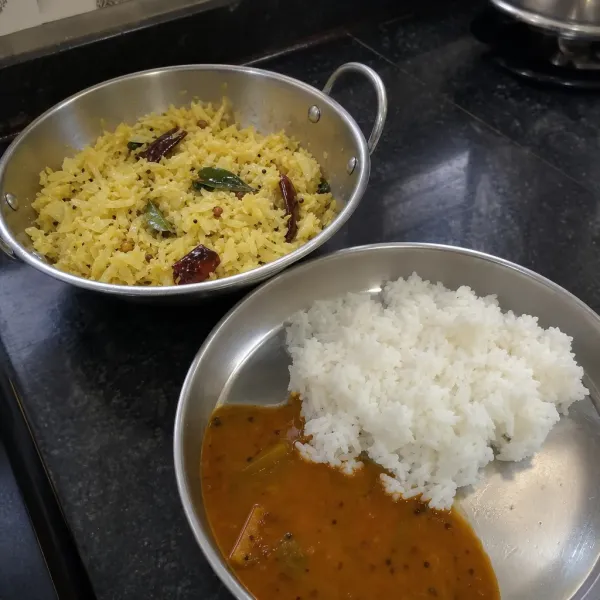
Cabbage Palya
Traditional Karnataka cabbage palya with mustard, curry leaves, toasted chana and urad dal. Dry, quick, and made without water. Everyday home recipe.
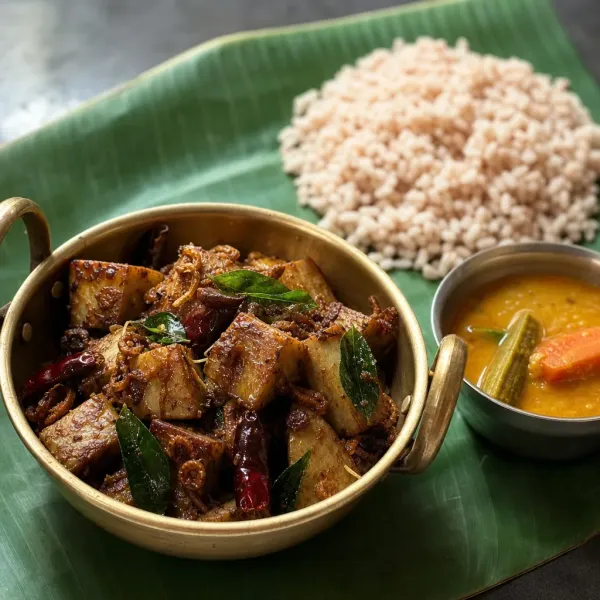
Chembu Mezhukkupuratti (Taro Root Stir-Fry)
Traditional Kerala chembu mezhukkupuratti: taro root stir-fried in coconut oil with shallots, dried red chillies and curry leaves. Step-by-step house…
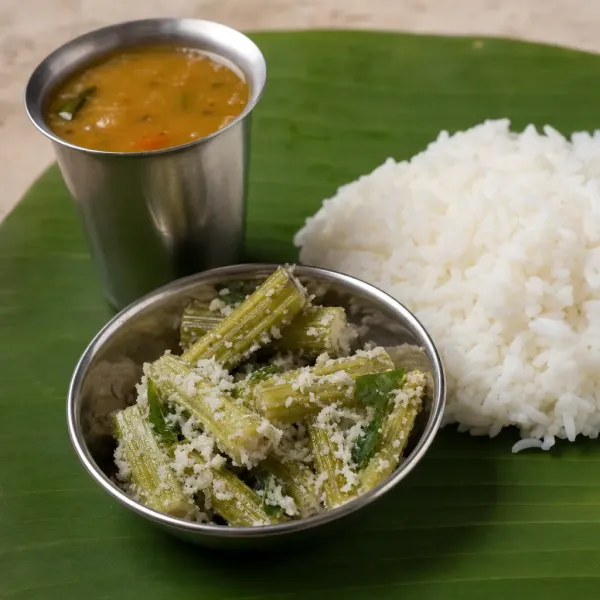
Murungakkai Poriyal
Authentic Tamil Iyer murungakkai poriyal: drumstick cooked dry with gingelly oil, shallots, and fresh coconut. Traditional household method, step by…
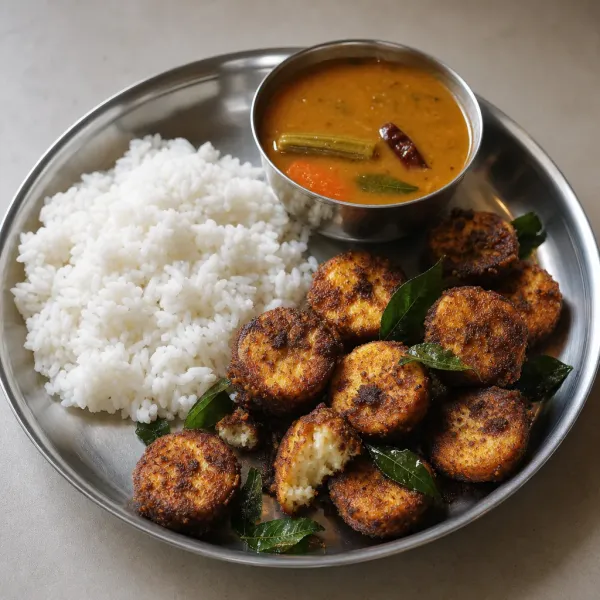
Vazhakkai Varuval
Traditional Tamil Nadu vazhakkai varuval: raw banana rounds fried in gingelly oil with turmeric, red chilli, and coriander until deeply golden.