Unnakaya Recipe
Malayalam ഉണ്ണക്കായTamil உன்னக்காயKannada ಉನ್ನಕಾಯTelugu ఉన్నకాయ
- Prep25 min
- Cook30 min
- Serves4
- DifficultyMedium
- DietEgg
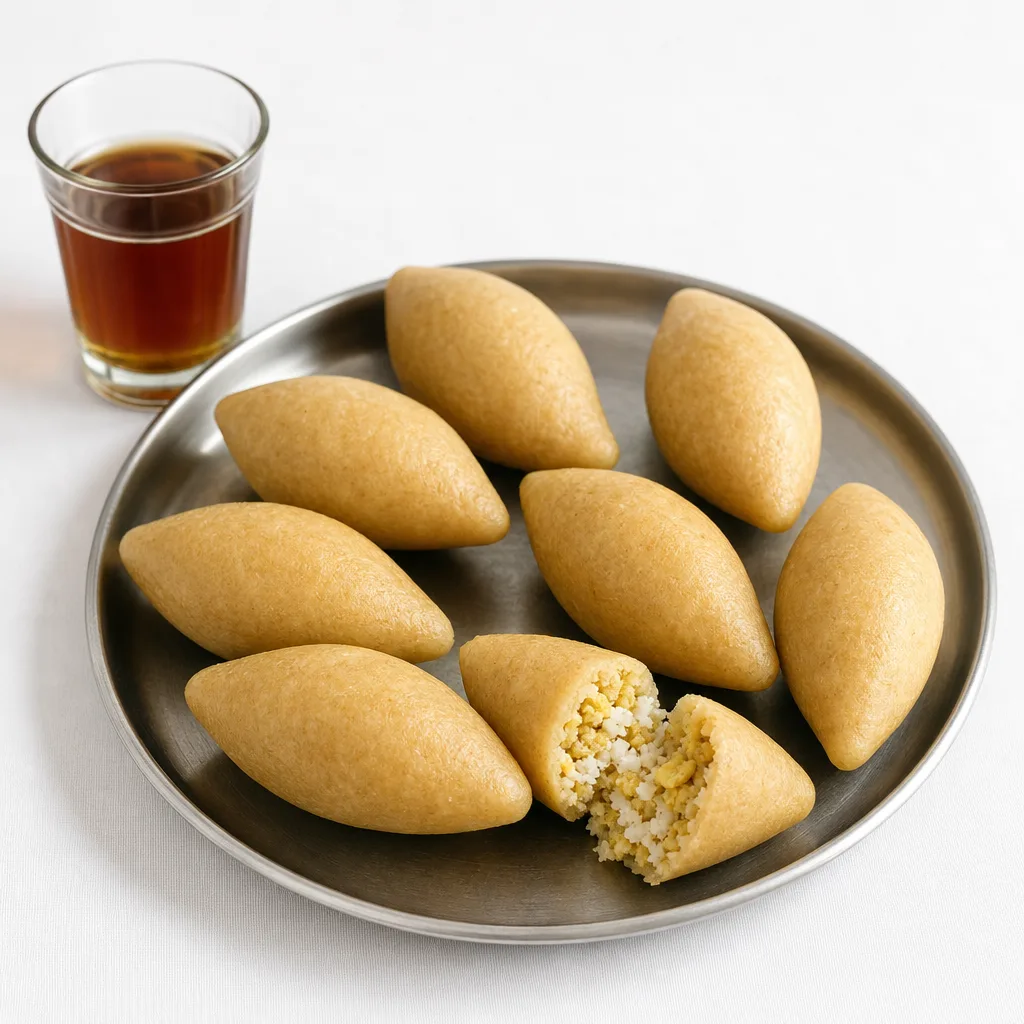
Unnakaya is a Mappila snack from the Malabar coast, made during Ramadan iftaar and at weddings, and also on ordinary afternoons when ripe ethapazham are plentiful. The outer shell is mashed steamed banana, shaped around a filling of scraped coconut, egg, sugar and cardamom, then deep-fried in coconut oil until the skin is just set and lightly coloured.
The banana used is the thick, starchy ethapazham — the large red-skinned Kerala cooking banana — at the stage when it is fully ripe and very sweet but still firm enough to mash without turning watery. If the banana is underripe the shell cracks during frying; if it is overripe it will not hold its shape at all. Getting that stage right is the first decision the cook makes.
Households differ mainly in the filling. The version given here, which is the most common across Kozhikode and Malappuram, uses egg scrambled into the coconut-sugar mixture. Some families keep the filling purely coconut and sugar, which makes it suitable for children and for guests who do not eat egg. The shape is always the same: a fat oval, tapered at both ends, about the size of a large date.
Ingredients (serves 4)
For the shell
For the filling
For frying
Method
Steam the bananas
Peel the ethapazham and cut each one into two or three pieces. Place them in a steamer or idli pot and steam over medium heat for 10 to 12 minutes, until completely tender when pierced with a skewer. They should be soft all the way through but not waterlogged. Remove and let them cool until you can handle them comfortably.
Mash and season the shell
Mash the steamed banana thoroughly while still warm, using your hands or the back of a spoon, until completely smooth with no lumps. Add the small pinch of salt and knead briefly. The mash should hold together cleanly when pressed into a ball. If it feels wet, do not add flour — simply let it sit uncovered for five minutes to dry slightly.
Make the filling
Place a small pan over low heat and add the ghee. Add the scraped coconut and sugar and stir for two minutes until the sugar dissolves and the coconut smells warm and fragrant. Pour in the beaten eggs and stir continuously, keeping the heat low, until the egg is just cooked through and the mixture is dry enough to hold its shape when pressed — about three to four minutes. Do not let it brown. Stir in the crushed cardamom, remove from heat and cool completely before filling.
Portion the shell
Divide the banana mash into 12 equal portions, roughly 30 to 35 g each. Roll each portion into a smooth ball between your palms. Keep them covered with a damp cloth so they do not dry out while you work.
Shape and fill
Take one ball of banana mash and flatten it in your palm into a disc about 7 cm across and 5 mm thick, pressing from the centre outward. Place a heaped teaspoon of filling in the centre — do not overfill or the shell will split. Bring the edges up and over the filling, pressing them together firmly to seal. Roll gently between your palms into a smooth oval, tapered at both ends. Any crack in the surface will open in the oil, so press and smooth carefully. Repeat with the remaining portions.
Heat the oil
Pour the coconut oil into a deep, narrow kadai and heat over medium flame to 170°C. To test without a thermometer, lower a tiny piece of banana mash into the oil — it should rise steadily to the surface within three seconds, not immediately and not slowly. The oil must not be smoking.
Fry in batches
Lower three or four unnakaya gently into the oil. Do not crowd the pan or the temperature drops and the shells absorb oil. Fry for three to four minutes, turning once or twice with a slotted spoon, until the surface is an even pale golden-brown — the colour of milky tea. The shell should be just set and very lightly coloured, not dark. Lift out and drain on a plate lined with paper.
Serve immediately
Unnakaya is at its best eaten within fifteen minutes of frying, while the shell is still tender and the filling warm. As they cool they firm up and lose that soft, yielding quality.
How to serve
Served on its own as an iftaar snack or tea-time sweet. Sometimes accompanied by black tea or sulaimani.
Served with: Served on its own as an iftaar snack or tea-time sweet. Sometimes accompanied by black tea or sulaimani.
Cook's tips
Choosing the banana
Ethapazham is non-negotiable here. The large red-skinned Kerala cooking banana, fully ripe, gives the right sweetness and starch to hold the shape. Nendrapazham (the smaller yellow variety sold as 'Kerala banana' in cities) can be used if ethapazham is unavailable, but the shell will be slightly softer and harder to shape. Ordinary dessert bananas are too wet and sweet and will not work.
The filling must be completely dry and cool
If the filling is warm when you shape the rolls, the banana mash softens from the inside and the rolls collapse in the oil. Cook the filling until it is genuinely dry — it should clump when pressed, not stick to your fingers — and let it cool fully before using.
Cracks in the shell
If the banana mash is too dry it cracks when you shape it. Dip your fingers lightly in water and smooth the surface before frying. A single small crack will open into a split in the oil and the filling will leak out.
Frying temperature
Too hot and the outside browns before the shell is cooked through; too cool and the rolls absorb oil and turn greasy. Medium heat and patience — three to four minutes per batch — gives the best result.
Making ahead
The shaped, unfilled rolls can be kept covered at room temperature for up to two hours before frying. The filling can be made a day ahead and refrigerated. Do not refrigerate the shaped banana rolls — the cold makes the mash dense and difficult to fry evenly.
Regional variations
Some households in Kozhikode use only coconut and sugar in the filling, without egg; a few add raisins and cashews to the filling alongside the egg.
Glossary
- Ethapazham ഏത്തപ്പഴം
- The large red-skinned Kerala cooking banana, used ripe for sweets and raw for savoury dishes.
- Unnakaya ഉണ്ണക്കായ
- Mappila deep-fried stuffed banana roll; the name derives from 'unna' (to eat) and 'kaya' (raw banana or plantain).
- Sulaimani സുലൈമാനി
- Malabar spiced black tea, often served with Mappila sweets and snacks at iftaar.
- Mappila മാപ്പിള
- The Muslim community of the Malabar coast, whose cuisine is distinct from both Travancore Hindu and Nasrani cooking.
Two things decide this recipe: the ripeness of the ethapazham and the dryness of the filling. Get both right and the shell holds its shape in the oil, the filling stays in place, and the finished roll is soft inside with a barely-there golden skin. Rush either and the oil will find the weakness.
More Snacks recipes
Kappa Chips (Kerala Tapioca Chips)
Classic Kerala tapioca chips fried in coconut oil and finished with a salt brine. Thin, pale, and crisp — the traditional household method from Trava…
Chicken Pakoda
Traditional Kongunad chicken pakoda with gram flour batter, fennel, curry leaves, and gingelly oil. Bone-in pieces, crisp outside, tender inside.
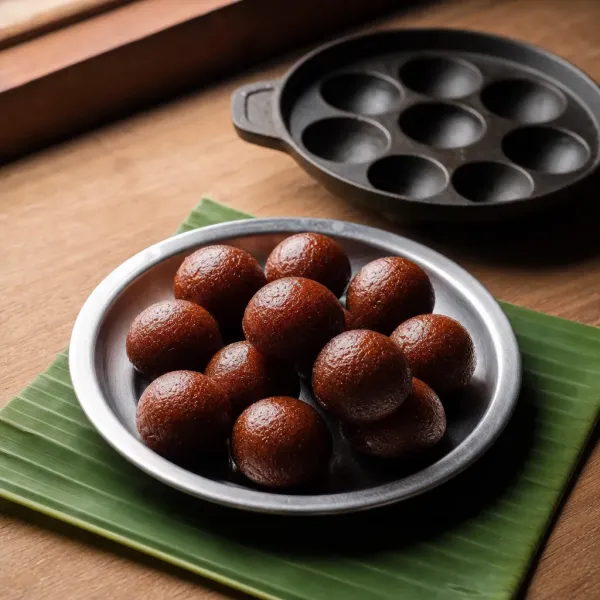
Unniyappam
Traditional Kerala unniyappam made with ground raw rice, dark jaggery, ripe nendran banana and coconut oil in a cast-iron appakaram. Step-by-step hou…
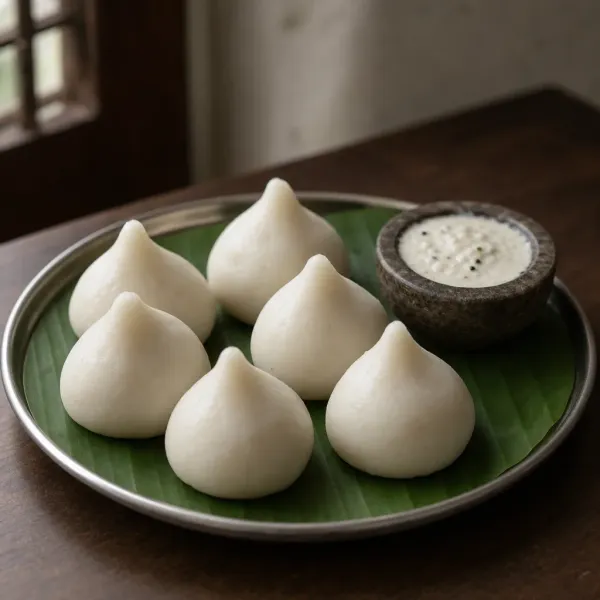
Uppu Kozhukattai
Traditional Iyer recipe for uppu kozhukattai: savoury steamed rice flour dumplings with mustard, curry leaves and coconut. Step-by-step method.
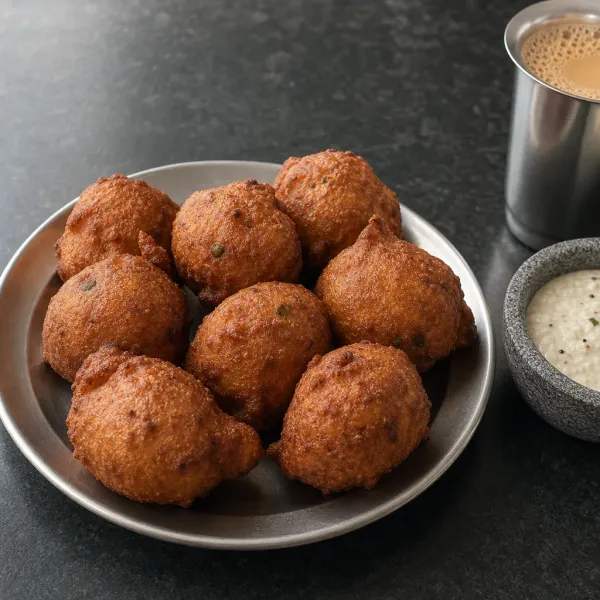
Mysore Bonda
Traditional Mysuru-style maida bonda made with thick sour curd. Crisp shell, soft inside. Step-by-step Karnataka household recipe with tips.