

Unniyappam Recipe
Malayalam ഉണ്ണിയപ്പംTamil உன்னியப்பம்Kannada ಉನ್ನಿಯಪ್ಪಂTelugu ఉన్నియప్పం
- Prep20 min
- Soak / ferment4 hr
- Cook40 min
- Serves30 pieces approximately
- DifficultyMedium
- DietVegetarian
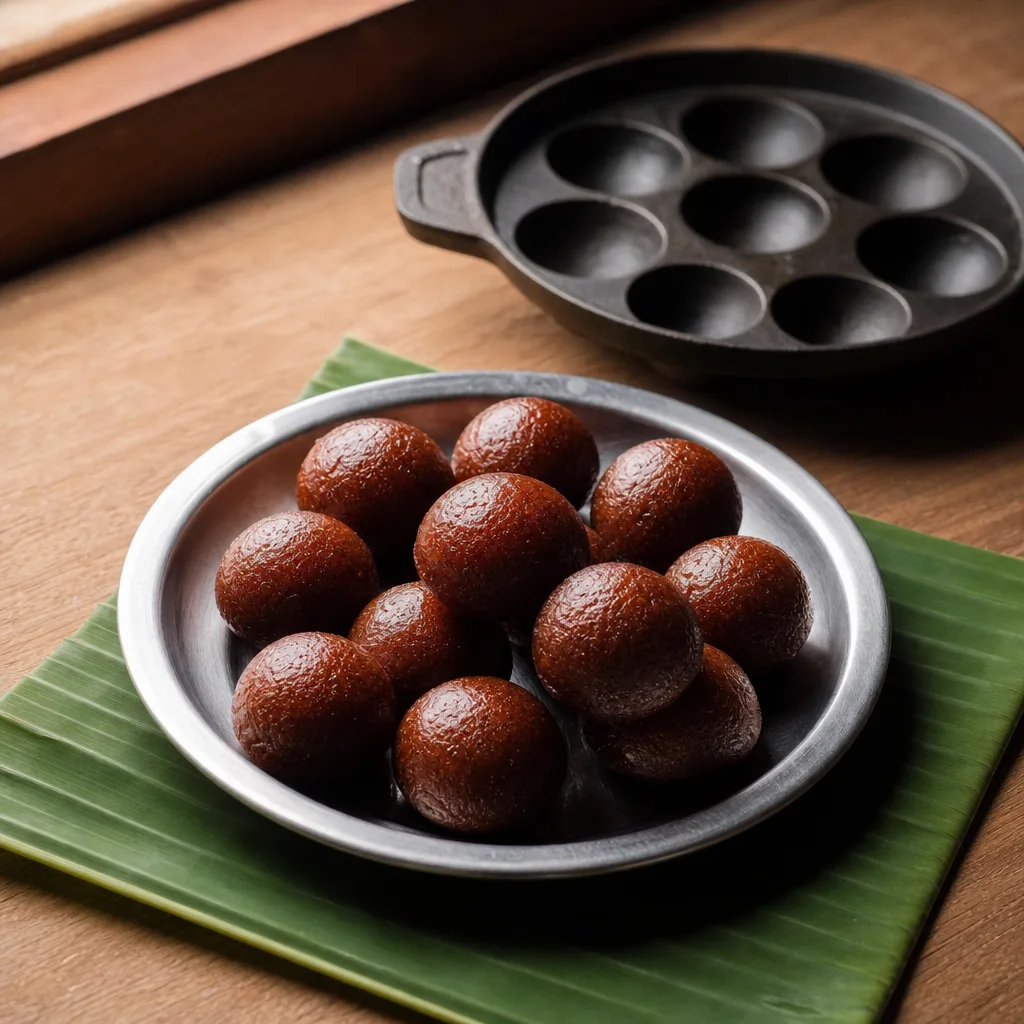
Unniyappam belongs to every Kerala household, but it is most closely associated with the temple kitchens of central and southern Kerala, where it is offered as prasadam. At home it is made for Vishu, Thiruvathira, and the afternoon snack that children expect when they come back from school. The appakaram — the heavy cast-iron pan with its seven or nine hemispherical cups — is what gives the fritter its round belly and thin, slightly crisp outer shell over a soft, yielding centre.
The batter is built on raw rice ground to a smooth paste, jaggery melted and strained, ripe nendran banana mashed in, and a small measure of roasted rice flour to give body. Cardamom and a little dried ginger are the only spices. Coconut oil is the cooking fat — no other oil belongs here. The cups are filled only two-thirds of the way because the batter puffs as it cooks, and each appam is turned once with a skewer or a thin wooden stick so both sides brown evenly.
Households vary on the banana: some use one small nendran, some use two, some leave it out entirely when the bananas are not ripe enough. The jaggery quantity shifts too, depending on how sweet the family likes it. What does not vary is the rice, the coconut oil, and the cast-iron pan.
Ingredients (serves 30 pieces approximately)
For the batter
Method
Soak the rice
Wash the pachari in two or three changes of water until the water runs clear. Cover with fresh cold water and leave to soak for 4 hours. In a warm Kerala kitchen this is enough; if the weather is very cool, soak for up to 5 hours. Drain completely before grinding.
Melt and strain the jaggery
Put the jaggery pieces and 100 ml water in a small saucepan over medium heat. Stir until the jaggery dissolves completely, then bring to a gentle boil and cook for 2 minutes. Pour through a fine strainer to remove grit and any small stones. Set aside to cool to room temperature. Do not use it warm — warm jaggery syrup will make the ground rice batter cook unevenly.
Grind the rice to a smooth paste
Put the drained rice into a wet grinder or a powerful mixer-grinder. Add the cooled jaggery syrup gradually as you grind, using it as the liquid. Grind until the batter is completely smooth — rub a little between your fingers and there should be no graininess at all. This takes 10 to 15 minutes in a mixer-grinder; longer in a stone grinder. The batter should be thicker than dosa batter, closer to the consistency of a thick pancake batter.
Add the remaining ingredients
Transfer the batter to a wide bowl. Add the mashed banana, roasted rice flour, cardamom powder, chukku, sesame seeds, and coconut slivers. Mix well with your hand or a spoon until everything is evenly incorporated. Add the pinch of cooking soda last and fold it in. The batter should fall from a spoon in a slow, thick ribbon. If it is too stiff, add a tablespoon of water at a time.
Heat the appakaram
Place the cast-iron appakaram over medium flame. Pour roughly half a teaspoon of coconut oil into each cup. Let the oil heat until it shimmers and a drop of batter dropped in sizzles immediately and rises to the surface — this takes 3 to 4 minutes. Do not rush this; if the oil is not hot enough the batter will stick and the appam will not release cleanly.
Fill the cups
Using a small ladle or a tablespoon, fill each cup to about two-thirds full. Do not fill to the brim — the batter rises as it cooks and will overflow and burn on the pan surface if overfilled. Work quickly so all cups go in at roughly the same time.
Cook the first side
Keep the flame at medium. Cook undisturbed for 3 to 4 minutes. You will see the edges of each appam turn from glossy to matte, and small bubbles will form on the surface. The underside should be a deep reddish-brown — lift one gently with a skewer to check. If it is pale, give it another minute.
Turn each appam
Push a thin wooden skewer or a knitting needle through the side of each appam and flip it over in the cup. Work one at a time. The turned appam will sit in the oil and cook the second side for another 2 to 3 minutes. It should be the same deep reddish-brown all over. If the oil in any cup has dried out, add a few drops more before turning.
Drain and rest
Lift the finished appam out with the skewer and rest them on a plate lined with a clean cloth or paper. Do not stack them while hot — they will steam each other and soften the exterior. They firm up as they cool and develop the slightly crisp shell that is the mark of a well-made unniyappam.
Continue with the remaining batter
Add a little fresh coconut oil to the cups before each new batch. The pan retains heat well, so you may need to reduce the flame slightly after the first two batches to prevent the appam from browning too fast on the outside while remaining raw in the centre. If this happens, reduce the heat and cover the pan loosely for the last minute of cooking.
How to serve
Unniyappam is eaten on its own as a snack or as a temple prasadam. At home it is sometimes served alongside ripe banana or a cup of black tea, but these are not part of the dish itself.
Served with: Unniyappam is eaten on its own as a snack or as a temple prasadam. At home it is sometimes served alongside ripe banana or a cup of black tea, but these are not part of the dish itself.
Cook's tips
The right jaggery
Use dark, slightly moist Kerala sharkkara (palm jaggery or dark cane jaggery) rather than pale refined jaggery. The deep colour and slight caramel bitterness of dark jaggery is what gives unniyappam its characteristic flavour. Pale jaggery produces a blander, paler result.
Banana ripeness matters
The nendran must be very ripe — the skin should be well-speckled or almost fully black. An underripe nendran is starchy and adds little sweetness or fragrance. If you cannot get ripe nendran, it is better to leave the banana out entirely than to use an underripe one.
Why the appam cooks raw inside
The most common mistake is too high a flame. The outside browns quickly over high heat while the inside stays wet. Keep the flame firmly at medium and be patient. The appam needs 3 to 4 minutes per side to cook through.
Storing the batter
Once the cooking soda is mixed in, use the batter within an hour or two. The soda's action is brief. You can make the batter without the soda and refrigerate it overnight; add the soda just before cooking the next day.
Seasoning a new appakaram
A new cast-iron appakaram needs to be seasoned before first use: fill the cups with coconut oil and heat over low flame for 20 minutes, then wipe out. Repeat twice. A well-seasoned pan releases the appam cleanly without sticking.
Regional variations
Some households in Malabar add a small measure of maida alongside the rice; temple-style unniyappam (neyyappam) is made with a higher ratio of ghee and no banana.
Glossary
- Pachari പച്ചരി
- Raw (unboiled, unparboiled) white rice used in Kerala cooking.
- Sharkkara ശർക്കര
- Jaggery, specifically the dark palm or cane jaggery used in Kerala sweets.
- Appakaram അപ്പക്കാരം
- The cast-iron pan with hemispherical cups used to make unniyappam and neyyappam.
- Chukku ചുക്ക്
- Dry ginger powder, used in small quantities in Kerala sweets and medicines.
- Nendran നേന്ത്രൻ
- A large, starchy Kerala banana variety used ripe in sweets and raw or green in savoury cooking.
- Thenga kothu തേങ്ങ കൊത്ത്
- Small slivers or pieces of fresh coconut kernel.
- Puttu podi പുട്ടുപൊടി
- Roasted rice flour, here used to add body to the batter.
Two things decide whether unniyappam works: the batter must be ground completely smooth so the inside is soft and even, and the flame must stay at medium throughout so the outside reaches a deep reddish-brown at the same moment the centre cooks through. Rush either step and you get a raw middle or a burnt shell.
More Snacks recipes
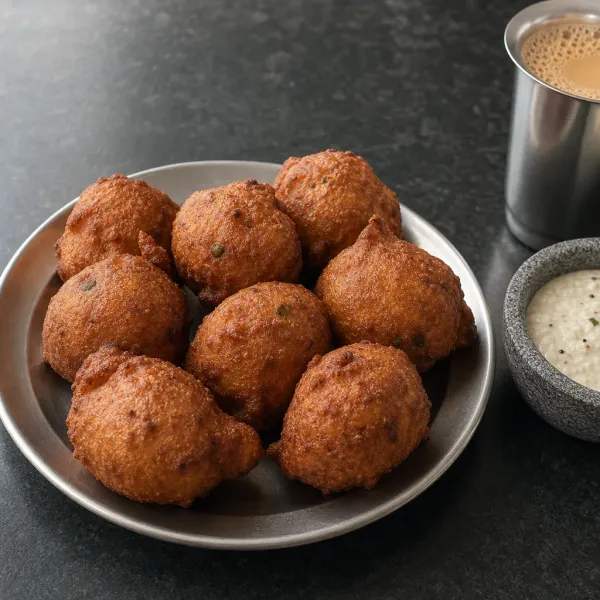
Mysore Bonda
Traditional Mysuru-style maida bonda made with thick sour curd. Crisp shell, soft inside. Step-by-step Karnataka household recipe with tips.
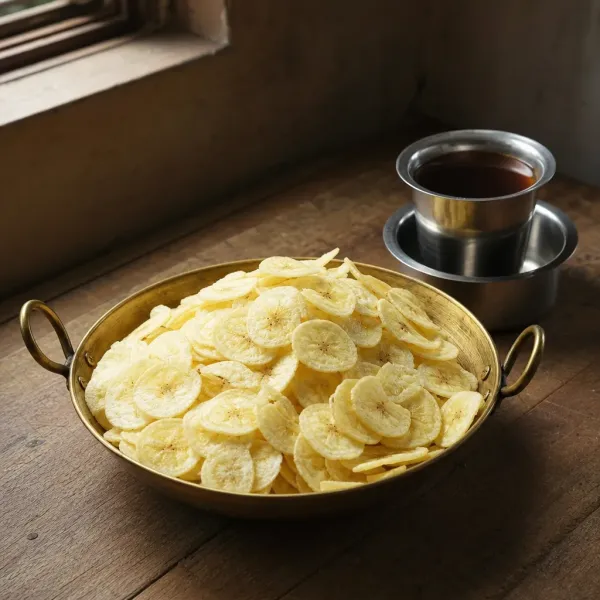
Kaya Upperi
Traditional Kerala kaya upperi recipe: raw nendran banana chips deep-fried in fresh coconut oil and salted the old-fashioned way. Crisp, simple, auth…
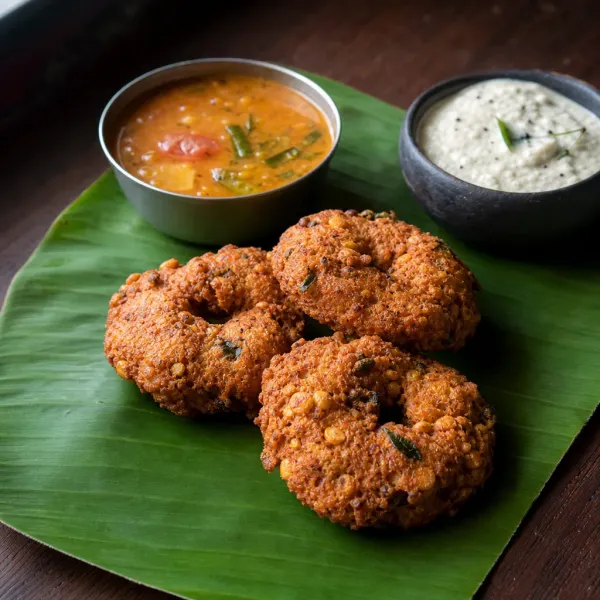
Masala Vada (Paruppu Vadai)
Traditional Tamil Iyer paruppu vadai made with coarse-ground chana dal, shallots, green chillies and curry leaves, deep-fried in gingelly oil.
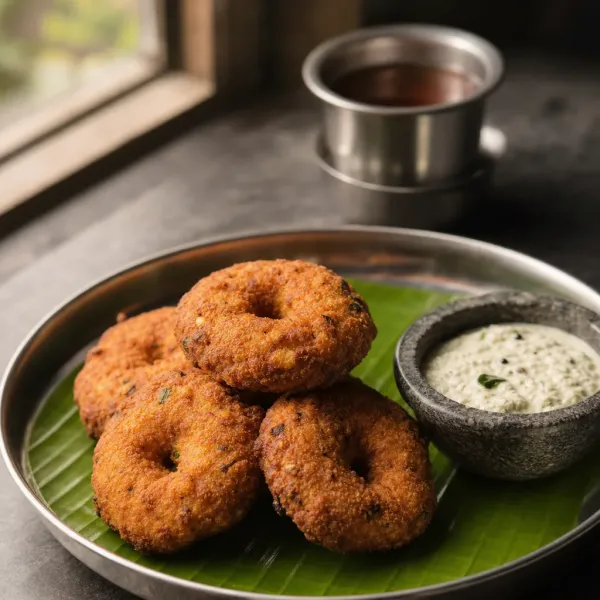
Parippu Vada
Traditional Kerala parippu vada made with coarsely ground chana dal, shallots, green chilli and curry leaves, deep-fried in coconut oil until crisp.
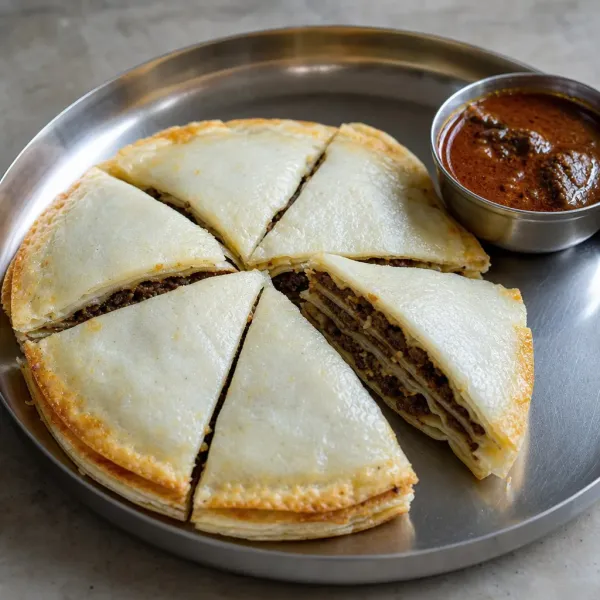
Chattipathiri
Traditional Malabar Mappila chattipathiri: thin rice flour crepes layered with spiced minced beef, sealed with egg, and baked in a chatti. Step-by-st…