

Appam Recipe
Malayalam അപ്പംTamil ஆப்பம்Kannada ಅಪ್ಪಂTelugu అప్పం
- Prep30 min
- Soak / ferment12 hr
- Cook40 min
- Serves4
- DifficultyMedium
- DietVegetarian
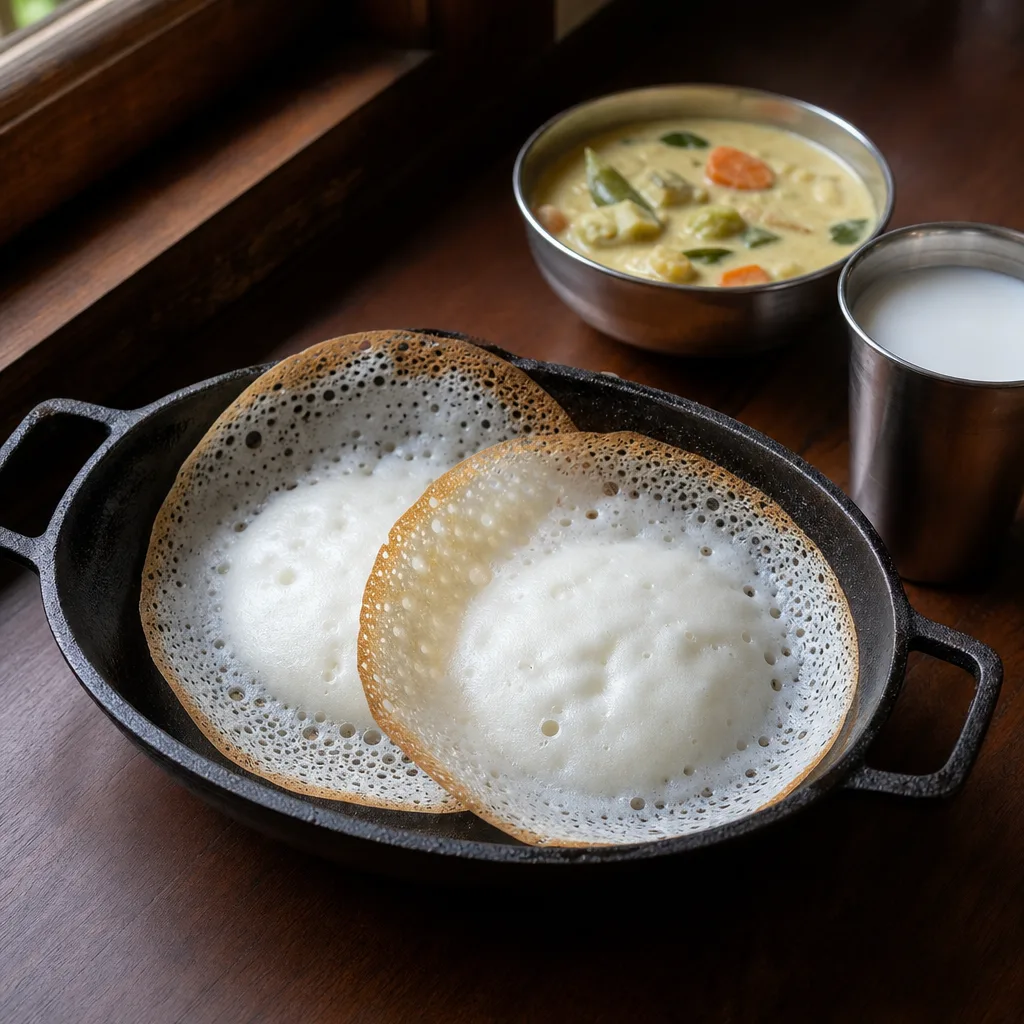
Appam is the daily breakfast of Nasrani households across Travancore. It is made in a small, deep, round-bottomed pan called an appachatti, and the finished hopper has a thick, soft, cloud-white centre and a thin, lacy, slightly browned rim. That contrast of textures in a single piece is what makes it what it is.
The traditional leavening is toddy, the fresh fermented sap tapped from coconut palms. Toddy gives the batter a mild sourness and a lift that dry yeast can approximate but not quite match. In households where toddy is unavailable or the cook prefers not to use it, a small pinch of instant yeast dissolved in warm water does the job acceptably. The batter also contains a cooked rice paste that keeps the centre soft and slightly gelatinous even after the hopper cools.
Across Kerala households there is real variation in the ratio of raw rice to cooked rice paste, in whether coconut milk enters the batter at all, and in how long fermentation is allowed to run. The version here is the one most Nasrani cooks in Kottayam and Ernakulam would recognise: raw rice soaked and ground, a small portion of cooked rice blended in, fresh grated coconut ground with the batter, toddy or yeast for rise, and a long overnight ferment.
Ingredients (serves 4)
For the batter
For cooking
Method
Soak the rice
Rinse the pachari two or three times in cold water until the water runs mostly clear. Cover with fresh water and leave to soak for 4 hours at room temperature. The grains should feel slightly soft when you press one between your fingers. Drain completely before grinding.
Grind the batter
Put the drained soaked rice, cooked rice, and grated coconut into a wet grinder or a powerful blender. Add water a little at a time and grind to a very smooth, fine batter. It should feel silky between your fingers with no graininess at all. This takes 20 to 25 minutes in a wet grinder; a blender needs two or three long runs with rests in between to avoid overheating. The finished batter should be slightly thicker than pouring cream.
Add toddy and sugar
Transfer the batter to a large vessel — it will at least double in volume overnight, so choose accordingly. Stir in the toddy or the yeast-water mixture and the sugar. Mix well. The sugar feeds the fermentation; do not skip it.
Ferment overnight
Cover the vessel loosely with a lid or a plate — not airtight, as the batter needs to breathe. Leave it in a warm spot in the kitchen for 8 to 12 hours. In Kerala's climate this is usually overnight. The batter is ready when it has risen noticeably, smells pleasantly sour and yeasty, and has small bubbles throughout. In a cool kitchen it may need a full 12 hours; in a hot kitchen in summer, 8 hours is often enough. Do not over-ferment or the sourness becomes sharp and the hoppers turn rubbery.
Season the batter
Stir the fermented batter gently from the bottom up. Add salt and mix. The batter should now be pourable and slightly aerated. If it seems very thick, add a few tablespoons of water to bring it to the consistency of thin pouring cream. Do not thin it too much — a batter that is too loose will not hold the thick centre.
Heat the appachatti
Place the appachatti over medium heat. When it is hot, add a few drops of coconut oil and wipe the pan with a folded cloth or paper. The pan is ready when a drop of batter sizzles immediately on contact. After the first hopper, the pan is seasoned and you will need no more oil.
Pour and swirl
Pour a ladleful of batter (about 60 to 70 ml) into the centre of the hot pan. Immediately lift the pan with both hands and swirl it in a circular motion so the batter climbs up the sides in a thin, even layer. Work quickly — the batter sets fast. The centre should remain thick and the edges thin. Set the pan back on the flame.
Cover and cook
Place the lid on the pan. Cook over medium-low heat for 2 to 3 minutes. The hopper is ready when the edges have turned lacy and golden-brown and pull away from the sides of the pan on their own, and the thick white centre is cooked through and no longer looks wet. Do not flip it. Appam is cooked only on one side.
Remove and serve
Slide a thin spatula under the edge and lift the hopper out whole. The centre will be soft and slightly spongy, the rim crisp and lacy. Serve immediately. Make the next one while the first is being eaten — appam is best eaten straight from the pan.
Adjust heat between hoppers
The pan gets hotter as you go. If the batter sets before you can swirl it, lower the heat slightly. If the centre is still wet when the edges are done, the heat is too low or the batter too thick. Finding the right rhythm usually takes the first two hoppers.
How to serve
Sweetened thin coconut milk (paal); vegetable or chicken stew (ishtew) made with coconut milk; egg roast; kadala curry. In Nasrani homes all of these may appear on the same breakfast table.
Served with: Sweetened thin coconut milk (paal); vegetable or chicken stew (ishtew) made with coconut milk; egg roast; kadala curry. In Nasrani homes all of these may appear on the same breakfast table.
Cook's tips
Toddy vs. yeast
Fresh toddy gives a rounder, more complex sourness than yeast. If you use dry yeast, the hoppers are still good but the flavour is slightly flatter. Use only ¼ tsp yeast for 2 cups of rice — more makes the batter over-rise and the hoppers taste of yeast.
The wet grinder matters
A wet grinder produces a smoother batter than a blender because it works the starch differently. If you use a blender, grind in intervals and check for graininess. Underground batter makes dense, heavy hoppers.
Over-fermented batter
If the batter has fermented too long and smells very sharp, the hoppers will be rubbery and sour. There is no fix. Start a new batch. In summer, check the batter after 8 hours.
The appachatti
A cast-iron appachatti holds heat evenly and produces the best rim. Non-stick versions work but the lacy browning is less pronounced. The pan must be properly hot before the first pour.
Storing the batter
Once fermented and salted, the batter keeps in the refrigerator for up to 2 days. Bring it to room temperature before making hoppers or the swirl will not work and the centre will cook unevenly.
Regional variations
Mappila households in Malabar make a similar hopper sometimes called palappam; Tamil Nadu has a version called aappam fermented with a small amount of cooked rice and urad dal; Sri Lankan hoppers use a slightly different ratio and coconut milk in the batter itself.
Glossary
- Pachari പച്ചരി
- Raw (unparboiled) white rice used in Kerala for grinding batters.
- Kallu കള്ള്
- Toddy; the mildly alcoholic fermented sap tapped from coconut or palm trees, used as a natural leavening agent.
- Appachatti അപ്പച്ചട്ടി
- The small, deep, round-bottomed pan with a lid used to make appam; its curved walls are what creates the hopper shape.
- Ishtew ഇഷ്ടു
- Kerala-style stew made with vegetables or meat simmered in thin coconut milk with whole spices; the classic accompaniment to appam.
Two things decide whether this works: the fineness of the grind and the state of the fermentation. Grind until there is no trace of graininess and the batter feels like silk. Ferment until the batter has risen and smells gently sour but not sharp. Get those two right and the swirl and the heat will follow with a little practice.
More Breakfast & Tiffin recipes
Mangalore Buns
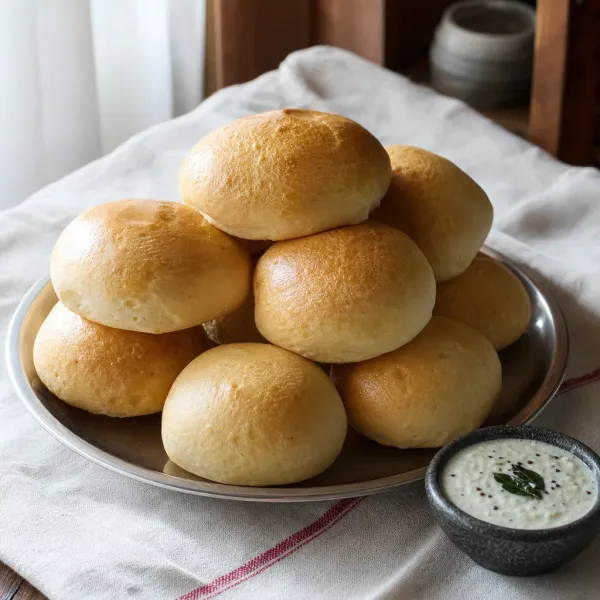
Traditional Mangalore Buns from Konkani Catholic kitchens: ripe banana and curd dough rested overnight, rolled thick and fried until soft and golden.
Aval Upma
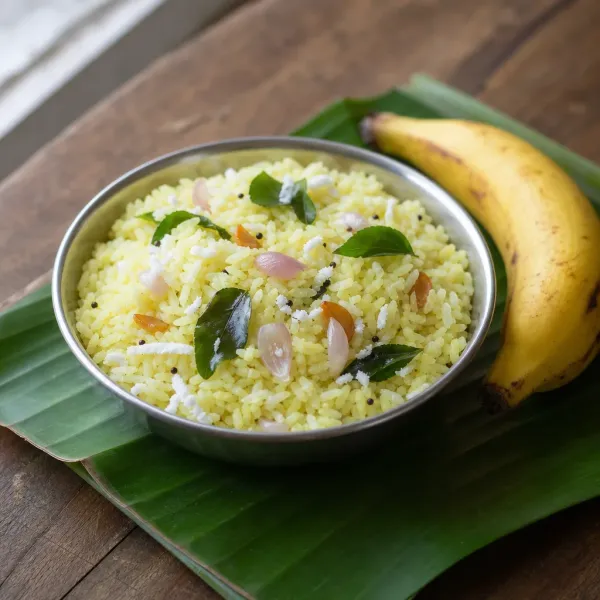
A quick Kerala breakfast of thin flattened rice tempered in coconut oil with shallots, curry leaves and fresh grated coconut. Ready in 30 minutes.
Godhuma Dosa
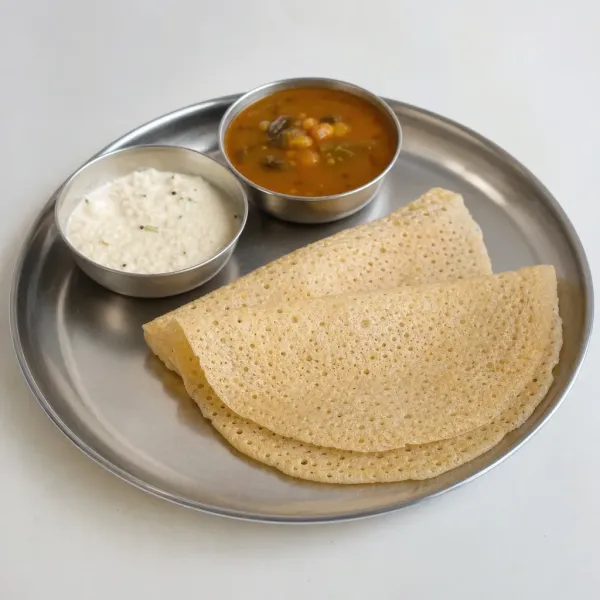
Quick Tamil Nadu-style godhuma dosa made with wheat flour and rice flour, no fermentation needed. Ready in under an hour, soft and lacy.
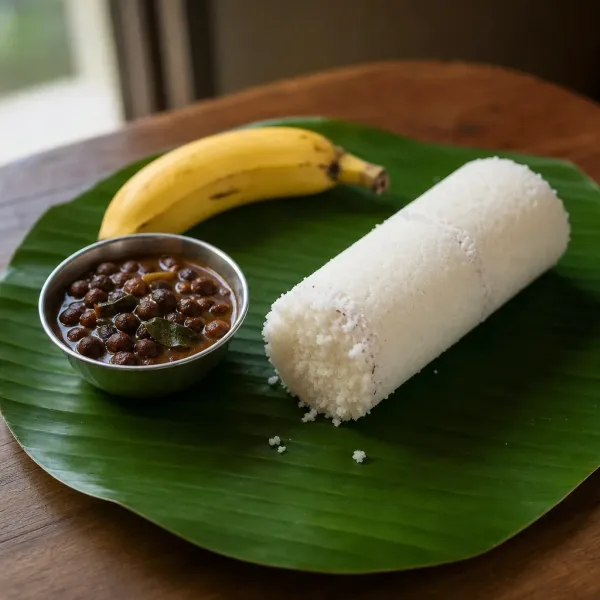
Kerala Puttu
Traditional Kerala puttu made with rice flour and fresh coconut, steamed in a puttu kutti. Step-by-step method with the correct flour texture explain…
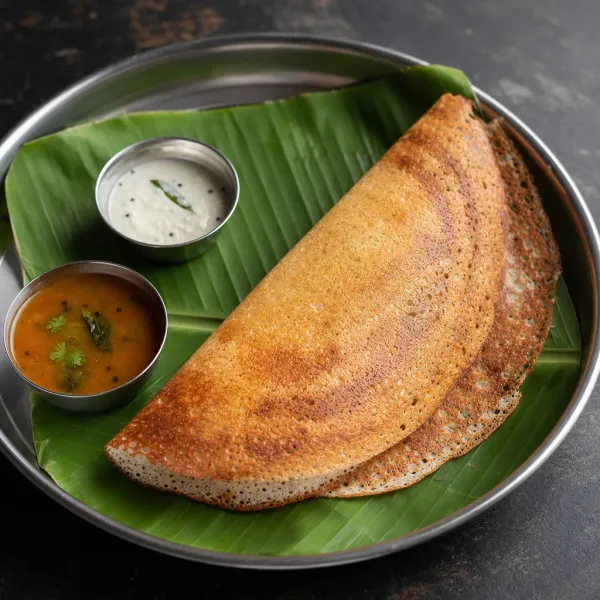
Plain Dosa
Traditional Tamil Iyer plain dosa: fermented rice and urad dal batter, spread thin on a cast-iron tawa with gingelly oil. Crisp, golden, and sour.
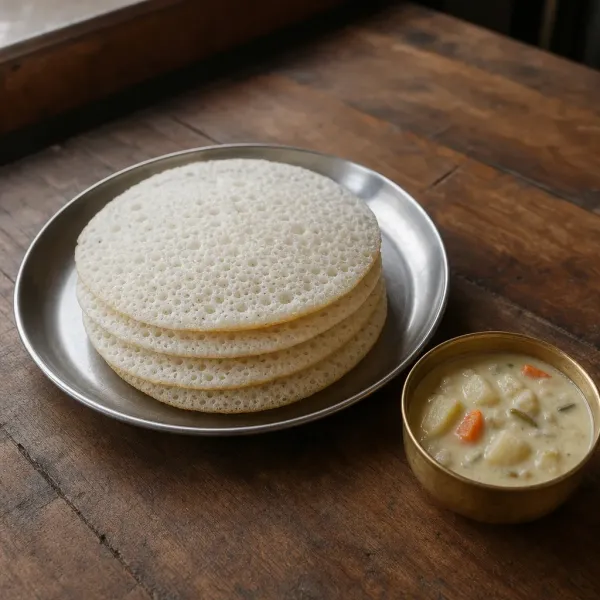
Kallappam
Traditional Kerala Nasrani kallappam made with fresh toddy and ground raw rice. Soft, spongy, overnight-fermented pancakes from the Syrian Christian…