

Egg Kurma for Parotta Recipe
Malayalam മുട്ട കുർമ്മTamil முட்டை குர்மாKannada ಮೊಟ್ಟೆ ಕುರ್ಮಾTelugu గుడ్డు కుర్మా
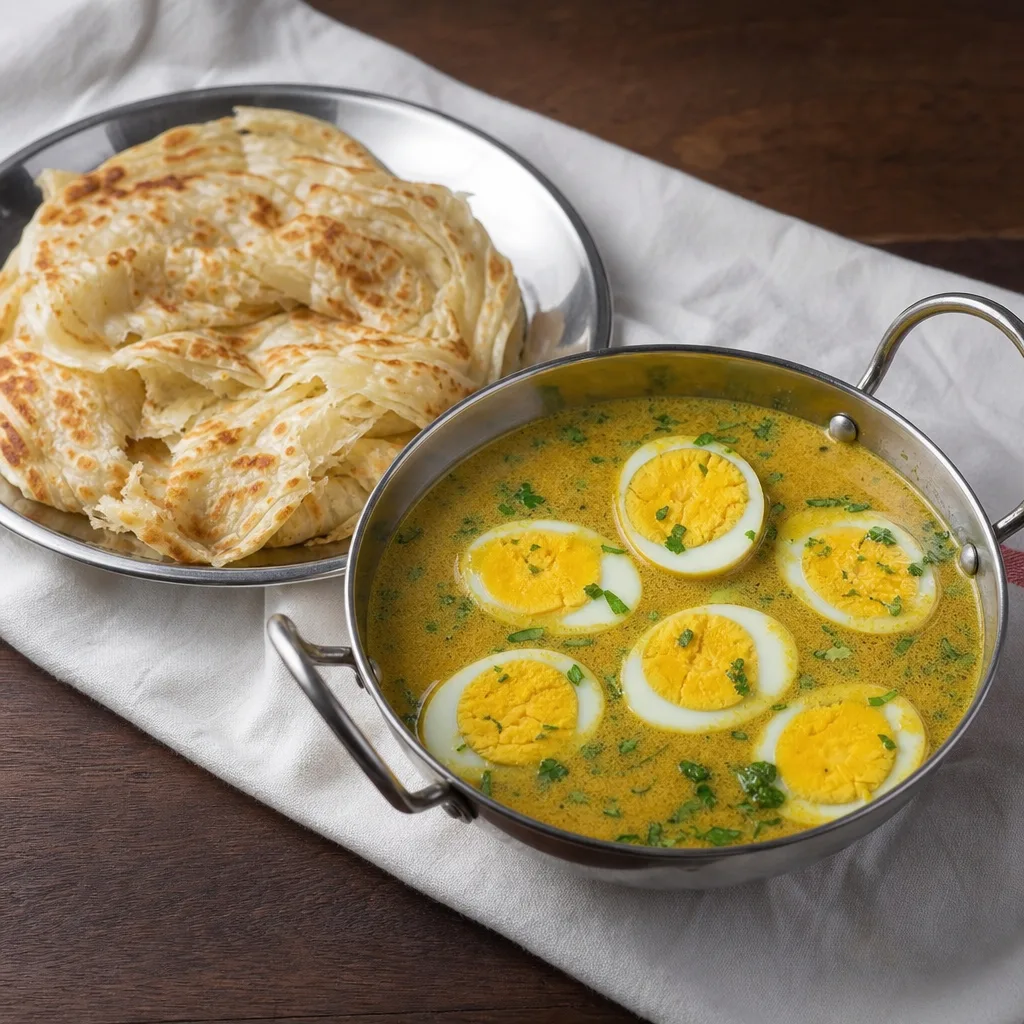
- Prep20 min
- Cook40 min
- Serves4
- DifficultyMedium
- DietEgg
In Tamil Nadu, parotta and kurma are inseparable. The kurma is not a thick restaurant gravy; it is a loose, fragrant, coconut-based sauce that soaks into the layers of parotta as you tear through them. Egg kurma is the weekday version of this pairing, made when there is no time to cook meat but when a plain vegetable kurma will not satisfy.
The backbone of this kurma is freshly ground coconut paste with poppy seeds and fennel. These give the gravy its body and its particular sweetness. The whole spices go in first, the shallots are cooked slowly until soft, and the ground paste is fried until the raw smell leaves before any liquid is added. Rushing either of those stages produces a thin, floury-tasting gravy.
Households differ mainly on two points: whether to add green chillies or rely entirely on red chilli powder, and whether the eggs are added halved or left whole and scored so the gravy enters the white. Both are genuine. This recipe halves them, which is the more common home practice.
Ingredients (serves 4)
Eggs
Whole spices
For the base
Coconut paste (ground fresh)
Liquid
Finish
Method
Hard-boil and prepare the eggs
Lower the eggs into boiling water and cook for 11 minutes. Transfer immediately to cold water and leave for 5 minutes before peeling. Cut each egg in half lengthwise and set aside. If you prefer whole eggs, make four shallow cuts through the white on each egg so the gravy can enter.
Grind the coconut paste
Drain the soaked poppy seeds and cashews. Grind them together with the fresh grated coconut and fennel seeds in a wet grinder or blender, adding just enough water (2 to 3 tbsp) to get a smooth, thick paste with no gritty texture. The paste should hold its shape on a spoon. Set aside.
Bloom the whole spices
Heat the gingelly oil in a wide, heavy-bottomed pan over medium heat. Add the cinnamon, cloves, cardamom, bay leaf, star anise and marathi mokku. Let them sizzle for 30 to 40 seconds until the oil smells fragrant. Do not let them darken.
Cook the shallots slowly
Add the sliced shallots and a small pinch of salt. Cook over medium-low heat, stirring often, for 12 to 15 minutes until the shallots are completely soft and a light golden colour. Do not rush this step; undercooked shallots leave a sharp, raw taste in the finished kurma.
Add ginger, garlic and green chillies
Add the chopped ginger, garlic and slit green chillies. Stir and cook for 3 to 4 minutes over medium heat until the raw smell of the garlic is gone and the mixture looks dry and slightly sticky.
Add the dry spice powders
Lower the heat. Add the red chilli powder, coriander powder and turmeric. Stir constantly for 1 minute so the powders coat the shallot mixture and cook in the oil without burning. If the pan looks very dry, add a splash of water.
Fry the coconut paste
Add the ground coconut paste and stir it into the shallot base. Cook over medium heat, stirring frequently, for 6 to 8 minutes. The paste will first look pale and wet, then it will begin to dry out and the oil will start to separate at the edges of the pan. This is the point at which the raw coconut and poppy seed flavour has cooked out. Do not skip this stage.
Add water and build the gravy
Pour in the 300 ml of warm water and stir well to dissolve the fried paste into a smooth gravy. Add salt to taste. Bring to a gentle boil, then reduce the heat and simmer uncovered for 5 minutes. The gravy should be pourable but not watery; it coats a spoon lightly.
Add the eggs
Slide the halved eggs into the simmering gravy, cut side up. Spoon the gravy gently over them. Simmer on low heat for 4 to 5 minutes so the eggs warm through and absorb some of the gravy. Do not stir vigorously or the yolks will break away from the whites.
Finish and rest
Scatter the chopped coriander leaves over the top. Turn off the heat and leave the kurma uncovered for 5 minutes before serving. This brief rest lets the gravy thicken slightly and the flavours settle.
How to serve
Layered parotta (Kerala parotta or Tamil veechu parotta). Also eaten with plain chapathi or idiyappam.
Served with: Layered parotta (Kerala parotta or Tamil veechu parotta). Also eaten with plain chapathi or idiyappam.
Cook's tips
Marathi mokku
Marathi mokku (dried kapok flower buds) is a traditional kurma spice in Tamil Nadu. If you cannot find it, leave it out rather than substituting something else. The kurma will still be good.
Gingelly oil
Use cold-pressed, untoasted gingelly oil, not the dark toasted sesame oil used in Chinese cooking. The flavour is milder and is what belongs in this dish.
Gravy consistency
This kurma is meant to be thinner than a restaurant korma. It should flow freely when you pour it over parotta. If it thickens too much on standing, add a little hot water and stir gently before serving.
Tomato
Many modern recipes add tomato. The traditional coconut-based kurma does not. Tomato changes the colour and adds an acidity that competes with the coconut paste. Leave it out.
Making ahead
The gravy base can be made up to the end of step 8 and refrigerated for a day. Add freshly boiled eggs and reheat gently when needed. Eggs that sit in the gravy overnight turn rubbery.
Regional variations
Kerala Mappila-style egg kurma uses coconut oil and kudampuli or coconut vinegar; Andhra versions add more green chilli and less coconut; some Chennai dhaba versions skip coconut entirely and use a cashew paste instead.
Glossary
- Kasa kasa கசகசா
- Poppy seeds; used ground in Tamil Nadu kurma to add body and a mild, nutty sweetness to the coconut paste.
- Sombu சோம்பு
- Fennel seeds; a key flavouring in Tamil Nadu kurma, giving a gentle anise note to the coconut paste.
- Marathi mokku மரத்தி மொக்கு
- Dried flower buds of the kapok tree; a traditional whole spice used in Tamil Nadu kurma and biryani for a faint floral, slightly bitter note.
- Shallots சிறிய வெங்காயம்
- Small red shallots used throughout South Indian cooking; sweeter and less pungent than large onions, they cook down to a richer base.
Two things decide this kurma: frying the shallots long enough to lose their sharpness, and frying the coconut paste long enough to lose its raw flavour. Both steps feel slow in the moment but they are what separates a kurma with depth from one that tastes thin and floury. Everything else follows from getting those two stages right.
More Egg recipes
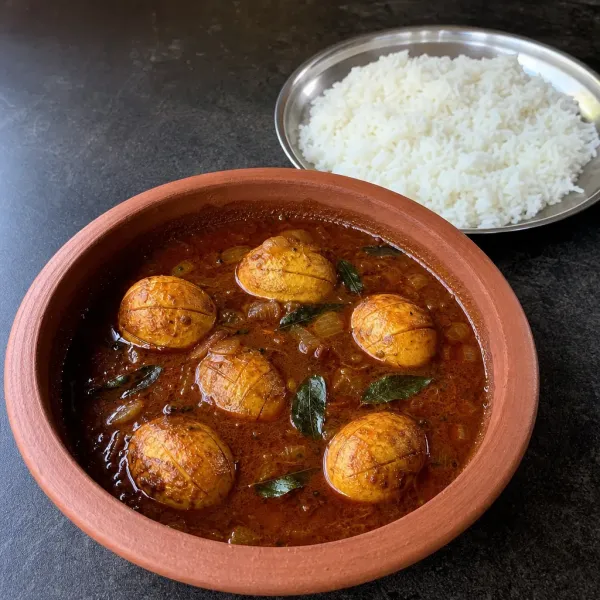
Kodi Guddu Pulusu
Traditional Rayalaseema-style Kodi Guddu Pulusu: hard-boiled eggs simmered in a hot, sour tamarind gravy with Guntur chillies and gingelly oil.
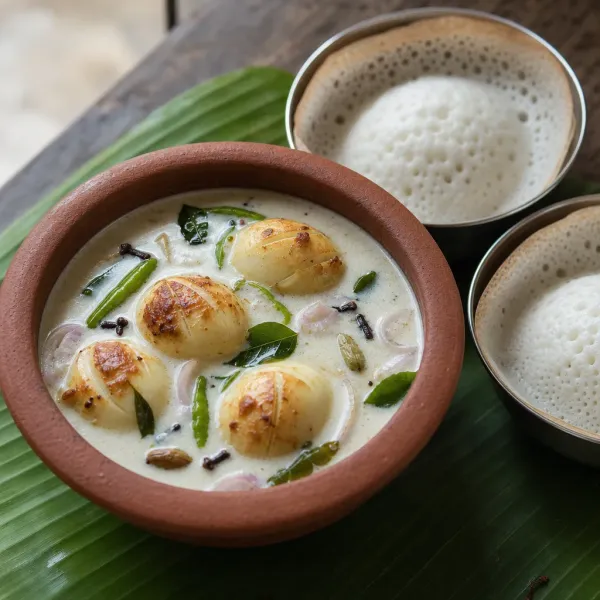
Mutta Mappas
Traditional Kerala Mappila egg curry in coconut milk with whole spices and shallots. Cooked the Malabar way, served with appam. Step-by-step recipe.
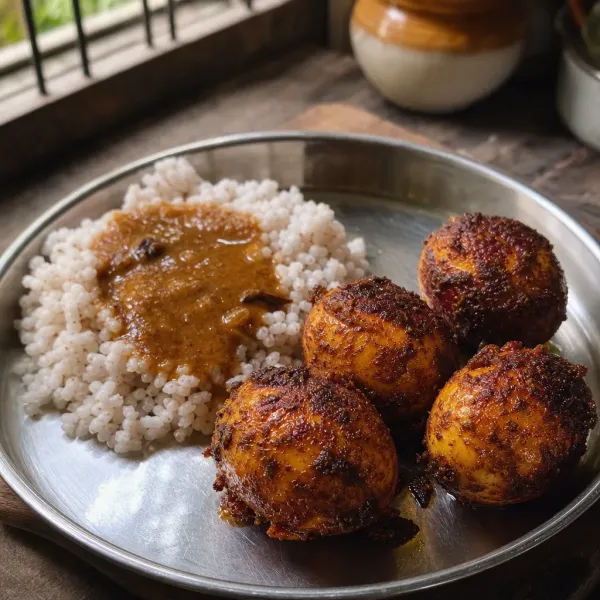
Mutta Porichathu
Traditional Kerala hard-boiled egg fried in coconut oil with a Kashmiri chilli and pepper masala coating. Ready in 25 minutes, perfect with matta ric…
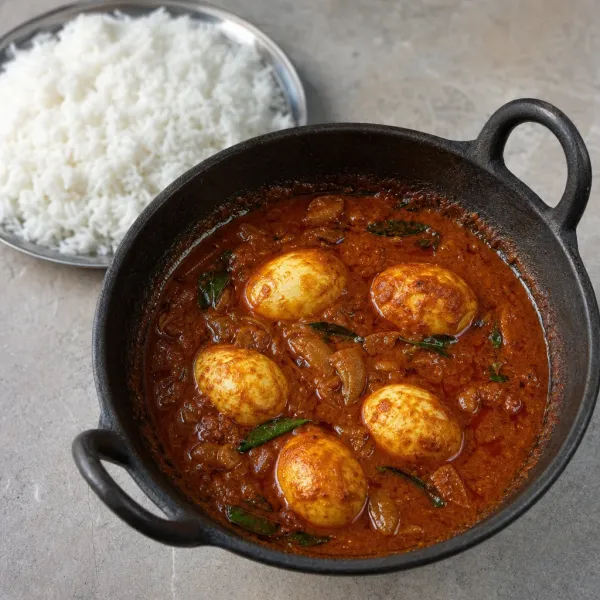
Muttai Kuzhambu
Traditional Kongunad muttai kuzhambu: eggs poached in a tamarind, shallot and fresh coconut gravy cooked in gingelly oil. Step-by-step Tamil home rec…
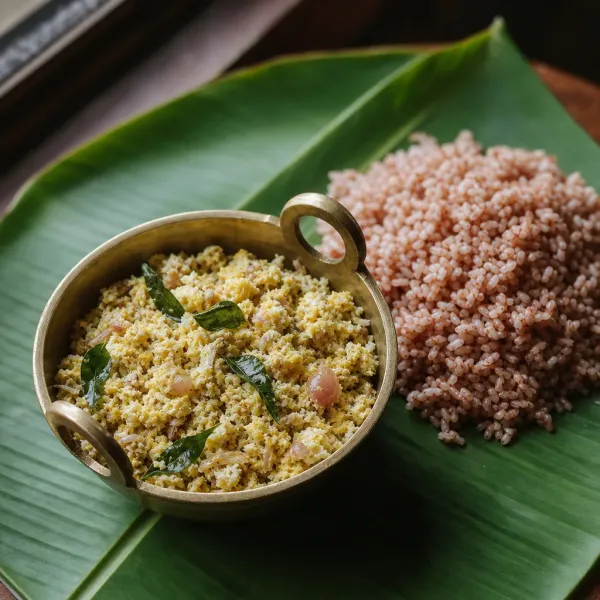
Nadan Mutta Thoran
Traditional Kerala egg thoran with shallots, fresh coconut and curry leaves. A dry, homestyle scramble cooked in coconut oil — ready in 20 minutes.