

Fish Mappas Recipe
Malayalam മീൻ മാപ്പാസ്Tamil மீன் மாப்பாஸ்Kannada ಮೀನ್ ಮಾಪ್ಪಾಸ್Telugu మీన్ మాప్పాస్
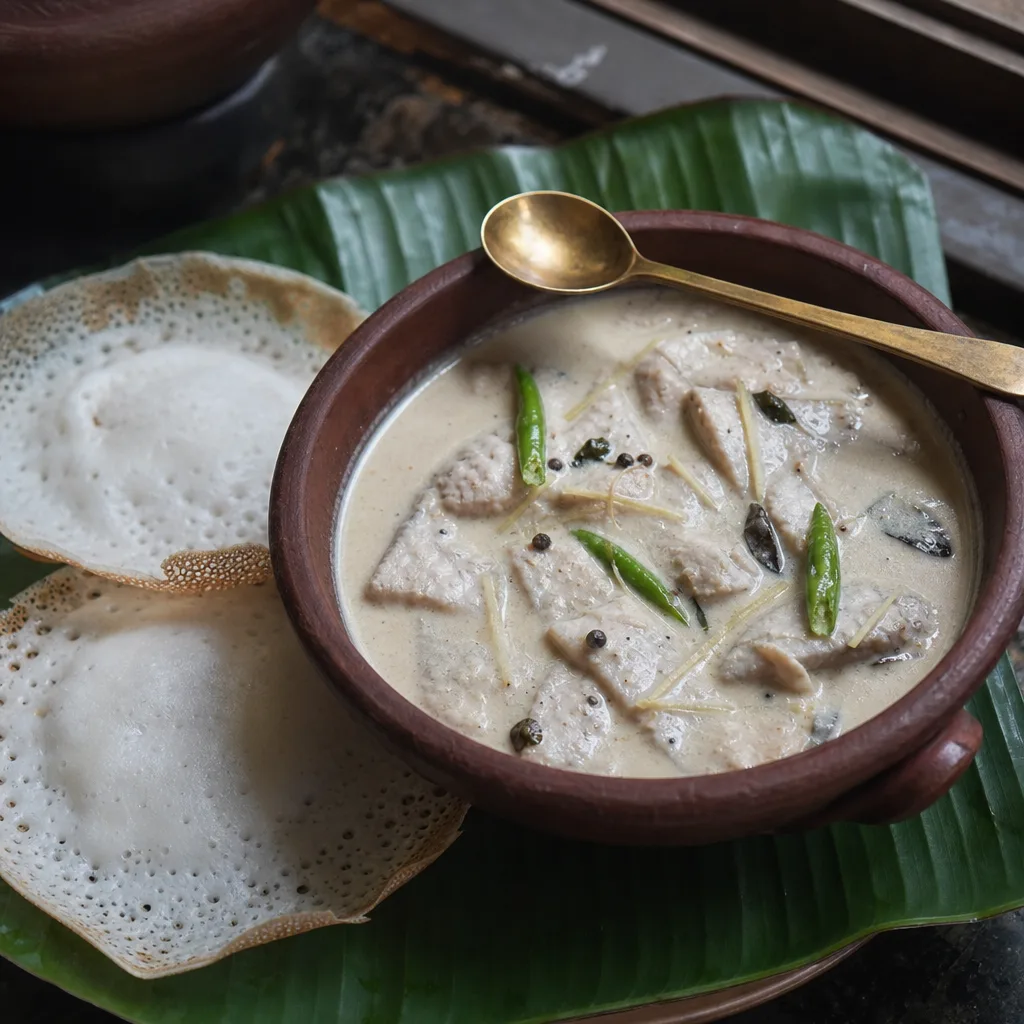
- Prep20 min
- Cook35 min
- Serves4
- DifficultyMedium
- DietNon-vegetarian
Fish Mappas is a Syrian Christian curry from the old Travancore heartland — Kottayam, Thiruvalla, Changanacherry — where coconut milk curries cooked in coconut oil have been the daily table for centuries. It is a mild, creamy, ivory-coloured gravy, gently spiced with whole black pepper, cloves, and green chillies, and given its characteristic slight sourness with a small measure of vinegar. That vinegar note is what separates it firmly from a plain coconut milk fish curry.
The fish most commonly used at home is pearl spot (karimeen) in the backwater regions, or a firm white-fleshed sea fish such as seer (neymeen) or kingfish further south. The curry is finished in thick coconut milk off the heat, so the milk never splits and the gravy stays smooth and pale. It is not a fiery dish. The heat is quiet, built from pepper and a few green chillies rather than red chilli powder.
Households differ mainly on the souring agent — most Travancore Nasrani kitchens use white vinegar or rice vinegar; a few add a single piece of kudampuli for a fruitier note. The amount of thick coconut milk varies too: some families like a thinner gravy that pools around the rice, others want it thick enough to coat the back of a spoon. Both are right.
Ingredients (serves 4)
For the fish
For the curry
Method
Season the fish
Rub the fish pieces with salt and ½ tsp of the vinegar. Set aside while you prepare everything else — 10 minutes is enough. Do not marinate longer or the vinegar will begin to cook the surface and make it grainy.
Extract the coconut milk
If using a fresh coconut, grate it and extract the thick first milk with 200 ml of warm water, squeezing firmly through a cloth. Set this aside. Add a further 300 ml of warm water to the same grated coconut, squeeze again, and keep this thinner second milk separately. Keep both at room temperature — cold milk added to a hot pan can cause it to split.
Fry the whole spices and aromatics
Heat the coconut oil in a wide, heavy-bottomed pan — a clay pot or a thick-bottomed uruli is traditional — over medium heat. Add the cloves, cinnamon, cardamom, and crushed peppercorns. Let them sizzle for 30 seconds until fragrant, then add the shallots. Cook the shallots slowly, stirring often, until they are soft and just beginning to turn golden at the edges, about 8 minutes. Do not rush this; under-cooked shallots leave a raw bite in the finished gravy.
Add ginger, garlic, and green chillies
Add the ginger matchsticks, sliced garlic, and slit green chillies. Stir and cook for 3 to 4 minutes over medium heat until the raw smell of the garlic is gone and the ginger has softened. The mixture should look pale gold and smell warm, not sharp.
Add the curry leaves and thin coconut milk
Drop in the curry leaves — stand back, they will sputter in the oil — then pour in the thin coconut milk. Stir, taste the liquid for salt, and bring it to a gentle simmer over medium-low heat. Do not let it boil hard.
Add the fish
Slide the fish pieces into the simmering gravy in a single layer. Spoon the gravy over the top. Cover with a lid and cook on medium-low heat for 10 to 12 minutes, until the fish is just cooked through. You can tell it is ready when the flesh flakes cleanly when pressed with a spoon and is opaque all the way through. Do not stir vigorously or the pieces will break.
Add the remaining vinegar
Add the remaining 1 tsp of vinegar to the pan. Gently tilt the pan to distribute it rather than stirring. Taste and adjust salt. The gravy should have a quiet, clean sourness — not sharp, just present.
Finish with thick coconut milk off the heat
Remove the pan from the heat completely. Pour the thick coconut milk over the fish in a slow, steady stream, tilting the pan gently so it mixes into the gravy. The residual heat will warm it through. If you put the pan back on the flame after adding thick coconut milk, it will split and look greasy. The finished gravy should be smooth, ivory-white, and coating.
Rest before serving
Cover the pan and leave it undisturbed for 5 minutes before serving. This allows the flavours to settle and the thick coconut milk to fully incorporate. The gravy will thicken slightly as it rests.
How to serve
Appam, vellayappam, or matta rice. On feast days, with idiyappam.
Served with: Appam, vellayappam, or matta rice. On feast days, with idiyappam.
Cook's tips
Fish choice matters
Soft fish like tilapia or pomfret can fall apart in the gravy. Choose firm-fleshed fish. Karimeen (pearl spot) is the most prized choice in Kottayam households; seer fish (neymeen) is the common everyday option.
Canned coconut milk
If using canned coconut milk, use the thick cream from the top of the can undiluted as the first extract, and dilute the remaining thinner liquid with an equal volume of water for the second extract. Shake the can well before opening if you want a uniform thin milk.
The vinegar is not optional
Some cooks omit it thinking it will curdle the coconut milk. It will not, as long as you add it before the thick milk goes in and the pan is not at a rolling boil. Without the vinegar, this is a different dish entirely.
Clay pot advantage
Cooking in a clay pot (manchatti) gives the gravy a gentle, even heat that prevents the coconut milk from splitting. If you use stainless steel, keep the flame consistently low once the coconut milk is in.
Reheating
Reheat very gently on the lowest flame possible, never to a boil. The coconut milk will split if boiled the next day. Many households eat the reheated version with matta rice and say it tastes better on the second day once the spices have had time to deepen.
Regional variations
A Mappila (Malabar Muslim) version exists using similar coconut milk base but with different spicing, notably more fennel and without vinegar; some Knanaya households add a small piece of kudampuli alongside the vinegar.
Glossary
- Mappas മാപ്പാസ്
- A Kerala Christian coconut milk curry, typically made with fish or mutton, distinguished by whole spices and a touch of vinegar.
- Karimeen കരിമീൻ
- Pearl spot fish (Etroplus suratensis), native to Kerala's backwaters; the state fish of Kerala.
- Neymeen നെയ്മീൻ
- Seer fish or king mackerel; a firm, oily sea fish widely used in Kerala curries.
- Kudampuli കുടംപുളി
- Gamboge or Malabar tamarind (Garcinia cambogia); the souring agent used in most Kerala fish curries, though not in the standard Nasrani mappas which uses vinegar instead.
- Manchatti മൺചട്ടി
- Unglazed clay cooking pot; traditional vessel for Kerala fish and coconut milk curries.
- Shallots (small red) ചെറിയ ഉള്ളി
- Small red shallots used throughout Kerala cooking in place of large onions; they are sweeter and more pungent.
- Uruli ഉരുളി
- A wide, shallow brass or bell-metal cooking vessel traditional to Kerala kitchens, used for curries and payasam.
Two things decide this curry. The first is patience with the shallots — if they are not properly softened and lightly golden before the coconut milk goes in, the gravy will taste raw and flat. The second is discipline with the heat at the end: the thick coconut milk must go in off the flame. Those two steps, done carefully, give you the smooth, pale, gently spiced gravy that makes this dish what it is.
More Seafood recipes
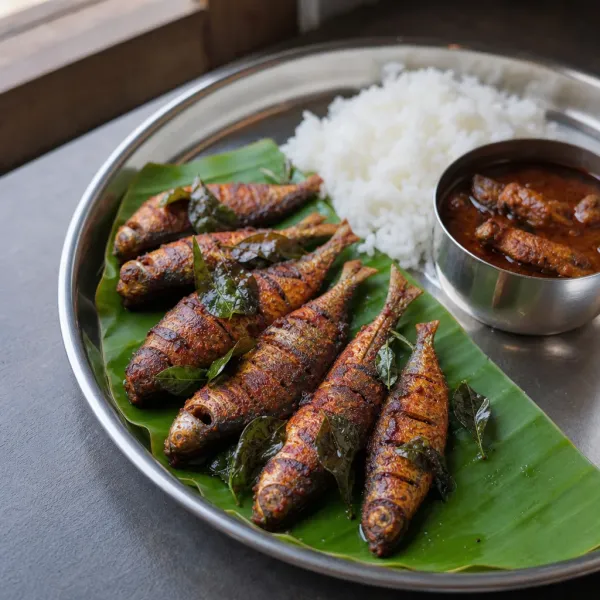
Mathi Fry (Kerala Sardine Tawa Fry)
Traditional Kerala mathi fry: sardines marinated in Kashmiri chilli, kudampuli, and coconut oil, fried on a cast-iron tawa until deeply crusted.
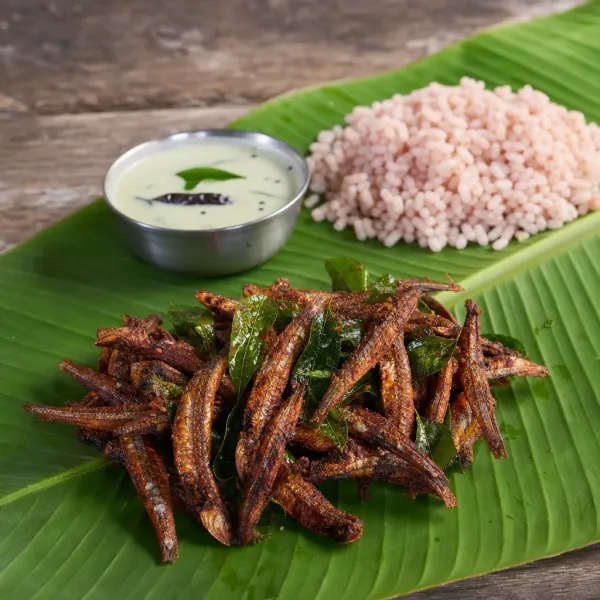
Netholi Fry (Kerala Anchovy Fry)
Traditional Kerala netholi fry with red chilli, turmeric, black pepper, and coconut oil. Step-by-step method for perfectly crisp anchovies every time.
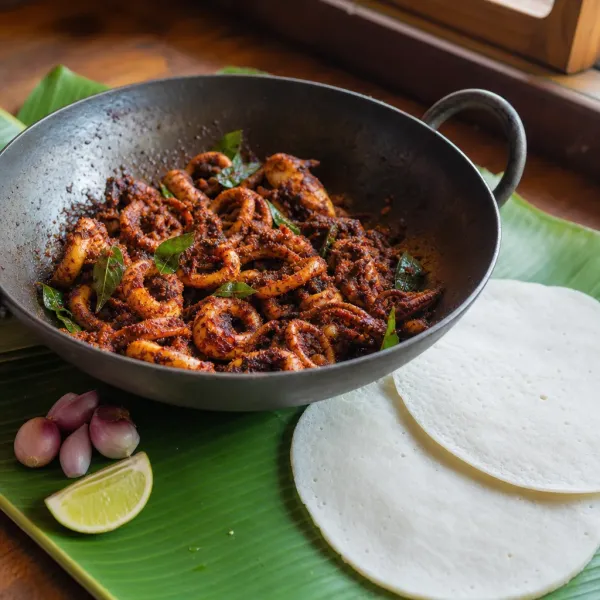
Koonthal Roast
Traditional Mappila koonthal roast from Malabar: squid slow-roasted with shallots, Kashmiri chilli, fennel and kudampuli in coconut oil. Step-by-step…
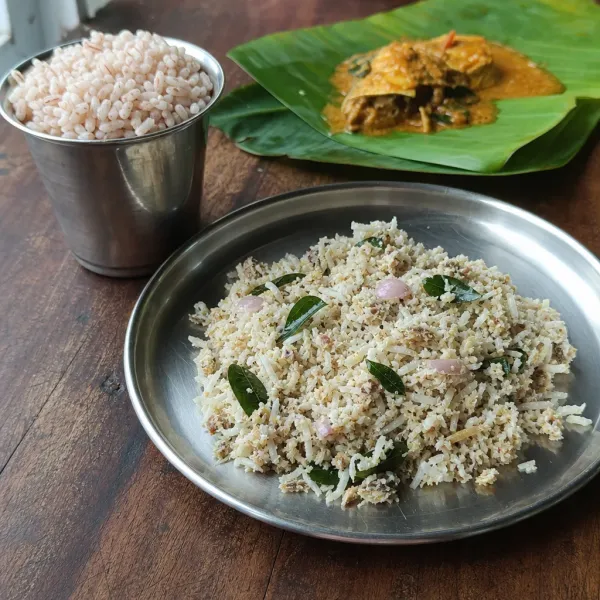
Meen Thoran
Traditional Nasrani-style meen thoran from Travancore: flaked fish folded with fresh coconut, shallots, and curry leaf in coconut oil. Dry, fragrant…
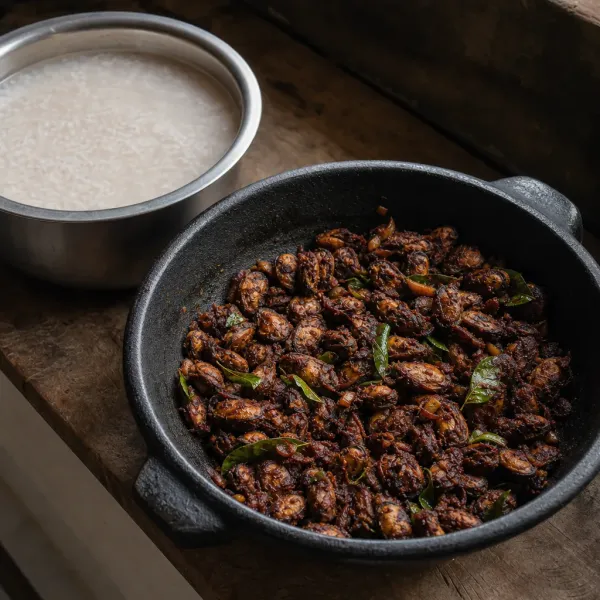
Kallummakkaya Ularthiyathu
Traditional Mappila mussel dry roast from Malabar – shallots, coconut oil, whole spices and fresh mussels roasted until completely dry. Step-by-step…
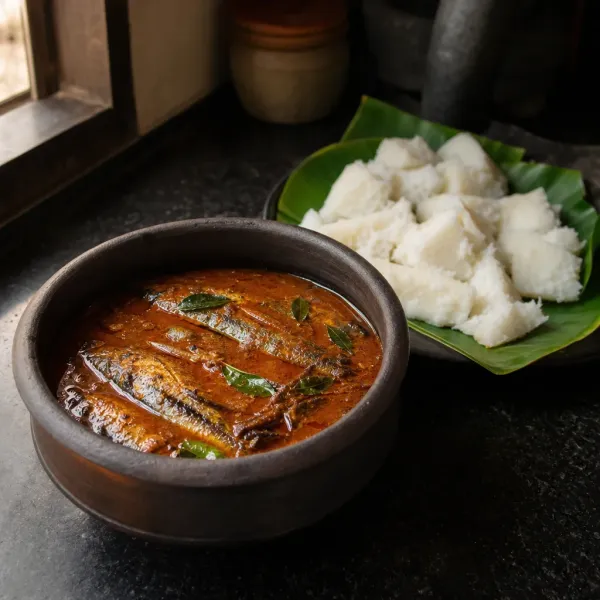
Chala Curry
Traditional Kerala sardine curry with kudampuli and fresh coconut paste, cooked in a manchatti. Authentic coastal recipe with kappa or matta rice.