

Netholi Fry (Kerala Anchovy Fry) Recipe
Malayalam നെത്തോലി ഫ്രൈTamil நெத்தலி ஃப்ரைKannada ನೆತ್ತೋಲಿ ಫ್ರೈTelugu నెత్తోలి ఫ్రై
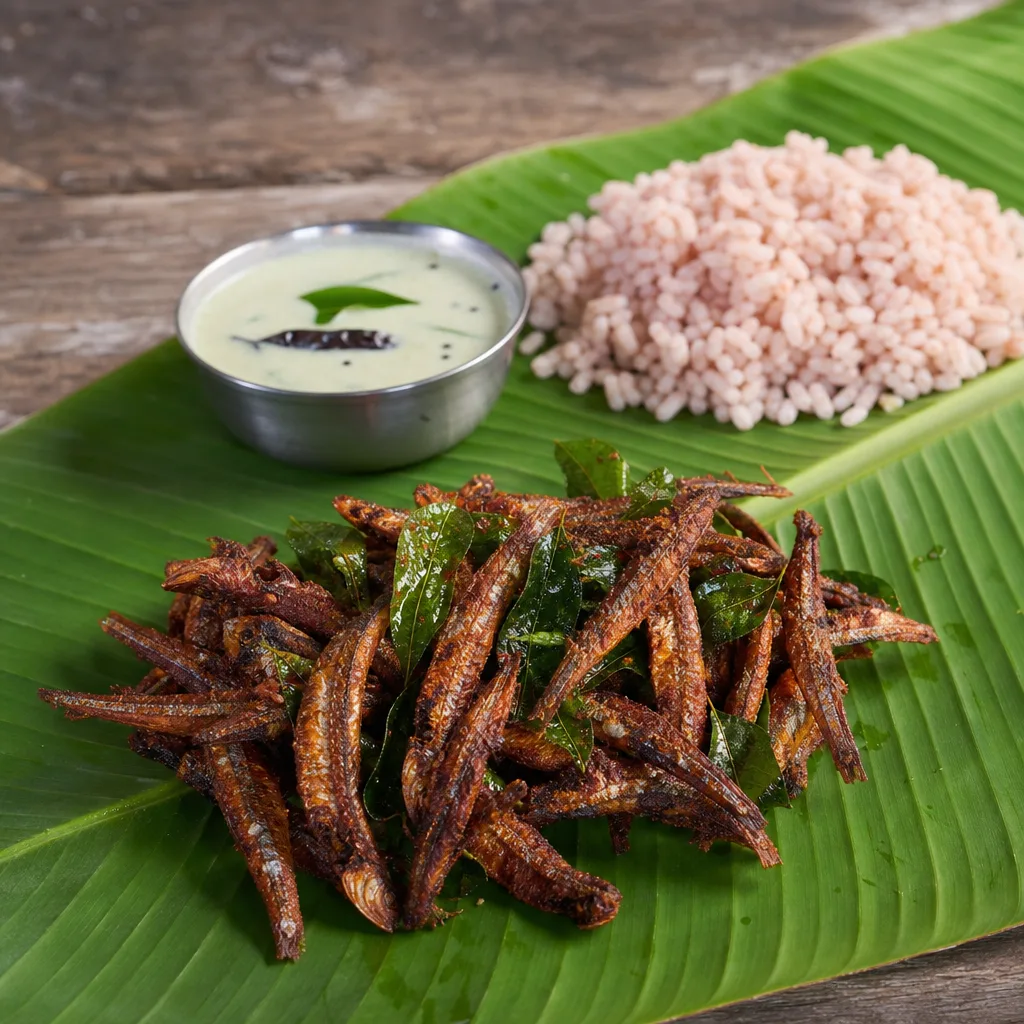
- Prep20 min
- Cook15 min
- Serves4
- DifficultyEasy
- DietNon-vegetarian
Netholi — the small silver anchovy pulled from Kerala's coastal waters — is one of the most everyday fish in a Kerala kitchen. It is cheap, available fresh at every fish market by early morning, and cooks in minutes. The fry is a staple side at a rice meal, eaten with plain matta rice and a simple kalan or moru curry to balance the heat.
The marinade is direct: red chilli powder, turmeric, a little black pepper, salt, and enough water or a squeeze of lime to make it coat the fish. Some households add a pinch of rice flour or fine semolina to the marinade for extra crispness; others rely entirely on the fish itself crisping in hot coconut oil. Both are genuine. What is not traditional is a thick batter coating — this is a shallow fry, not a deep-fried fritter.
The fish must be very fresh. Netholi deteriorates faster than larger fish; if the eyes are cloudy or the smell is sharp rather than briny, do not buy them. Clean them the same morning you cook them.
Ingredients (serves 4)
For cleaning the fish
For the marinade
For frying
Method
Clean the fish
Remove the heads by pinching them off with your fingers; the entrails usually come away with the head. Rinse the fish in two changes of cold water. In the final rinse, rub in ¼ tsp turmeric and a little salt, then drain well in a colander for 5 minutes. The fish must not be wet when it goes into the marinade or the spices will slide off.
Make the marinade
In a wide bowl, mix together the Kashmiri chilli powder, hot chilli powder, turmeric, black pepper, salt, and lime juice. Add water a few drops at a time until you have a thick paste — it should coat a spoon but not drip. Taste it for salt before the fish goes in.
Coat the fish
Add the drained netholi to the marinade and turn them gently with your hands until every fish is evenly coated. Be gentle; netholi are small and break easily. Leave them to sit for 10 minutes. If you leave them longer than 20 minutes the lime starts to cook the flesh and the texture suffers.
Heat the oil
Pour the coconut oil into a wide, heavy iron or steel frying pan and set it over medium-high heat. When the oil shimmers and a single curry leaf dropped in sputters immediately, the oil is ready. Do not let it smoke.
Fry the first batch
Lay the marinated fish in a single layer in the hot oil, working in batches so you do not crowd the pan. Crowding brings the oil temperature down and the fish will steam rather than fry. Add one sprig of curry leaves alongside the first batch. Do not move the fish for the first 2 minutes.
Turn once
After 2 to 3 minutes on the first side, the underside should be deep red-brown and the fish should release cleanly from the pan without sticking. Flip each fish carefully with a thin spatula. Fry the second side for another 2 minutes until equally crisp. The whole fish should feel firm, not soft, when pressed lightly.
Drain and fry the second batch
Lift the fried fish onto a plate lined with a clean cloth or paper. Add the remaining curry leaves to the oil and fry the second batch the same way. The oil will already be hot so the second batch may need only 1½ minutes per side — watch it.
Serve immediately
Netholi fry is at its best within 10 minutes of coming out of the pan. The crispness fades as it cools and is gone by the time it sits covered. Serve it hot, straight from the pan to the plate.
How to serve
Plain cooked matta rice (Kerala red rice), moru curry (thin buttermilk curry) or a simple parippu curry, and raw sliced shallots and green chilli on the side.
Served with: Plain cooked matta rice (Kerala red rice), moru curry (thin buttermilk curry) or a simple parippu curry, and raw sliced shallots and green chilli on the side.
Cook's tips
Rice flour for extra crispness
Many households add ½ tsp fine rice flour to the marinade. It gives a noticeably crisper crust and helps the coating hold. This is common enough to be considered traditional rather than a shortcut.
Dryness is everything
If the fish carries too much water into the pan, it spits dangerously and the coating turns soft. Drain the fish well and pat dry if needed before marinating.
Iron tawa versus non-stick
A well-seasoned iron tawa gives a better crust than non-stick. Non-stick pans do not hold high heat as steadily, and the fish can turn rubbery rather than crisp.
Kashmiri chilli and hot chilli together
Using only hot chilli powder makes the fry very sharp and dark. Kashmiri chilli gives the deep red colour without burning heat. The combination is the standard household approach.
Do not refrigerate before frying
Cold fish dropped into hot oil lowers the pan temperature sharply. If you have cleaned the fish ahead of time, bring it back to room temperature for 15 minutes before frying.
Regional variations
Tamil Nadu coastal households make a similar anchovy fry (nethili fry) spiced with gingelly oil, curry leaves, and a heavier hit of fennel; Mangalorean Catholic households make a version marinated with vinegar.
Glossary
- Netholi നെത്തോലി
- Small silver anchovy (Stolephorus spp.) common along the Kerala coast; also called kozhuva in some parts of Kerala.
- Matta rice മട്ട അരി
- Kerala red parboiled rice with a nutty flavour and firm texture; the everyday rice of most Kerala households.
- Curry leaves കറിവേപ്പില
- Fresh leaves of Murraya koenigii; used in hot oil to flavour fries and curries throughout South India.
- Tawa തവ
- Flat or slightly concave iron griddle used for frying fish and making flatbreads.
- Moru curry മോര് കറി
- Thin, lightly spiced buttermilk curry; a cooling counterpart to fried fish at a Kerala rice meal.
Two things decide this dish: the freshness of the fish and the dryness of the fish before it hits the oil. Stale netholi turns sour in the pan no matter how good the marinade is, and wet fish will never crisp. Get those two right and the rest takes care of itself.
More Seafood recipes
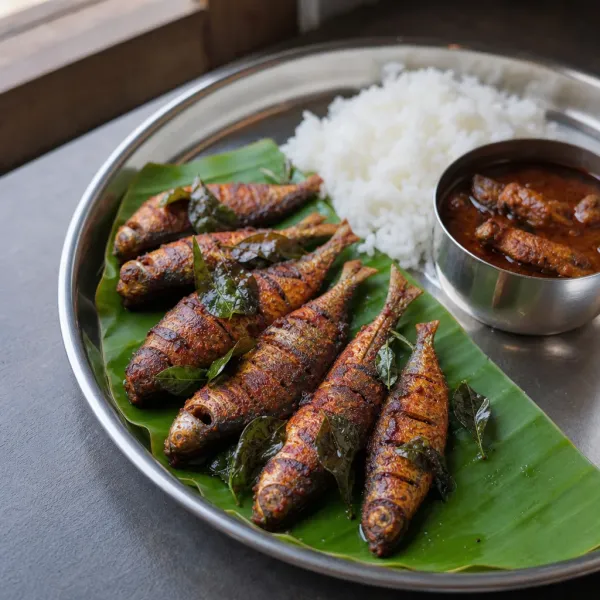
Mathi Fry (Kerala Sardine Tawa Fry)
Traditional Kerala mathi fry: sardines marinated in Kashmiri chilli, kudampuli, and coconut oil, fried on a cast-iron tawa until deeply crusted.
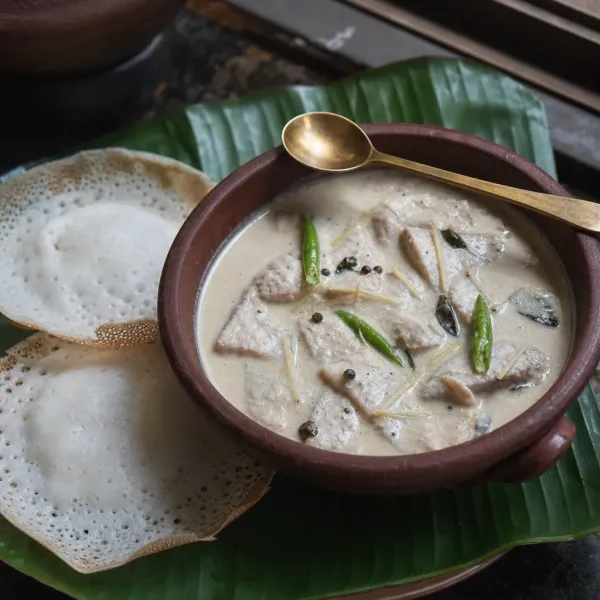
Fish Mappas
Authentic Syrian Christian fish mappas from Travancore: firm white fish in a smooth coconut milk gravy with whole spices and a touch of vinegar. Trad…
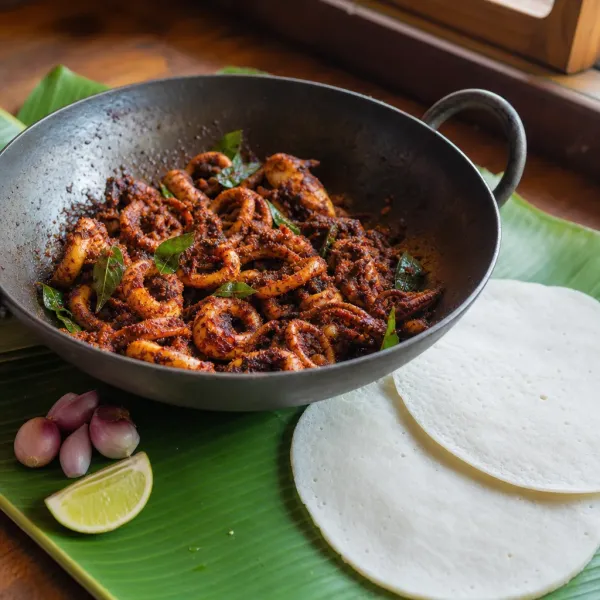
Koonthal Roast
Traditional Mappila koonthal roast from Malabar: squid slow-roasted with shallots, Kashmiri chilli, fennel and kudampuli in coconut oil. Step-by-step…
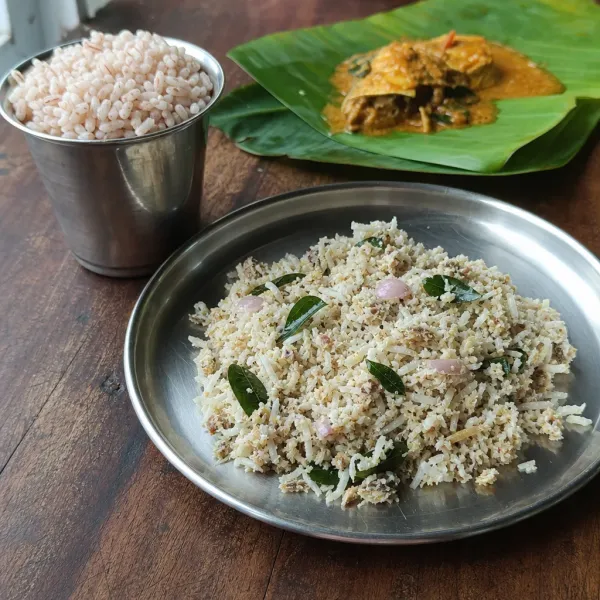
Meen Thoran
Traditional Nasrani-style meen thoran from Travancore: flaked fish folded with fresh coconut, shallots, and curry leaf in coconut oil. Dry, fragrant…
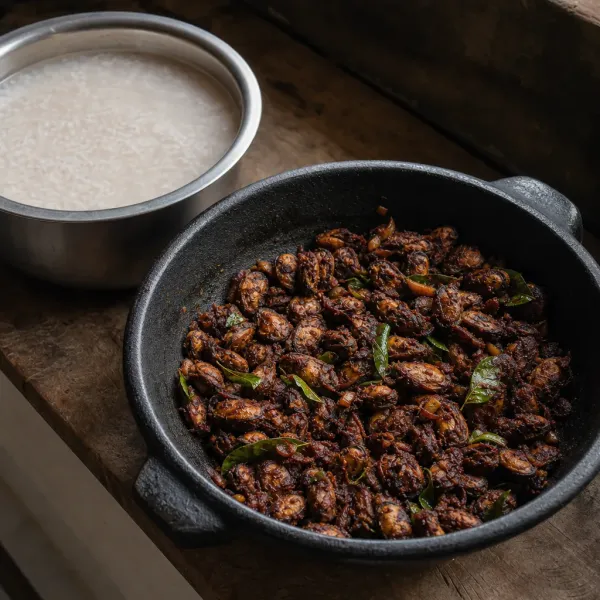
Kallummakkaya Ularthiyathu
Traditional Mappila mussel dry roast from Malabar – shallots, coconut oil, whole spices and fresh mussels roasted until completely dry. Step-by-step…
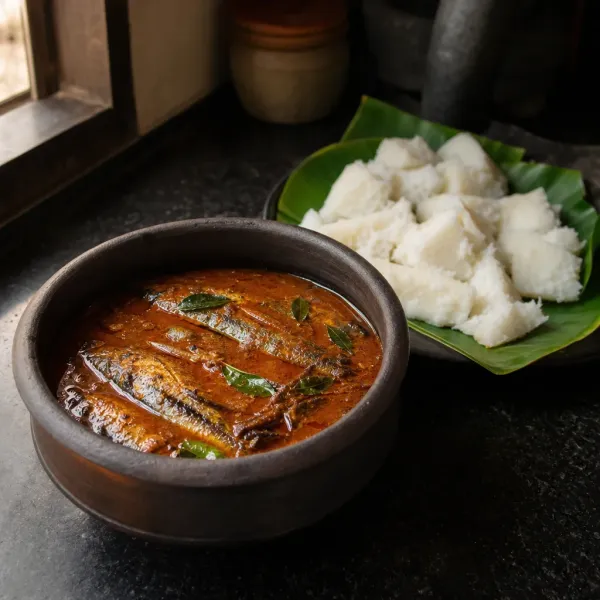
Chala Curry
Traditional Kerala sardine curry with kudampuli and fresh coconut paste, cooked in a manchatti. Authentic coastal recipe with kappa or matta rice.