

Parippu Pradhaman (Moong Dal Payasam) Recipe
Malayalam പരിപ്പ് പ്രഥമൻTamil பருப்பு பிரதமன்Kannada ಪರಿಪ್ಪು ಪ್ರಥಮನ್Telugu పరిప్పు ప్రధమన్
- Prep10 min
- Cook50 min
- Serves6
- DifficultyMedium
- DietVegetarian
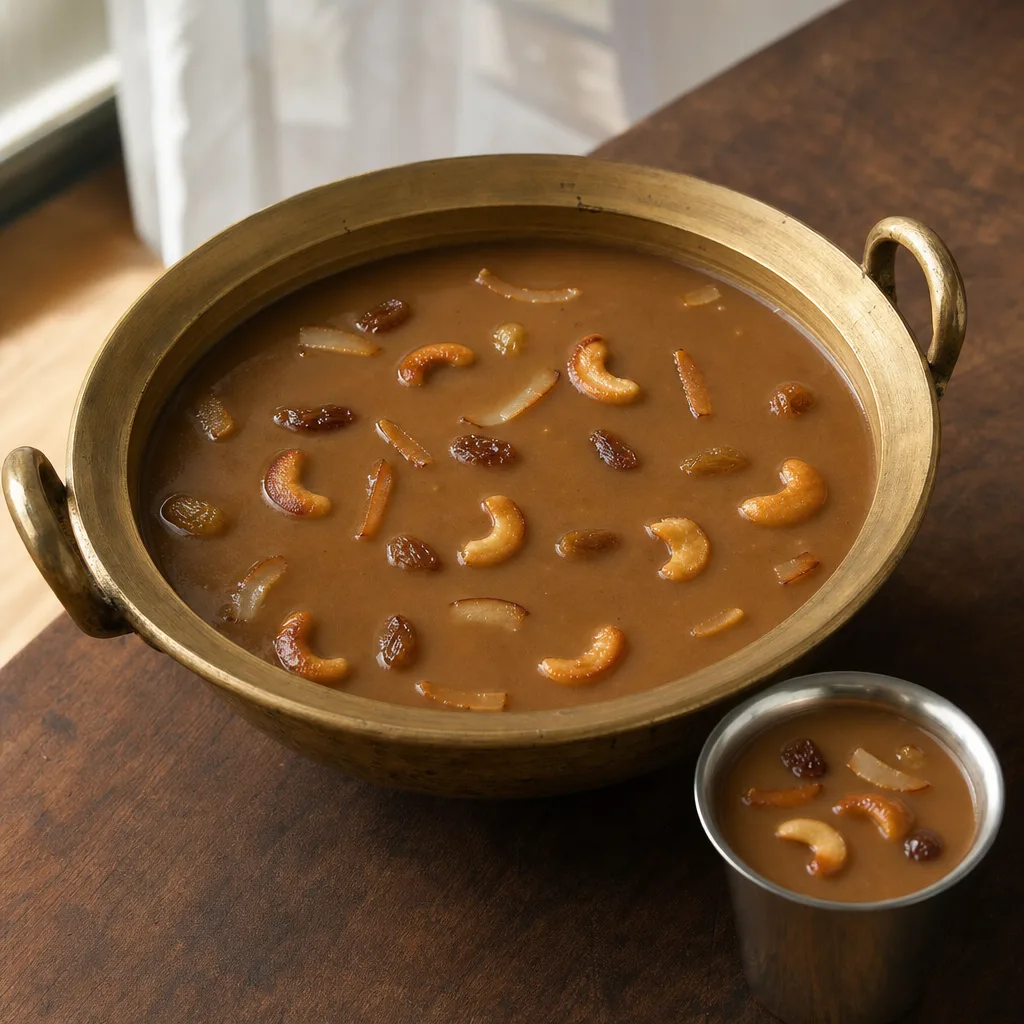
Parippu pradhaman is the moong dal payasam that anchors the sadya dessert course, served in the final sweet pour on a banana leaf. It belongs to every community in Kerala that cooks a sadya — Nair, Namboothiri, Nasrani — and the method is broadly shared. What varies between households is the ratio of thin to thick coconut milk and how deeply the dal is roasted before cooking.
The dish has two textures working together: soft, almost dissolving dal in a jaggery-dark base, and the richness of thick coconut milk stirred in at the end off the heat. Both matter. Rush the jaggery reduction and the sweetness is thin. Add the thick coconut milk while the pot is still boiling and it will split.
This is a sadya dish, so it is cooked in quantity and served at room temperature or just warm. At home, on a non-sadya day, families make smaller portions and eat it as an evening sweet. The ghee-fried coconut bits and cashews on top are not optional garnish — they are part of the dish.
Ingredients (serves 6)
For the pradhaman
For the garnish (fried in ghee)
Method
Roast the dal
Place the moong dal in a dry, heavy-bottomed vessel over medium heat. Stir constantly for 6 to 8 minutes until the dal turns pale gold and smells nutty. Do not let it brown deeply — it will turn bitter. Tip it out immediately so it does not keep cooking in the residual heat of the pan.
Cook the dal until very soft
Rinse the roasted dal once. Transfer to a pressure cooker with enough water to cover by about 4 cm. Cook for 3 whistles on medium heat, then let the pressure drop on its own. Open and check: the dal should be completely soft and beginning to collapse. If any grain holds its shape, cook for one more whistle. Mash lightly with the back of a spoon — you want a rough, not smooth, texture.
Make the jaggery syrup
Combine the broken jaggery with 100 ml water in a small pan over medium heat. Stir until the jaggery dissolves fully, then let it come to a boil for 2 minutes. Strain through a fine sieve into a bowl to remove grit and impurities. Set aside.
Combine dal and jaggery syrup
Transfer the cooked, mashed dal into a wide, heavy-bottomed uruli or deep pan. Pour in the strained jaggery syrup and stir well over medium heat. The mixture will look thin at first. Cook, stirring frequently, for 5 minutes until the jaggery is fully absorbed and the colour deepens to a warm brown.
Add thin coconut milk and reduce
Pour in the thin coconut milk (second and third extract) and stir to combine. Keep the heat at medium-low. Cook uncovered, stirring every few minutes, for 20 to 25 minutes. The pradhaman should thicken noticeably and coat the back of a spoon. Do not walk away during this stage — it catches and scorches at the bottom if left unstirred.
Add spices
Stir in the powdered cardamom, dry ginger powder, and the small pinch of cumin. Add 1 tablespoon of ghee and stir through. Cook for another 2 minutes. Taste for sweetness — the jaggery quantity here gives a medium-sweet result; if your jaggery is mild, you may add a little more dissolved jaggery at this point.
Take off the heat before adding thick milk
Remove the pan from the flame completely. Wait 2 minutes so the vigorous boiling subsides. Then pour in the thick coconut milk slowly, stirring as you go. Never add thick coconut milk to a boiling pradhaman — it will curdle and the fat will separate. The pradhaman will look lighter in colour immediately after adding the thick milk; it settles as it cools.
Fry the garnish
Heat the remaining 2 tablespoons of ghee in a small pan over medium heat. Add the cashew halves and fry, stirring, until golden — about 2 minutes. Add the coconut slivers and fry until they turn deep gold and begin to crisp, another 3 to 4 minutes. Add the raisins last and fry for 30 seconds until they puff. Pour the entire contents of the pan, ghee and all, into the pradhaman.
Rest before serving
Let the pradhaman rest for at least 10 minutes before serving. It thickens further as it cools. Serve warm or at room temperature — never straight from a rolling boil, which mutes the coconut milk flavour.
How to serve
Served as part of the Kerala sadya on a banana leaf, poured after the other curries and rice are eaten. At home on other days, served in a small steel or brass bowl on its own as a sweet.
Served with: Served as part of the Kerala sadya on a banana leaf, poured after the other curries and rice are eaten. At home on other days, served in a small steel or brass bowl on its own as a sweet.
Cook's tips
Extracting coconut milk at home
Grate one large coconut. Add 100 ml warm water, squeeze firmly, and strain — this is your thick first extract. Add 600 ml more water to the same gratings in two batches, squeezing each time — this is your thin milk. Packaged coconut milk can be used but the flavour is noticeably flatter.
Jaggery quality matters
Use dark, slightly smoky Kerala jaggery (Kozhikode or Palakkad variety if you can find it) rather than pale, refined jaggery. The colour and a faint caramel depth come from the jaggery, not from any added colour.
The pradhaman thickens on cooling
If it looks slightly too thin when hot, do not reduce further — it will be correct once it cools to serving temperature. Overcooked pradhaman turns gluey.
Storing leftovers
Keep refrigerated for up to two days. Reheat very gently over low heat with a splash of water, stirring constantly. Do not boil after the thick coconut milk has been added.
Cumin — leave it out if you prefer
The tiny pinch of cumin is traditional in many Travancore households and adds a barely perceptible warmth. Some families omit it entirely. Both are correct.
Regional variations
Cherupayar parippu pradhaman uses the same dal but a thinner consistency for some Malabar households; ada pradhaman uses rice ada instead of dal entirely and is a distinct dish.
Glossary
- Pradhaman പ്രഥമൻ
- Kerala's category of payasam made with coconut milk and jaggery, as distinct from pal payasam which uses cow's milk and sugar.
- Cherupayar parippu ചെറുപയർ പരിപ്പ്
- Split moong dal, the small yellow split lentil used here.
- Sharkkara ശർക്കര
- Kerala jaggery, made from cane, darker and more flavourful than refined jaggery.
- Chukku ചുക്ക്
- Dry ginger powder, used in small quantities in several Kerala sweets for warmth and digestion.
- Thenga kothu തേങ്ങ കൊത്ത്
- Fresh coconut cut into small thin slivers, fried in ghee until crisp as a garnish for pradhamans.
- Uruli ഉരുളി
- A wide, shallow, heavy brass or bell-metal cooking vessel traditional to Kerala kitchens, ideal for reducing payasam evenly.
- Sadya സദ്യ
- The Kerala feast served on a banana leaf, traditionally for festivals and weddings, of which pradhaman is the centrepiece sweet.
Two things decide this pradhaman: the jaggery must be reduced with the thin coconut milk until genuinely thick before the flame goes off, and the thick coconut milk must go in only after the pot has stopped boiling. Get those two right and the rest follows.
More Sweets & Payasam recipes
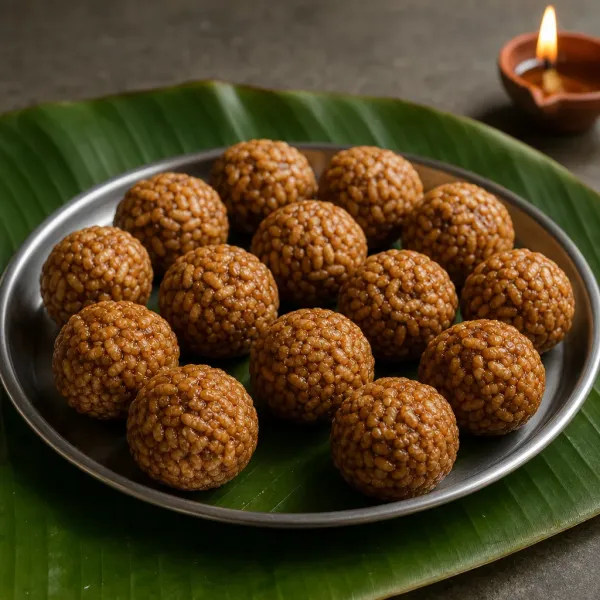
Pori Urundai
Traditional Tamil pori urundai made with puffed rice and dark jaggery syrup. Step-by-step method with soft-ball stage syrup test. A Karthigai Deepam…
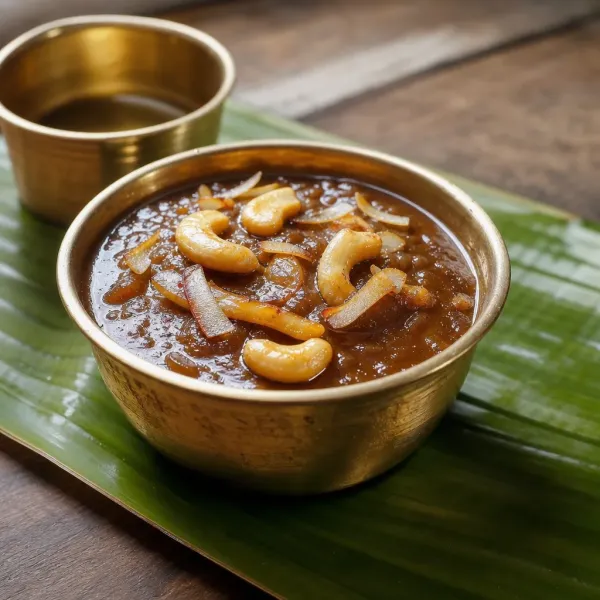
Pazham Pradhaman
Traditional Kerala pazham pradhaman made with ripe nendran banana, dark jaggery and fresh coconut milk. Step-by-step sadya recipe with household tips.
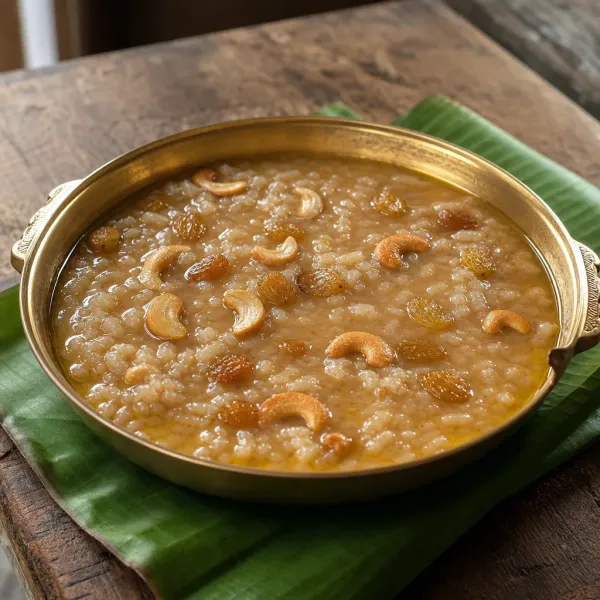
Aval Payasam
Traditional Kerala aval payasam made with thick beaten rice, full-fat milk, jaggery and ghee-fried cashews. A classic sadya sweet, ready in 40 minute…
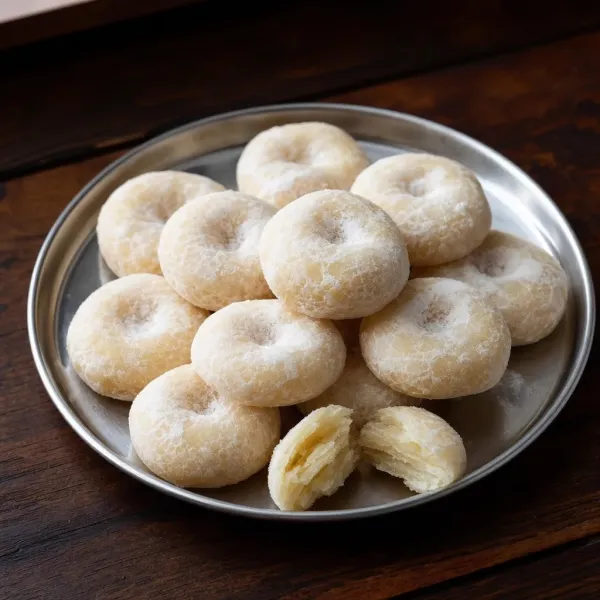
Badusha
Traditional badusha recipe: flaky maida dough fried low and slow, soaked in one-string sugar syrup. Step-by-step method with tips for the perfect gla…
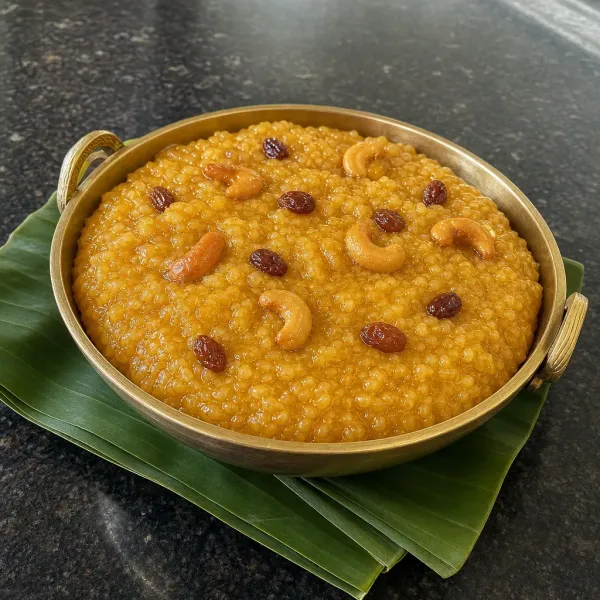
Sakkarai Pongal
Authentic Tamil Brahmin sakkarai pongal with jaggery, ghee and cardamom. Temple-style method with roasted moong dal and strained jaggery syrup.
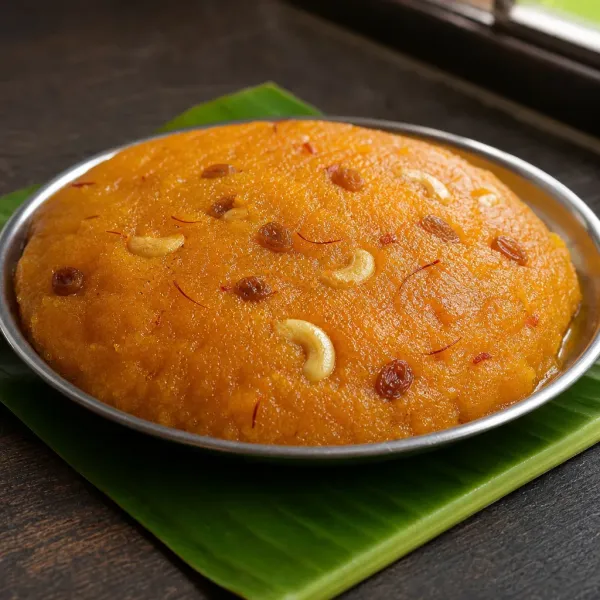
Rava Kesari
Classic Tamil Brahmin rava kesari made with semolina, saffron, and ghee. Soft, glossy, and cooked the traditional way with the correct water ratio.