

Rava Kesari Recipe
Malayalam റവ കേസരിTamil ரவா கேசரிKannada ರವಾ ಕೇಸರಿTelugu రవా కేసరి
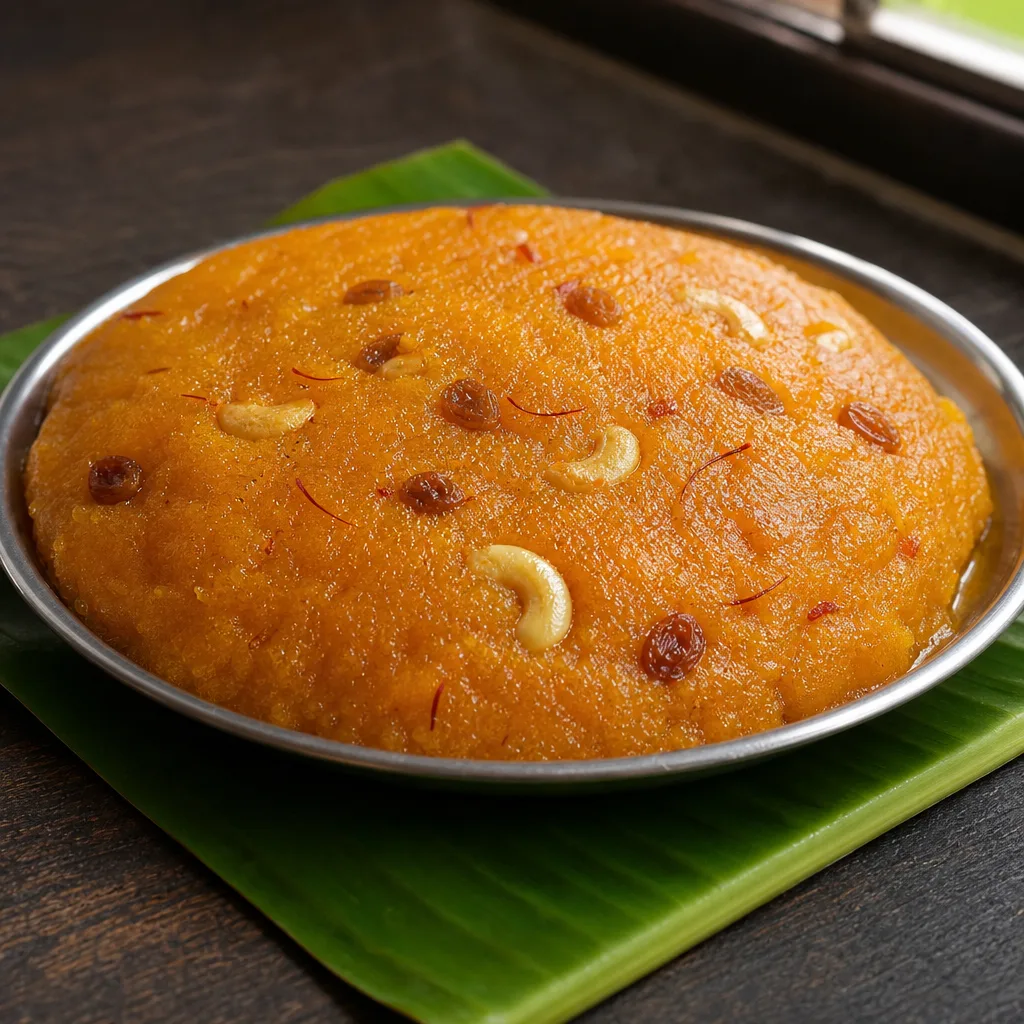
- Prep10 min
- Cook25 min
- Serves4
- DifficultyEasy
- DietVegetarian
Rava kesari is a semolina sweet made in Tamil Brahmin households for festivals, Saturdays dedicated to Vishnu, and as the first sweet a new bride makes in her marital home. It is quick enough for a weekday morning and festive enough for Pongal or a house warming. In many Iyer homes it is made alongside kesari's savoury counterpart, upma, and the two are served together as a breakfast combination called chow-chow bath, though that name is more firmly Kannada.
The colour comes from a generous pinch of saffron bloomed in warm water, and from a small measure of kesari powder — the orange food colour that gives the dish its name. Some older households use only saffron and skip the colour entirely; the result is a pale gold rather than the familiar deep orange. Both are correct. The texture should be soft and slightly cohesive, pulling away from the pan cleanly, not stiff like a burfi and not loose like a porridge.
The ratio of water to rava and the moment you add the sugar are the two things that decide everything. Add the sugar too early and the rava seizes; add too little water and the rava does not cook through before the sugar goes in. Every experienced cook has a fixed ratio she trusts and does not deviate from.
Ingredients (serves 4)
Main
Method
Bloom the saffron
Warm 2 tablespoons of water until it is just hot to the touch — not boiling. Add the saffron strands and set aside. The water will turn a deep amber in about 10 minutes. If you are using kesari colour, dissolve it in this same water now.
Fry the cashews and raisins
Place a wide, heavy-bottomed pan — a thick aluminium or steel vessel works well — over medium-low heat. Add 2 tablespoons of ghee. When it is warm, add the cashew halves and fry, stirring, until they are pale gold. Add the raisins and fry for another 30 seconds until they puff. Remove everything with a slotted spoon and set aside, leaving the ghee in the pan.
Roast the rava
In the same ghee over medium-low heat, add the rava. Stir continuously with a wooden spoon or flat ladle. The rava should roast evenly for 4 to 5 minutes until it smells faintly nutty and feels slightly dry and separate. Do not let it colour. If it starts to brown even lightly, your heat is too high.
Bring the water to a full boil
While the rava roasts, heat the 600 ml of water in a separate vessel until it reaches a rolling boil. Having the water boiling before it meets the rava is important — it prevents lumps from forming and ensures the rava cooks evenly.
Add the boiling water
Reduce the heat under the rava pan to low. Pour in the boiling water carefully and all at once, stirring vigorously as you pour. The mixture will bubble and sputter. Keep stirring. Within 2 minutes the rava will absorb the water and the mixture will thicken into a soft, lump-free mass that moves as one piece when you stir.
Cook the rava through
Cover the pan and cook on low heat for 3 to 4 minutes. This steams the rava through so there are no raw, gritty grains at the centre. Lift the lid and stir once to check — press a small amount between your fingers and it should feel smooth, not grainy.
Add the sugar
Add all the sugar at once and stir immediately. The mixture will loosen dramatically as the sugar dissolves and releases moisture — this is expected. Stir continuously over medium-low heat. Do not walk away at this stage.
Add the saffron water and colour
Pour in the bloomed saffron water (with the dissolved colour if using) and stir to distribute evenly. The mixture will take on its characteristic orange-gold colour within a minute of stirring.
Add the remaining ghee in stages
Add the remaining 3 tablespoons of ghee one tablespoon at a time, stirring each addition in fully before adding the next. The kesari will begin to pull away from the sides of the pan and come together into a glossy, cohesive mass. This takes about 5 to 7 minutes of stirring over medium-low heat.
Add cardamom, cashews and raisins
When the kesari is pulling cleanly from the sides and the bottom, add the cardamom powder and the fried cashews and raisins. Stir to combine. Switch off the heat.
Set or serve
Serve immediately in mounds on a steel plate or banana leaf for a soft, slightly flowing texture. If you prefer it set into squares, press it into a greased plate while still hot, smooth the top, and cut into diamonds or squares after 10 minutes. It firms up as it cools.
How to serve
Eaten on its own as a sweet, or served alongside upma as part of a chow-chow bath breakfast. On festival days it may be served as part of a full South Indian meal on a banana leaf.
Served with: Eaten on its own as a sweet, or served alongside upma as part of a chow-chow bath breakfast. On festival days it may be served as part of a full South Indian meal on a banana leaf.
Cook's tips
Water ratio is fixed
The ratio of rava to water is 1:3 by volume. Do not reduce the water hoping for a firmer result — the rava will not cook through and you will have a gritty kesari. The sugar adds its own moisture, which is why the mixture loosens after you add it.
Sugar ratio
The traditional ratio is 1:1.5, rava to sugar by volume. This makes a properly sweet kesari. Reducing the sugar significantly changes the texture, not just the sweetness, because the dissolved sugar is part of what gives the final set.
Skipping the food colour
Many older Iyer households never use kesari colour and rely entirely on saffron. The result is a pale golden yellow rather than orange. Both are authentic. The name 'kesari' refers to saffron, not to the orange colour.
Ghee temperature for frying
If the ghee is too hot when you add the cashews, they brown on the outside while remaining raw inside. Medium-low heat gives you an even pale gold. Raisins need only seconds — they puff and are done.
Reheating
Kesari stiffens as it cools. Reheat in a pan with a teaspoon of ghee and a tablespoon of water over low heat, stirring until it loosens. It comes back well. Do not microwave without covering, as it dries out.
Regional variations
Karnataka households make a version with more ghee and sometimes add pineapple (pineapple kesari bath); Andhra households make a similar halwa called ravva kesari with slight differences in saffron usage and cashew quantity.
Glossary
- Rava ரவை
- Semolina; in South India this almost always refers to fine Bombay rava made from durum or hard wheat.
- Kesari கேசரி
- Saffron; the dish is named for the saffron used to colour and flavour it.
- Kesari powder கேசரி பவுடர்
- Orange food colour sold as a powder in South Indian provision stores; used to deepen the colour of the sweet beyond what saffron alone provides.
- Elaichi ஏலக்காய்
- Green cardamom; the seeds are powdered fine and added at the end so the fragrance is not cooked away.
Two things decide this dish: the water must be boiling when it meets the rava, and the sugar must go in only after the rava is fully cooked through. Get those two moments right and the rest — the ghee, the colour, the cashews — falls into place.
More Sweets & Payasam recipes
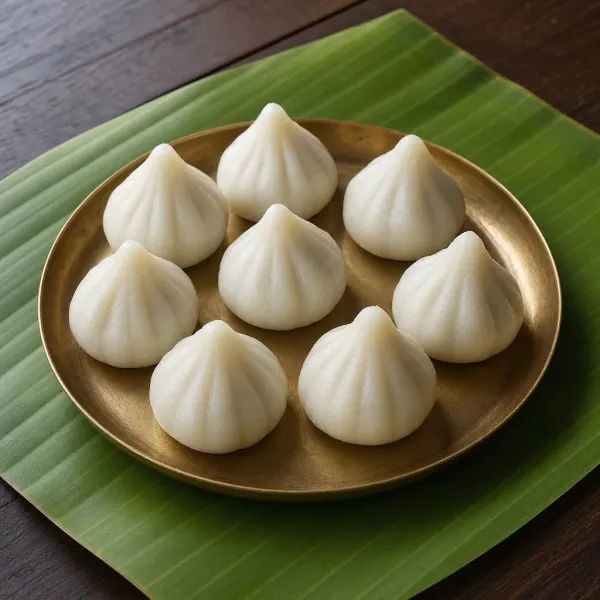
Kozhukattai with Coconut and Jaggery Filling
Traditional Tamil Brahmin kozhukattai with fresh coconut and jaggery poornam. Steamed rice flour dumplings shaped in the modak style for Ganesh Chatu…
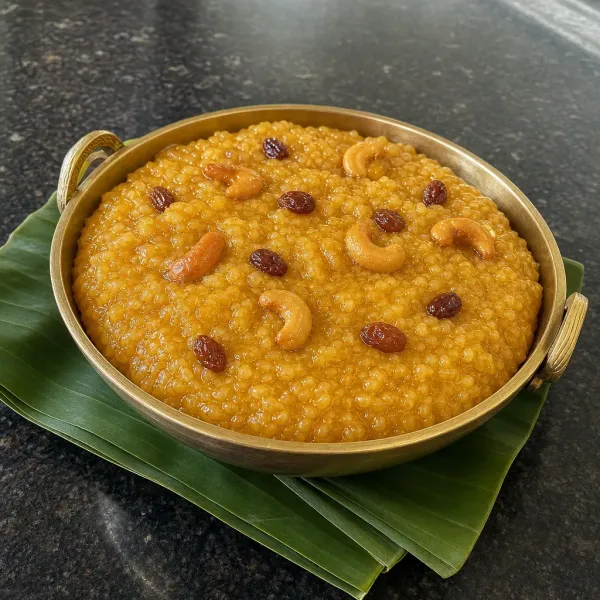
Sakkarai Pongal
Authentic Tamil Brahmin sakkarai pongal with jaggery, ghee and cardamom. Temple-style method with roasted moong dal and strained jaggery syrup.
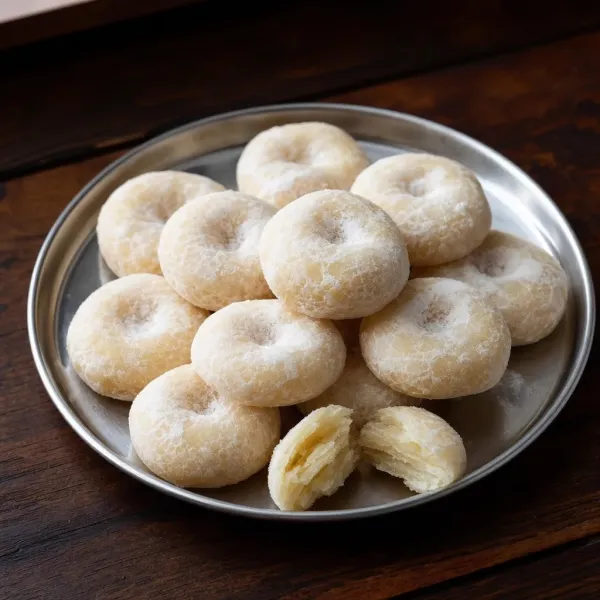
Badusha
Traditional badusha recipe: flaky maida dough fried low and slow, soaked in one-string sugar syrup. Step-by-step method with tips for the perfect gla…
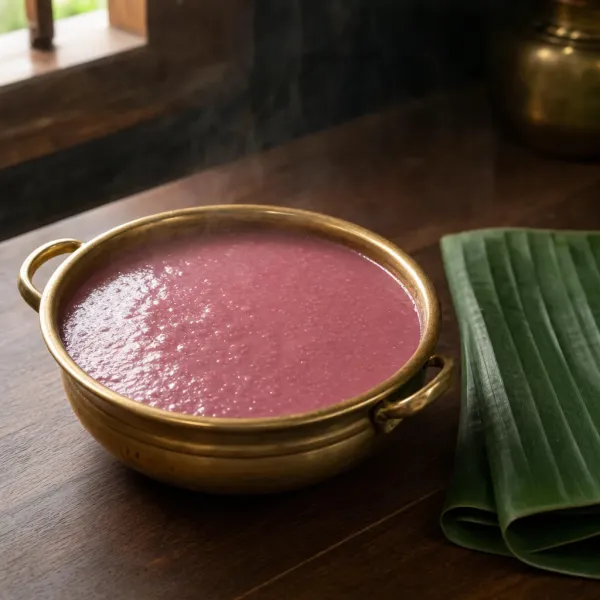
Ambalappuzha Paal Payasam
Authentic Ambalappuzha paal payasam with just milk, rice and sugar. The three-hour slow-cook method that gives the famous rose-pink colour.
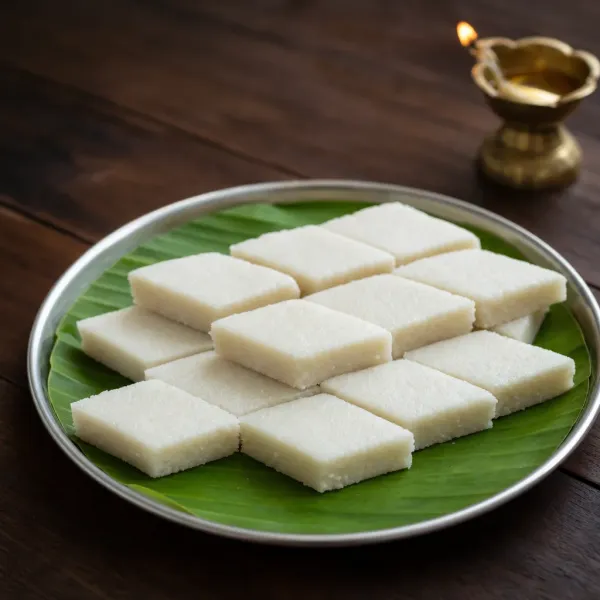
Thengai Burfi (Coconut Burfi)
Classic Tamil Iyer-style thengai burfi made with fresh coconut, sugar and cardamom. Firm, milk-white and festival-ready. Step-by-step traditional met…
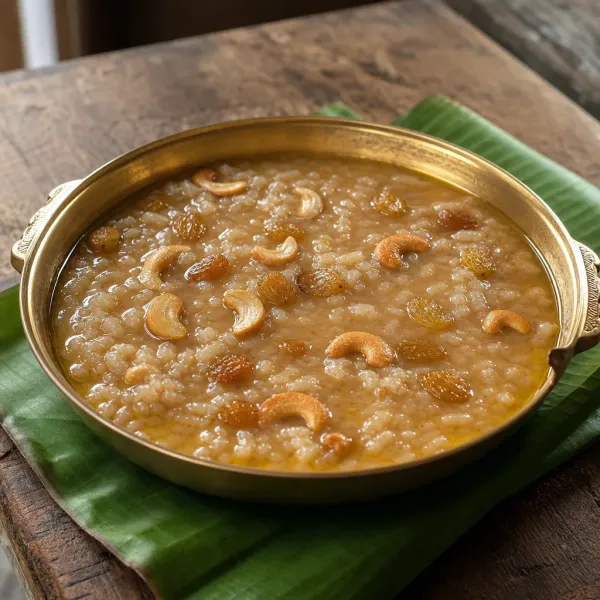
Aval Payasam
Traditional Kerala aval payasam made with thick beaten rice, full-fat milk, jaggery and ghee-fried cashews. A classic sadya sweet, ready in 40 minute…