

Thengai Burfi (Coconut Burfi) Recipe
Malayalam തേങ്ങ ബർഫിTamil தேங்காய் பர்ஃபிKannada ತೆಂಗಿನಕಾಯಿ ಬರ್ಫಿTelugu కొబ్బరి బర్ఫీ
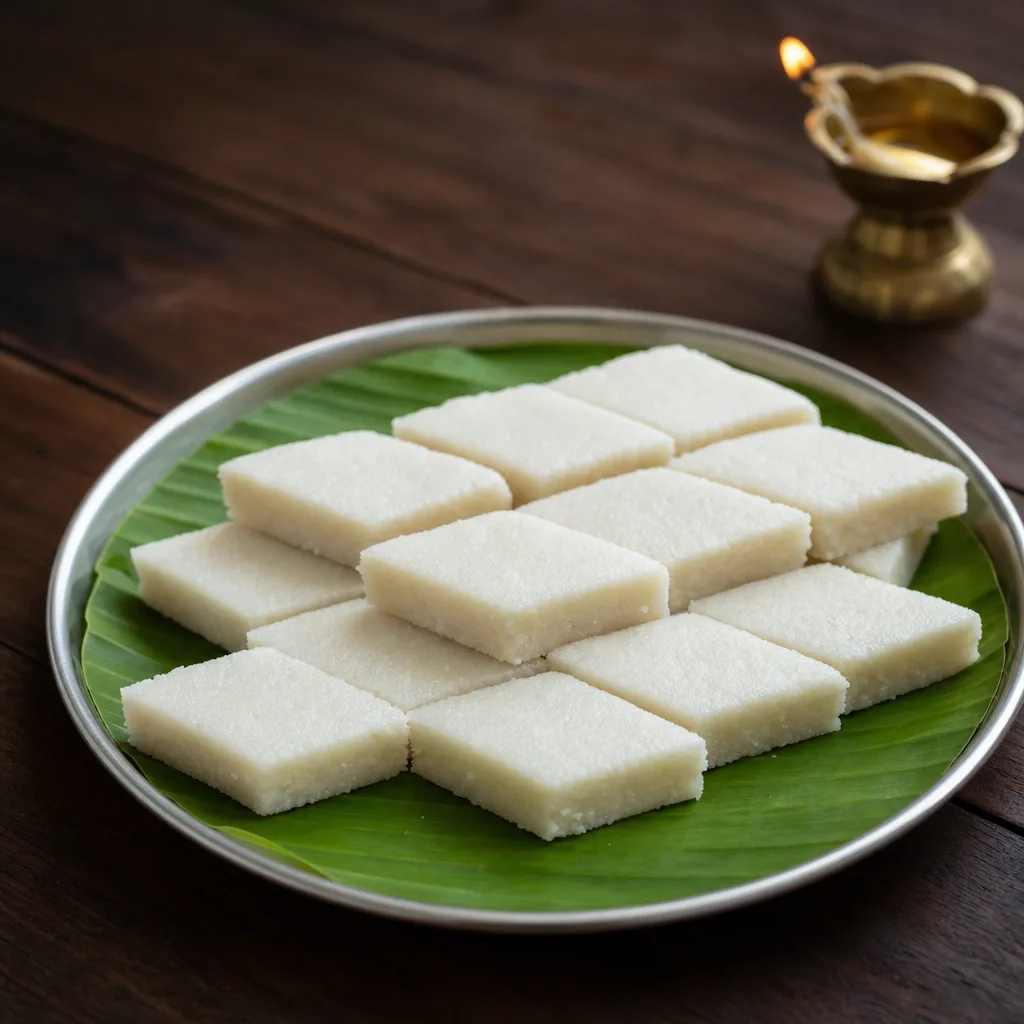
- Prep20 min
- Cook35 min
- Serves20 to 24 pieces
- DifficultyMedium
- DietVegetarian
Thengai burfi is a firm, milk-white coconut sweet made in Tamil Brahmin homes for festivals, especially Krishnashtami and Karthigai Deepam. It is set into a greased plate, cut into neat diamonds or squares while still warm, and stacked on a steel plate or banana leaf for offering before it is eaten. It keeps well for three or four days in a cool kitchen, which is why it travels well to relatives.
The method is simple but unforgiving on timing. Sugar, water and freshly grated coconut go into one pan; the cook must stay at the stove and stir without stopping once the syrup reaches the right stage. Pull it too early and the burfi stays sticky and will not set. Cook it a minute too long and it becomes grainy and dry. The visual cue is everything: the mixture pulls cleanly away from the sides of the pan and loses its wet shine.
Every household has small preferences. Some add a spoon of ghee at the end for gloss. Some use only cardamom; others add a few strands of saffron dissolved in a teaspoon of warm milk, which gives a pale gold tint and a faint fragrance. The version here is the plain cardamom one, which is the most common.
Ingredients (serves 20 to 24 pieces)
For the burfi
Method
Prepare your plate and tools
Grease a steel or stainless plate (roughly 20 cm across) generously with ghee and set it aside near the stove. Have a flat spatula ready. Once the mixture starts moving fast you will not have time to search for anything.
Make the sugar syrup
Put the sugar and water in a wide, heavy-bottomed kadai over medium heat. Stir until the sugar dissolves, then stop stirring. Let it boil undisturbed until it reaches a firm one-string consistency: lift a little syrup on the back of a spoon, let it cool for five seconds, then press between thumb and forefinger and pull apart slowly. A single firm thread that holds without breaking is what you need. This usually takes eight to ten minutes from the boil.
Add the coconut
Add the grated coconut all at once to the syrup. Reduce the heat to medium-low immediately. Stir continuously with the spatula, scraping the bottom and sides of the pan. The mixture will look wet and loose at first; this is correct.
Cook, stirring without stopping
Keep stirring on medium-low heat. After ten to fifteen minutes the mixture will thicken noticeably and begin to leave the sides of the pan. Do not rush this by raising the heat; it will scorch on the bottom. The colour should remain white throughout.
Watch for the setting point
The mixture is ready when it comes together as one mass, pulls cleanly away from the pan sides, and loses its wet, glossy look. Press a small amount between your fingers: it should feel firm and not sticky. If it still feels tacky, stir for another two minutes and test again.
Add cardamom and ghee
Remove the pan from the heat. Add the ground cardamom and the tablespoon of ghee. Stir quickly to combine. Work fast; the mixture stiffens as it cools.
Transfer and spread
Pour the mixture immediately onto the greased plate. Using the back of a greased spatula or a greased piece of banana leaf, press and spread it evenly to about 1.5 cm thickness. Work quickly and press firmly to get a flat, even surface with no cracks.
Cut while warm
After five minutes, when the burfi has set but is still warm and slightly soft, cut it into diamonds or squares with a greased knife. Press the knife straight down rather than dragging it, or the pieces will crumble at the edges. Do not wait until it is fully cold to cut; it will crack.
Cool and separate
Leave the pieces undisturbed on the plate until fully cool, about twenty minutes. Then lift each piece gently with a flat spatula. They should come away cleanly. Stack on a plate lined with a piece of banana leaf or parchment.
How to serve
Offered as prasadam during puja, or served on a steel plate as part of a festival spread. Sometimes placed alongside other sweets such as paal kozhukattai or seedai.
Served with: Offered as prasadam during puja, or served on a steel plate as part of a festival spread. Sometimes placed alongside other sweets such as paal kozhukattai or seedai.
Cook's tips
Grating the coconut
Grate fine, not coarse. Coarse grating gives a stringy, uneven texture. Use the fine side of a box grater or the traditional aruvamanai if you have one. Avoid the dark brown skin near the shell; it will show as brown flecks in the white burfi.
The syrup stage matters most
If the syrup is under-cooked (below one-string), the burfi will not set and will remain sticky even after cooling. If it is over-cooked (two-string), the finished burfi will be grainy and crumbly. Test the thread carefully before adding the coconut.
Staying white
Keep the heat at medium-low once the coconut goes in. High heat browns the mixture. Thengai burfi should be milk-white all the way through; any yellowing means the heat was too high.
Storage
Store in an airtight tin at room temperature for up to three days in a cool kitchen, or refrigerate for up to a week. Bring to room temperature before serving; cold burfi is harder and less fragrant.
Saffron variation
A few households dissolve four or five saffron strands in one teaspoon of warm milk and stir it in with the cardamom at the end. This gives a faint gold colour and a light fragrance but does not change the method.
Regional variations
Kerala households make a similar sweet using jaggery instead of sugar and sometimes add cardamom and dry ginger; Karnataka versions occasionally include khoya for a richer texture.
Glossary
- Thengai தேங்காய்
- Coconut in Tamil; refers to the mature coconut used for grating and cooking.
- Burfi பர்ஃபி
- A firm Indian sweet set in a tray and cut into squares or diamonds; the word is used across South India for this style of set sweet.
- Kadai கடாய்
- A wide, deep, round-bottomed pan used for frying and cooking sweets; the heavy base prevents scorching.
- Aruvamanai அருவாமணை
- A traditional Tamil kitchen tool: a curved blade fixed to a wooden board, used for grating coconut and slicing vegetables while seated on the floor.
- Prasadam பிரசாதம்
- Food offered to a deity during puja and then distributed to devotees; sweets made for festivals are commonly offered as prasadam first.
Two things decide whether this burfi works: the syrup must reach a true single-string consistency before the coconut goes in, and the heat must stay low and steady from that point on. Get those right and the mixture will set firm, cut clean, and stay white.
More Sweets & Payasam recipes
Ambalappuzha Paal Payasam
Authentic Ambalappuzha paal payasam with just milk, rice and sugar. The three-hour slow-cook method that gives the famous rose-pink colour.
Kozhukattai with Coconut and Jaggery Filling
Traditional Tamil Brahmin kozhukattai with fresh coconut and jaggery poornam. Steamed rice flour dumplings shaped in the modak style for Ganesh Chatu…
Jangiri (Jhangiri)
Traditional Tamil Nadu jangiri made with aerated urad dal batter piped into coils, fried gently and soaked in saffron-cardamom sugar syrup. Step-by-s…
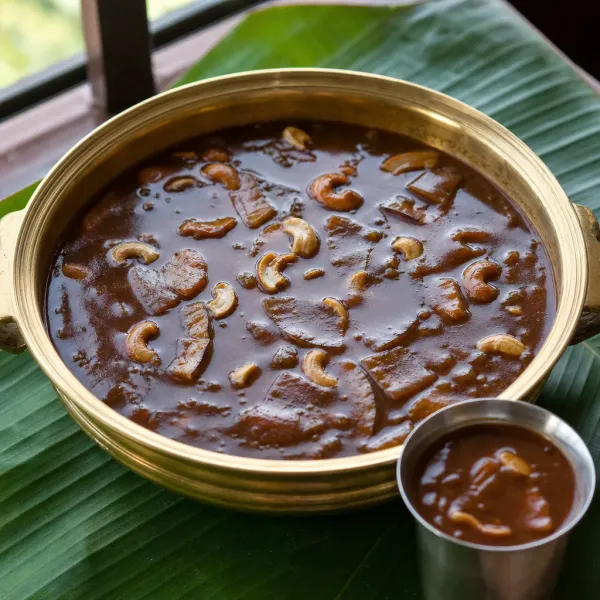
Ada Pradhaman
Authentic Kerala ada pradhaman with rice ada, dark jaggery and fresh coconut milk. Traditional Onam sadya recipe with step-by-step method.
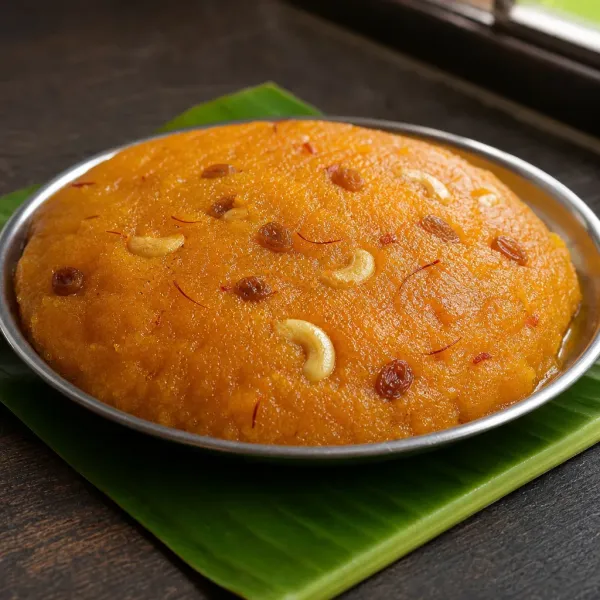
Rava Kesari
Classic Tamil Brahmin rava kesari made with semolina, saffron, and ghee. Soft, glossy, and cooked the traditional way with the correct water ratio.
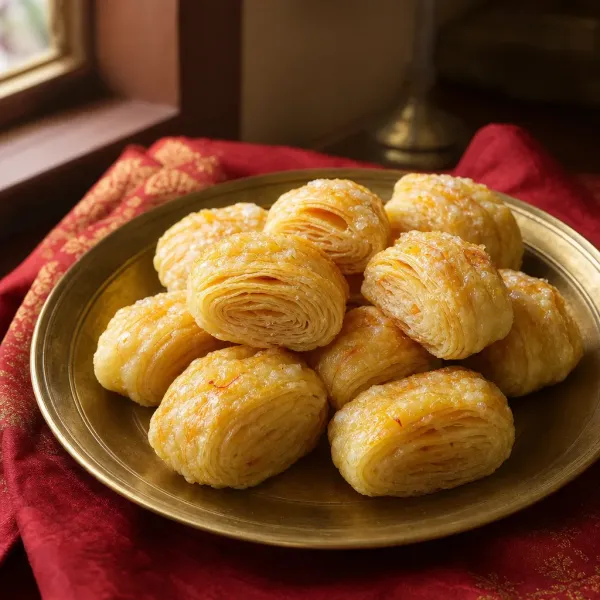
Chiroti
Traditional Karnataka chiroti with ghee-layered maida dough, deep fried and coated in cardamom sugar syrup. Festival sweet from the Dharwad kitchen.