

Kozhukattai with Coconut and Jaggery Filling Recipe
Malayalam കൊഴുക്കട്ടTamil கொழுக்கட்டைKannada ಕೊಳುಕಟ್ಟೆTelugu కొళుకట్టై
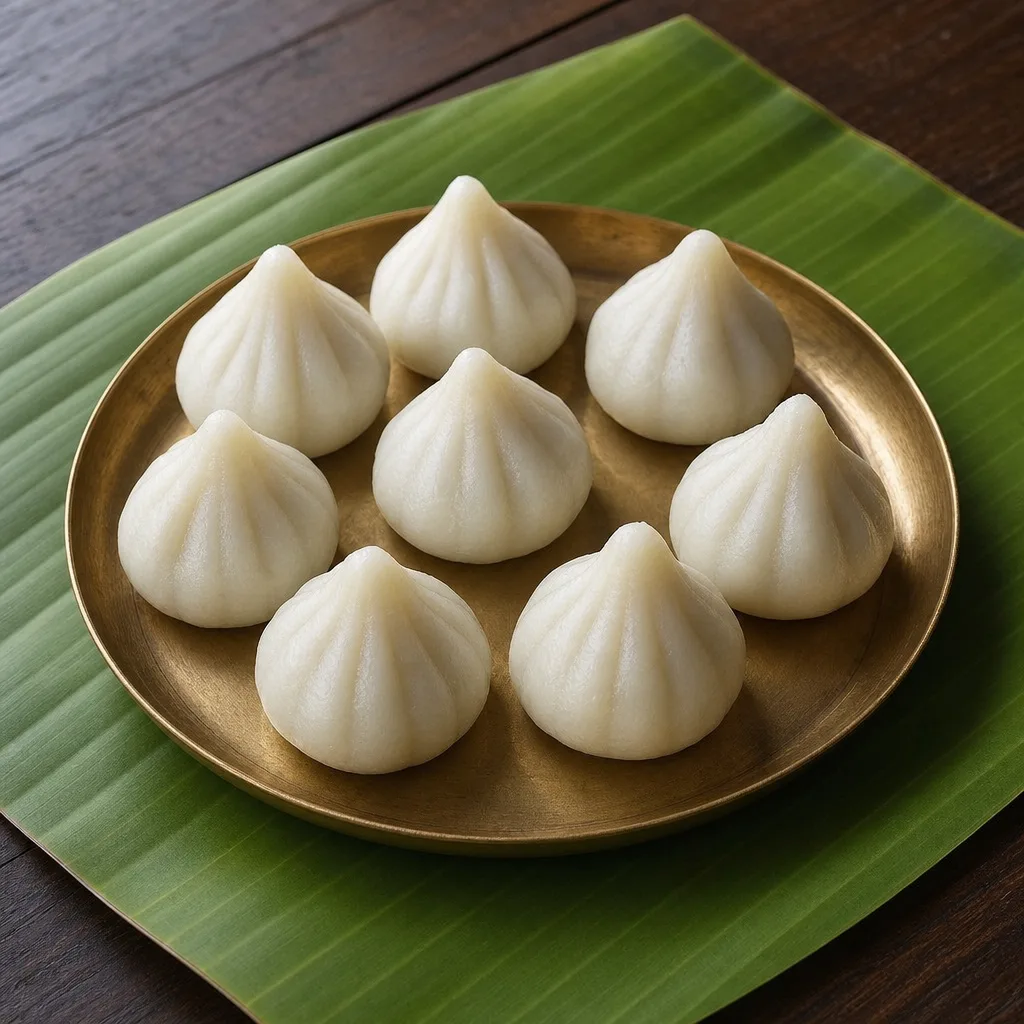
- Prep20 min
- Cook40 min
- Serves4
- DifficultyMedium
- DietVegan
In Tamil Brahmin homes, kozhukattai is made for Ganesh Chaturthi without exception. It is the dish of that festival. On that morning the kitchen smells of fresh coconut and melting jaggery before anything else happens, and the steamer goes on early because the dumplings need time.
The shell is made from rice flour cooked in boiling water into a smooth, pliable dough. The filling is puratttu poornam, a dry mixture of grated fresh coconut and powdered jaggery cooked together until the jaggery binds the coconut into a mass that holds its shape when pinched. The dough is shaped by hand into a thin cup, filled, and sealed into a half-moon or a pointed oval, then steamed. The finished dumpling is white, soft and slightly translucent at the edges. There is no browning anywhere.
Household variation is mostly in the shaping. Some women pinch a pleated edge in the modak style, a cone with a gathered top. Others press a simple half-moon. The filling ratio varies too: some families like more jaggery, some keep it restrained so the coconut stays prominent. The technique of cooking the dough in hot water is not optional; it is what makes the shell soft without being sticky.
Ingredients (serves 4)
For the dough
For the filling (poornam)
Method
Make the filling first
Put the powdered jaggery in a dry heavy-bottomed pan over low heat. It will begin to melt in its own moisture. Add the grated coconut and stir continuously. Cook for 6 to 8 minutes until the mixture comes together into a cohesive mass that leaves the sides of the pan and does not stick to your fingers when you pinch a little. Add the ground cardamom and stir once more. Remove from the heat and spread on a plate to cool. If the filling is wet or loose, the dumplings will tear when you seal them.
Portion the filling
While the filling cools, divide it into balls roughly the size of a large marble, about 15 g each. You should get 14 to 16 portions. Rolling them now saves time when you are shaping the dumplings.
Boil the water for the dough
Bring 300 ml of water to a rolling boil in a saucepan. Add salt and the teaspoon of coconut oil. The oil keeps the dough from sticking to itself.
Make the dough
Take the pan off the heat. Add the rice flour all at once and stir immediately with a wooden spoon or a flat ladle. Work quickly and firmly, pressing out any lumps. The flour will absorb the water and come together into a rough, shaggy mass within a minute. Cover the pan with a lid and leave for 3 minutes. The resting time finishes the hydration.
Knead while warm
Turn the dough onto a clean surface. Knead it with your palms while it is still warm but handleable, about 2 to 3 minutes, until it is completely smooth with no cracks. If the dough tears at the edges when you press it, it is too dry; wet your palm lightly and knead again. If it sticks to the surface, it is too wet; dust with a pinch of rice flour. Keep the dough covered with a damp cloth so it does not dry out.
Shape the cups
Pinch off a portion of dough about the size of a golf ball, roughly 25 g. Roll it smooth between your palms, then press your thumb into the centre and rotate the ball slowly, pressing the walls outward and upward to form a thin cup about 6 cm across and 3 mm thick at the sides. The base can be a little thicker. Work quickly; the dough dries fast.
Fill and seal in the modak shape
Place one ball of filling in the centre of the cup. Now gather the rim of the dough upward around the filling, pleating as you go, pinching each pleat firmly against the next. Bring all the pleats together at the top and twist them into a small pointed peak. Press the peak firmly so it does not open during steaming. Set aside on a lightly oiled plate and cover with a damp cloth. Repeat with the remaining dough and filling.
Prepare the steamer
Fill a wide steamer pot or idli pot with water and bring it to a full boil. Grease the steamer plates or an idli tray lightly with coconut oil. Arrange the kozhukattai without touching each other; they will expand slightly and may stick if crowded.
Steam
Place the tray in the steamer, cover tightly, and steam on medium-high heat for 10 to 12 minutes. They are ready when the surface looks smooth and slightly translucent and does not feel sticky when you touch one lightly with a fingertip. Do not open the lid in the first 8 minutes or the steam will drop and the dough will become dense.
Rest before serving
Switch off the heat and leave the lid on for 2 minutes. Lift the kozhukattai off the plate gently with a flat spoon or your fingers once they are cool enough to handle. They firm up slightly as they cool and become easier to lift cleanly.
How to serve
Eaten on their own as a festival offering (naivedyam) and then as a snack or breakfast. No accompaniment is traditional in the Iyer household context.
Served with: Eaten on their own as a festival offering (naivedyam) and then as a snack or breakfast. No accompaniment is traditional in the Iyer household context.
Cook's tips
The dough temperature matters
If you let the dough cool completely before kneading, it will crack and refuse to seal. Work it while it is still warm. Keep a small bowl of water nearby to wet your palms if needed.
Filling must be dry
A wet filling is the most common reason kozhukattai burst open in the steamer. Cook the poornam until it is genuinely dry and pulls away from the pan. If in doubt, cook it a minute longer.
Freshly ground flour
If you have a wet grinder, soak raw rice (pachari) for 2 hours, grind fine, spread on a cloth, and dry in shade for an hour before using. The texture of the shell is noticeably smoother. Store-bought idiyappam flour is a genuine household shortcut and not inferior in most kitchens.
Storing leftovers
Kozhukattai harden as they cool further. Store in an airtight container and re-steam for 4 to 5 minutes before eating. Do not microwave; the shell becomes rubbery.
Jaggery quality
Very wet or syrupy jaggery will make the filling loose. If your jaggery is very soft, cook it alone in the pan for a minute before adding the coconut to drive off some moisture.
Regional variations
Kerala Nasrani households make a similar steamed dumpling called kozhukatta with a looser coconut-jaggery filling and sometimes add cardamom and cumin; Karnataka has kadubu with a chana dal and coconut filling; Andhra households make kudumulu, often plain or with a sesame-jaggery filling.
Glossary
- Pachari പച്ചരി
- Raw, unparboiled white rice; the variety used for idiyappam flour and rice-based doughs in Kerala and Tamil Nadu.
- Vellam வெல்லம்
- Unrefined cane jaggery in Tamil; used in sweets and festival dishes.
- Poornam பூரணம்
- The sweet filling inside a steamed or fried dumpling; in this context the coconut-jaggery mixture.
- Naivedyam நைவேத்யம்
- Food offered to a deity before being eaten; kozhukattai is a naivedyam dish for Ganesh Chaturthi in Tamil Brahmin homes.
- Idiyappam flour இடியாப்பம் மாவு
- Finely milled raw rice flour, sold ready-made; used here as the dough base.
Two things decide whether this works: the dough must be kneaded while warm enough to be pliable, and the filling must be dry enough to hold its shape. Get those right and the shaping, even if imperfect, will not matter much. A well-sealed kozhukattai steamed for the right time will be soft, white, and hold together cleanly when you pick it up.
More Sweets & Payasam recipes
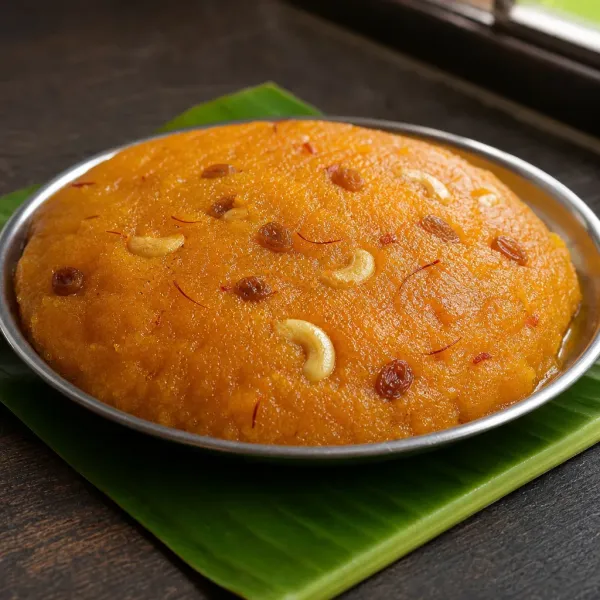
Rava Kesari
Classic Tamil Brahmin rava kesari made with semolina, saffron, and ghee. Soft, glossy, and cooked the traditional way with the correct water ratio.
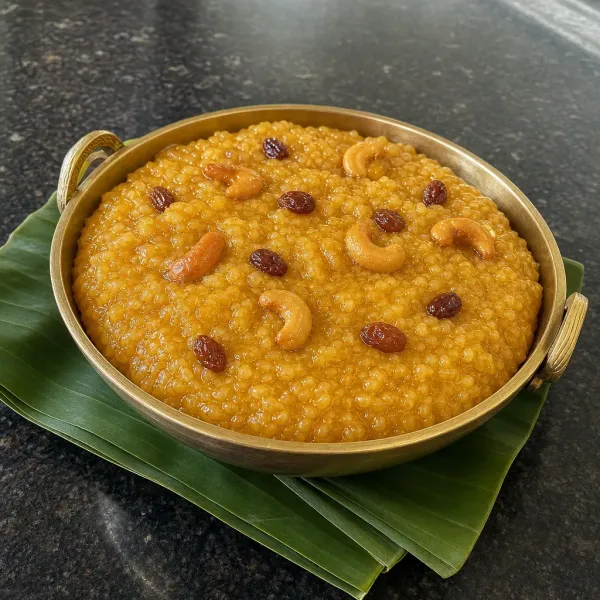
Sakkarai Pongal
Authentic Tamil Brahmin sakkarai pongal with jaggery, ghee and cardamom. Temple-style method with roasted moong dal and strained jaggery syrup.
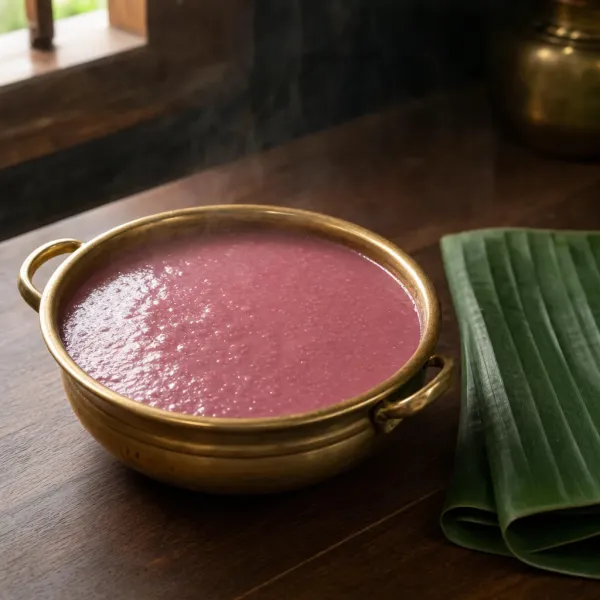
Ambalappuzha Paal Payasam
Authentic Ambalappuzha paal payasam with just milk, rice and sugar. The three-hour slow-cook method that gives the famous rose-pink colour.
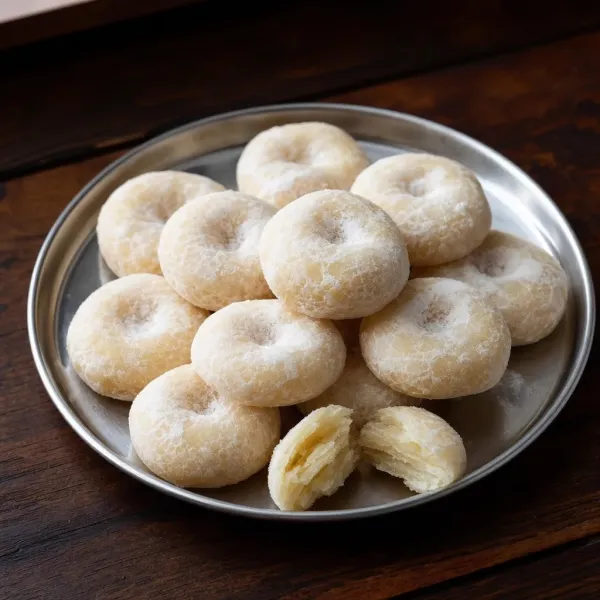
Badusha
Traditional badusha recipe: flaky maida dough fried low and slow, soaked in one-string sugar syrup. Step-by-step method with tips for the perfect gla…
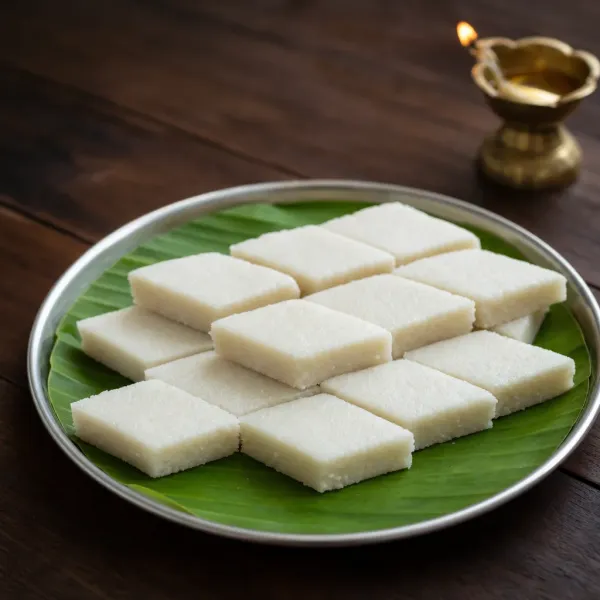
Thengai Burfi (Coconut Burfi)
Classic Tamil Iyer-style thengai burfi made with fresh coconut, sugar and cardamom. Firm, milk-white and festival-ready. Step-by-step traditional met…
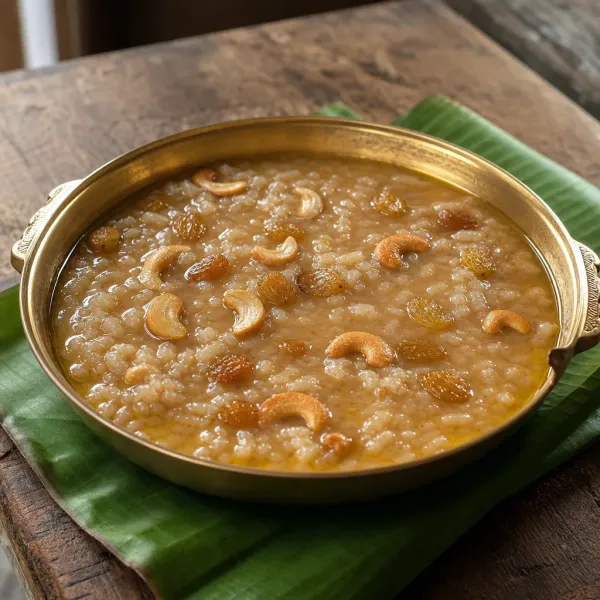
Aval Payasam
Traditional Kerala aval payasam made with thick beaten rice, full-fat milk, jaggery and ghee-fried cashews. A classic sadya sweet, ready in 40 minute…