

Ambalappuzha Paal Payasam Recipe
Malayalam അമ്പലപ്പുഴ പാൽ പായസംTamil பால் பாயசம்Kannada ಪಾಲ್ ಪಾಯಸTelugu పాల్ పాయసం
- Prep10 min
- Cook3 hr
- Serves6
- DifficultyHard
- DietVegetarian
The paal payasam made at the Ambalappuzha Sree Krishna temple is the standard against which every other version in Kerala measures itself. It is a three-ingredient dish: raw rice, full-fat cow's milk, and sugar. Nothing else. No cardamom, no cashews, no raisins, no saffron. The colour, the flavour, and the body all come from one thing alone: time on the fire.
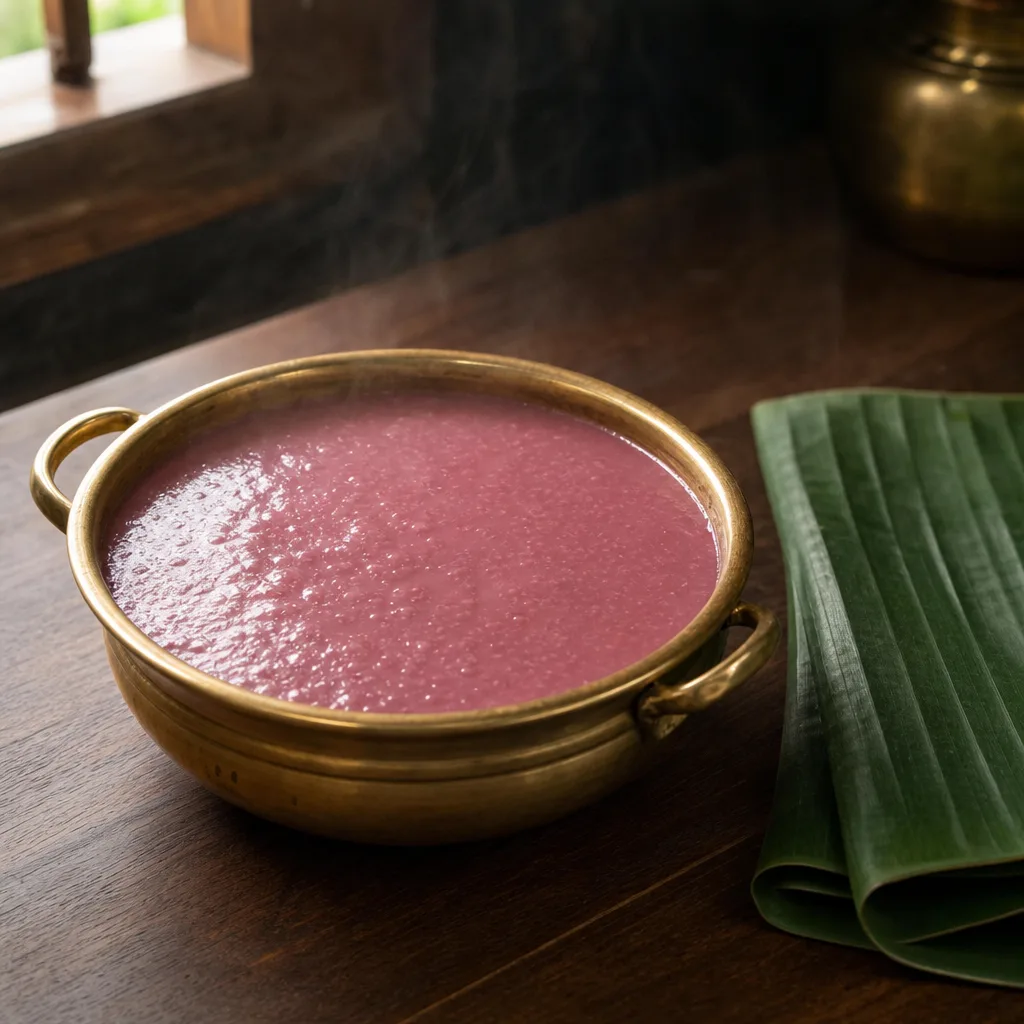
The milk is reduced very slowly, stirring without pause, until it turns a deep blush-pink and coats the back of the spoon like a thin custard. The rice, added early, dissolves almost entirely into the milk rather than remaining as separate grains. What you get is thick, faintly grainy, and a colour that sits somewhere between rose and pale terracotta. That pink is not from any added ingredient; it is the Maillard reaction working slowly on milk sugars over a long, patient cook.
At home, this is made for Vishu, Onam sadya, and temple festivals. Households in the region are strict about using only full-fat, unhomogenised cow's milk, ideally from a local source. The quantity of sugar varies: some families go lighter, some heavier, but no one adds anything else. The only real variable is how long you are willing to stand at the stove.
Ingredients (serves 6)
For the payasam
Method
Wash the rice
Rinse the rice in two changes of cold water until the water runs clear. Drain and set aside. Do not soak it; you want it to break down slowly in the milk, not arrive already softened.
Start the milk on medium heat
Pour the milk into a wide, heavy-bottomed uruli or a thick-bottomed stainless-steel vessel. A wider base means more evaporation and faster reduction, which matters over a three-hour cook. Bring to the boil on medium heat, stirring occasionally so the bottom does not scorch.
Add the rice as soon as the milk boils
The moment the milk rises to a full boil, add the washed rice. Stir it in immediately. Reduce the heat to low-medium: you want a steady, active simmer with small bubbles breaking the surface, not a rolling boil that will boil over.
Cook and stir without stopping
From this point you must stir continuously or at very frequent intervals, scraping the bottom and sides of the vessel. The milk solids that form on the sides are not waste; fold them back in each time. This is the work that builds the body and the colour. Rushing this step or leaving the pot unattended will give you a scorched bottom and a grey, burnt note in the final dish.
Watch for the colour change
After roughly 90 minutes the milk will have reduced by about half and will begin to turn from white to a pale cream. Keep stirring. Over the next hour it will deepen to a faint rose-pink. This is the sign that the milk sugars are caramelising gently. Do not increase the heat to hurry it; the pink comes from time and low heat, and high heat gives bitterness instead.
Check the rice
By the two-hour mark the rice grains should have swollen and most should have broken down or become very soft. A few grains remaining is fine; they will continue to soften. If large intact grains persist past this point, use the back of the spoon to press them against the side of the vessel.
Add the sugar
When the milk has reduced to roughly one-third of its original volume and has turned a clear rose-pink, add the sugar. Stir well to dissolve completely. Adding sugar too early slows the reduction and can prevent the milk from colouring properly.
Cook to the right consistency
After the sugar goes in, continue cooking for another 15 to 20 minutes, stirring constantly. The payasam should coat the back of a spoon and fall in a slow, thick stream when you lift the ladle. It will thicken further as it cools, so take it off the heat when it is slightly thinner than you want at the table.
Rest before serving
Remove from the heat and let it rest for 10 minutes before ladling. Serve warm. The surface will form a thin skin as it cools; stir it back in gently before serving.
How to serve
Served on its own as a dessert or as part of an Onam sadya on a banana leaf, where it comes at the end of the meal. At the Ambalappuzha temple it is distributed as prasadam in small portions.
Served with: Served on its own as a dessert or as part of an Onam sadya on a banana leaf, where it comes at the end of the meal. At the Ambalappuzha temple it is distributed as prasadam in small portions.
Cook's tips
The vessel matters
A traditional uruli (broad, shallow bronze or brass vessel) gives the widest base and the best evaporation. A wide stainless-steel kadai is the practical home substitute. A narrow saucepan will take far longer and is harder to stir properly.
Why only cow's milk
Buffalo milk has higher fat but also a stronger flavour that competes with the delicate caramelised note. The Ambalappuzha version is specifically cow's milk. Packet full-cream milk works but unhomogenised milk from a local dairy gives a better skin and richer body.
The pink colour is not optional
If your payasam is still white or pale yellow when done, it has not cooked long enough or the heat was too high and it boiled rather than simmered. A properly made Ambalappuzha payasam is unmistakably pink-rose.
Sugar timing
Adding sugar early is the most common mistake. It prevents the milk from reducing and colouring. Always wait until the milk is well reduced and visibly pink before adding sugar.
Storage
It keeps refrigerated for two days. It will thicken considerably when cold. Warm gently on low heat with a tablespoon of milk stirred in to loosen it. Do not boil after reheating.
Regional variations
Palakkad Iyer paal payasam uses a smaller quantity of rice and is finished faster; Tamil Nadu versions often add cardamom and cashews; some Kerala households make a jaggery-based version (chakkarapayasam) which is a separate dish.
Glossary
- Pachari പച്ചരി
- Raw white rice, as opposed to parboiled (puzhungalari). Used in payasam and certain rice dishes.
- Uruli ഉരുളി
- A wide, shallow vessel traditionally made of bell metal or bronze, used in Kerala for cooking large quantities and for temple preparations.
- Payasam പായസം
- The Kerala term for a sweet milk-based pudding, equivalent to kheer in north India. Dozens of varieties exist.
- Prasadam പ്രസാദം
- Food offered to a deity at a temple and then distributed to devotees as a blessing.
- Sadya സദ്യ
- A traditional Kerala feast served on a banana leaf, associated with Onam and other celebrations. Payasam is always the final course.
Two things decide this dish: the patience to keep the heat low and steady for the full three hours without scorching the bottom, and the discipline to add the sugar only after the milk has already turned pink. Get those two right and the colour, the body, and the flavour follow without any further intervention.
More Sweets & Payasam recipes
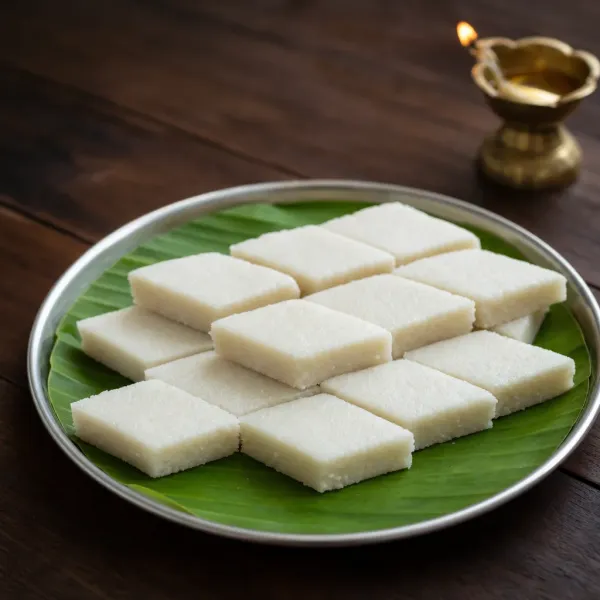
Thengai Burfi (Coconut Burfi)
Classic Tamil Iyer-style thengai burfi made with fresh coconut, sugar and cardamom. Firm, milk-white and festival-ready. Step-by-step traditional met…
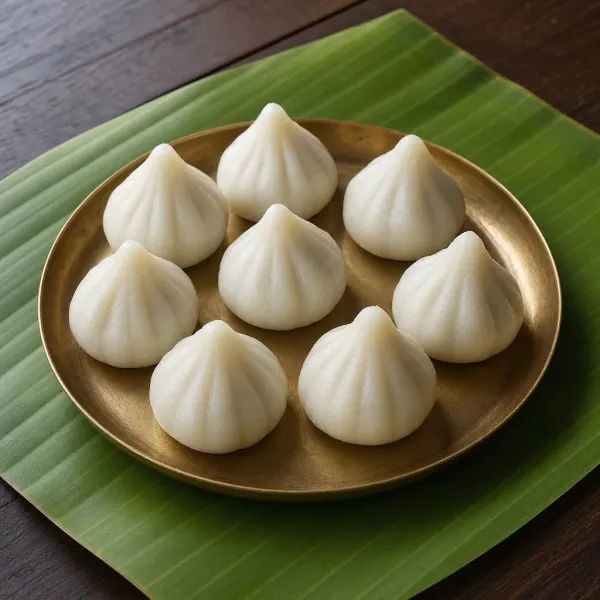
Kozhukattai with Coconut and Jaggery Filling
Traditional Tamil Brahmin kozhukattai with fresh coconut and jaggery poornam. Steamed rice flour dumplings shaped in the modak style for Ganesh Chatu…
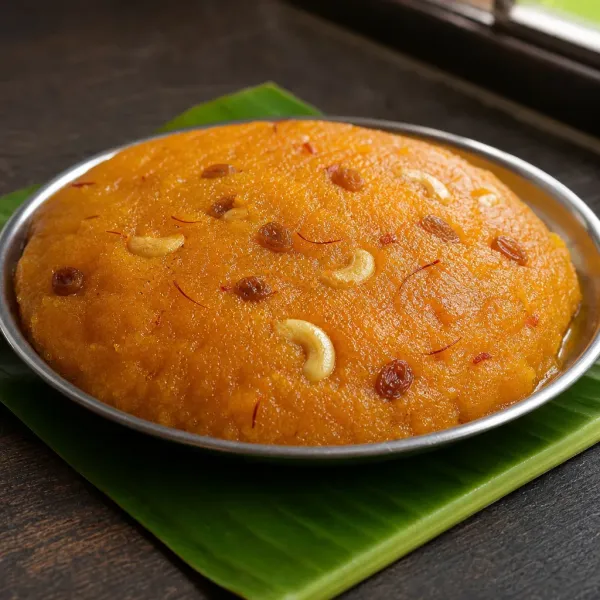
Rava Kesari
Classic Tamil Brahmin rava kesari made with semolina, saffron, and ghee. Soft, glossy, and cooked the traditional way with the correct water ratio.
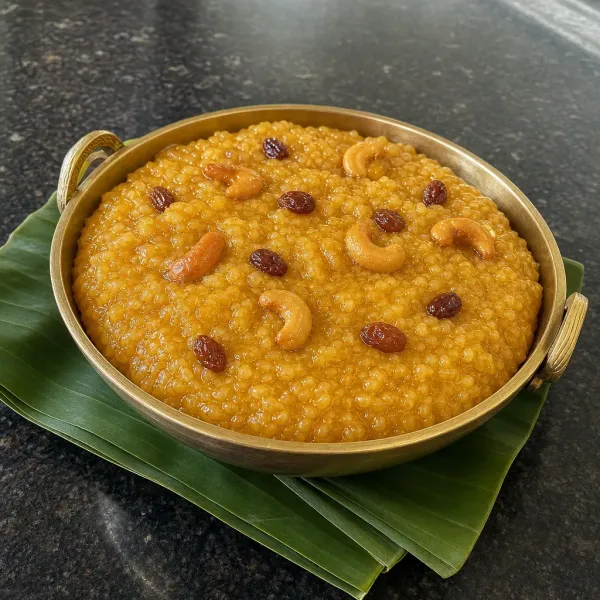
Sakkarai Pongal
Authentic Tamil Brahmin sakkarai pongal with jaggery, ghee and cardamom. Temple-style method with roasted moong dal and strained jaggery syrup.
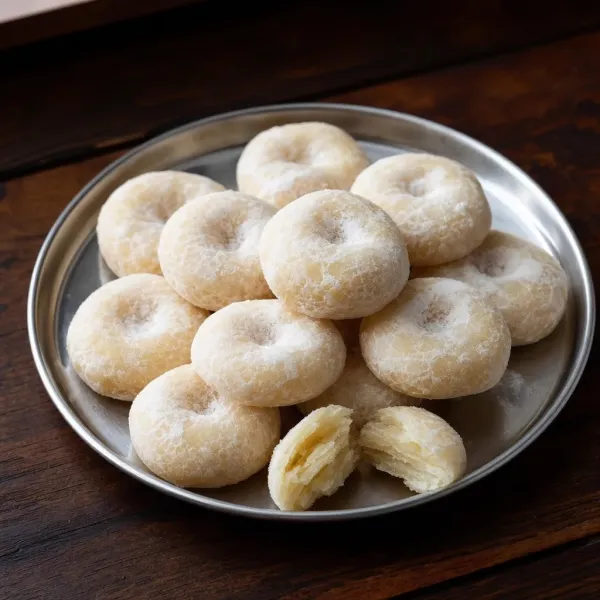
Badusha
Traditional badusha recipe: flaky maida dough fried low and slow, soaked in one-string sugar syrup. Step-by-step method with tips for the perfect gla…
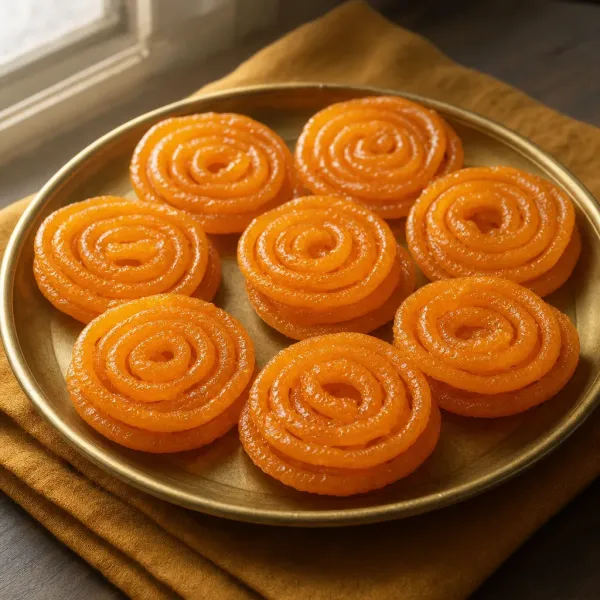
Jangiri (Jhangiri)
Traditional Tamil Nadu jangiri made with aerated urad dal batter piped into coils, fried gently and soaked in saffron-cardamom sugar syrup. Step-by-s…