

Jangiri (Jhangiri) Recipe
Malayalam ജാംഗ്രിTamil ஜாங்கிரிKannada ಜಾಂಗ್ರಿTelugu జాంగ్రీ
- Prep30 min
- Soak / ferment4 hr
- Cook50 min
- Serves20 to 22 pieces
- DifficultyHard
- DietVegetarian
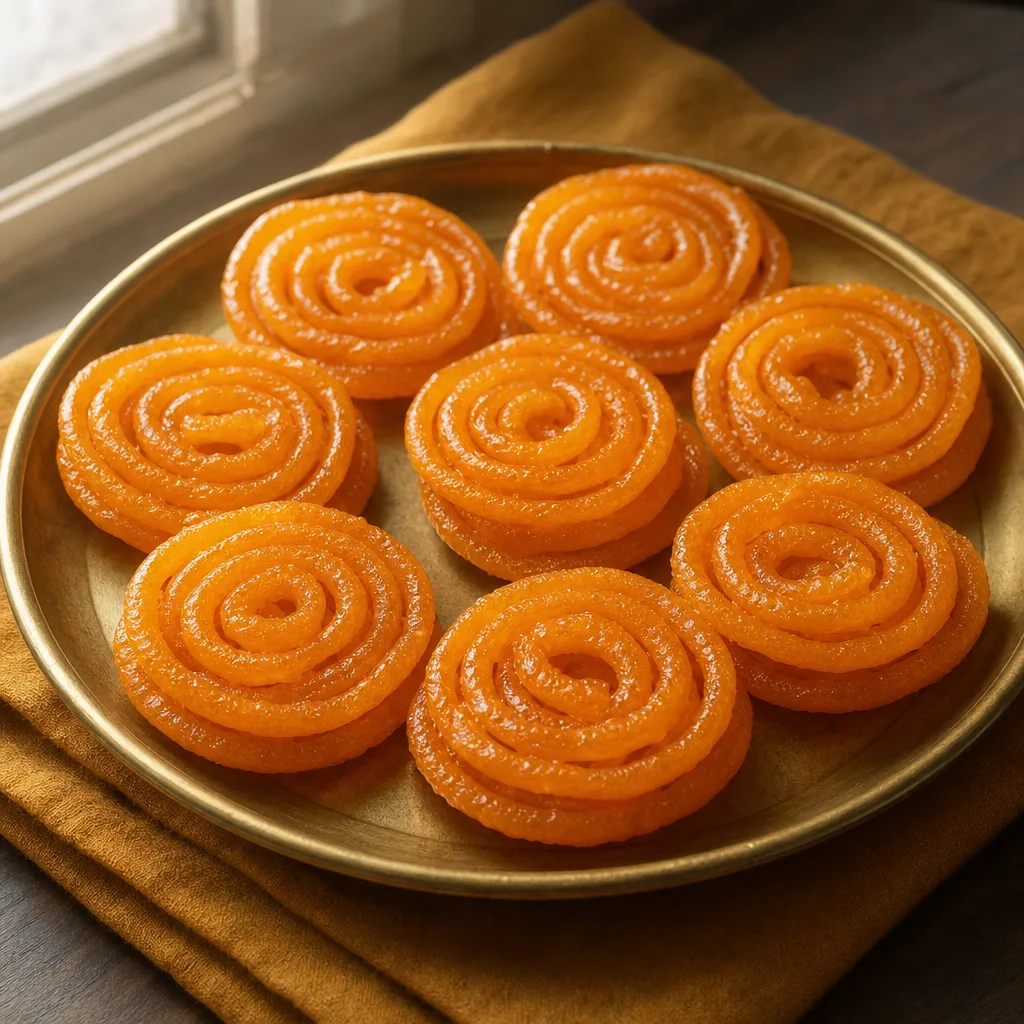
Jangiri is a festival sweet made from urad dal batter piped in tight concentric coils directly into hot oil, then lifted straight into warm sugar syrup. The finished sweet is soft all the way through, faintly chewy, and soaked with syrup that carries the colour and scent of saffron. It is sold at sweet shops year-round but made at home especially for Diwali, weddings, and thread ceremonies.
What makes jangiri different from its North Indian cousin imarti is the scale and the tightness of the coil. A good jangiri is small enough to eat in two bites, and the coils are pressed close together so the whole thing holds its shape in the syrup without falling apart. The batter must be beaten long enough to become very light and airy — this is what gives the sweet its soft, almost melt-in-the-mouth texture rather than a dense or rubbery one.
Household cooks differ mainly on the syrup: some keep it at a firm one-thread consistency, others prefer it a little lighter so the jangiri stays moist for two days. The saffron is non-negotiable for the colour and the faint floral note it gives. Some families add a few drops of orange food colour alongside the saffron; others rely on the saffron alone for the deep golden-orange hue.
Ingredients (serves 20 to 22 pieces)
For the batter
For the sugar syrup
For frying
Method
Soak the dal
Rinse the urad dal three times in cold water until the water runs clear. Cover with fresh cold water and soak for 4 hours at room temperature. The dal is ready when it swells and you can crush a grain easily between your fingers. Drain completely in a colander and shake out as much water as you can; excess water makes the batter thin and the coils will not hold.
Grind the batter
Grind the drained dal in a wet grinder or a powerful blender, adding water in tiny amounts — no more than 3 to 4 tbsp total. The batter must be very thick, smooth and almost paste-like; it should not flow off a spoon but fall in a heavy ribbon. Grind for at least 15 to 20 minutes in a wet grinder; this extended grinding aerates the batter, which is what makes the finished sweet soft rather than dense. Add the pinch of salt, the rice flour and the orange colour if using, and grind for another 2 minutes.
Beat the batter by hand
Transfer the batter to a wide bowl. Beat it vigorously with your hand or a stiff spatula for 5 minutes, lifting and folding to incorporate air. Drop a small ball of batter into a bowl of water — if it floats, the batter has enough air and is ready. If it sinks, beat for another 3 minutes and test again. This float test is the most reliable check you have.
Make the sugar syrup
Combine the sugar and water in a wide, heavy pan over medium heat. Stir until the sugar dissolves, then stop stirring. Let the syrup boil steadily. After about 8 to 10 minutes, test for one-thread consistency: dip a clean spoon, let it cool for a moment, then press a drop between your thumb and forefinger and pull them apart slowly — a single thread should form and hold without breaking. Add the saffron water and crushed cardamom, stir once, and keep the syrup on the lowest possible flame to stay warm. If it thickens too much while you fry, add a tablespoon of hot water and stir.
Prepare for piping
Fill a piping bag or a thick zip-lock bag with the batter. Cut a small hole at the tip — about 4 to 5 mm in diameter. Alternatively, use a traditional jangiri cloth bag with a small brass nozzle. The hole must be uniform and clean; a ragged edge will break the coil mid-pipe. Keep a sheet of parchment or a wet cloth nearby to rest the bag on between batches.
Heat the oil
Pour oil into a wide, flat-bottomed kadai to a depth of about 5 cm. Heat over medium flame until the oil reaches approximately 170°C. Test by dropping a tiny bit of batter in — it should rise to the surface in 2 to 3 seconds without browning immediately. The oil must not be too hot; jangiri fries gently and stays pale orange, not golden brown.
Pipe the jangiris
Hold the bag directly over the oil surface, very close to it. Pipe a small central circle about 2 cm across, then coil the batter around it in two or three tight rings, finishing with a small loop or petal shape on the outside edge — the traditional form looks like a flat rose or a chrysanthemum. Work quickly and steadily; hesitation creates gaps in the coil. Pipe two or three at a time, no more, so the oil temperature stays steady.
Fry gently
Fry over medium-low heat for about 2 minutes on the first side until the coils are just set and very lightly coloured — they should be pale orange, not golden. Flip carefully with a thin slotted spoon or two skewers and fry the other side for another 1 to 2 minutes. The jangiri is done when it is cooked through and feels firm but not hard when you press it lightly. Do not let it darken; a dark jangiri will be tough after soaking.
Soak in syrup immediately
Lift the fried jangiris directly from the oil and lower them into the warm sugar syrup. Do not drain on paper first; they go straight from oil to syrup. Let them soak for 1 to 2 minutes, turning once. They will absorb the syrup quickly. Lift out with a slotted spoon and place on a wire rack or a plate. The surface should look glossy and slightly sticky. Continue frying and soaking in batches, keeping the syrup warm throughout.
Rest before serving
Let the finished jangiris rest for at least 30 minutes before serving. During this time the syrup that has soaked in distributes itself evenly and the texture settles from slightly wet to soft and yielding. They are best eaten at room temperature on the day they are made, but will keep well for two days in a covered container at room temperature.
How to serve
Eaten on their own as a sweet, typically as part of a festival spread or offered as prasadam. Sometimes served alongside Mysore pak or ladoo on a banana leaf during celebrations.
Served with: Eaten on their own as a sweet, typically as part of a festival spread or offered as prasadam. Sometimes served alongside Mysore pak or ladoo on a banana leaf during celebrations.
Cook's tips
The batter must be thick
If the batter is too loose, the coils will spread in the oil and merge into each other instead of holding their shape. You cannot correct a thin batter by adding flour — it changes the texture. If this happens, the only fix is to grind more dal and fold it in.
Syrup temperature matters throughout
If the syrup cools and thickens while you fry, the jangiri will have a hard, crystallised coating instead of a soft glaze. Keep it on the lowest flame possible, and add a tablespoon of hot water if it starts to granulate at the edges.
Practice the piping pattern first
If you have never piped jangiri before, practise the coil pattern on a wet plate or the back of a tray before you start with the oil. The motion needs to be continuous and confident; stopping mid-coil leaves a gap that breaks apart in the syrup.
Oil and syrup temperature together
Both the frying oil and the soaking syrup need to be at the right temperature at the same time. Many home failures happen because one batch of jangiri sits waiting while the cook adjusts the syrup. Have everything ready before you begin frying.
Wet grinder versus blender
A wet grinder gives a noticeably smoother, more aerated batter than a blender. If using a blender, grind in short pulses and rest the machine to avoid heating the batter, which will make it dense. The float test remains your most honest guide.
Regional variations
Karnataka version uses a slightly thicker syrup; Andhra households sometimes add cardamom and rose water together; North Indian imarti is a close cousin made with a similar batter but piped in a larger, looser spiral.
Glossary
- Urad dal உளுந்து (Tamil)
- Black gram, used here skinned and split; the whole white form gives a lighter batter than the split variety.
- Kadai கடாய்
- A deep, round-bottomed wok used for deep frying across South Indian kitchens.
- Vanaspati வனஸ்பதி
- Hydrogenated vegetable fat, used in some sweet shops for frying jangiri; gives a slightly different flavour from pure oil.
- One-thread consistency ஒரு கம்பி பதம்
- The stage of sugar syrup at which a single unbroken thread forms between the thumb and forefinger; the correct stage for jangiri syrup.
Two things decide whether jangiri works: the batter must be beaten long enough to pass the float test, and the oil must be at a steady medium-low heat throughout frying. Rush either of these and the sweet will be dense, or dark, or both. Everything else — the piping pattern, the syrup soak — follows from getting those two things right.
More Sweets & Payasam recipes
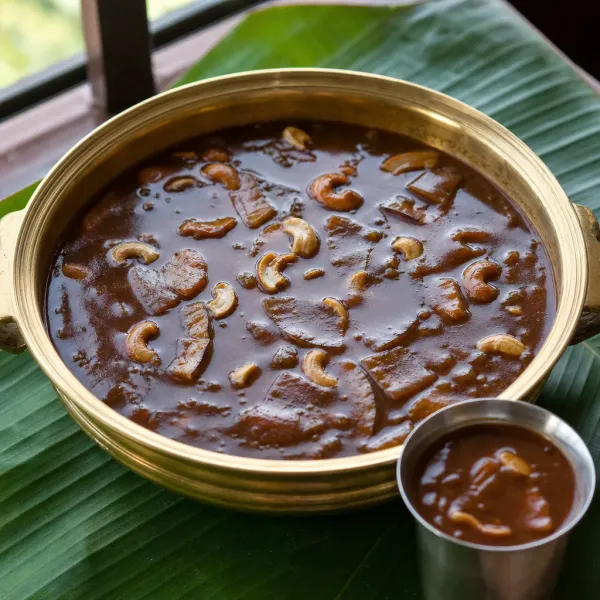
Ada Pradhaman
Authentic Kerala ada pradhaman with rice ada, dark jaggery and fresh coconut milk. Traditional Onam sadya recipe with step-by-step method.
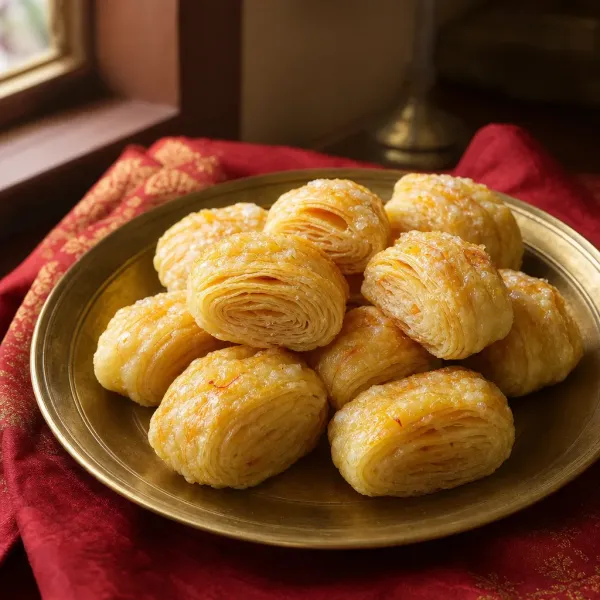
Chiroti
Traditional Karnataka chiroti with ghee-layered maida dough, deep fried and coated in cardamom sugar syrup. Festival sweet from the Dharwad kitchen.
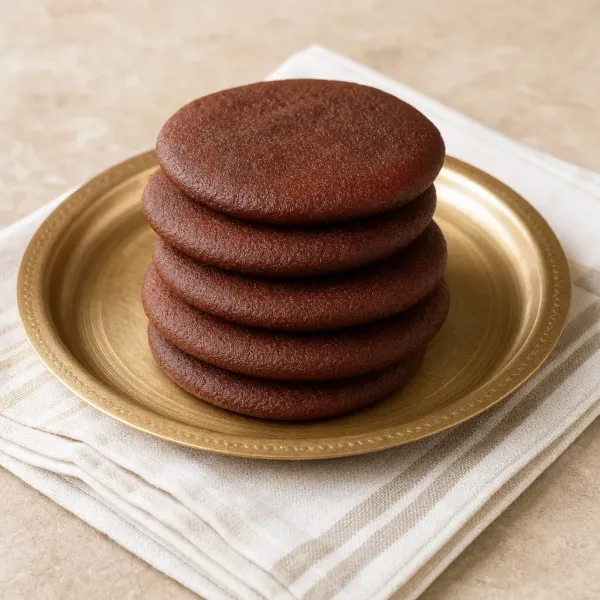
Adhirasam
Authentic Tamil Iyer adhirasam made with freshly ground pacharisi and dark jaggery syrup. Festival sweet for Karthigai Deepam and Diwali, with step-b…
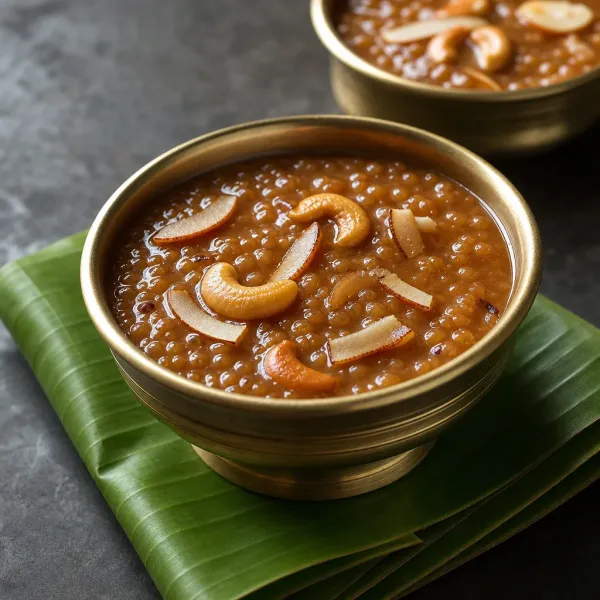
Gothambu Payasam
Traditional Nasrani broken wheat payasam from Travancore made with dark jaggery and fresh coconut milk. A classic Kerala sadya sweet.
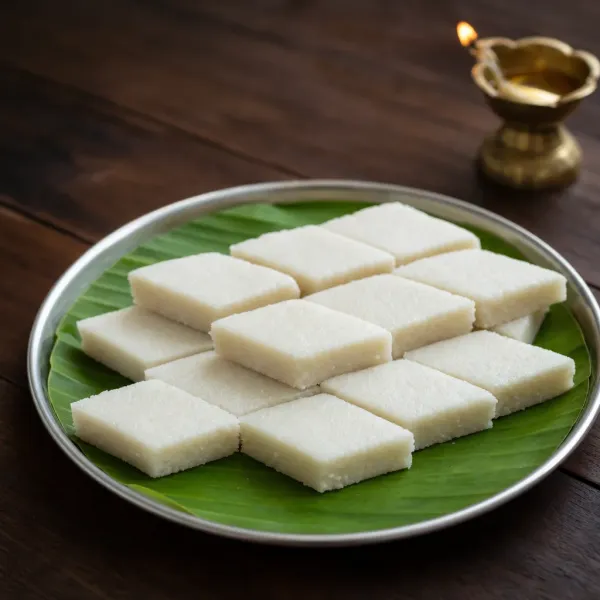
Thengai Burfi (Coconut Burfi)
Classic Tamil Iyer-style thengai burfi made with fresh coconut, sugar and cardamom. Firm, milk-white and festival-ready. Step-by-step traditional met…
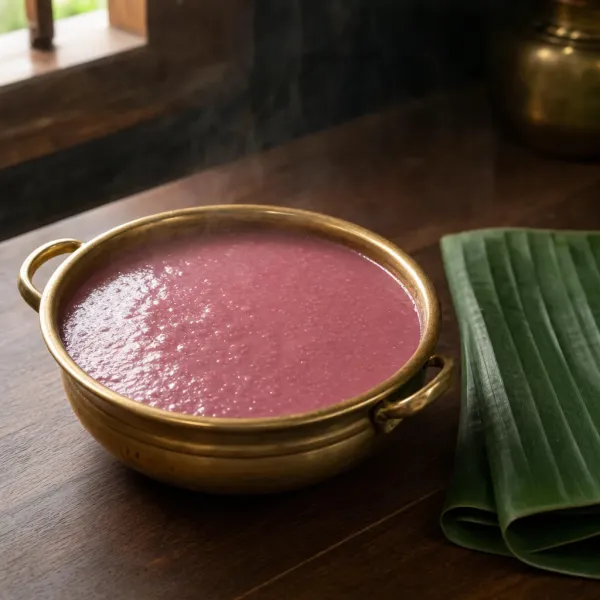
Ambalappuzha Paal Payasam
Authentic Ambalappuzha paal payasam with just milk, rice and sugar. The three-hour slow-cook method that gives the famous rose-pink colour.