

Adhirasam Recipe
Malayalam അതിരസംTamil அதிரசம்Kannada ಅಧಿರಸTelugu అధిరసం
- Prep30 min
- Soak / ferment12 hr
- Cook1 hr
- Serves20 pieces
- DifficultyHard
- DietVegetarian
Adhirasam is a festival sweet made at Karthigai Deepam and Diwali in Tamil Iyer homes, and it is one of those sweets that experienced cooks approach with respect. The dough has only two ingredients, but the jaggery syrup must be taken to exactly the right stage, and the dough must rest overnight before it is ready to fry. Rush either step and you will know immediately: the adhirasam will either split apart in the oil or come out hard and dense instead of soft within and just firm at the edges.
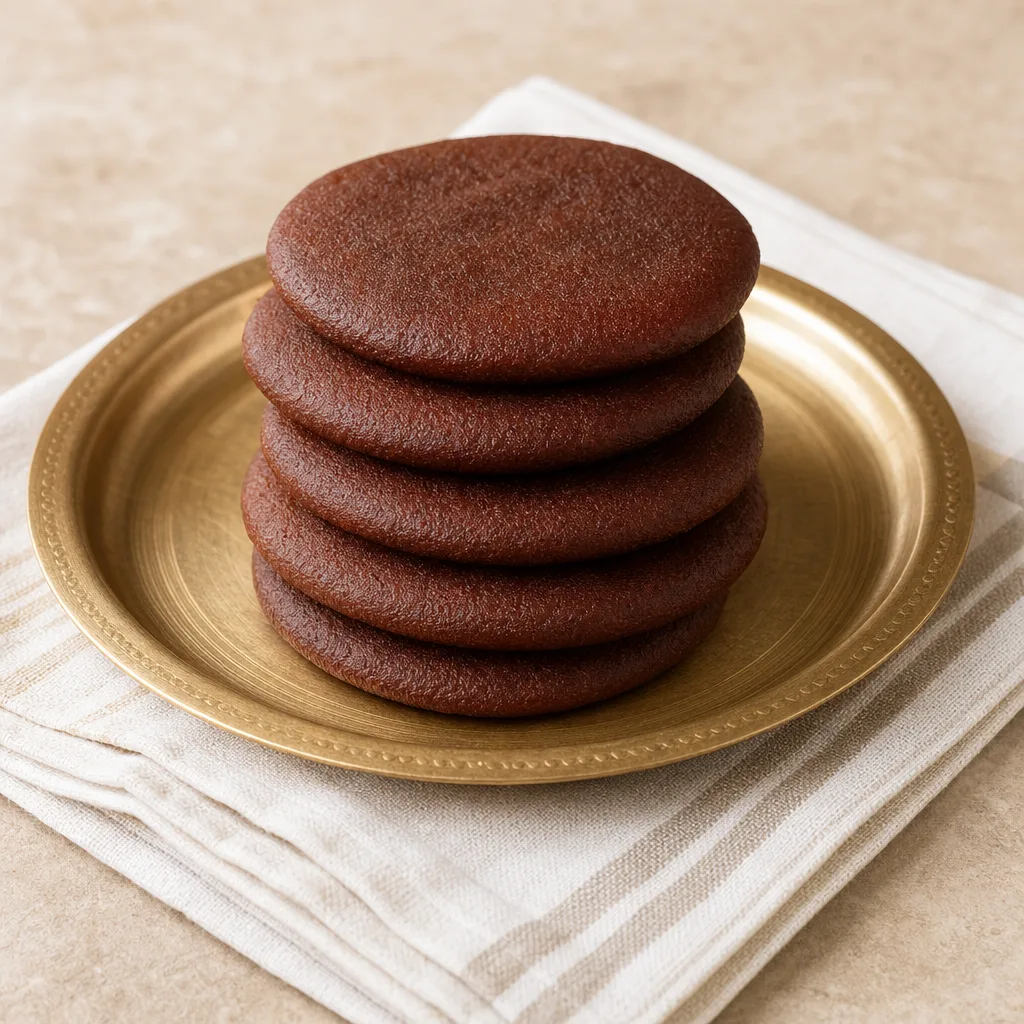
The finished sweet is a dark reddish-brown disc, roughly the size of a small puri, soft and slightly sticky at the centre with a surface that is just set. It is not crisp. The colour comes from the jaggery, which in Tamil kitchens is the dark Vellore or Thirunelveli variety, not the pale golden block. Sesame seeds are pressed onto the surface in some households; in others the surface is left plain.
Household variation is real and honestly debated. Some cooks use a one-to-one ratio of rice to jaggery by weight; others use slightly less jaggery and find the dough easier to manage. The resting time ranges from a few hours to a full day. What everyone agrees on is that the dough must be pliable but not sticky when you shape it, and the oil must be at a moderate heat throughout, never screaming hot.
Ingredients (serves 20 pieces)
For the dough
For frying
Method
Soak and dry the rice
Wash the pacharisi twice and soak in cold water for 4 hours. Drain it thoroughly, then spread it in a single layer on a clean cotton cloth and leave for 30 minutes. The grains should feel dry to the touch on the outside but not brittle. This matters: too much moisture in the flour makes the dough slack and hard to shape.
Grind the rice to flour
Grind the dried rice in a mixer-grinder in batches until you have a fine, smooth flour. Pass it through a fine sieve. Any coarse grains left in the sieve can be re-ground. The flour should feel like fine semolina, not powdery like store-bought rice flour. Set aside in a wide bowl.
Make the jaggery syrup
Combine the grated jaggery and 120 ml water in a heavy-bottomed pan over medium heat. Stir until the jaggery dissolves completely, then strain through a fine sieve into a clean pan to remove any grit. Return to the heat and cook without stirring until the syrup reaches the soft-ball stage: drop a little into a bowl of cold water and it should form a soft, pliable ball that holds its shape briefly. On a thermometer this is around 112–115 °C. Do not take it further or the dough will be stiff and crack when you shape it.
Mix the dough
Remove the syrup from the heat and immediately pour it in a thin, steady stream over the rice flour, stirring continuously with a wooden spoon or your hand (protect your hand with a wet cloth at first). Add the cardamom powder. Mix until everything comes together into a soft, cohesive dough with no dry patches of flour. The dough will feel warm and slightly sticky at this point.
Rest the dough overnight
Cover the bowl with a plate or lid and leave the dough at room temperature overnight, or for at least 8 hours. In a warm kitchen this resting is what makes the dough manageable: it firms up, loses its stickiness, and becomes smooth and pliable. By morning it should feel like soft modelling clay. If it still sticks to your fingers, it needs more time or the syrup was taken slightly under. Do not refrigerate.
Check the dough consistency
Before you begin shaping, pinch off a small piece of dough and press it between your palms. It should flatten without cracking at the edges and should not stick to your skin. If it cracks, the dough is too dry, which usually means the syrup was slightly over-cooked; you can knead in a teaspoon of warm water, very carefully, a little at a time. If it sticks badly, rest it longer.
Shape the adhirasam
Divide the dough into balls of about 40 g each, roughly the size of a large lime. Place one ball on a sheet of banana leaf or a lightly oiled plastic sheet and flatten it with your palm or the base of a flat bowl to a round disc about 7–8 cm in diameter and 5–6 mm thick. It should be even in thickness so it fries uniformly. Shape all the balls before you begin frying.
Heat the oil
Pour the oil into a wide, deep kadai and heat over a medium flame. The oil is ready when a tiny pinch of dough dropped in rises slowly to the surface without browning immediately. If it sinks and stays down, the oil is too cool; if it browns within seconds, the oil is too hot. Adhirasam must fry slowly at moderate heat to cook through without a raw centre.
Fry the adhirasam
Slide one or two discs gently into the oil. They will sink slightly, then rise. Fry for about 2 minutes on the first side until the underside is a deep reddish-brown, then turn carefully with a flat ladle. Fry the second side for another 2 minutes. The finished adhirasam should be uniformly dark reddish-brown on both sides, and when you press the surface lightly with the back of the ladle it should feel firm but give a little, not hard. Do not press hard or it will break.
Drain and press
Lift the adhirasam out of the oil and hold it between two flat ladles or between two clean folded cloths and press gently to squeeze out excess oil. This pressing is traditional and gives the adhirasam its characteristic slightly flattened, compact look. Drain on a plate lined with paper. Repeat with the remaining discs, keeping the oil at a consistent moderate temperature throughout.
Cool completely before storing
Leave the adhirasam on the plate until completely cool. They will firm up as they cool and the centre will set. The surface should feel just dry to the touch, not oily. Store in an airtight tin; they keep well at room temperature for up to a week in a cool kitchen, longer in cooler weather.
How to serve
Eaten on its own as a festival sweet or as part of a sweet plate (inippu vagaigal) offered during Karthigai Deepam or Diwali. No accompaniment is standard.
Served with: Eaten on its own as a festival sweet or as part of a sweet plate (inippu vagaigal) offered during Karthigai Deepam or Diwali. No accompaniment is standard.
Cook's tips
The syrup stage is the critical point
Under-cooked syrup makes a dough that stays sticky and spreads in the oil. Over-cooked syrup makes a dough that cracks and breaks when you shape it. If you are uncertain, use a thermometer and aim for 112 °C. The cold-water test is reliable once you have done it a few times.
Freshly ground rice flour is not optional
Store-bought rice flour is dried to a different moisture level and the dough behaves differently. The traditional method uses freshly ground flour from soaked rice, and the texture of the finished sweet depends on it. Some experienced cooks do use store-bought flour as a shortcut; if you do, reduce the soaking step and expect to adjust the syrup quantity slightly.
Dark jaggery gives the right colour and flavour
Pale or golden jaggery produces a lighter, less complex sweet. The dark Thirunelveli or Vellore block jaggery has a slight molasses note that is part of the flavour. If you can only find pale jaggery, the sweet will still work but will taste milder and look lighter.
Oil temperature must stay moderate
If the oil gets too hot, the outside browns before the inside cooks through. Lower the flame between batches if needed, and let the oil return to the right temperature before adding the next disc. Frying one at a time gives you better control until you are confident.
Pressing out the oil
The pressing step between two ladles or cloths is not just about removing oil; it also compacts the texture. Skip it and the adhirasam will be slightly puffed and oilier. Do it while still hot, before the surface sets.
Regional variations
Andhra ariselu (sesame-topped, slightly thicker, made at Sankranti); Karnataka version closer to ariselu; some Tamil non-Brahmin households add a pinch of dry ginger.
Glossary
- Pacharisi பச்சரிசி
- Raw white rice used in Tamil cooking; the variety used for grinding, distinct from boiled or parboiled rice.
- Vellam வெல்லம்
- Jaggery; unrefined cane sugar sold in blocks; the dark variety has a stronger flavour suited to adhirasam.
- Kadai கடாய்
- A deep, wide, round-bottomed pan used for deep-frying and stir-frying.
- Soft-ball stage மென் உருண்டை பதம்
- The point in sugar or jaggery syrup cooking at which a drop in cold water forms a soft, pliable ball; roughly 112–115 °C.
- Inippu vagaigal இனிப்பு வகைகள்
- Sweets; the category of festival confections served on ritual occasions.
Two things decide this sweet: the jaggery syrup taken to exactly the soft-ball stage, and the overnight rest that transforms a sticky, unworkable dough into something you can shape cleanly. Get both right and the frying is straightforward. Rush the rest or misjudge the syrup and no amount of skill at the kadai will save it.
More Sweets & Payasam recipes
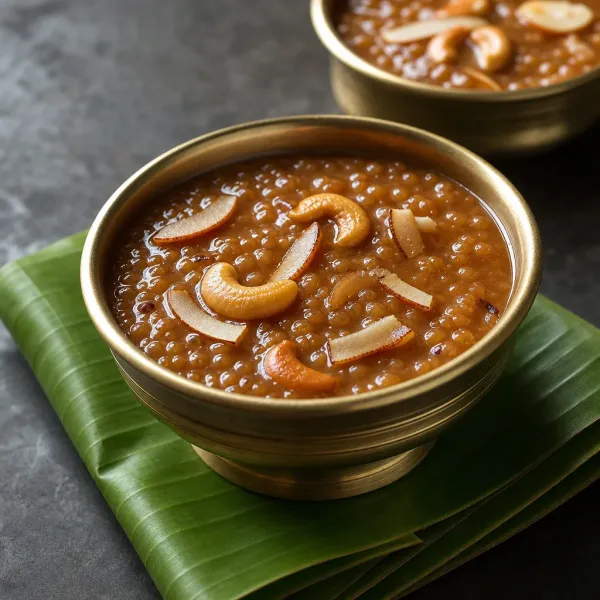
Gothambu Payasam
Traditional Nasrani broken wheat payasam from Travancore made with dark jaggery and fresh coconut milk. A classic Kerala sadya sweet.
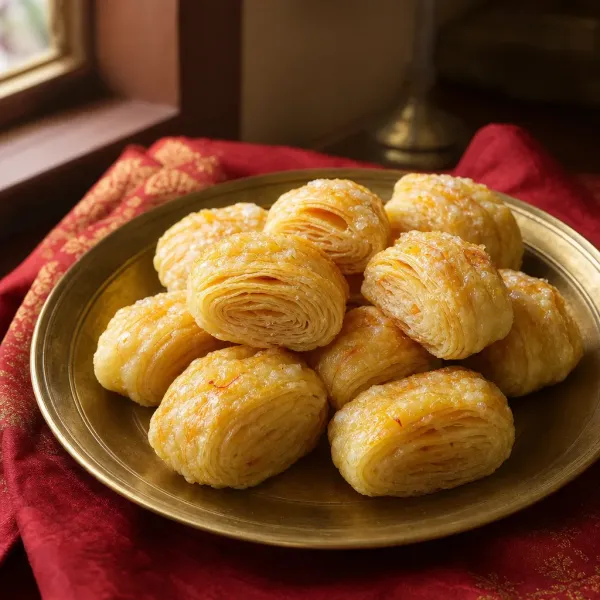
Chiroti
Traditional Karnataka chiroti with ghee-layered maida dough, deep fried and coated in cardamom sugar syrup. Festival sweet from the Dharwad kitchen.
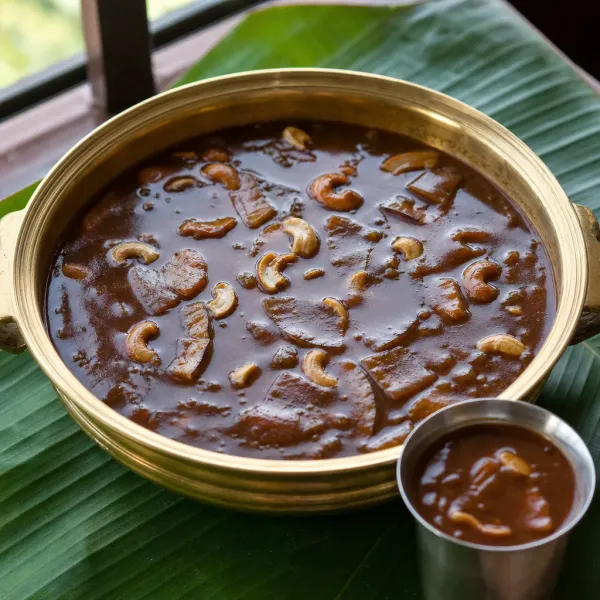
Ada Pradhaman
Authentic Kerala ada pradhaman with rice ada, dark jaggery and fresh coconut milk. Traditional Onam sadya recipe with step-by-step method.
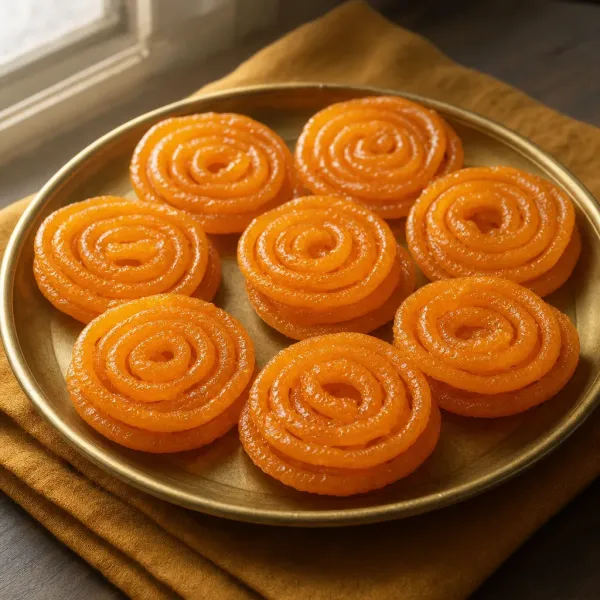
Jangiri (Jhangiri)
Traditional Tamil Nadu jangiri made with aerated urad dal batter piped into coils, fried gently and soaked in saffron-cardamom sugar syrup. Step-by-s…
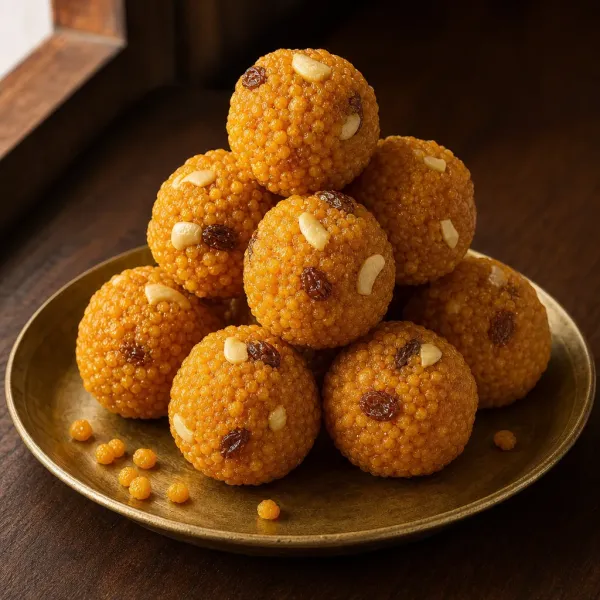
Boondi Ladoo
Traditional Telangana boondi ladoo with one-thread sugar syrup, cardamom, cloves and edible camphor. Step-by-step method for firm, festival-ready lad…
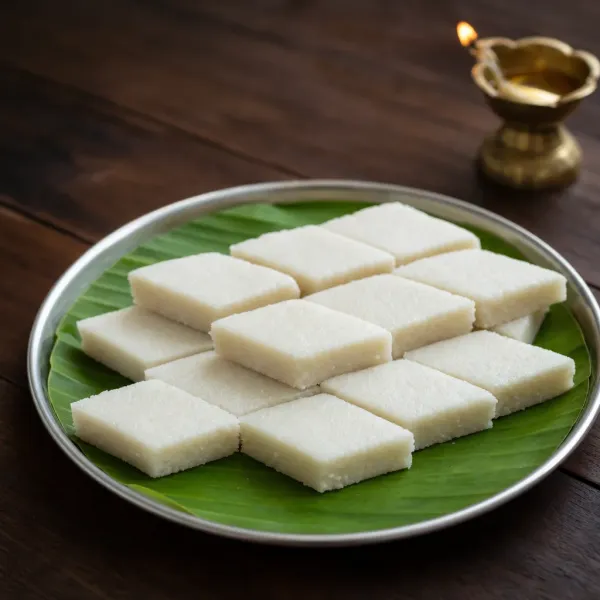
Thengai Burfi (Coconut Burfi)
Classic Tamil Iyer-style thengai burfi made with fresh coconut, sugar and cardamom. Firm, milk-white and festival-ready. Step-by-step traditional met…