

Veluthulli Achar Recipe
Malayalam വെളുത്തുള്ളി അച്ചാർTamil வெள்ளுள்ளி ஊறுகாய்Kannada ಬೆಳ್ಳುಳ್ಳಿ ಉಪ್ಪಿನಕಾಯಿTelugu వెల్లుల్లి పచ్చడి
- Prep20 min
- Cook25 min
- ServesMakes one 500 ml jar
- DifficultyEasy
- DietVegan
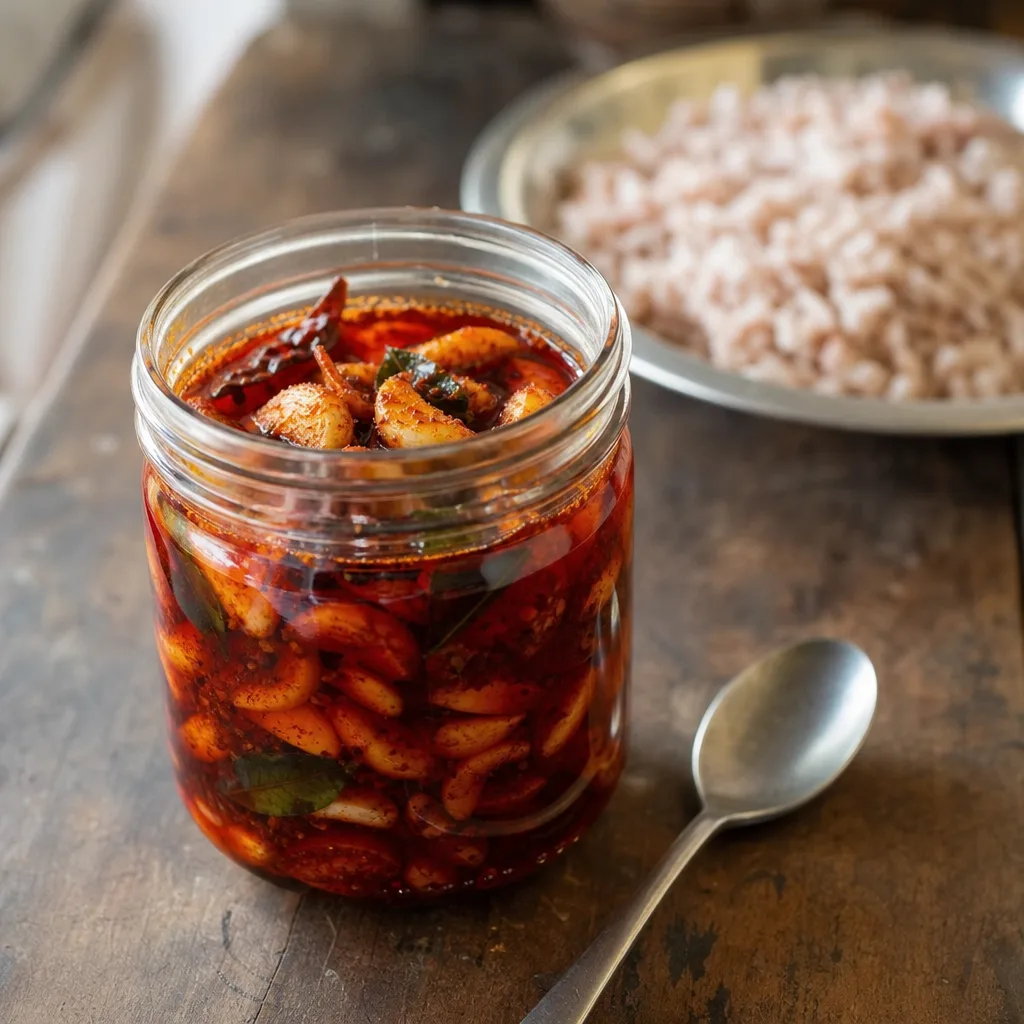
This is a sharp, fiery, oily pickle that belongs on the table wherever rice and curry are served. The garlic cloves are left whole or halved, cooked just enough to lose their raw bite but not so much that they turn soft, and then drowned in a spiced, vinegar-spiked oil that keeps them for weeks. In Malabar homes it is made in batches and stored in a glass jar that sits on the kitchen shelf, improving as the days pass.
The fat is coconut oil and it must be good coconut oil, the kind that smells of coconut. Gingelly oil is not used here. The vinegar is ordinary white vinegar, the kind that has always been available in Malabar through coastal trade. The chilli is Kashmiri or a local mild-medium red chilli for colour, with additional dry red chillies for heat. The balance between the two is what gives the pickle its deep red colour without being purely punishing.
Households differ on whether to fry the garlic in the oil or simply heat the spiced oil and pour it over raw garlic. The fried version is more common in Malabar; the poured version is quicker and keeps the garlic slightly crisper. This recipe fries the garlic lightly, which is the traditional method in the households I am drawing from.
Ingredients (serves Makes one 500 ml jar)
Main
Method
Dry the garlic
Spread the peeled garlic cloves on a clean kitchen towel for 15 to 20 minutes. Any moisture on the garlic will make the oil splutter dangerously and can shorten the pickle's shelf life. The cloves should feel completely dry to the touch before they go into the pan.
Heat the oil
Pour the coconut oil into a heavy-bottomed pan or uruli and set it over a medium flame. Let it heat until it is just shimmering, not smoking. Coconut oil heats quickly, so watch it.
Temper the mustard and fenugreek
Add the mustard seeds. When they pop, add the fenugreek seeds and the broken dry red chillies. Stir for about 20 seconds. The fenugreek should turn a shade darker but must not go brown or it will make the pickle bitter.
Add the curry leaves
Drop in the curry leaves. They will splutter loudly. Stand back for a moment, then stir them into the oil. Let them fry for 30 seconds until they are crisp and the sound dies down.
Fry the garlic
Add the dry garlic cloves. Stir to coat them in the oil and reduce the flame to medium-low. Fry for 6 to 8 minutes, stirring frequently, until the cloves are pale golden on the outside and just beginning to soften when pressed. They should not be fully cooked through; they will continue to cook in the residual heat and in the jar.
Add the asafoetida
Push the garlic to one side briefly and add the asafoetida directly to the oil. Let it sizzle for 10 seconds, then stir everything together.
Add the chilli powder
Take the pan off the flame. This is important: if the chilli powder hits a very hot pan it will burn and turn bitter. With the pan off the heat, add the Kashmiri chilli powder and stir it through the oil and garlic for 30 seconds. The oil will turn a deep brick red.
Return to low heat and cook the masala
Put the pan back on the lowest possible flame. Stir continuously for 2 to 3 minutes until the chilli powder is cooked into the oil and no raw smell remains. The oil will begin to separate and float above the masala; that is the sign it is ready.
Add salt and vinegar
Add salt and stir. Then add the vinegar and stir well. The mixture will sizzle. Cook for another 2 minutes on low heat until the vinegar is absorbed and the oil floats clearly on top. Taste for salt and sourness and adjust.
Cool and jar
Take the pan off the heat and let the pickle cool completely to room temperature. Do not cover while it is warm. Transfer to a clean, dry glass jar using a dry spoon. Press the garlic down so the oil covers it. Seal the jar.
Rest before using
Leave the jar at room temperature for at least one full day before opening. By the second day the garlic will have absorbed the spiced oil and the flavour will have deepened and rounded. It keeps at room temperature for up to three weeks if the jar and spoon are always dry.
How to serve
Plain matta rice and a simple dal or moong curry. Also good alongside kanji (rice porridge) or spread on bread.
Served with: Plain matta rice and a simple dal or moong curry. Also good alongside kanji (rice porridge) or spread on bread.
Cook's tips
Why the pan must come off the heat before the chilli powder
Kashmiri chilli powder burns in seconds in very hot oil and turns the pickle dark and acrid. Removing the pan from the flame before adding it is not optional.
The oil level matters
The garlic must be submerged under oil in the jar. If it pokes above the surface it will dry out and go mouldy first. Top up with a little extra coconut oil, heated and cooled, if needed.
Dry everything that touches the pickle
A single drop of water in the jar or on the spoon will ruin the batch within days. Dry the jar in a warm oven or in the sun before filling it.
Fenugreek is easy to overdo
A quarter teaspoon is enough. More fenugreek makes the pickle medicinal and bitter. If you are unsure, use slightly less.
Vinegar strength varies
Ordinary white vinegar sold in Kerala is usually 4 to 5% acidity. If yours is stronger, start with 2 tablespoons and taste before adding more.
Regional variations
Nasrani version uses kudampuli instead of vinegar; Tamil Nadu versions use gingelly oil and are drier; some Kerala households add a small amount of jaggery to balance the heat.
Glossary
- Veluthulli വെളുത്തുള്ളി
- Garlic in Malayalam; literally 'white onion'.
- Achar അച്ചാർ
- Pickle; a preserved condiment in oil, vinegar or brine.
- Kayam കായം
- Asafoetida; the dried resin used in small quantities for its pungent, savoury depth.
- Kudampuli കുടംപുളി
- Gamboge or Malabar tamarind (Garcinia cambogia); the souring agent used in many Kerala fish curries and some pickles in place of vinegar.
- Uruli ഉരുളി
- A wide, shallow brass or bronze cooking vessel traditional to Kerala kitchens.
Two things decide whether this pickle works: the garlic must be completely dry before it goes into the oil, and the chilli powder must never touch a smoking-hot pan. Get those two right and the rest is straightforward. The pickle only gets better after a day in the jar.
More Chutneys, Podis & Pickles recipes
Pulikachal
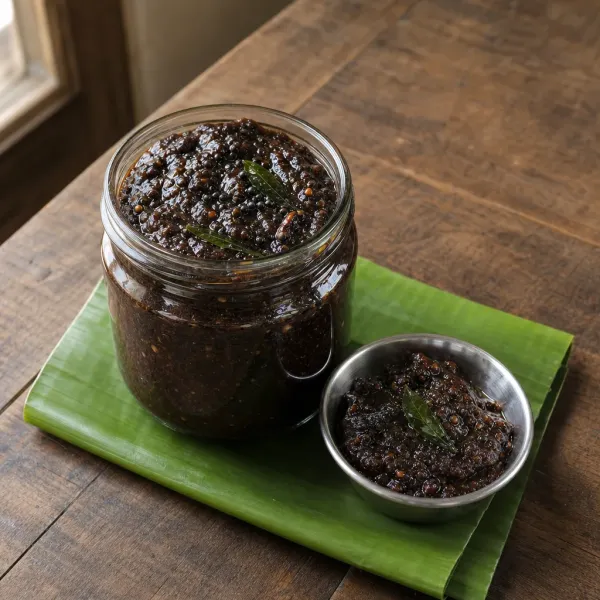
Traditional Iyer-style pulikachal: tamarind cooked down with gingelly oil, fresh-ground spice powder, and a tempering of mustard and curry leaves. Ma…
Gongura Pachadi (Andhra Gongura Pickle, Long-Keeping)
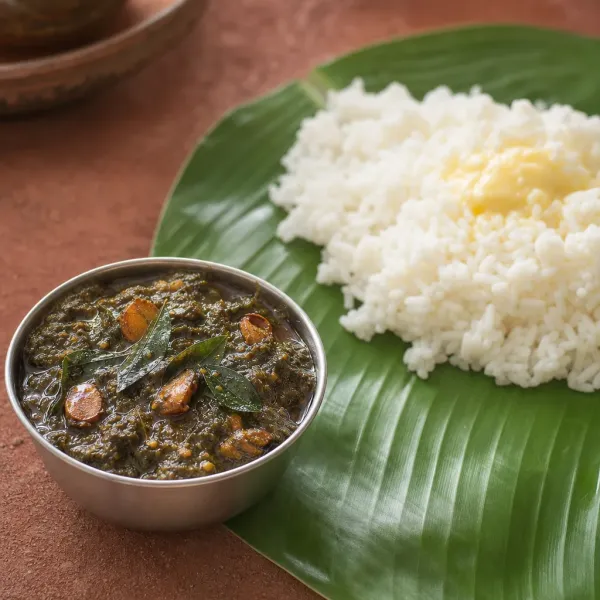
Traditional Rayalaseema gongura pickle with gingelly oil, Guntur chillies and garlic. Keeps for weeks. Step-by-step Andhra household method.
Puli Inji
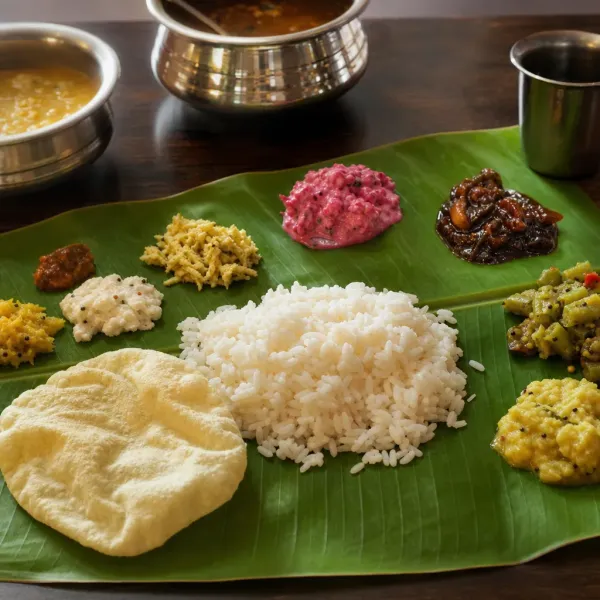
Traditional Kerala puli inji recipe for sadya – fresh ginger and tamarind cooked to a thick, dark condiment with jaggery and coconut oil tempering.
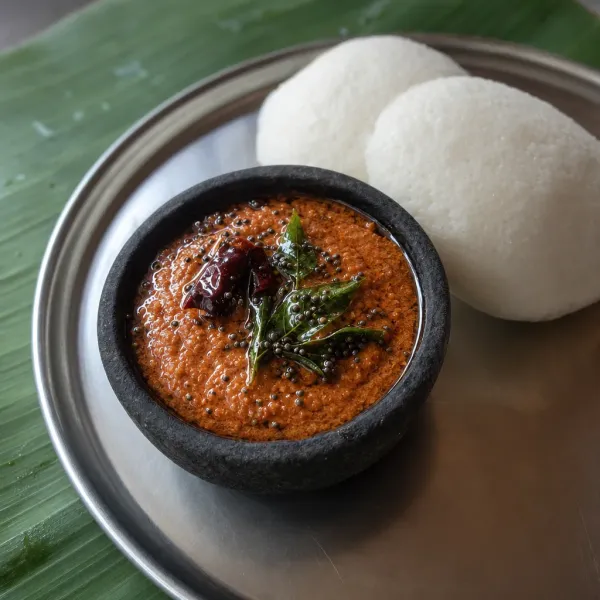
Poondu Chutney (Tamil Nadu Brahmin Style)
Traditional Tamil Brahmin poondu chutney with raw garlic, roasted chana dal, dried red chillies, and tamarind, tempered in gingelly oil. Served with…
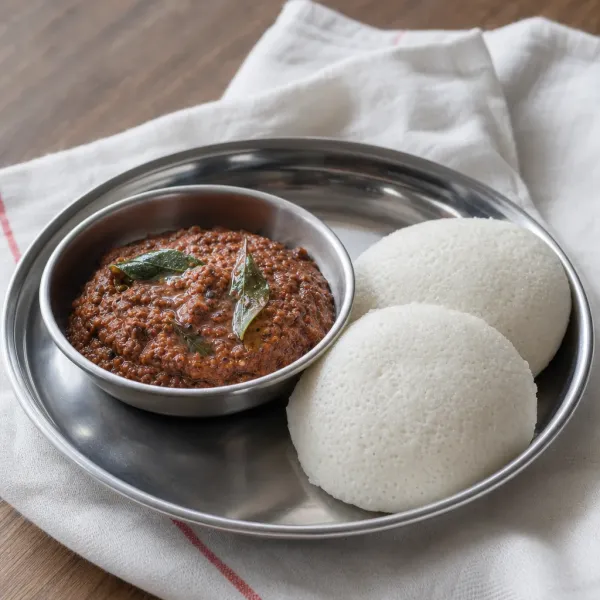
Kathirikai Chutney
Traditional Tamil Brahmin roasted brinjal chutney with gingelly oil tempering. No onion, no garlic. Ready in 30 minutes. Serve with idli or dosa.
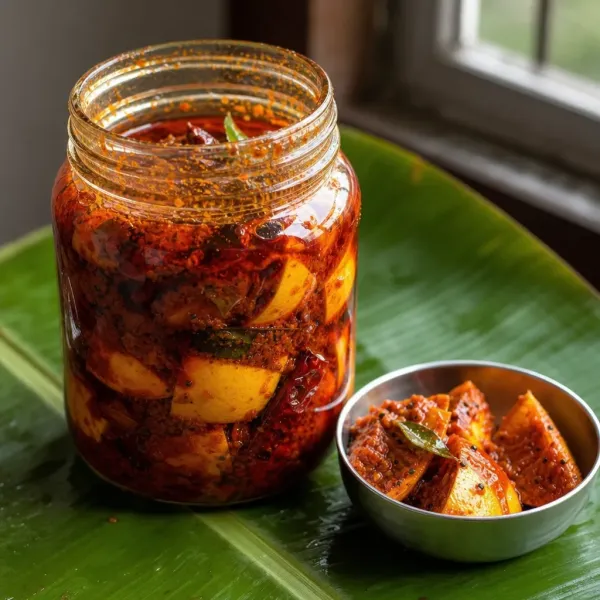
Naranga Achar
Traditional Kerala lemon pickle with a 10-day salt cure, coconut oil tempering, and fenugreek-chilli masala. Step-by-step household method from Trava…