

Puli Inji Recipe
Malayalam പുളി ഇഞ്ചിTamil புளி இஞ்சிKannada ಹುಣಸೆ ಶುಂಠಿTelugu పులి అల్లం
- Prep20 min
- Cook40 min
- ServesFills one small jar; serves 10 to 12 as
- DifficultyMedium
- DietVegan
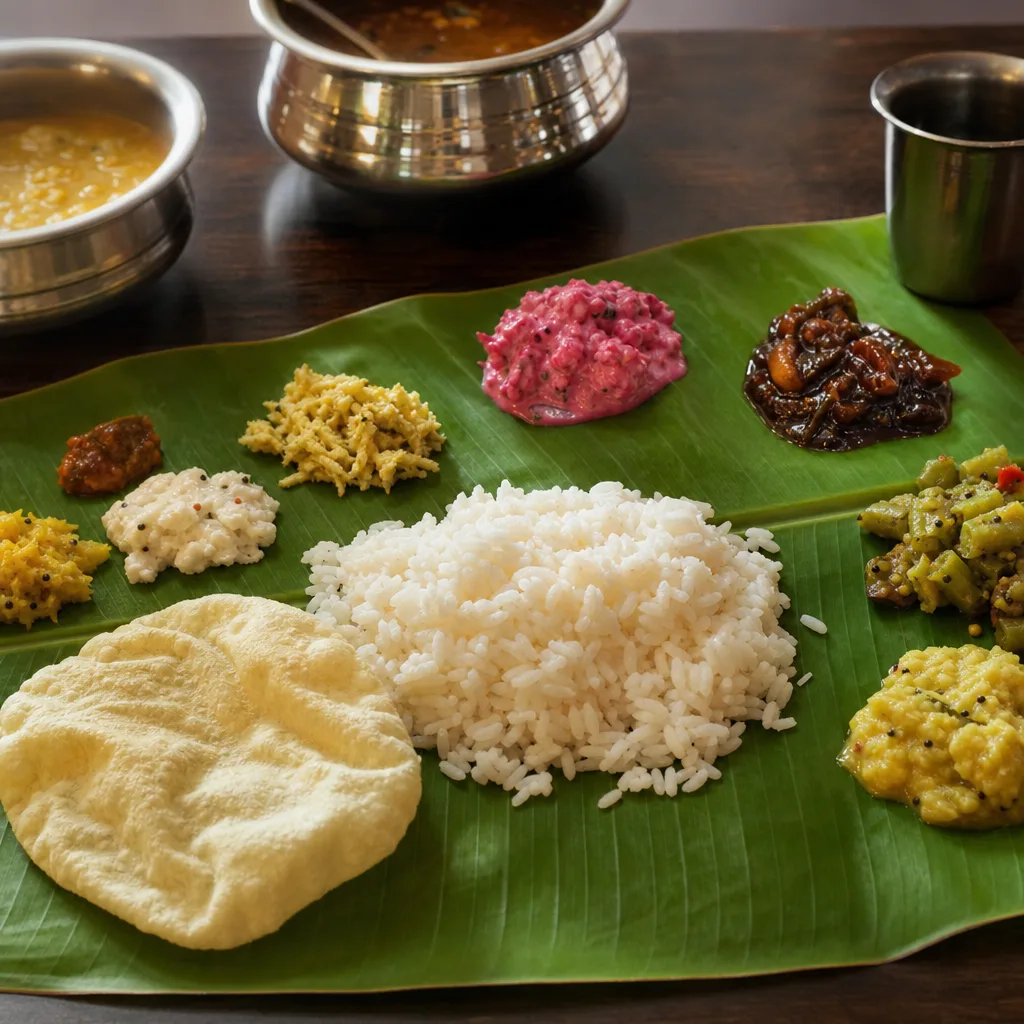
Puli inji is the one sharp, sour-hot-sweet condiment on every Onam sadya banana leaf. It sits in the top-right corner of the leaf alongside the other pickles and chutneys, and a small spoonful of it cuts through the richness of the avial and the dal. Without it the sadya feels incomplete.
The base is fresh ginger cooked down in tamarind water with green chillies, then balanced with jaggery and tempered with dried red chillies and curry leaves in coconut oil. The result should be thick and glossy, not runny, and dark brown from the tamarind and jaggery. It is not a chutney and it is not a pickle; it is somewhere in between, and it keeps at room temperature for a week and longer in the refrigerator.
Households differ mainly on the ginger-to-tamarind ratio and the amount of jaggery. Some cooks add a small piece of kudampuli alongside the tamarind for extra depth; others keep it pure tamarind. The heat comes from both fresh green chillies cooked into the body of the dish and dried red chillies in the tempering. Do not reduce either.
Ingredients (serves Fills one small jar; serves 10 to 12 as )
Main
Tempering
Method
Soak the tamarind
Break the tamarind into small pieces and soak in 300 ml warm water for 15 minutes. Squeeze thoroughly with your fingers until all the pulp has dissolved into the water, then strain through a fine sieve, pressing the fibres hard. You need a thick, deep-brown extract. Set aside.
Fry the ginger and green chillies
Heat 2 tbsp of the coconut oil in a heavy-bottomed kadai or uruli over medium heat. Add the chopped ginger and green chillies together. Fry, stirring often, for 8 to 10 minutes until the ginger is lightly golden at the edges and the raw smell is completely gone. Do not rush this step; under-cooked ginger will make the finished dish taste sharp and bitter rather than mellow.
Add the tamarind extract
Pour the strained tamarind extract into the kadai with the ginger and chillies. Stir well and bring to a gentle boil over medium heat. Add salt now. Let it cook uncovered, stirring occasionally, for 15 to 18 minutes until the raw tamarind smell cooks off and the mixture begins to thicken and darken. It should reduce by roughly a third.
Add the jaggery
Add the grated jaggery and stir until it dissolves completely. Continue cooking over low to medium heat for another 8 to 10 minutes, stirring more frequently now as the mixture thickens. It is ready when it coats the back of a spoon thickly and a line drawn through it holds for a moment before closing. The colour will be a deep, dark brown.
Prepare the tempering
In a small tempering pan, heat the remaining 1 tbsp coconut oil over medium heat. Add the mustard seeds and wait for them to splutter fully. Add the dried red chillies and let them darken for a few seconds, then add the curry leaves and the pinch of asafoetida if using. The curry leaves will crackle loudly; keep the heat steady and do not walk away.
Combine and finish
Pour the tempering immediately over the cooked tamarind-ginger mixture and stir it in. Taste for salt, sourness and sweetness and adjust with a little more jaggery or salt if needed. The balance should be sour first, then hot, then a background sweetness. Cook together for one more minute on low heat, then remove from the flame.
Cool and store
Allow to cool completely in the kadai before transferring to a clean, dry glass jar. The mixture thickens further as it cools, which is correct. At room temperature it keeps for up to a week; refrigerated it keeps for three to four weeks. Always use a dry spoon.
How to serve
Served as one of the condiments on a Kerala sadya banana leaf, alongside rice, sambar, rasam, avial, olan, kichadi, papad and banana chips. A small mound, about one teaspoon, placed in the upper-right section of the leaf.
Served with: Served as one of the condiments on a Kerala sadya banana leaf, alongside rice, sambar, rasam, avial, olan, kichadi, papad and banana chips. A small mound, about one teaspoon, placed in the upper-right section of the leaf.
Cook's tips
Ginger texture
Chop the ginger finely by hand rather than using a grater or processor. Grated ginger turns to mush when cooked and loses its presence in the finished dish. You want small, identifiable pieces that soften but hold their shape.
Tamarind strength
The sourness of tamarind varies considerably between batches. Taste the extract before adding it. If it is very sour, use 40 g tamarind and add a little more water. If it is mild, you may need to reduce for longer.
Jaggery type
Dark Travancore jaggery (the round dark variety) gives a deeper colour and a slightly smoky sweetness that suits this dish. Pale jaggery or refined sugar will make it taste flat and too sweet.
The consistency test
The most common mistake is taking it off the heat too early. It should look almost too thick in the pan; it thickens further as it cools. If it is pourable when warm, cook it for another five minutes.
Making ahead
Puli inji is always made a day ahead for sadya. The flavours settle and the sourness mellows overnight. Make it the evening before.
Regional variations
Inji puli in some Malabar households leans slightly sweeter and uses more jaggery; the Palakkad Iyer version is closer to Tamil inji thokku and is drier.
Glossary
- Puli പുളി
- Tamarind; also used generally to mean sourness.
- Inji ഇഞ്ചി
- Fresh ginger.
- Kudampuli കുടംപുളി
- Gamboge or Malabar tamarind (Garcinia cambogioides); the souring agent used in Kerala fish curries, distinct from tamarind.
- Kayam കായം
- Asafoetida; the resin used in small quantities for tempering in South Indian cooking.
- Sadya സദ്യ
- The traditional Kerala feast served on a banana leaf, most associated with Onam.
- Kadai കടായി
- A wide, deep cooking pan used for frying and simmering; the South Indian equivalent of a wok.
- Uruli ഉരുളി
- A traditional Kerala brass or bell-metal cooking vessel, wide and shallow, used for making large quantities of sadya dishes.
Two things decide whether puli inji works: the ginger must be fried long enough to lose its raw edge before the tamarind goes in, and the whole mixture must be cooked down to a genuinely thick consistency. Get those two right and the balance of sour, hot and sweet takes care of itself.
More Chutneys, Podis & Pickles recipes
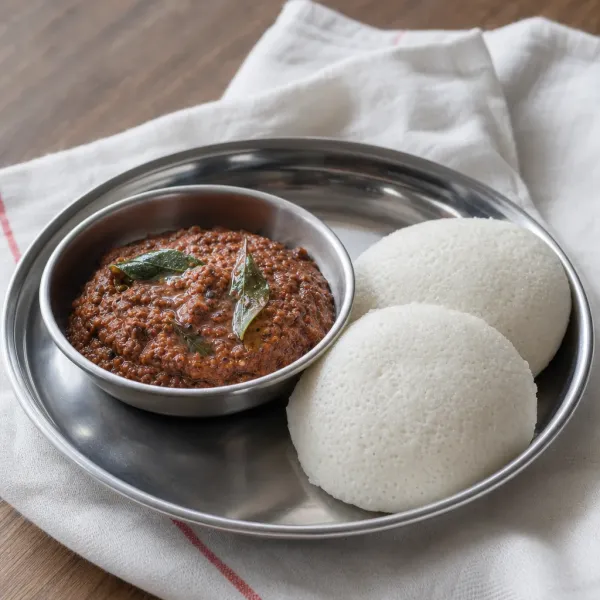
Kathirikai Chutney
Traditional Tamil Brahmin roasted brinjal chutney with gingelly oil tempering. No onion, no garlic. Ready in 30 minutes. Serve with idli or dosa.
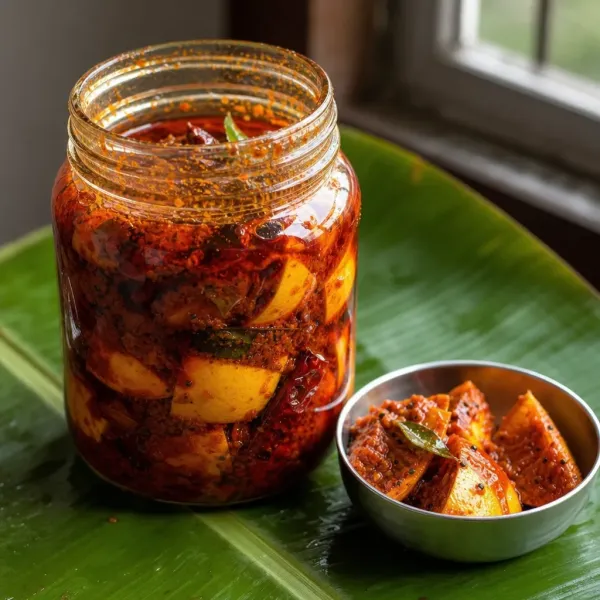
Naranga Achar
Traditional Kerala lemon pickle with a 10-day salt cure, coconut oil tempering, and fenugreek-chilli masala. Step-by-step household method from Trava…
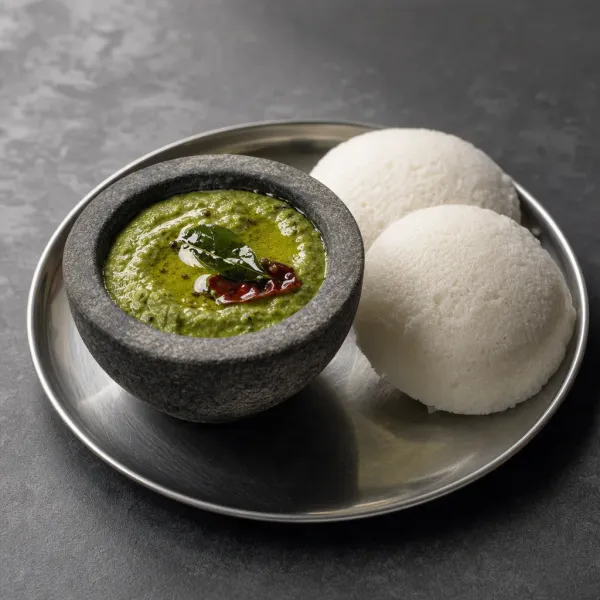
Pudina Chutney
Traditional Tamil Brahmin pudina chutney with fresh coconut, green chilli and tamarind, finished with a gingelly oil tadka. Ready in 15 minutes.
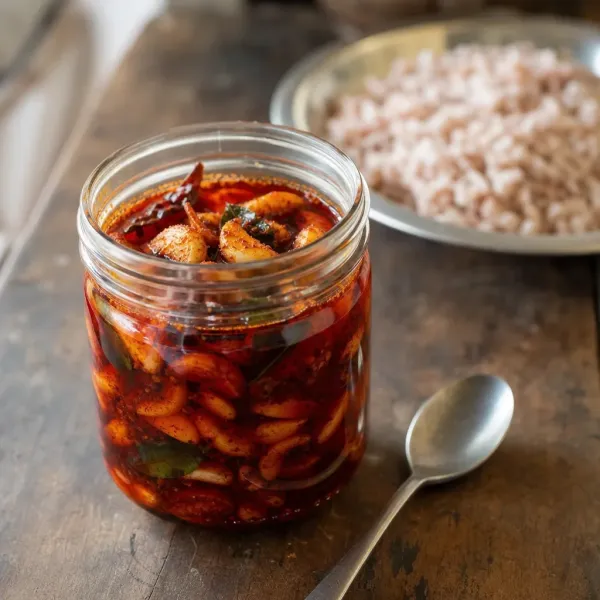
Veluthulli Achar
Traditional Malabar-style garlic pickle in coconut oil with Kashmiri chilli and vinegar. A fiery, long-keeping condiment from the Mappila kitchen.
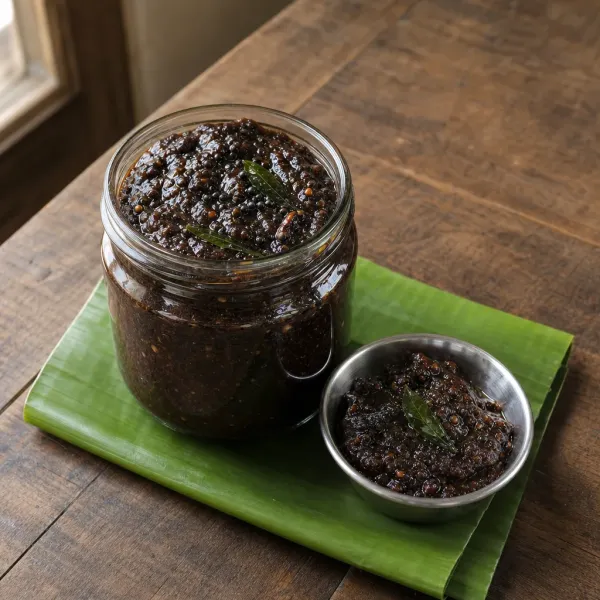
Pulikachal
Traditional Iyer-style pulikachal: tamarind cooked down with gingelly oil, fresh-ground spice powder, and a tempering of mustard and curry leaves. Ma…
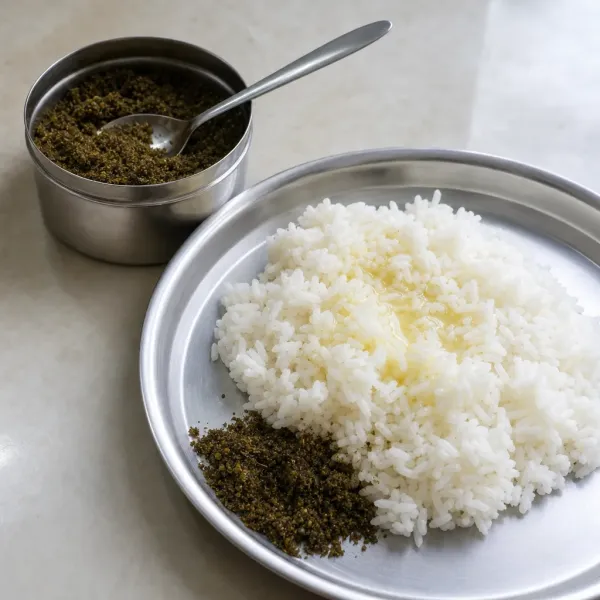
Karuveppilai Podi (Curry Leaf Powder)
Traditional Tamil Iyer karuveppilai podi made with urad dal, black pepper and dry curry leaves. A step-by-step household recipe for rice podi.