

Ada Pradhaman Recipe
Malayalam അട പ്രഥമൻTamil அட பிரதமன்Kannada ಅಡ ಪ್ರಥಮನ್Telugu అడ ప్రథమన్
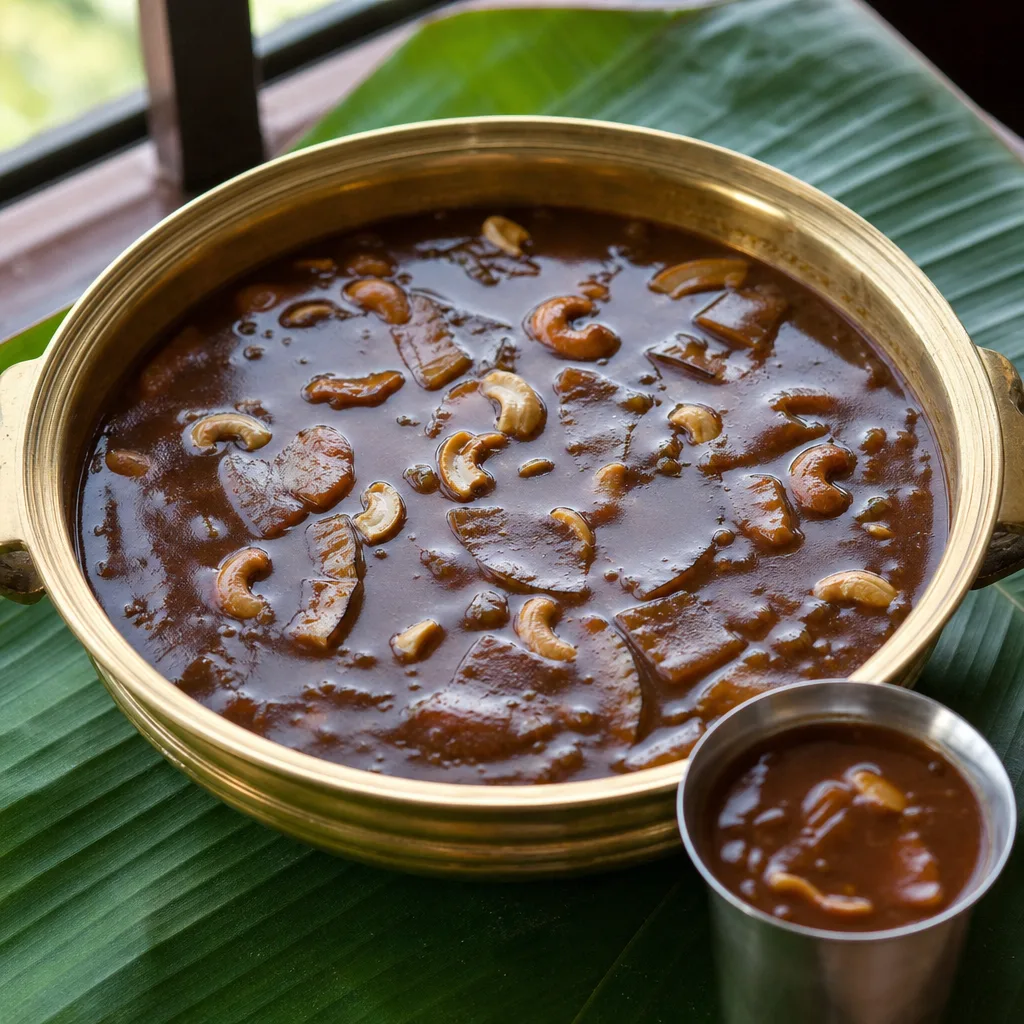
- Prep20 min
- Cook1 hr
- Serves6
- DifficultyMedium
- DietVegetarian
Ada pradhaman is the pradhaman that anchors the Onam sadya. It is made from rice ada — flat, chewy strips of cooked rice dough — cooked slowly in dark jaggery syrup and then finished with three extractions of coconut milk added in sequence, from thin to thick. The result is a deep brown, richly sweet payasam with a faint smokiness from the jaggery and a full coconut fragrance.
This is a Travancore household recipe. The ada is store-bought in most homes today, though older cooks still make it by spreading a thin batter on banana leaf, folding it, and steaming it. The jaggery used is panam kalkandu or the dark Keralan variety; palm jaggery gives a more complex flavour than cane jaggery and is preferred here. The coconut milk is pressed fresh from a grated coconut: the first press is thick and added last, off the heat; the second and third presses are thinner and go in earlier.
Household ratios vary. Some families use more ada and less jaggery for a thicker, chewier result; others keep it more liquid so it pours easily into the leaf. The one constant is that the thick coconut milk is never boiled after it goes in, or it will split and the payasam will look greasy and separated.
Ingredients (serves 6)
For the ada
For the jaggery syrup
For the coconut milk
For finishing
Method
Soak and cook the ada
Put the dried ada in a large bowl, pour over plenty of boiling water, and leave it for 20 minutes until the pieces are soft and pliable but not falling apart. Drain, then transfer to a pot of fresh boiling water and cook for 8 to 10 minutes until the ada is completely tender all the way through with no hard centre. Drain and rinse under cold water so the pieces do not clump. Set aside.
Press the coconut milk in three extractions
Put the grated coconut in a bowl. Add 100 ml of warm water, squeeze and press firmly with both hands for 2 minutes, then strain through a fine cloth or sieve, pressing hard. This is the first (thick) extraction; set it aside separately. Add another 250 ml of warm water to the same coconut, squeeze again, and strain — this is the second extraction. Repeat once more with the remaining 250 ml of water for the third (thinnest) extraction. Keep all three separate.
Melt the jaggery
Combine the jaggery pieces and 200 ml of water in a heavy-bottomed uruli or wide pan over medium heat. Stir until the jaggery dissolves completely, then let it simmer for 3 to 4 minutes. Strain through a fine sieve to remove any grit or impurities. Return the strained syrup to the pan.
Cook the ada in the jaggery syrup
Add the drained ada to the hot jaggery syrup over medium heat. Stir to coat every piece. Cook for 8 to 10 minutes, stirring regularly, until the syrup thickens slightly and is absorbed into the ada. The mixture will look dark and glossy. Do not rush this step — the ada must absorb the jaggery flavour fully before the coconut milk goes in.
Add the third (thinnest) coconut milk
Pour in the third extraction of coconut milk and stir well. Cook over medium heat, stirring often, for 8 to 10 minutes until the liquid reduces and the pradhaman thickens noticeably. Keep the heat steady — it should simmer gently, not boil hard.
Add the second coconut milk
Pour in the second extraction and stir through. Continue cooking over medium-low heat for another 10 minutes, stirring frequently. The pradhaman will deepen in colour and take on a richer, creamier consistency. It should coat the back of a spoon.
Add spices
Stir in the crushed cardamom and the dry ginger powder. Mix well and taste — the spices should be present but not sharp. Give it another minute on the heat.
Fry the garnish
In a small pan, heat the coconut oil over medium heat. Fry the cashew halves until golden, then lift them out. In the same oil, fry the coconut slivers until they turn a deep golden brown — watch closely, they colour fast. Pour the oil, cashews and coconut slivers into the pradhaman and stir through.
Finish with the thick coconut milk, off the heat
Take the pan completely off the flame. Wait 30 seconds, then pour in the first (thick) extraction of coconut milk and stir gently but thoroughly. The residual heat is enough. Do not return it to the flame. If the thick milk is added to a boiling pradhaman it will split, leaving an oily, curdled surface that cannot be fixed.
Rest and serve
Let the pradhaman sit for 5 minutes before serving. It will thicken further as it cools. Serve warm, not piping hot, ladled directly onto the banana leaf of the sadya or into small steel cups.
How to serve
Served as part of the Onam sadya on a banana leaf, typically after the rice and curries. It may be followed by pal pradhaman. On its own, it is served at the end of a Kerala feast or as a festival offering (neivedhyam).
Served with: Served as part of the Onam sadya on a banana leaf, typically after the rice and curries. It may be followed by pal pradhaman. On its own, it is served at the end of a Kerala feast or as a festival offering (neivedhyam).
Cook's tips
Jaggery quality matters most
Dark Keralan sharkkara or palm jaggery gives the pradhaman its characteristic deep colour and slightly smoky sweetness. Light cane jaggery produces a pale, flat-tasting result. If you can only find cane jaggery, increase the quantity slightly and accept that the colour will be lighter.
Homemade ada
To make ada at home, mix raw rice flour with a little hot water to a soft, smooth dough. Spread thinly on a banana leaf, fold, and steam for 10 minutes. Peel off the leaf once cool. The texture is softer than store-bought dried ada and the cooking time in the jaggery will be shorter — check after 5 minutes.
Thickness on cooling
Ada pradhaman thickens considerably once it cools. If you are making it ahead for a sadya, keep it slightly more liquid than you want at the table. Reheat gently over very low heat, stirring, and add a splash of thin coconut milk if needed — never add water.
The thick milk rule
Every experienced cook will repeat this: the thick first extraction of coconut milk must go in off the flame. Even a minute of boiling after that point will cause the milk to separate. There is no recovering a split pradhaman.
Straining the jaggery
Keralan jaggery often contains sand and impurities. Never skip the straining step. A small stone that reaches the pradhaman will not be found until someone bites down on it.
Regional variations
Pal pradhaman uses rice and cow's milk rather than coconut milk; chakka pradhaman uses jackfruit and coconut milk; gothambu pradhaman uses broken wheat.
Glossary
- Ada അട
- Flat strips or sheets of cooked rice dough, used in sweets; here the ribbon variety used in pradhaman.
- Pradhaman പ്രഥമൻ
- A Kerala payasam made with coconut milk rather than cow's milk; the name signals it is the first and foremost sweet.
- Sharkkara ശർക്കര
- Dark unrefined Keralan cane or palm jaggery; deeper in flavour than the lighter cane jaggery sold elsewhere.
- Thenga kothu തേങ്ങ കൊത്ത്
- Small slivers or pieces cut from a fresh coconut kernel, fried in oil as a garnish for payasam.
- Chukku ചുക്ക്
- Dried ginger powder; used in small quantities in payasam for digestive warmth and a mild spice note.
- Uruli ഉരുളി
- A wide, shallow, heavy bronze or brass cooking vessel traditional to Kerala; ideal for payasam because of its even heat distribution.
- Sadya സദ്യ
- The traditional Kerala feast served on a banana leaf, most associated with Onam; pradhaman is its defining sweet.
Ada pradhaman stands or falls on two things: the quality and darkness of the jaggery, which sets the colour and depth of flavour, and the discipline to take the pan off the heat before the thick coconut milk goes in. Get those two right and the rest follows naturally.
More Sweets & Payasam recipes
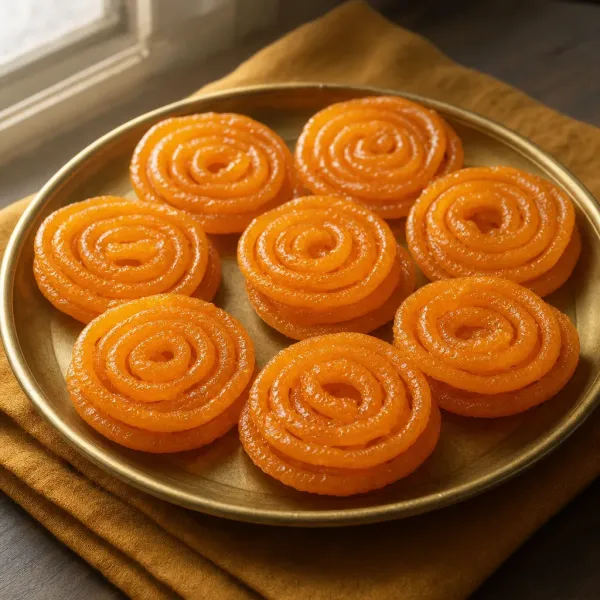
Jangiri (Jhangiri)
Traditional Tamil Nadu jangiri made with aerated urad dal batter piped into coils, fried gently and soaked in saffron-cardamom sugar syrup. Step-by-s…
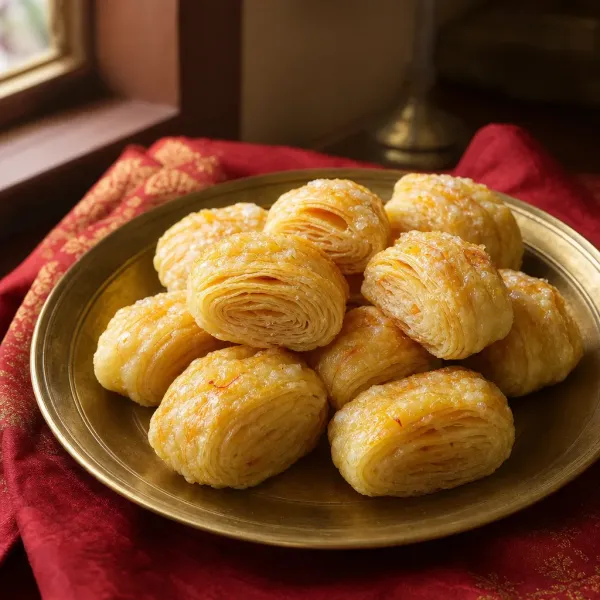
Chiroti
Traditional Karnataka chiroti with ghee-layered maida dough, deep fried and coated in cardamom sugar syrup. Festival sweet from the Dharwad kitchen.
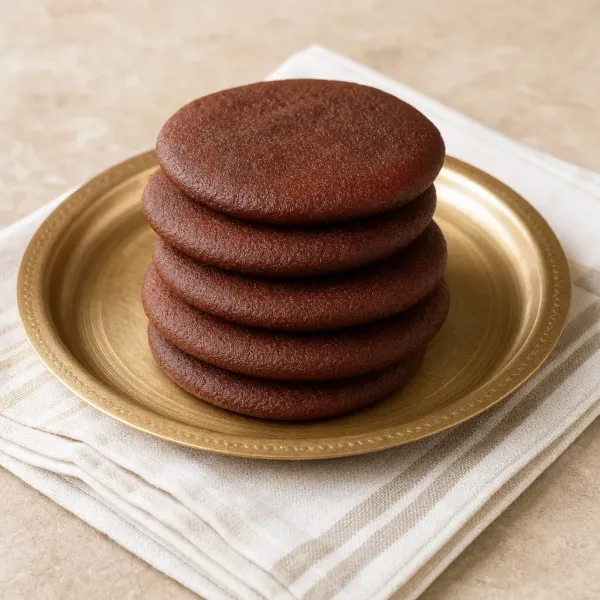
Adhirasam
Authentic Tamil Iyer adhirasam made with freshly ground pacharisi and dark jaggery syrup. Festival sweet for Karthigai Deepam and Diwali, with step-b…
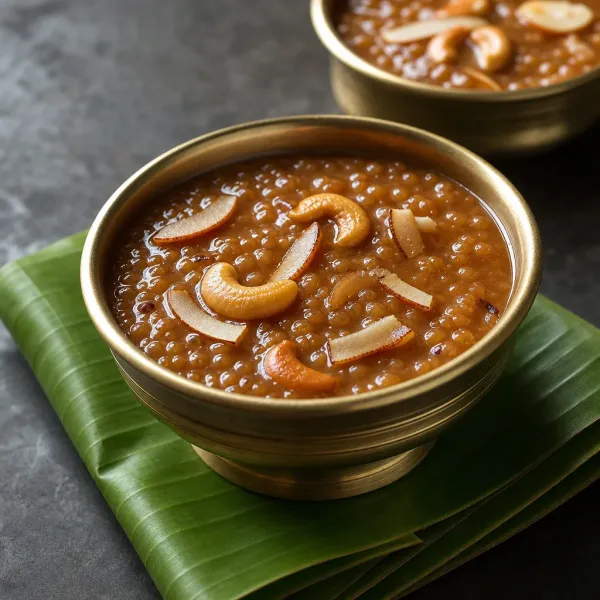
Gothambu Payasam
Traditional Nasrani broken wheat payasam from Travancore made with dark jaggery and fresh coconut milk. A classic Kerala sadya sweet.
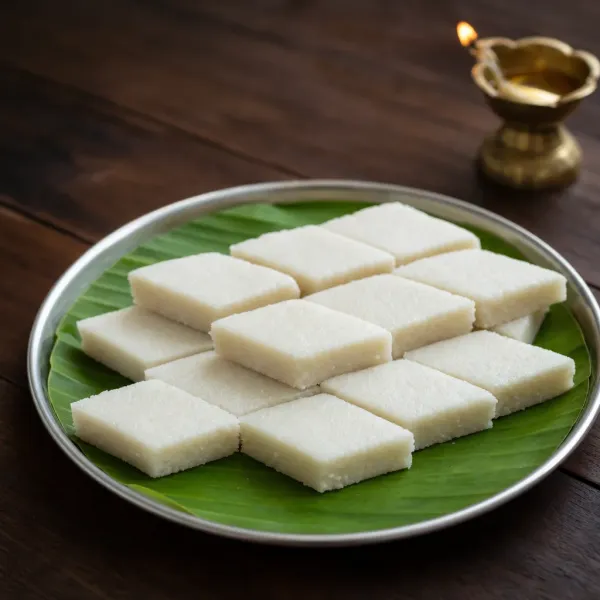
Thengai Burfi (Coconut Burfi)
Classic Tamil Iyer-style thengai burfi made with fresh coconut, sugar and cardamom. Firm, milk-white and festival-ready. Step-by-step traditional met…
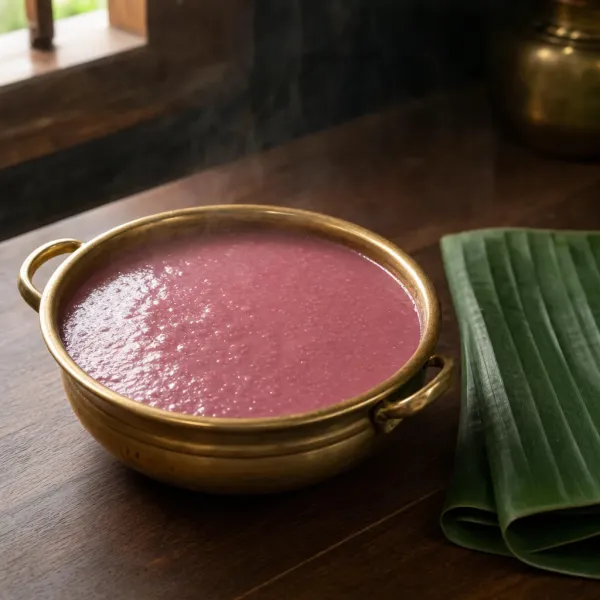
Ambalappuzha Paal Payasam
Authentic Ambalappuzha paal payasam with just milk, rice and sugar. The three-hour slow-cook method that gives the famous rose-pink colour.