

Chiroti Recipe
Malayalam ചിരോടിTamil சிரோட்டிKannada ಚಿರೋಟಿTelugu చిరోటి
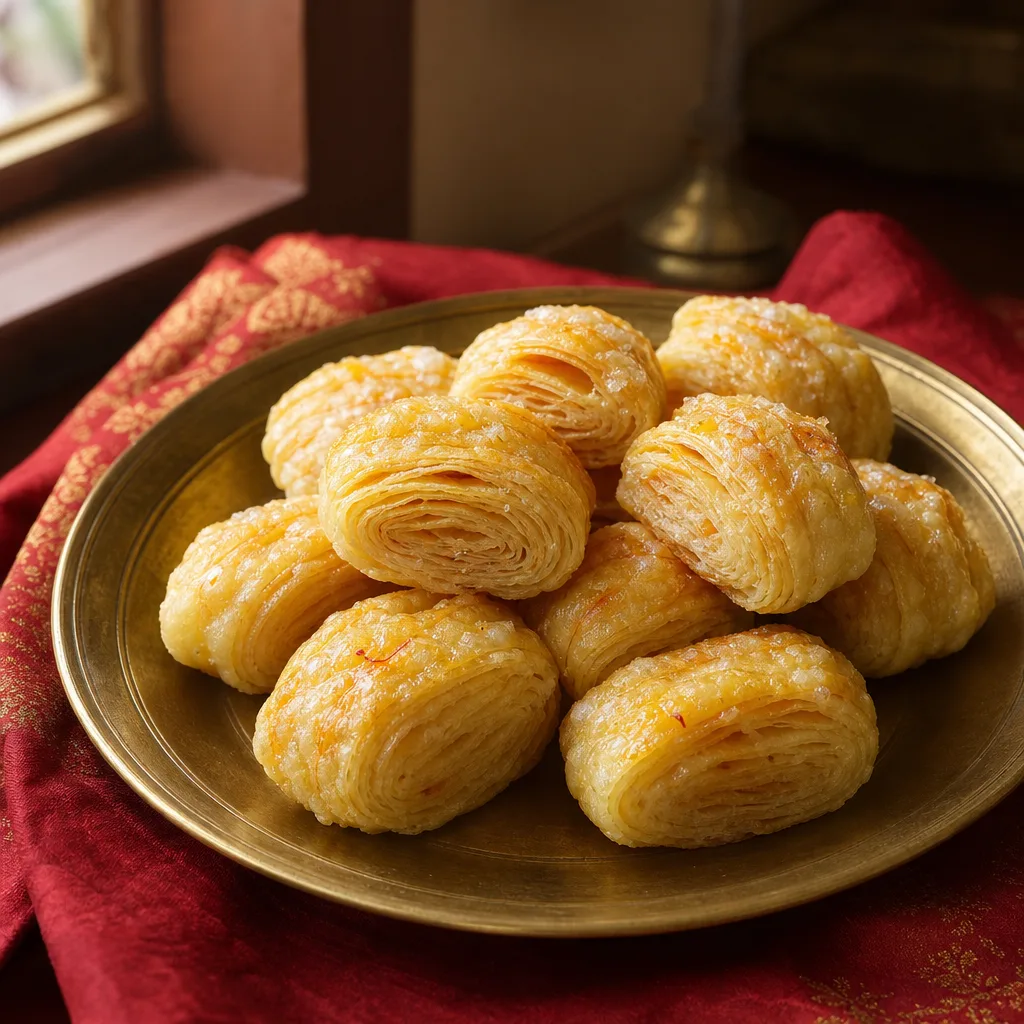
- Prep45 min
- Cook1 hr
- Serves20 to 24 pieces
- DifficultyHard
- DietVegetarian
Chiroti is a festival sweet from the northern Karnataka kitchen, made most often for Diwali, weddings and thread ceremonies. It is a deep-fried pastry of paper-thin layers that shatter when you bite them, then dissolve into something almost creamy. The layers come from rolling a soft maida dough very thin, coating it with a paste of ghee and rice flour, stacking or rolling the sheets, and cutting them before frying. The syrup is poured over at the last moment so the layers stay distinct rather than collapsing into each other.
In Dharwad and Belgaum households the syrup is kept at a firm one-string and poured hot over the fried chirotis. In some Bengaluru Brahmin homes the pieces are dusted with powdered sugar instead, which keeps them crisper for longer. Both are genuine. The version here uses syrup, which is the older and more widespread practice.
The work is slow. Resting the dough matters. Rolling thin enough to see light through the sheet matters. If either step is hurried the layers fuse during frying and you get a thick puri instead of a flaky pastry. Make these when you have an unhurried morning.
Ingredients (serves 20 to 24 pieces)
For the dough
For the layering paste
For the sugar syrup
For frying
Method
Make the dough
Mix the maida, sooji, salt and 2 tbsp ghee together in a wide bowl. Rub the ghee in with your fingers until the flour looks like coarse breadcrumbs and holds together when you press a fistful. Add warm water a little at a time and knead to a smooth, pliable dough that is softer than chapati dough but not sticky. Cover with a damp cloth and rest for 30 minutes. Do not skip this rest; the gluten needs to relax so the sheets roll thin without springing back.
Mix the layering paste
Stir the 4 tbsp ghee and rice flour together in a small bowl until you have a smooth, spreadable paste with no lumps. It should be the consistency of thick cream. Keep it at room temperature; if it sets firm the layers will tear when you roll.
Divide and roll the first sheet
Divide the rested dough into four equal portions. Work with one portion at a time and keep the rest covered. On a lightly floured surface, roll one portion into a rectangle as thin as you can manage, roughly 30 cm by 20 cm. You are aiming for near-translucency; hold it up to the light and you should see your hand through it. Tears are fine; patch them gently.
Apply the paste and stack the sheets
Spread a thin, even layer of the ghee-rice flour paste over the entire surface of the rolled sheet using your fingers or the back of a spoon. Roll out the second portion of dough to the same size and lay it directly on top of the first. Spread paste on the second sheet. Repeat with the third and fourth portions so you have four sheets stacked with paste between each layer. Do not apply paste to the topmost surface.
Roll into a log and rest
Starting from the longer edge, roll the stacked sheets tightly into a log, the way you would roll a mat. Pinch the seam gently to seal. Wrap the log in a damp cloth and rest for 10 minutes. This brief rest helps the layers hold together when you cut them.
Cut the chirotis
With a sharp knife, cut the log into rounds about 1.5 cm thick. You should get 20 to 24 pieces. Lay each round flat on the board and press it gently with your palm to flatten it slightly into a small disc. Do not use a rolling pin; pressing by hand keeps the layers from fusing at the edges. If any piece looks very thick, press a little more firmly.
Heat the ghee
Pour the frying ghee into a wide, heavy kadai and heat on a medium-low flame. Test the temperature by dropping in a tiny scrap of dough; it should rise to the surface slowly and steadily without browning immediately. The correct temperature is around 150 to 160 °C. Too hot and the outside browns before the layers inside cook through; too cool and the pastry absorbs fat and turns heavy.
Fry the chirotis
Slide three or four pieces into the ghee at a time; do not crowd the pan. Fry on medium-low heat, turning gently once, until the chirotis are pale golden and the layers have puffed and separated visibly at the edges. This takes about 3 to 4 minutes per batch. They should not be deep brown. Lift them out with a slotted spoon and drain on a plate lined with paper. Let each batch cool for a minute before the syrup goes on.
Make the sugar syrup
While the last batches fry, combine the sugar and water in a small saucepan and bring to a boil on medium heat, stirring until the sugar dissolves. Then stop stirring and cook until the syrup reaches one-string consistency: dip a spoon in, let it cool for a moment, then press a drop between your thumb and forefinger and pull them apart slowly. One thread should form and hold before breaking. Add the cardamom powder and saffron water and stir once. Keep the syrup warm on the lowest possible flame.
Coat with syrup
Working quickly while both the chirotis and syrup are still warm, drop three or four pieces at a time into the syrup and turn them gently to coat all sides. Lift them out immediately with a fork and set them on a greased plate or tray in a single layer. Do not let them sit in the syrup; even 30 seconds too long and they soften. The syrup will set to a thin, glossy, slightly crystalline coat as the pieces cool.
Cool and store
Leave the coated chirotis undisturbed for at least 20 minutes until the syrup coating sets firm. Once completely cool, store in an airtight tin in a single layer, or with parchment between layers. They keep well for 4 to 5 days at room temperature in a dry kitchen.
How to serve
Served on their own as a festival sweet or as part of a Diwali or wedding sweets platter. In some households they are offered alongside other Karnataka sweets such as karadantu or besan ladoo, but chiroti needs no accompaniment.
Served with: Served on their own as a festival sweet or as part of a Diwali or wedding sweets platter. In some households they are offered alongside other Karnataka sweets such as karadantu or besan ladoo, but chiroti needs no accompaniment.
Cook's tips
The paste must stay soft
If the ghee-rice flour paste thickens or sets while you are working, warm it gently for a few seconds over low heat and stir. Cold, stiff paste tears the thin dough sheets.
Frying temperature is everything
If the ghee is too hot the chiroti browns on the outside while the inner layers remain raw and doughy. Keep the flame at medium-low throughout and adjust between batches. A thermometer set at 155 °C is reliable.
Syrup timing
If the syrup cools and thickens too much before you finish coating, add a teaspoon of warm water and stir over low heat to loosen it. Do not let it go past one-string or it will crystallise thickly on the outside and the chiroti will look coated in white sugar crust rather than a fine glaze.
Rice flour as dusting agent
Some families dust with plain maida between the layers instead of a ghee-rice flour paste. The paste method gives more reliable separation of layers in a home kitchen.
Powdered sugar shortcut
Bengaluru households sometimes skip the syrup and dust the hot fried chirotis with fine powdered sugar mixed with cardamom. The result is crisper and stays so for longer, though the traditional syrup-coated version is considered the classic.
Regional variations
Chiroti is also made in Maharashtra (especially Pune and Kolhapur) where it is called Chirote and is sometimes dusted with powdered sugar rather than dipped in syrup; a Goa Catholic version exists as well.
Glossary
- Maida ಮೈದಾ
- Refined white wheat flour, finely milled, low in bran.
- Sooji / Rava ರವೆ
- Semolina; coarse-ground durum wheat used in small quantities here to give slight texture to the dough.
- Kadai ಕಡಾಯಿ
- A deep, wide, round-bottomed pan used for frying and sautéing.
- One-string consistency ಒಂದು ತಂತಿ ಪಾಕ
- The stage of sugar syrup at which a single thread forms between thumb and forefinger when a cooled drop is pulled apart.
Two things decide whether chiroti works: rolling the dough thin enough to create true layers, and holding the frying ghee at a steady medium-low heat so the layers cook through without browning too fast. Get those right and the syrup coat is almost forgiving.
More Sweets & Payasam recipes
Ada Pradhaman
Authentic Kerala ada pradhaman with rice ada, dark jaggery and fresh coconut milk. Traditional Onam sadya recipe with step-by-step method.
Jangiri (Jhangiri)
Traditional Tamil Nadu jangiri made with aerated urad dal batter piped into coils, fried gently and soaked in saffron-cardamom sugar syrup. Step-by-s…
Adhirasam
Authentic Tamil Iyer adhirasam made with freshly ground pacharisi and dark jaggery syrup. Festival sweet for Karthigai Deepam and Diwali, with step-b…
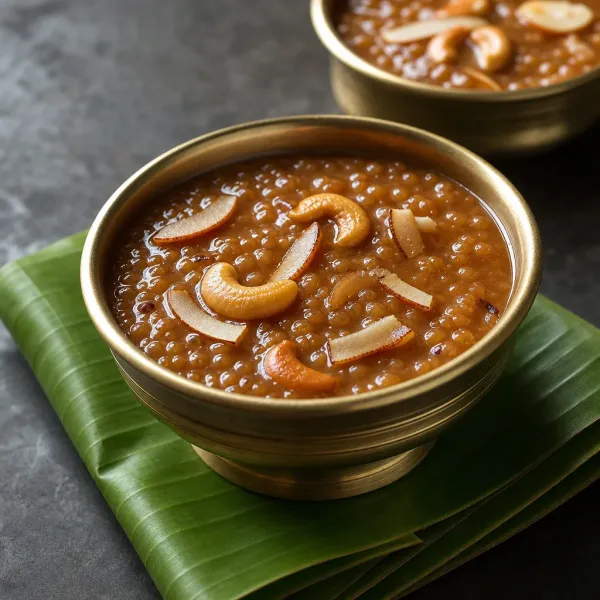
Gothambu Payasam
Traditional Nasrani broken wheat payasam from Travancore made with dark jaggery and fresh coconut milk. A classic Kerala sadya sweet.
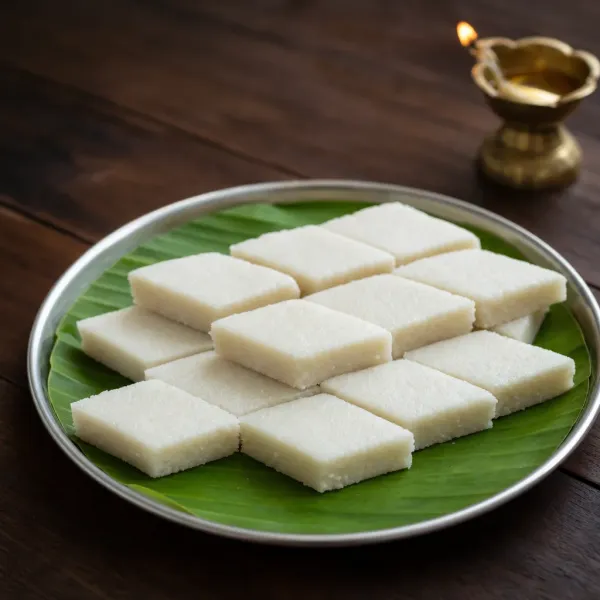
Thengai Burfi (Coconut Burfi)
Classic Tamil Iyer-style thengai burfi made with fresh coconut, sugar and cardamom. Firm, milk-white and festival-ready. Step-by-step traditional met…
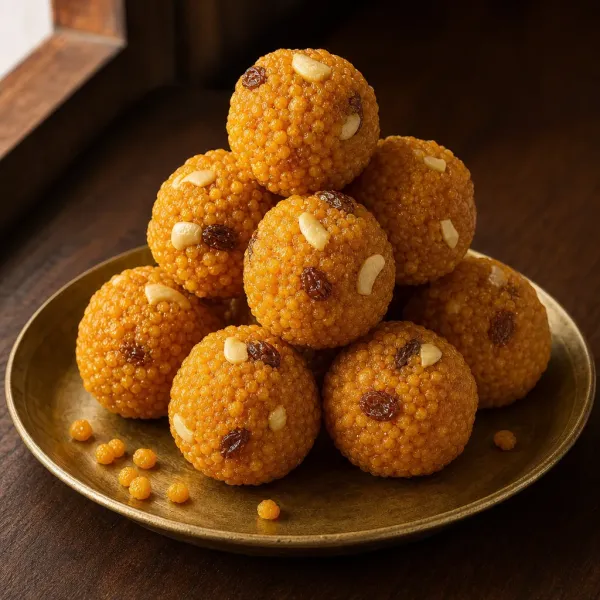
Boondi Ladoo
Traditional Telangana boondi ladoo with one-thread sugar syrup, cardamom, cloves and edible camphor. Step-by-step method for firm, festival-ready lad…