

Kerala Beef Roast (Nadan Beef Roast) Recipe
Malayalam നാടൻ ബീഫ് റോസ്റ്റ്Tamil கேரள பீஃப் ரோஸ்ட்Kannada ಕೇರಳ ಬೀಫ್ ರೋಸ್ಟ್Telugu కేరళ బీఫ్ రోస్ట్
- Prep25 min
- Cook1 hr 15 min
- Serves4 to 5
- DifficultyMedium
- DietNon-vegetarian
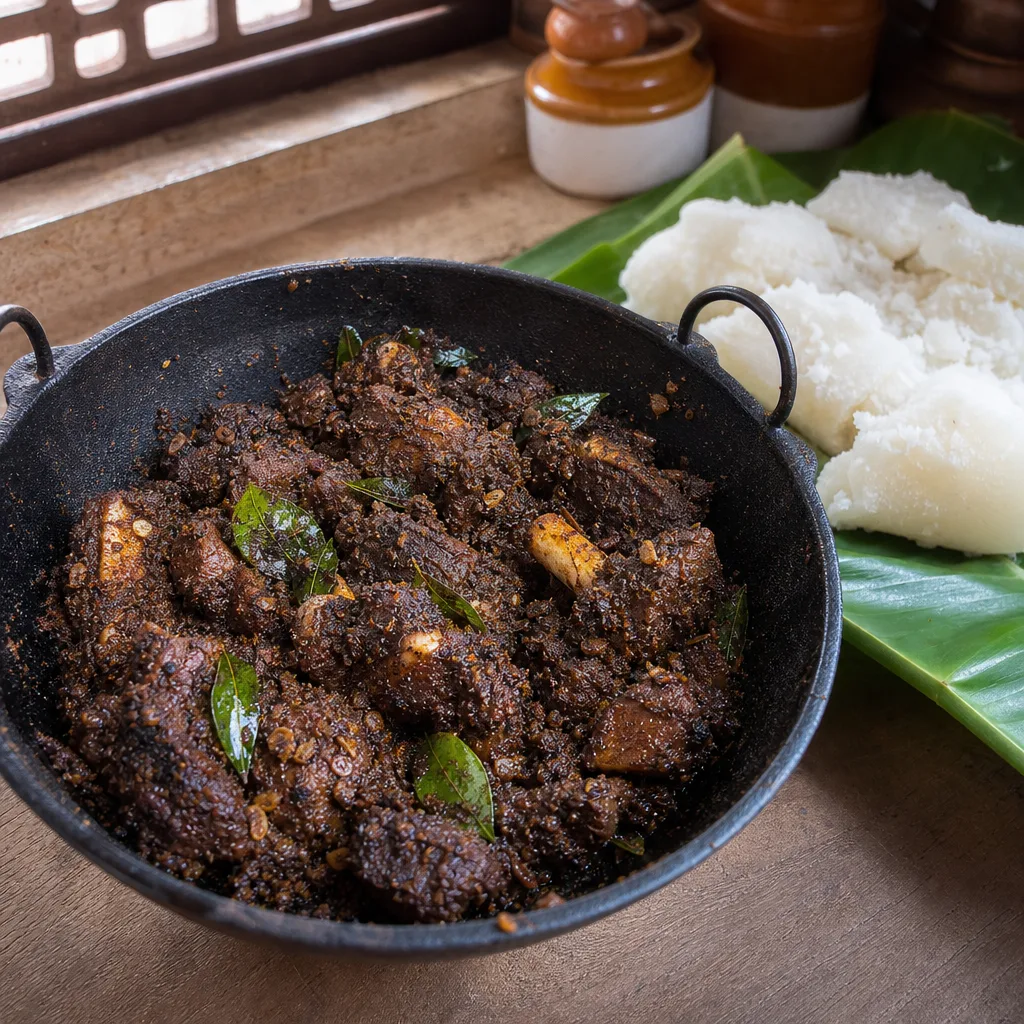
This is the beef roast that appears on Nasrani tables in central and southern Kerala, cooked for Sunday lunch after church, for Onam sadya in non-vegetarian households, and for any gathering where rice and tapioca are on the table. It is not a roast in the oven sense. The beef is pressure-cooked first with whole spices, then transferred to a heavy iron kadai or cheenachatti where the masala is built and the meat is roasted dry over low heat until each piece is coated in a thick, nearly black masala that clings without being wet.
The colour comes from dark-roasted coriander, the quantity of shallots cooked down to nothing, and the slow frying at the end. Coconut oil is not optional here. It carries the fragrance of the curry leaves and the shallots in a way no other fat does. Some households add a small piece of coconut cut into batons and fried alongside the meat at the final stage; others do not. Both are correct.
It is eaten with kappa (boiled tapioca), pathiri, appam, or plain matta rice. Leftover roast the next morning, reheated in the same iron pan with a little more coconut oil, is considered by many to be better than the original.
Ingredients (serves 4 to 5)
For the beef
For the masala and roasting
Method
Pressure-cook the beef
Put the beef pieces into a pressure cooker with the shallots, ginger, garlic, green chillies, black peppercorns, cloves, cinnamon, cardamom, turmeric, salt, and 60 ml water. Do not add more water; the beef will release its own liquid. Cook on medium heat for 4 whistles, then lower the heat and cook for another 10 minutes. Let the pressure drop on its own. Open and check: the meat should be just cooked through but not falling apart. You want it to hold its shape for the roasting stage.
Separate the meat and stock
Lift the beef pieces out with tongs and set them aside. Pour the cooking liquid that remains into a small bowl and keep it close. You will use it to deglaze the pan later. Discard the whole spices if you can fish them out, but a few left behind will not harm the dish.
Fry the shallots low and slow
Heat 5 tbsp coconut oil in a heavy iron kadai or a thick-bottomed cheenachatti over medium-low heat. Add the sliced shallots with a pinch of salt and fry, stirring often, for 18 to 22 minutes until they are deep golden brown and reduced to about a third of their original volume. Do not rush this on high heat; they will burn at the edges while the centres stay raw. The sweetness they release is what builds the base of the masala.
Add ginger, garlic, chillies and curry leaves
Add the ginger matchsticks, sliced garlic, slit green chillies, and curry leaves to the browned shallots. Fry on medium heat for 4 to 5 minutes, stirring, until the raw smell of the ginger and garlic is completely gone and everything is starting to colour.
Bloom the ground spices
Lower the heat. Add the coriander powder, Kashmiri chilli powder, black pepper powder, and fennel powder. Stir constantly for 90 seconds to 2 minutes. The spices will darken and smell roasted rather than raw. If the pan looks too dry, add a splash of the reserved beef stock, just enough to keep the spices moving without steaming them.
Add the beef to the masala
Tip the pressure-cooked beef pieces into the kadai and turn them in the masala until every surface is coated. Pour in the remaining beef stock. Stir well and bring to a brisk simmer. Cook uncovered on medium heat for 8 to 10 minutes, turning the pieces occasionally, until the stock is almost entirely absorbed and the masala is thick and clinging to the meat.
Roast the beef dry
This is the step that defines the dish. Lower the heat to the lowest your stove allows. Spread the beef in a single layer as much as possible and leave it undisturbed for 3 to 4 minutes so the underside catches colour against the pan. Turn the pieces and repeat. The masala should look nearly dry, almost caramelised, and very dark. If it is sticking, scrape the bottom of the pan and incorporate those bits into the meat; that is flavour. Continue turning every few minutes for a total of 12 to 15 minutes.
Add garam masala and finish with coconut oil
Sprinkle the freshly ground garam masala over the meat and toss to coat. Cook for one more minute. Take the pan off the heat and drizzle 1 tbsp fresh coconut oil over everything. The heat of the pan will bloom the oil's fragrance without cooking it away. Taste for salt. Serve hot.
How to serve
Kappa (boiled tapioca / cassava), plain matta rice, pathiri (Malabar rice flatbread), or appam. A raw sliced shallot and a wedge of lime are often placed on the side of the plate.
Served with: Kappa (boiled tapioca / cassava), plain matta rice, pathiri (Malabar rice flatbread), or appam. A raw sliced shallot and a wedge of lime are often placed on the side of the plate.
Cook's tips
Choice of cut
Bone-in chuck or brisket gives the best result because the collagen in the bone enriches the cooking liquid and the meat stays moist through the long roasting. A lean cut like topside will dry out and become stringy in the final roasting stage.
The shallots cannot be replaced
Large onions will not build the same base. Shallots have a lower water content and a different sweetness. If you are short, use the small South Indian shallots (chuvannulli) rather than large red onions. The quantity looks enormous raw but cooks down to very little.
Coriander powder: roast your own
Many Nasrani households dry-roast whole coriander seeds in a pan until they are a deep brown, then grind them fresh for this dish. The difference in depth of flavour is real. If you use store-bought powder, the dish is still good, but this is where much of the colour and body comes from.
The next day
Store in the same iron kadai if possible, covered. Reheat on low with a small spoon of coconut oil. The masala coat tightens further overnight and the flavour deepens. It keeps well refrigerated for 3 days.
Pressure cooker whistles vary
Older Indian pressure cookers and newer ones release at different pressures. After 4 whistles, open and test a piece. It should yield to a fork but not collapse. If it is still tough, cook for 2 more whistles before proceeding.
Regional variations
Mappila-style beef roast from Malabar uses fennel seed more prominently and sometimes adds coconut slices; a drier Kodava version from Karnataka uses different spicing entirely.
Glossary
- Chuvannulli ചുവന്നുള്ളി
- Small red shallots native to Kerala, more pungent and less watery than large onions.
- Cheenachatti ചീനച്ചട്ടി
- A deep, round-bottomed iron wok used throughout Kerala, ideal for slow-roasting because it holds and distributes heat evenly.
- Kappa കപ്പ
- Boiled tapioca (cassava), a staple carbohydrate in Kerala, the classic partner for beef roast.
- Kudampuli കുടംപുളി
- Gamboge (Malabar tamarind), the souring agent used in Kerala fish curries; not used in this dish but often confused with tamarind by those outside the region.
- Nadan നാടൻ
- Literally 'of the land' or 'country-style'; used to signal a traditional, unmodernised preparation.
Two things decide this dish: the patience to brown the shallots fully without burning them, and the courage to keep the heat low and the pan dry at the roasting stage. Pull the meat off too early and you have a wet curry. Rush the shallots and the masala tastes raw under all that spice. Get both right and the masala coat is thick, dark, and fragrant, and the beef holds together in pieces that are tender inside and just catching at the edges.
More Mutton, Beef & Pork recipes
Mutton Chops Fry
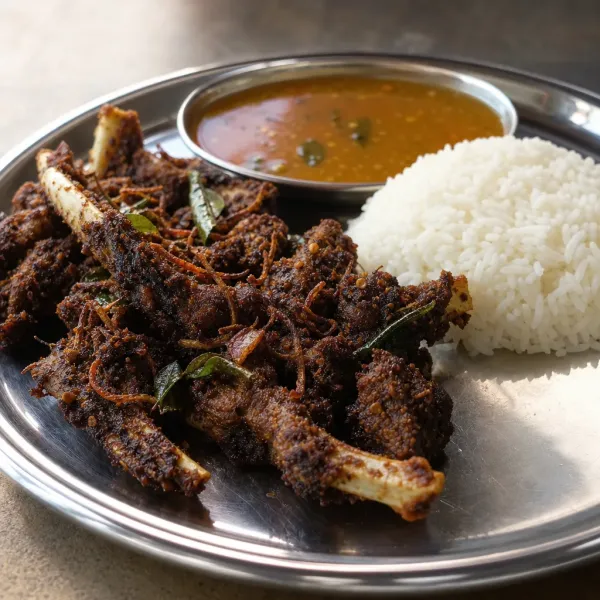
Traditional Chettinad mutton chops fry with freshly ground kalpasi masala, fried in gingelly oil with shallots until dry and deeply spiced.
Mangalorean Mutton Ghee Roast
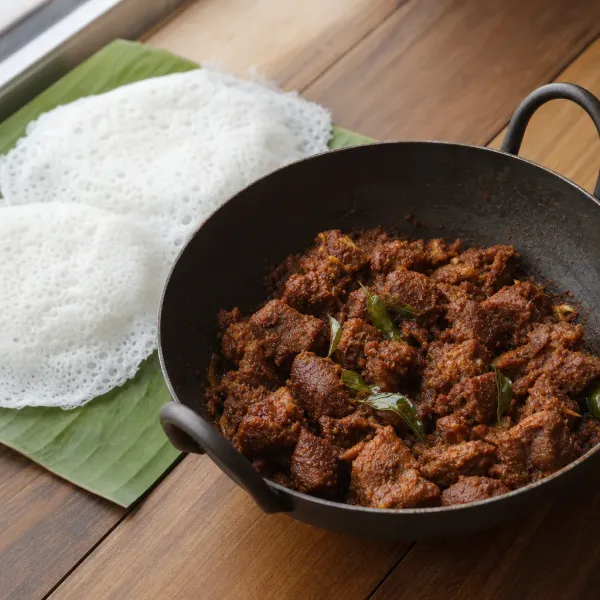
Traditional Konkani Catholic mutton ghee roast from Mangalore, made with Byadagi chillies, tamarind, and pure ghee. Step-by-step home recipe.
Kerala Nasrani Beef Pepper Fry
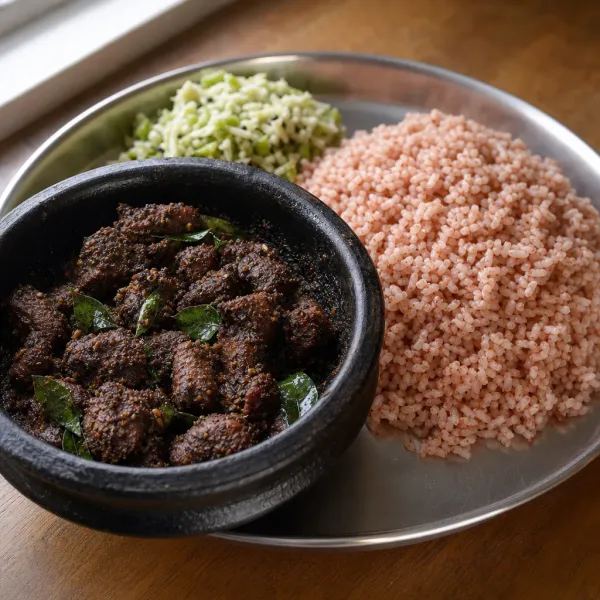
Traditional Syrian Christian beef pepper fry from Travancore: pressure-cooked, reduced dry, then fried hard in coconut oil with shallots and cracked…
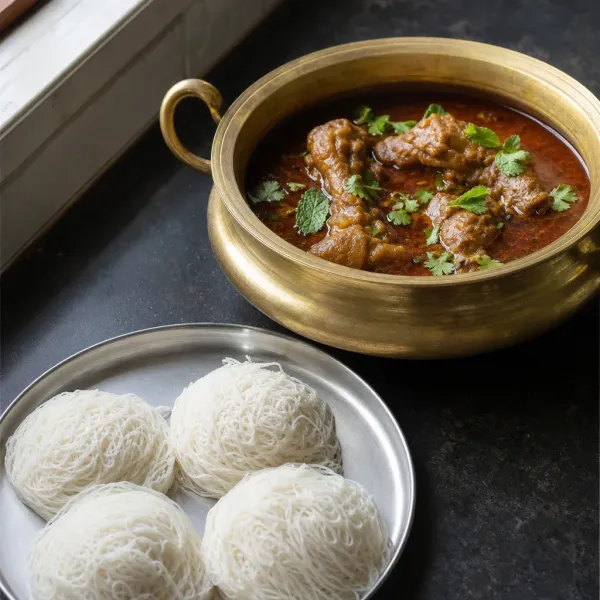
Aatu Kaal Paya
Traditional Tamil Muslim goat trotter stew slow-cooked with shallots, whole spices and kalpasi. Served with idiyappam for a classic breakfast.
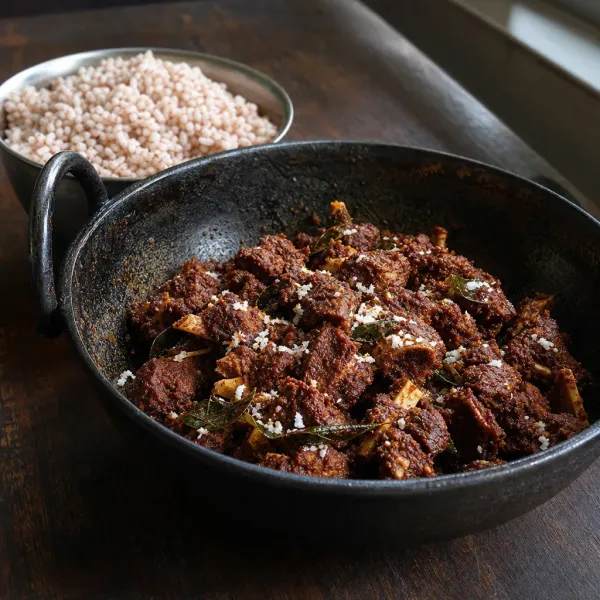
Mangalorean Mutton Sukka
Traditional Mangalorean mutton sukka from the Konkani Catholic kitchen: bone-in mutton slow-cooked with freshly roasted Byadgi chilli masala and grat…
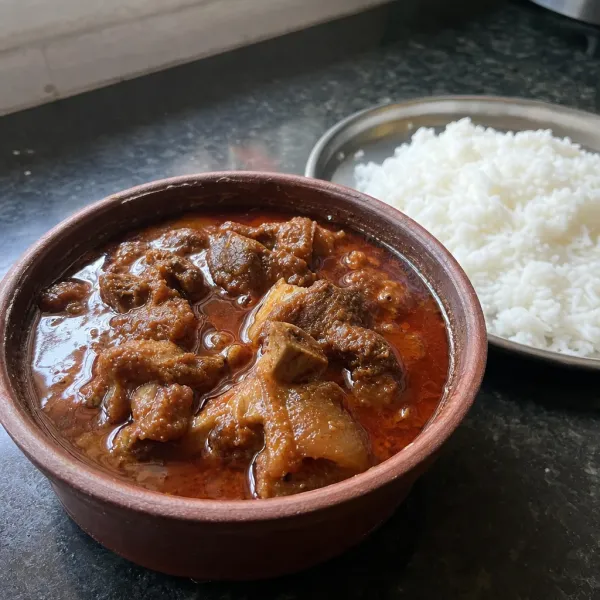
Pork Bafat
Traditional Mangalorean Catholic pork bafat made with bone-in pork and homemade bafat powder. Slow-cooked, brick-red, and deeply spiced.