

Kerala Nasrani Beef Pepper Fry Recipe
Malayalam ബീഫ് കുരുമുളക് വറുതൽTamil மாட்டிறைச்சி மிளகு வறுவல்Kannada ಬೀಫ್ ಮೆಣಸು ಫ್ರೈTelugu బీఫ్ మిరియాల వేపుడు
- Prep20 min
- Cook55 min
- Serves4
- DifficultyMedium
- DietNon-vegetarian
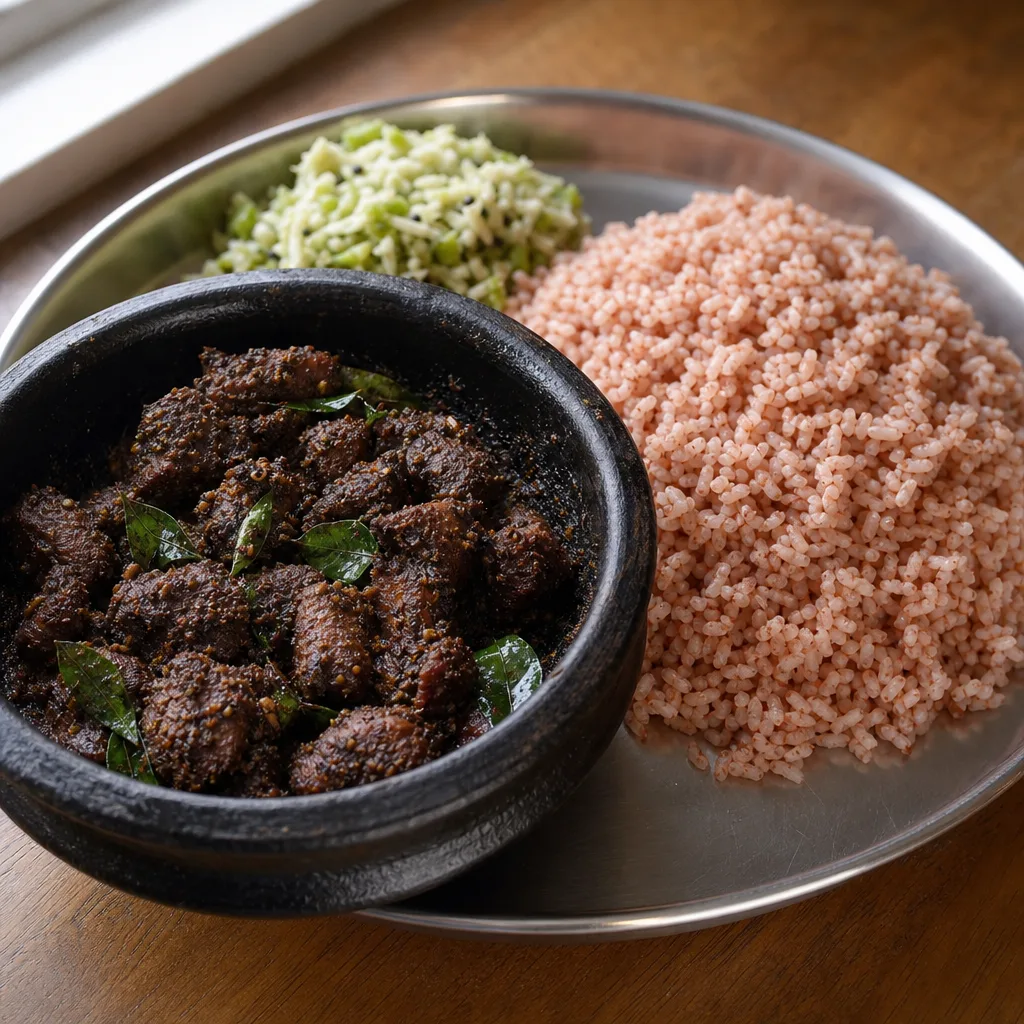
This is Sunday-lunch food in Syrian Christian homes across Travancore. The beef is pressure-cooked first in its own juices with whole spices, then the cooking liquid is reduced until the meat is almost dry, and finally it is fried hard in coconut oil with shallots, curry leaves and a generous amount of coarsely cracked black pepper. The pepper is not background heat here — it is the point of the dish.
Most Nasrani cooks use a cut with some fat running through it, because lean beef turns tough in the frying stage. The spice paste cooked into the meat is mild; the heat comes entirely from the pepper added at the end. Some households add a small piece of cinnamon and two or three cloves to the pressure cooker; others keep it to just ginger, garlic and coriander. Both are correct.
It goes on the table with matta rice and a simple vegetable thoran, or rolled inside appam at breakfast the next morning when the leftovers are even better than they were the day before.
Ingredients (serves 4)
For pressure-cooking the beef
For the frying stage
Method
Mix the beef with its spices
Put the beef pieces into the pressure cooker. Add the shallots, ginger, garlic, green chillies, coriander powder, turmeric, 1 tsp cracked pepper, cinnamon, cloves, salt and 1 tbsp coconut oil. Mix everything together with your hands so the spices coat the meat evenly. There is no added water — the beef will release its own liquid.
Pressure-cook the beef
Close the cooker and cook on medium heat. After the first whistle, lower the heat and cook for 20 minutes, then remove from heat and let the pressure release on its own. Open the lid — the beef should be just cooked through and sitting in a good amount of dark, spiced liquid.
Reduce the cooking liquid
Set the open cooker back on medium-high heat. Stir occasionally and let the liquid bubble down until it coats the meat thickly and there is almost no free liquid left in the pot. This takes about 10 to 12 minutes. Do not rush this step — if you carry wet meat into the frying pan it will steam rather than fry and you will not get the colour you want.
Heat the oil in a wide pan
In a wide, heavy-bottomed pan or a cheenachatti, heat 3 tbsp coconut oil on medium-high until it shimmers. The pan needs to be wide enough that the beef pieces can sit in a single layer without crowding.
Fry the shallots, ginger and garlic
Add the sliced shallots and fry, stirring, for about 5 minutes until they are soft and beginning to turn a light golden brown at the edges. Add the ginger matchsticks and sliced garlic and fry for another 2 minutes until fragrant. Do not let the garlic burn.
Add the curry leaves
Throw in the curry leaves — they will splutter in the oil, so stand back. Stir for 30 seconds until they are crisp and fragrant.
Add the beef and fry
Tip the spice-coated beef into the pan. Spread the pieces out and let them sit undisturbed on medium-high heat for 2 to 3 minutes until they pick up a dark brown crust on the underside. Turn and repeat. You are not deep-frying — you are building colour and getting the outside of each piece slightly chewy and caramelised.
Add the pepper and finish
Scatter the 2 tsp coarsely cracked black pepper over the beef. Toss everything together and fry for another 2 to 3 minutes on medium heat. The pepper should bloom in the residual oil and coat every piece. Taste for salt. The finished dish should be dark, nearly dry, fragrant and hot from the pepper.
How to serve
Matta rice (red parboiled rice) and a simple vegetable thoran such as cabbage or beans. Also eaten with appam or pathiri, and the cold leftovers are excellent inside a bread roll the next morning.
Served with: Matta rice (red parboiled rice) and a simple vegetable thoran such as cabbage or beans. Also eaten with appam or pathiri, and the cold leftovers are excellent inside a bread roll the next morning.
Cook's tips
Which cut to use
Chuck or brisket works well because the fat keeps the meat from drying out during the frying stage. A very lean cut like topside will turn dry and stringy by the time you have fried it long enough to get colour.
Cracking the pepper
Crack the pepper roughly in a mortar — you want uneven pieces, some almost whole, some powdered. Pre-ground pepper from a jar loses the sharp heat and the floral note that makes this dish. Do not use fine pepper powder for the finishing stage.
The reduction step is not optional
If you skip reducing the cooking liquid and tip wet beef straight into the frying pan, the meat will steam and turn grey. The reduction concentrates the spices and dries the surface so the beef can actually fry.
Bone-in versus boneless
Many Nasrani cooks prefer bone-in pieces because the marrow enriches the cooking liquid. If you use bone-in, the reduction stage may take a few minutes longer.
Leftovers
The flavour deepens overnight. Store in an airtight container and reheat in a dry pan on low heat with a few drops of coconut oil. It keeps well for two days at room temperature in a cool kitchen, or three days refrigerated.
Regional variations
Mappila-style beef pepper fry from Malabar uses fennel and fried shallots as a finishing layer and is drier; Kodava households in Karnataka make a similar dish with their own spice blend including kachampuli.
Glossary
- Chuvannulli ചുവന്നുള്ളി
- Small red shallots used throughout Kerala cooking; sharper and more fragrant than large onions.
- Matta rice മട്ട അരി
- Kerala red parboiled rice, nutty and slightly chewy, the everyday rice of Travancore households.
- Cheenachatti ചീനച്ചട്ടി
- A wide, shallow wok-like pan used in Kerala kitchens, ideal for frying because of its large surface area.
- Thoran തോരൻ
- A dry Kerala stir-fry of shredded vegetables with grated coconut and mustard, served as a side.
Two things decide whether this dish works: reducing the cooking liquid completely before you fry, and using enough freshly cracked black pepper at the end. Shortchange either one and you have spiced beef rather than beef pepper fry.
More Mutton, Beef & Pork recipes
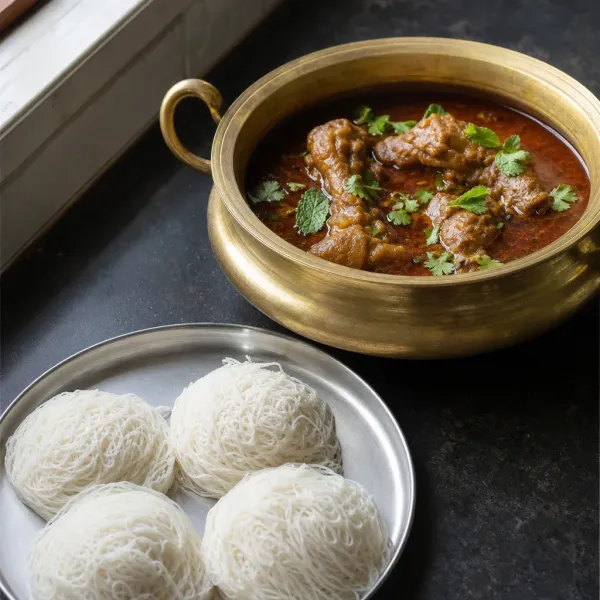
Aatu Kaal Paya
Traditional Tamil Muslim goat trotter stew slow-cooked with shallots, whole spices and kalpasi. Served with idiyappam for a classic breakfast.
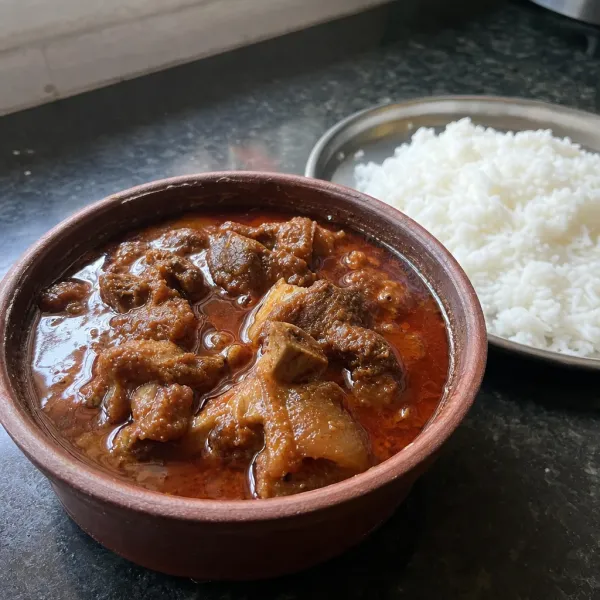
Pork Bafat
Traditional Mangalorean Catholic pork bafat made with bone-in pork and homemade bafat powder. Slow-cooked, brick-red, and deeply spiced.
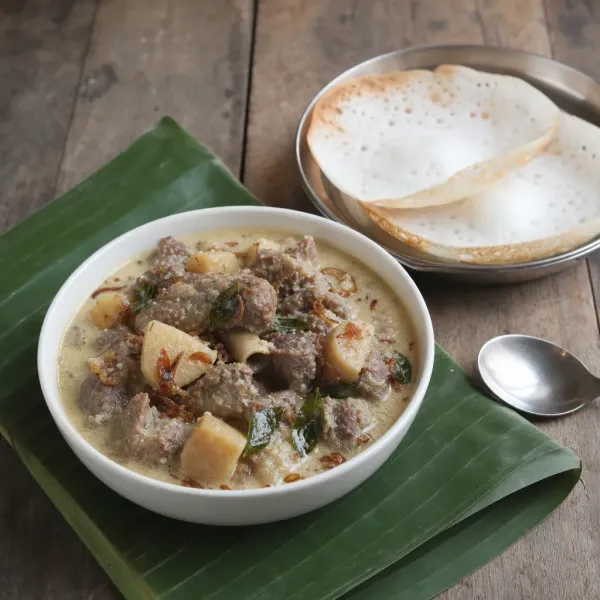
Kerala Mutton Stew
Traditional Nasrani mutton stew from Travancore: bone-in mutton, shallots, whole spices and fresh coconut milk. Served with appam. Step-by-step metho…
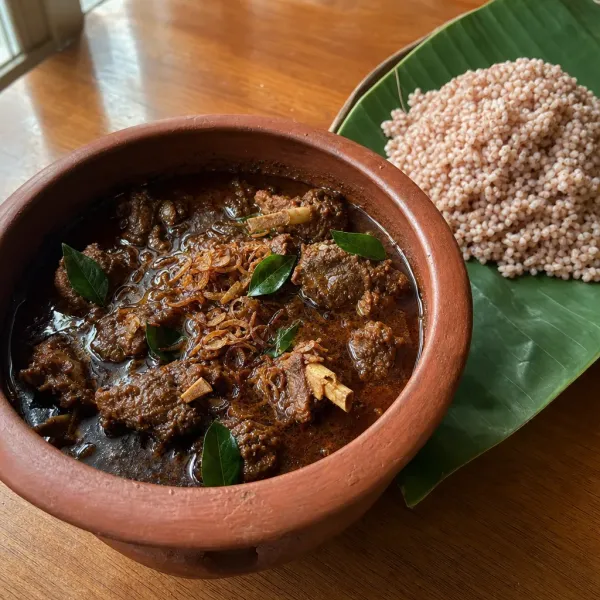
Mutton Varutharacha Curry
Traditional Kerala Nasrani mutton curry with deep-roasted coconut paste, kudampuli and coconut oil. Step-by-step household method from Travancore.
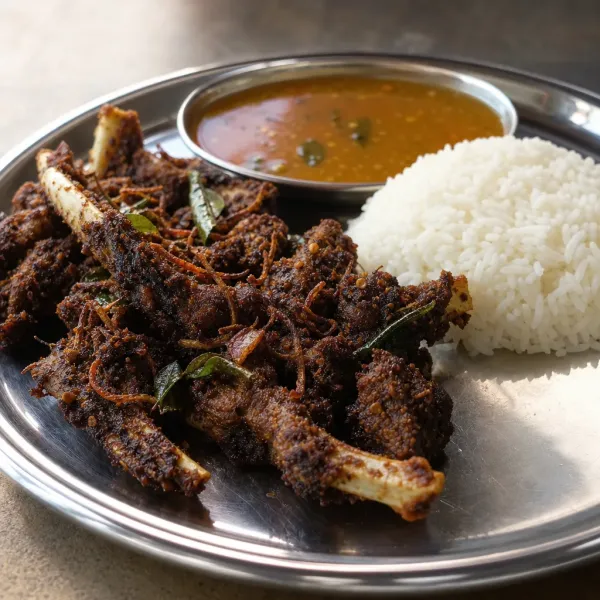
Mutton Chops Fry
Traditional Chettinad mutton chops fry with freshly ground kalpasi masala, fried in gingelly oil with shallots until dry and deeply spiced.
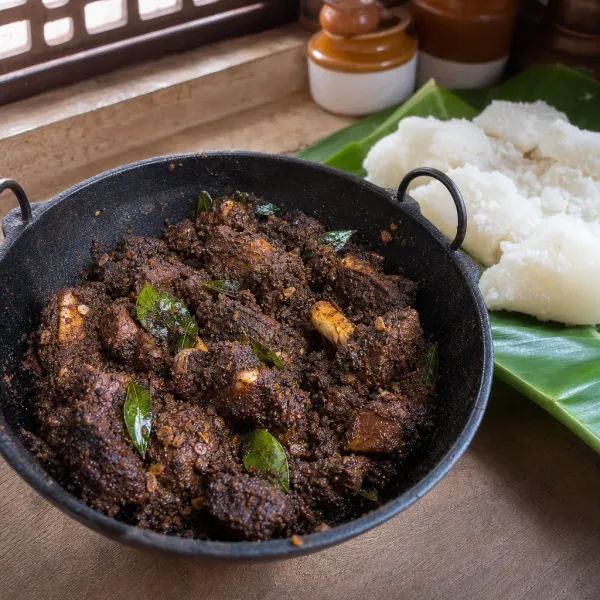
Kerala Beef Roast (Nadan Beef Roast)
Authentic Kerala Nasrani beef roast with thick dark masala, cooked the traditional way with shallots, coconut oil and curry leaves. Step-by-step hous…