

Kerala Mutton Stew Recipe
Malayalam മട്ടൺ ഇഷ്ടുTamil கேரள மட்டன் இஷ்டுKannada ಕೇರಳ ಮಟನ್ ಇಷ್ಟುTelugu కేరళ మటన్ ఇష్టు
- Prep25 min
- Cook55 min
- Serves4
- DifficultyMedium
- DietNon-vegetarian
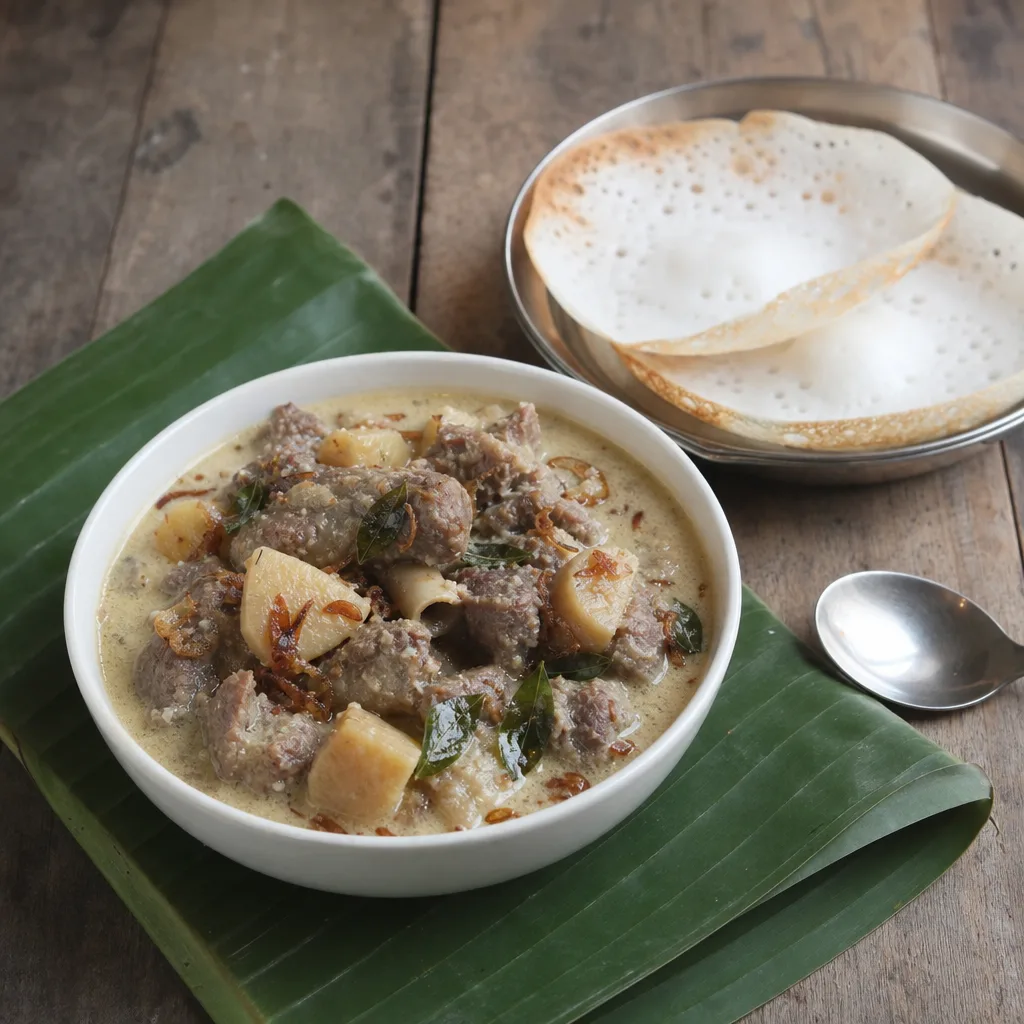
This is a Nasrani Sunday dish, the one that appears on the table with appam after the family returns from church. It is pale, gently spiced and built on coconut milk. The broth is not thin soup and it is not a heavy gravy; it sits somewhere between the two, coating the back of a spoon without being starchy.
The flavour comes from whole spices kept restrained, from shallots and green chillies that are barely cooked through, and from the two additions of coconut milk: the thinner second milk goes in early to cook the meat, and the thick first milk goes in last, off the heat or on the lowest possible flame, so it does not split. Coconut oil is the fat for the tempering, though some older Travancore households use a small spoon of ghee at the very end.
Households differ mainly on the vegetables. Potato is nearly universal. Some add a few pieces of carrot. Some add neither and let the meat carry the dish. The spice level is deliberately mild; this is not a dish that should make you reach for water.
Ingredients (serves 4)
For the meat and vegetables
Whole spices
Ground spices
Coconut milk
For cooking
To finish
Method
Extract the coconut milk
Add 150 ml of warm water to the grated coconut and squeeze firmly through a muslin cloth or a fine strainer. This thick first milk should be creamy white and quite dense; set it aside in a bowl. Now add the remaining 350 ml of warm water to the same coconut, squeeze again thoroughly, and keep this thinner second milk separately. You should have roughly 130–150 ml of thick milk and 320–340 ml of thin milk.
Bloom the whole spices
Heat 3 tbsp coconut oil in a wide, heavy pot over medium flame. Add the cinnamon, cloves, cardamom, peppercorns and bay leaves. Let them sizzle for about 45 seconds, stirring once, until the oil is fragrant. Do not let the spices darken or the broth will turn bitter.
Soften the aromatics
Add the halved shallots, ginger matchsticks, crushed garlic and slit green chillies. Cook over medium flame for 4 to 5 minutes, stirring occasionally, until the shallots turn translucent and soft at the edges but have not taken on any colour. This stew should stay pale throughout.
Add the ground spices and mutton
Add the black pepper powder and fennel powder. Stir for 30 seconds so they coat the aromatics. Add the mutton pieces and turn them in the spiced oil for 2 minutes. Season with salt now so the meat begins to absorb it.
Cook in thin coconut milk
Pour in the thin second milk. The liquid should come about halfway up the meat; add a splash of water if it does not. Bring to a gentle boil, then reduce the flame to low, cover the pot, and cook for 30 minutes. The meat should be almost but not quite tender at this point; a skewer should meet a little resistance at the centre.
Add the potatoes
Add the potato chunks, stir gently, replace the lid and continue cooking on low flame for another 12 to 15 minutes, until the potato is cooked through and the mutton is fully tender. The broth will have thickened slightly from the potato starch. Taste and adjust salt.
Add the thick coconut milk
Reduce the flame to the absolute lowest setting. Pour in the thick first milk and stir it in slowly. Do not let the stew boil from this point. Heat it gently for 2 to 3 minutes, just until you see the first wisps of steam rising from the surface. Boiling will cause the thick milk to split and turn grainy. Remove from the flame.
Temper and finish
In a small pan, heat 1 tsp coconut oil over medium flame. Add the thinly sliced shallots and fry until they are golden brown at the edges, about 3 minutes. Add the curry leaves and let them crackle for 10 seconds. Pour this tempering over the stew and cover the pot immediately for 2 minutes so the fragrance is absorbed before serving.
How to serve
Appam (lacy fermented rice pancakes) is the classic pairing. Also eaten with idiyappam or plain matta rice. Some households serve it at breakfast with appam and again at lunch with rice.
Served with: Appam (lacy fermented rice pancakes) is the classic pairing. Also eaten with idiyappam or plain matta rice. Some households serve it at breakfast with appam and again at lunch with rice.
Cook's tips
Pressure cooker shortcut
Many households pressure-cook the mutton with the thin coconut milk and aromatics for 3 whistles on medium flame, then open, add the potatoes, cook on the stove for 10 minutes, and finish with thick milk off the heat. The result is slightly less nuanced but perfectly acceptable for a weekday.
Thick milk must go in last
If you add the thick coconut milk too early or let the stew boil after adding it, the milk will separate into white curds floating in a thin liquid. There is no recovering from this. Keep the flame low and stay at the stove for those final minutes.
Freshly extracted milk matters
Tinned coconut milk works in a practical sense, but the stew loses its delicate sweetness. If you use tinned milk, use one 400 ml tin: take 150 ml from the top of the tin as the thick milk and dilute the rest with 150 ml of water as the thin milk.
Choosing the cut
Bone-in pieces give a richer broth. Shoulder is more forgiving than leg because it has more connective tissue and stays moist even if slightly overcooked. Ask the butcher for mixed curry cut pieces with some bone.
The stew should not be orange
There is no turmeric and no red chilli powder in this dish. If your stew is orange or red, something has gone wrong with the recipe. The finished colour is an off-white cream with flecks of green from the chillies and curry leaves.
Regional variations
Mappila households in Malabar make a similar coconut-milk stew with more whole spices and sometimes a small amount of fennel; Kodava pandi curry is a distinct dish and should not be confused with this.
Glossary
- Cheriya ulli ചെറിയ ഉള്ളി
- Small shallots native to Kerala, more pungent and sweeter than large onions; essential to the flavour of most Kerala dishes.
- Karugapatta കറുകപ്പട്ട
- True cinnamon (Cinnamomum verum), thin-barked and mildly sweet; distinct from the harder, more pungent cassia bark sold widely elsewhere.
- Onnaam paal ഒന്നാം പാൽ
- First milk; the thick, rich coconut milk extracted from the first pressing of grated coconut with a small amount of water.
- Randaam paal രണ്ടാം പാൽ
- Second milk; the thinner coconut milk from the second pressing of the same grated coconut, used for cooking rather than finishing.
- Ishtu ഇഷ്ടു
- The Malayalam adaptation of the English word 'stew'; the Nasrani coconut-milk stew of meat or vegetables, distinct from any British preparation.
Two things decide this dish: keeping the heat low enough that the thick coconut milk never boils, and using fresh-extracted milk rather than a shortcut. Get those right and the stew will be pale, gently fragrant and exactly as mild as it should be.
More Mutton, Beef & Pork recipes
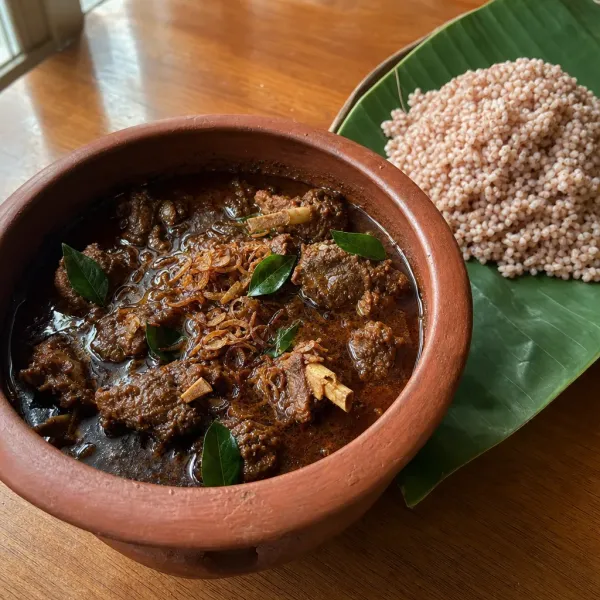
Mutton Varutharacha Curry
Traditional Kerala Nasrani mutton curry with deep-roasted coconut paste, kudampuli and coconut oil. Step-by-step household method from Travancore.
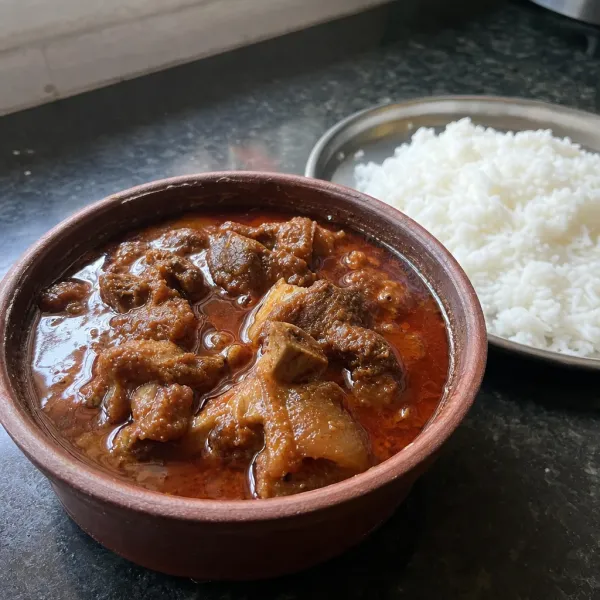
Pork Bafat
Traditional Mangalorean Catholic pork bafat made with bone-in pork and homemade bafat powder. Slow-cooked, brick-red, and deeply spiced.
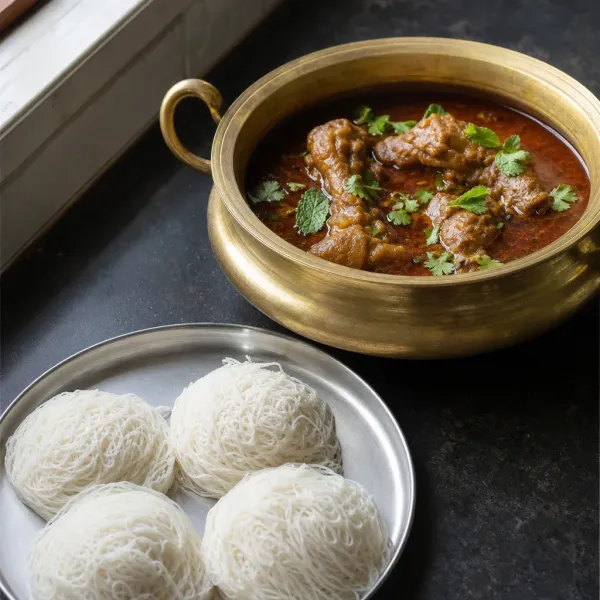
Aatu Kaal Paya
Traditional Tamil Muslim goat trotter stew slow-cooked with shallots, whole spices and kalpasi. Served with idiyappam for a classic breakfast.
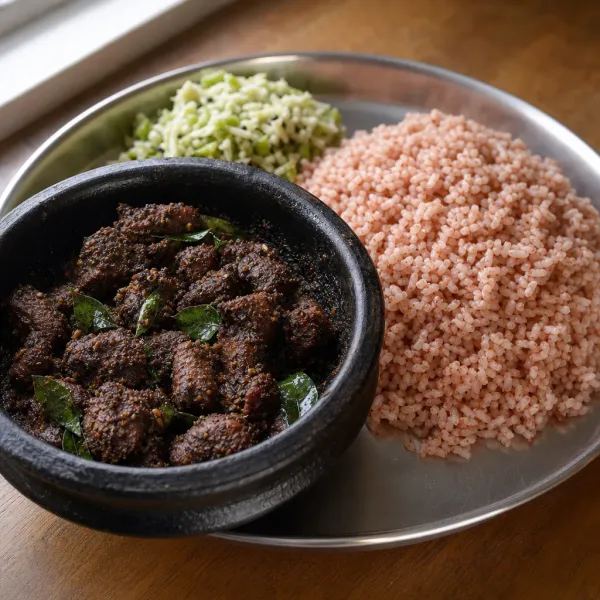
Kerala Nasrani Beef Pepper Fry
Traditional Syrian Christian beef pepper fry from Travancore: pressure-cooked, reduced dry, then fried hard in coconut oil with shallots and cracked…
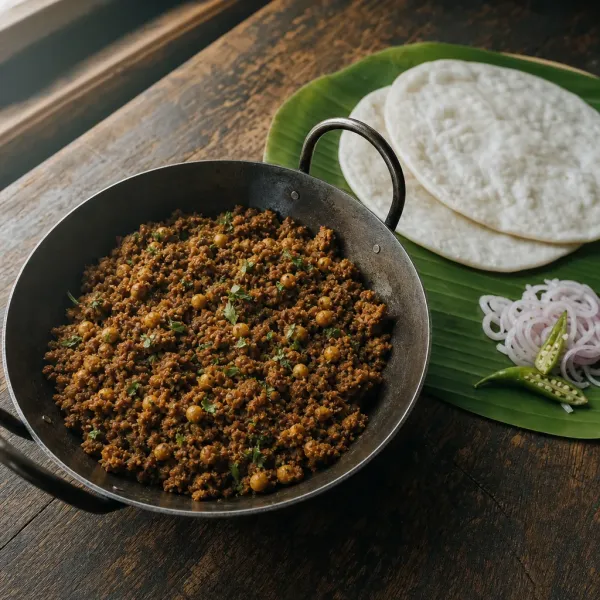
Mutton Kheema with Peas
Traditional Malabar Mappila mutton kheema with soaked white peas, shallots and whole spices, cooked dry in coconut oil. Served with pathiri.
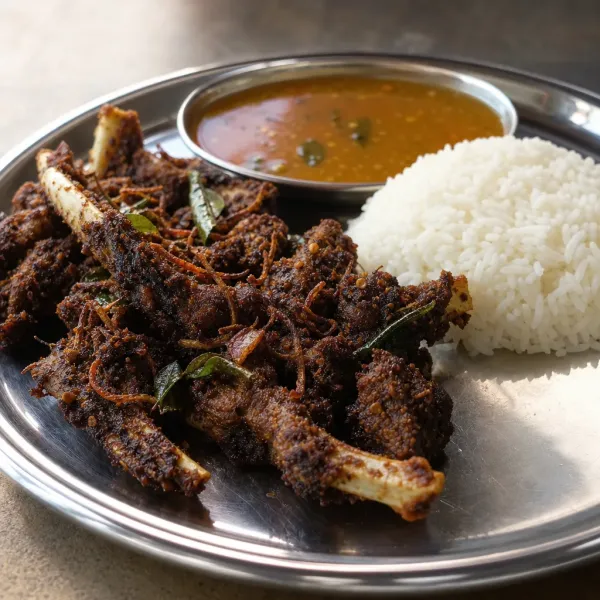
Mutton Chops Fry
Traditional Chettinad mutton chops fry with freshly ground kalpasi masala, fried in gingelly oil with shallots until dry and deeply spiced.