

Mutton Varutharacha Curry Recipe
Malayalam മട്ടൻ വറുത്തരച്ച കറിTamil மட்டன் வறுத்தரைத்த கறிKannada ಮಟನ್ ವರುತ್ತರಚ್ಚ ಕರಿTelugu మటన్ వరుత్తరచ్చ కూర
- Prep30 min
- Cook1 hr 30 min
- Serves4
- DifficultyHard
- DietNon-vegetarian
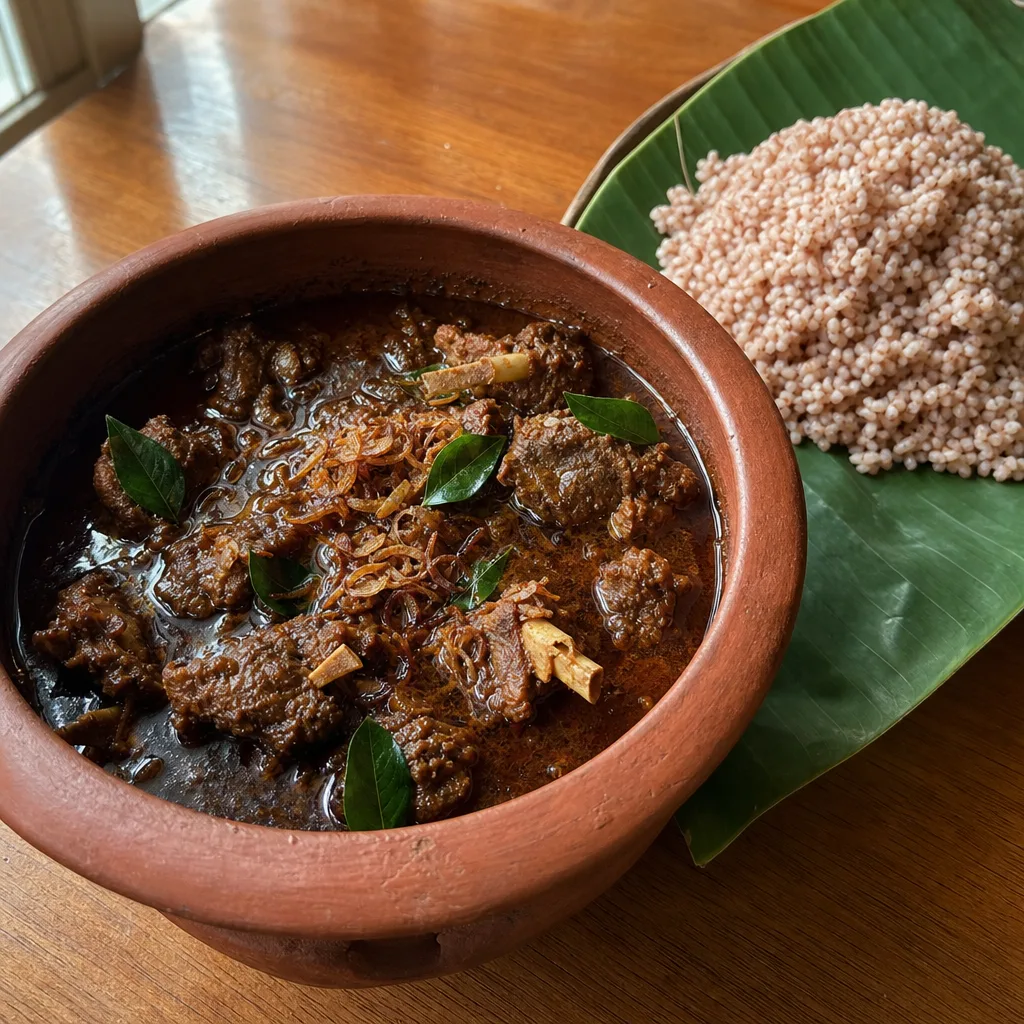
This is a Nasrani kitchen dish from Travancore, the kind that appears at Sunday lunch and on feast days. The word varutharacha tells you the method: the coconut and spices are dry-roasted together until the coconut is deep brown, then ground to a paste. That roasting is what separates this from every other coconut-based mutton curry. The paste is almost black at the edges, and it gives the gravy a smoky, bitter-edged depth that no shortcut can replicate.
The gravy is thick and dark, not pale or thin. Kudampuli is the souring agent here, not tamarind and certainly not tomato. The fat is coconut oil throughout. In most Travancore Nasrani homes, the mutton is cooked with shallots and a few spices first, and the roasted coconut paste is stirred in only toward the end, so it does not scorch against the bottom of the pot.
Households differ mainly in heat: some families add more dried red chillies to the roasting pan, others keep it moderate and rely on black pepper for the back-of-the-throat warmth. The curry sits well overnight and most cooks will tell you it is better the next day.
Ingredients (serves 4)
For the mutton
For the varutharacha paste (roasted coconut masala)
For tempering
Method
Soak the kudampuli
Rinse the kudampuli pieces and soak them in 3 tablespoons of warm water for 10 minutes. Set aside with the soaking water. Do not discard the water; it carries the sourness.
Roast the coconut and spices
Set a heavy iron or thick-bottomed pan over medium heat and rub it with the teaspoon of coconut oil. Add the dried red chillies, coriander seeds, black pepper, fennel seeds, cardamom, cloves and cinnamon. Stir constantly for 2 minutes until the spices smell toasted and the chillies deepen in colour. Do not leave them unattended; they scorch fast.
Brown the coconut
Add the grated coconut and the halved shallots to the same pan. Keep the heat at medium and stir without stopping. The coconut will first steam and turn pale, then begin to colour. Keep going until the coconut is a deep reddish-brown, almost mahogany, with darker edges. This takes 15 to 20 minutes. If you rush this step and stop at golden, the gravy will taste raw and pale. Take it off the heat the moment it smells nutty and roasted, before it tips into burnt.
Grind the paste
Let the roasted mixture cool for 5 minutes, then transfer to a wet grinder or heavy mixer jar. Add about 4 to 5 tablespoons of water and grind to a very smooth, dark paste. The paste should have no gritty coconut texture when you rub a little between your fingers. Set aside.
Cook the shallots and aromatics
In a wide, heavy pot, heat 3 tablespoons of coconut oil over medium heat. Add the sliced shallots and cook, stirring, until they are soft and beginning to turn golden at the edges, about 8 minutes. Add the crushed ginger, garlic and green chillies and cook for another 3 minutes until the raw smell is gone.
Add the dry spices and mutton
Add the coriander powder and turmeric and stir for 1 minute. Add the mutton pieces and turn them in the masala until every piece is coated. Cook on medium-high for 5 minutes, turning occasionally, until the meat is sealed and no longer pink on the outside.
Braise the mutton
Add the kudampuli with its soaking water and enough water to just come halfway up the meat, about 200 ml. Add salt. Bring to a boil, then lower the heat, cover tightly and cook for 45 to 55 minutes until the mutton is fully tender and the bones are beginning to loosen. Check every 15 minutes and add small splashes of water if the pot looks dry. Bone-in mutton from an older animal may need the full hour.
Stir in the varutharacha paste
Once the mutton is tender, add the roasted coconut paste and stir it through. Rinse the grinder jar with about 100 ml of water and add that too. Stir well so the paste does not sit in clumps at the bottom, which is where it will scorch. Simmer uncovered on low heat for 10 to 12 minutes, stirring every couple of minutes, until the gravy thickens and the oil begins to separate and float at the surface. Taste for salt and sourness.
Temper and finish
In a small pan, heat 2 tablespoons of coconut oil over medium heat. Add the dried red chilli, then the sliced shallots and curry leaves. Fry until the shallots are crisp and golden, about 4 minutes. Pour this over the curry and cover the pot immediately for 2 minutes so the aroma absorbs into the gravy. Stir once before serving.
How to serve
Kappa (boiled tapioca), matta rice, appam, or pathiri. On feast days, alongside rice and a simple thoran.
Served with: Kappa (boiled tapioca), matta rice, appam, or pathiri. On feast days, alongside rice and a simple thoran.
Cook's tips
Do not stop the roasting early
The single most common mistake is pulling the coconut off the heat when it is golden rather than deep brown. A pale roast gives a pale, flat-tasting gravy. The colour you want is the colour of dark teak wood.
Kudampuli sourness varies
Kudampuli pieces differ in potency depending on how long they have been dried and stored. Taste the gravy after the paste is added and adjust by adding a little more soaked kudampuli water if it needs more sourness.
Overnight improvement
This curry genuinely improves after resting. The roasted coconut paste absorbs into the meat and the flavours settle. Reheat gently over low flame with a splash of water to loosen it.
Pressure cooker shortcut
Many households pressure-cook the mutton with the shallots, ginger, garlic, turmeric and salt for 4 to 5 whistles before adding the varutharacha paste. This cuts the braising time significantly. The paste is still added after pressure-cooking and simmered in the open pot.
Fat matters
This dish is cooked in coconut oil at every stage. Substituting refined oil removes the flavour layer that binds the roasted coconut paste to the gravy.
Regional variations
Mappila households in Malabar make a varutharacha mutton with additional whole spices and fennel; Kodava pandi curry uses a different souring agent and fat entirely.
Glossary
- Varutharacha വറുത്തരച്ച
- Roasted and ground; refers to the technique of dry-roasting coconut and spices before grinding them into a paste.
- Kudampuli കുടംപുളി
- Malabar tamarind, also called fish tamarind or Garcinia cambogia; a dried rind used as a souring agent in Kerala curries, especially with fish and meat.
- Chuvannulli ചുവന്നുള്ളി
- Small red shallots native to Kerala; sharper and more aromatic than large onions, used throughout Kerala cooking.
- Perumjeerakam പെരുംജീരകം
- Fennel seeds; used in small quantities in Nasrani and Mappila meat curries for a mild sweetness.
- Matta rice മട്ട അരി
- Red parboiled rice from Palakkad, the everyday rice of Kerala households; slightly nutty and firm.
Two things decide this curry: how dark you take the coconut during roasting, and how long you let the paste simmer into the meat at the end. Shortcut either of those and the gravy will be thin in colour and flat in taste. Get both right and the result is a dark, deeply aromatic gravy that clings to the bone.
More Mutton, Beef & Pork recipes
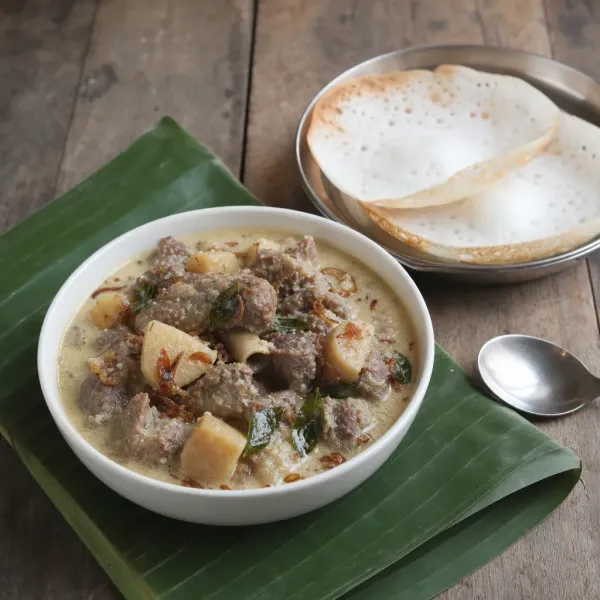
Kerala Mutton Stew
Traditional Nasrani mutton stew from Travancore: bone-in mutton, shallots, whole spices and fresh coconut milk. Served with appam. Step-by-step metho…
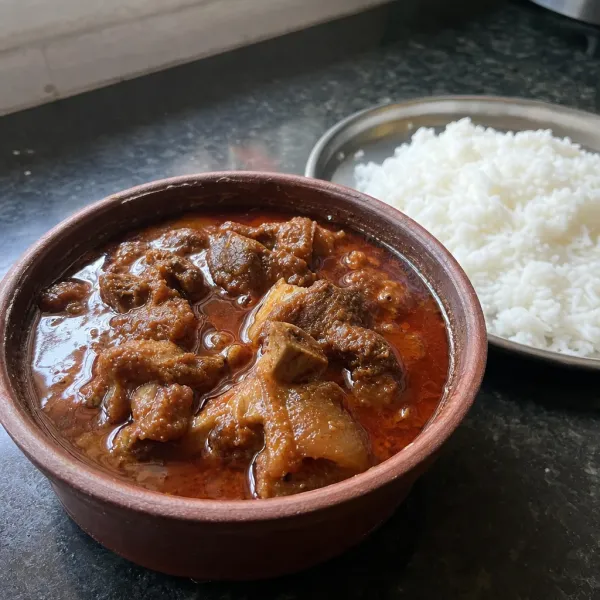
Pork Bafat
Traditional Mangalorean Catholic pork bafat made with bone-in pork and homemade bafat powder. Slow-cooked, brick-red, and deeply spiced.
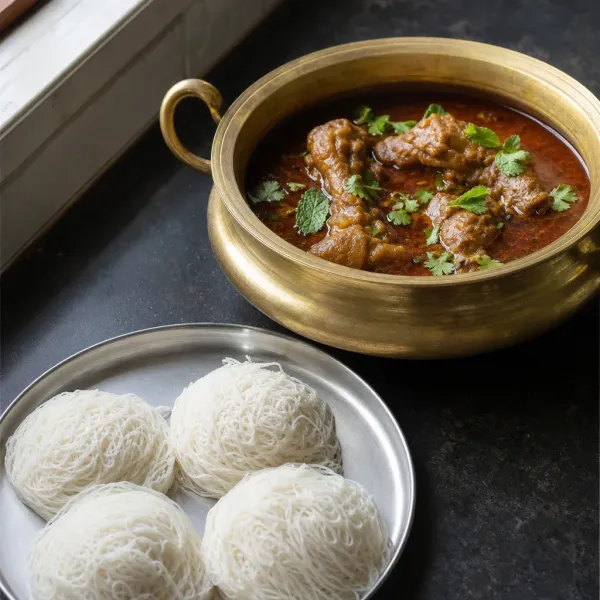
Aatu Kaal Paya
Traditional Tamil Muslim goat trotter stew slow-cooked with shallots, whole spices and kalpasi. Served with idiyappam for a classic breakfast.
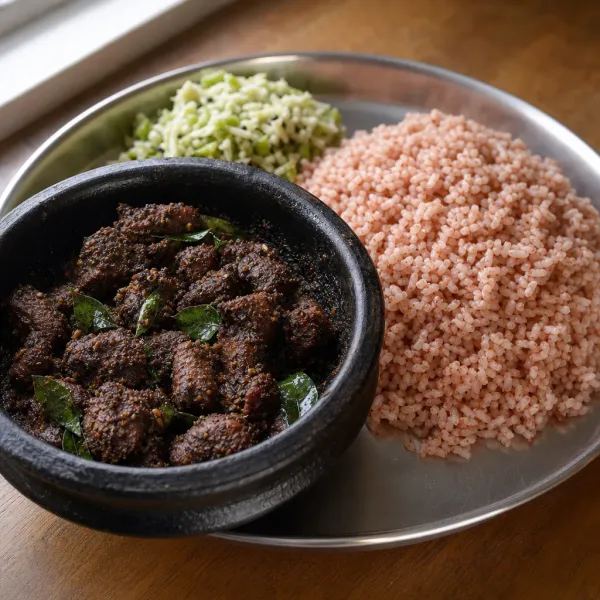
Kerala Nasrani Beef Pepper Fry
Traditional Syrian Christian beef pepper fry from Travancore: pressure-cooked, reduced dry, then fried hard in coconut oil with shallots and cracked…
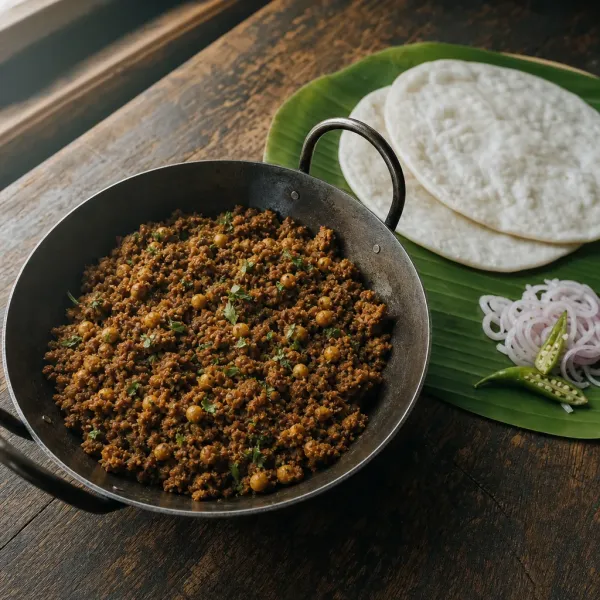
Mutton Kheema with Peas
Traditional Malabar Mappila mutton kheema with soaked white peas, shallots and whole spices, cooked dry in coconut oil. Served with pathiri.
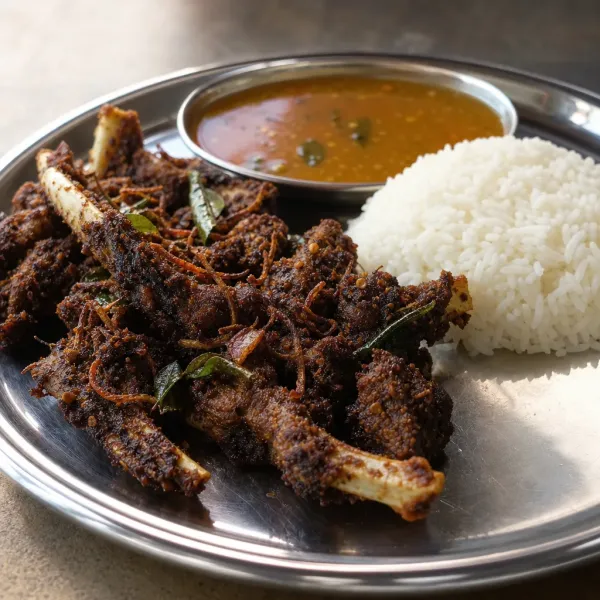
Mutton Chops Fry
Traditional Chettinad mutton chops fry with freshly ground kalpasi masala, fried in gingelly oil with shallots until dry and deeply spiced.