

Pork Bafat Recipe
Malayalam പോർക്ക് ബഫാത്Tamil போர்க் பஃபாத்Kannada ಪೋರ್ಕ್ ಬಾಫತ್Telugu పోర్క్ బాఫత్
- Prep30 min
- Cook1 hr 15 min
- Serves6
- DifficultyMedium
- DietNon-vegetarian
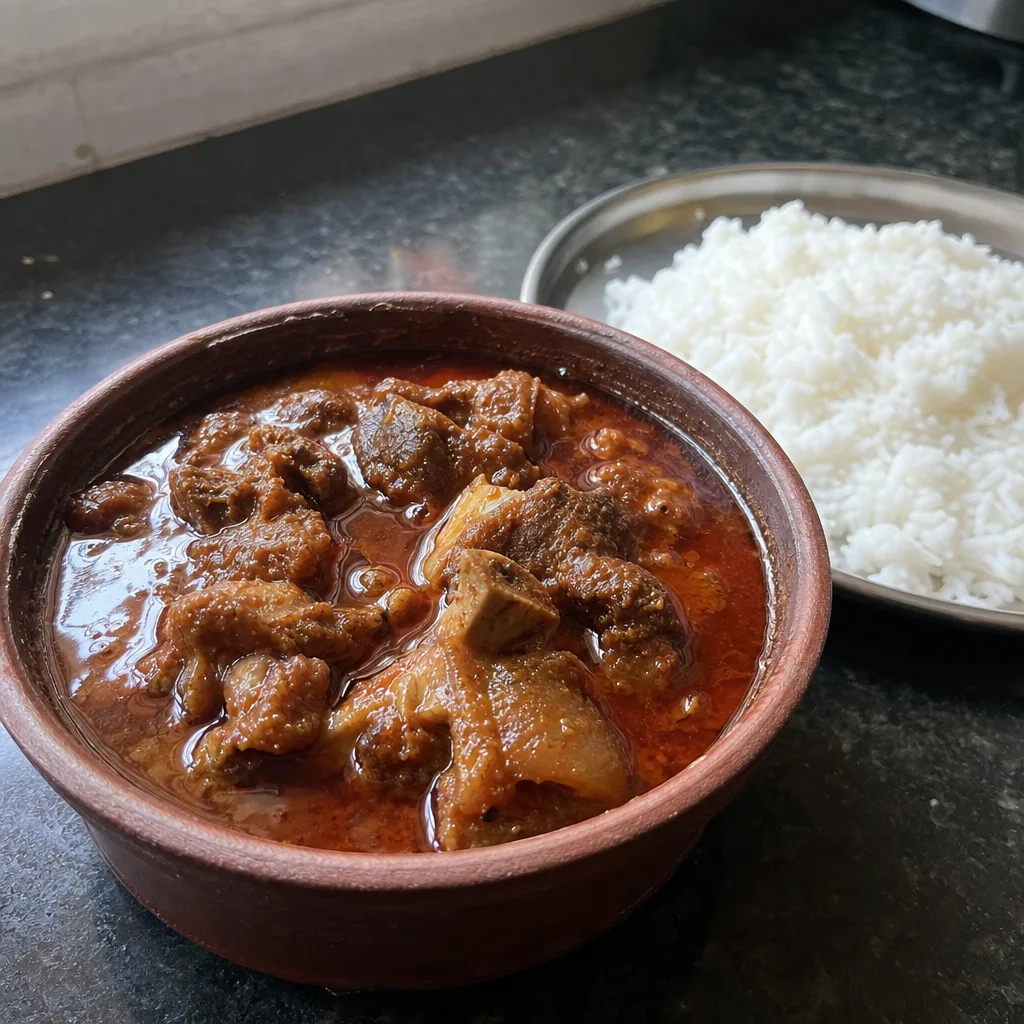
Bafat is the everyday pork curry of Mangalorean Catholic homes, built around bafat powder, a dry spice blend that each family grinds and stores in quantity. The powder is the dish. Without it you are making something else. It is a warm, brick-red, moderately hot curry with a gravy that is neither thin nor thick, and it deepens considerably if left overnight.
The cut matters. Mangalorean cooks use bone-in pork with a fair amount of fat — ribs, shoulder, belly, or a mix. The fat renders into the gravy and carries the spice. Lean pork gives a drier, less satisfying result. The meat is cooked in its own moisture and the fat it releases, with no added water beyond what is needed to prevent sticking.
Households differ mainly in heat level and the ratio of coriander to chilli in the bafat powder. Some cooks add a little vinegar at the very end; others do not. The gravy is meant to coat rice well, so it should be spoonable but not watery. This recipe follows the method common in Mangalore town households: shallots, ginger, garlic, green chillies, and bafat powder cooked down with the pork until the fat separates and the masala clings.
Ingredients (serves 6)
For the pork
For the masala base
Method
Trim and salt the pork
Check the pork pieces and remove any stray bone splinters. Score the skin lightly with a knife so the spice penetrates. Rub salt all over and set aside while you prepare the masala base. Do not rinse the pork.
Sweat the shallots
Heat coconut oil in a heavy-bottomed pot or kadai over medium heat. Add the sliced shallots and cook, stirring often, for 10 to 12 minutes until they are soft, translucent, and just beginning to colour at the edges. Do not rush this; undercooked shallots will leave a raw sweetness that throws the final gravy off.
Add ginger, garlic, and green chillies
Add the crushed garlic, ginger, and slit green chillies to the pot. Stir and cook for 3 to 4 minutes over medium heat until the raw smell of garlic is gone and the mixture looks slightly golden. Keep the heat steady; if it catches, lower it and add a splash of water.
Add the bafat powder and turmeric
Reduce the heat to low. Add the bafat powder and turmeric, stir well, and cook the dry spices in the oil and shallot mixture for 2 minutes. The masala should smell toasted and fragrant, not raw. If it sticks, add 2 tbsp of water and stir quickly.
Add the pork and coat it well
Add the salted pork pieces to the pot. Raise the heat to medium-high and turn the meat continuously for 4 to 5 minutes so every piece is coated in the masala. The pork will begin to release moisture. This is the moment to get the spice onto the meat before the liquid rises.
Cook in the pork's own moisture
Once the pork has released its juices, reduce the heat to medium-low, cover the pot with a lid, and cook for 40 minutes. Lift the lid every 10 minutes and stir so the bottom does not catch. The pork fat will begin to render and the gravy will turn a deep brick red. Add water only if the pot looks completely dry, and then only 3 to 4 tbsp at a time.
Check for doneness and adjust salt
After 40 minutes, test a piece of pork by pressing it with a spoon; it should yield easily and the meat near the bone should no longer look pink. Taste the gravy and adjust salt. If the gravy is thinner than you want, remove the lid, raise the heat to medium, and cook uncovered for 5 to 8 minutes, stirring, until it thickens and coats the back of a spoon.
Rest before serving
Turn off the heat and let the curry sit uncovered for 10 minutes before serving. The fat will rise slightly and the gravy will settle. Bafat is noticeably better the next day; the spices continue to work into the meat as it cools.
How to serve
Boiled matta rice or plain white rice. Also eaten with sanna (steamed fermented rice cakes) at festive meals. Some households serve it with bread for breakfast the following morning.
Served with: Boiled matta rice or plain white rice. Also eaten with sanna (steamed fermented rice cakes) at festive meals. Some households serve it with bread for breakfast the following morning.
Cook's tips
Bafat powder composition
A standard Mangalorean bafat powder contains dry red chillies (Byadagi variety for colour, Guntur for heat), coriander seeds, cumin, black pepper, cloves, cinnamon, and cardamom, all dry-roasted and ground together. Each family adjusts the chilli ratio. Readymade bafat powder is sold in Mangalore and available online; if you grind your own, the ratios vary by household and there is no single correct version.
The right cut of pork
Lean pork loin will dry out and the gravy will be thin. Use shoulder, belly, or ribs with bone and fat. The rendered fat is what gives the gravy its body and carries the bafat spices.
Vinegar
Some cooks add 1 tsp of coconut vinegar or cane vinegar in the last 5 minutes of cooking for a slight sour lift. This is a genuine household variation, not a mistake. If you add it, taste first — the dish should not taste sour, only brighter.
Overnight improvement
This curry is almost always better the next day. Cool it completely before refrigerating. Reheat gently over low heat with a splash of water; do not boil hard or the meat will tighten.
Heat level
The green chillies add a fresh heat separate from the dried chilli in the bafat powder. If your bafat powder is already very hot, reduce the green chillies to 2. If it is mild, keep all 4.
Regional variations
Some Mangalorean Catholic households add vinegar at the end for sharpness; a drier version exists where most of the gravy is cooked off. Goan Catholic pork dishes use a different spice blend and are not the same dish.
Glossary
- Bafat powder ಬಾಫತ್ ಪುಡಿ
- The proprietary Mangalorean Catholic spice blend of dry-roasted chillies, coriander, cumin, pepper, and warm spices, ground together and stored dry. Defines the flavour of this dish.
- Byadagi chilli ಬ್ಯಾಡಗಿ ಮೆಣಸಿನಕಾಯಿ
- A wrinkled, deep-red Karnataka chilli used primarily for colour rather than intense heat; gives bafat its brick-red appearance.
- Sanna ಸಾನ್ನಾ
- Soft, slightly tangy steamed rice cakes leavened with toddy or yeast, traditional to Mangalorean Catholic and Konkani cooking; the classic accompaniment to bafat at celebrations.
- Kudampuli കുടംപുളി
- Gamboge or Malabar tamarind; not used in bafat, which is a Karnataka dish, but listed here to clarify that the souring agent in this dish (if used at all) is vinegar, not kudampuli.
Two things decide whether this works: the quality of the bafat powder and the fat content of the pork. A good bafat powder, whether homemade or from a trusted Mangalorean source, carries the whole dish. Fatty, bone-in pork that renders into the gravy gives it the body and richness that lean meat never will. Get those two right and the method is forgiving.
More Mutton, Beef & Pork recipes
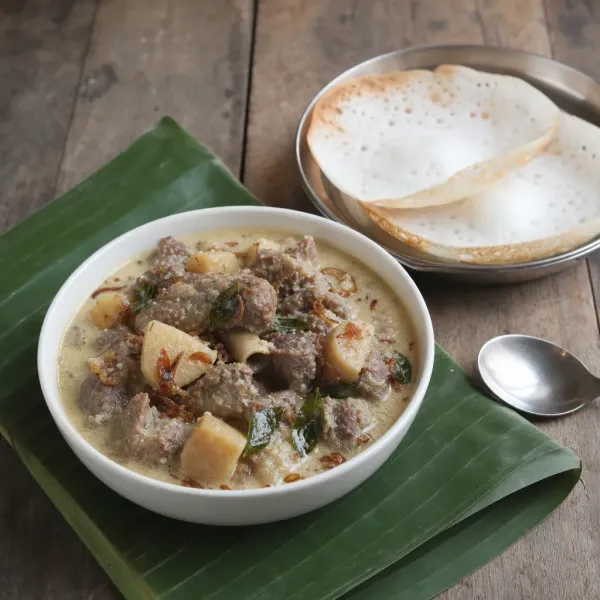
Kerala Mutton Stew
Traditional Nasrani mutton stew from Travancore: bone-in mutton, shallots, whole spices and fresh coconut milk. Served with appam. Step-by-step metho…
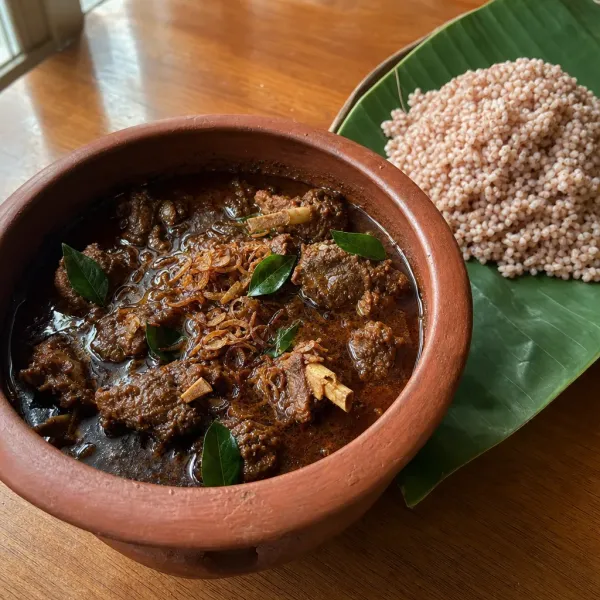
Mutton Varutharacha Curry
Traditional Kerala Nasrani mutton curry with deep-roasted coconut paste, kudampuli and coconut oil. Step-by-step household method from Travancore.
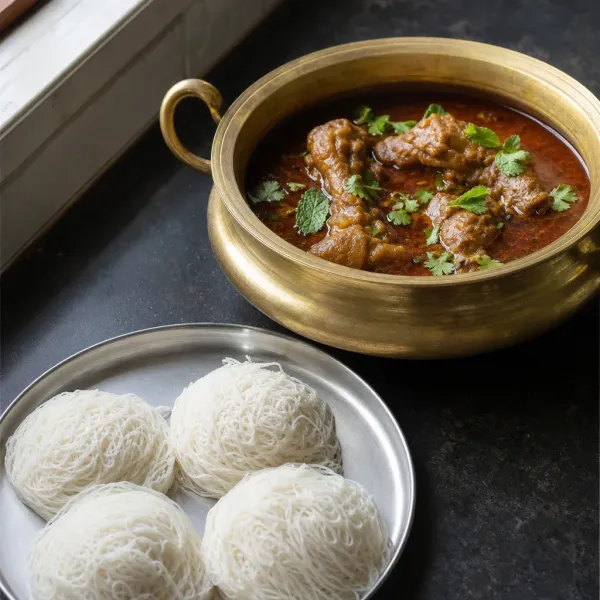
Aatu Kaal Paya
Traditional Tamil Muslim goat trotter stew slow-cooked with shallots, whole spices and kalpasi. Served with idiyappam for a classic breakfast.
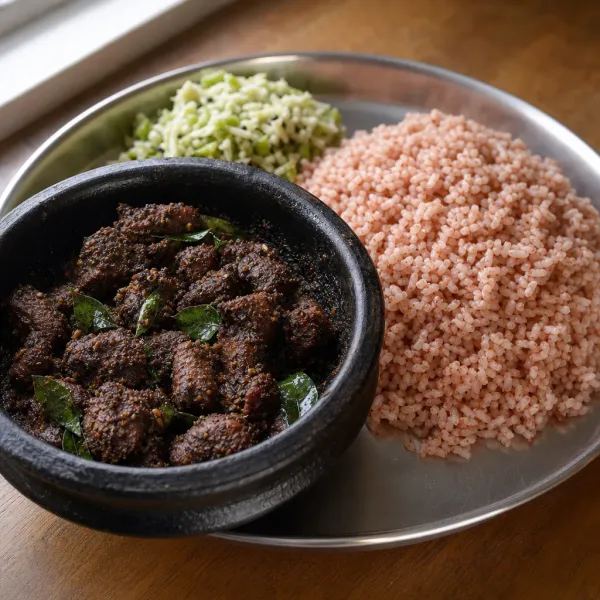
Kerala Nasrani Beef Pepper Fry
Traditional Syrian Christian beef pepper fry from Travancore: pressure-cooked, reduced dry, then fried hard in coconut oil with shallots and cracked…
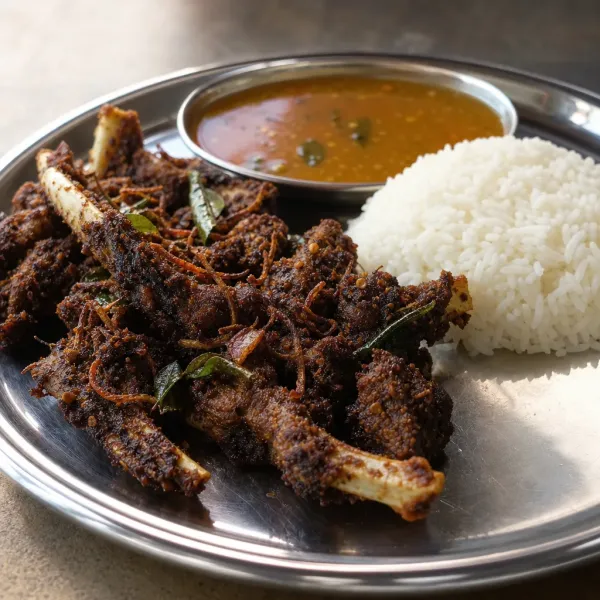
Mutton Chops Fry
Traditional Chettinad mutton chops fry with freshly ground kalpasi masala, fried in gingelly oil with shallots until dry and deeply spiced.
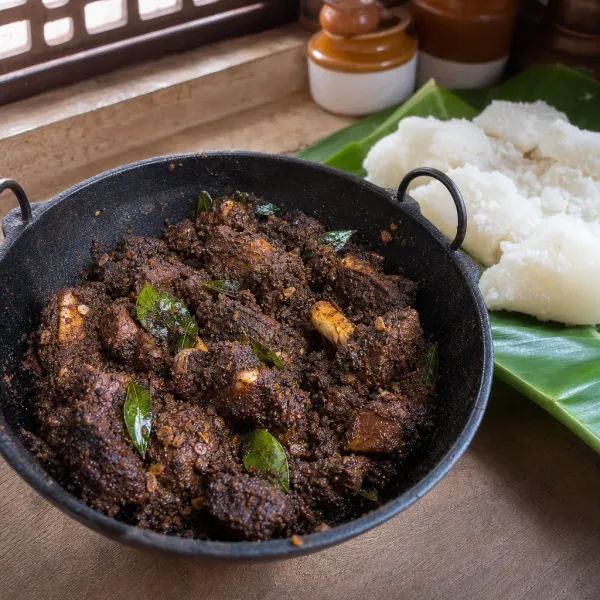
Kerala Beef Roast (Nadan Beef Roast)
Authentic Kerala Nasrani beef roast with thick dark masala, cooked the traditional way with shallots, coconut oil and curry leaves. Step-by-step hous…