

Kerala Meen Curry with Kudampuli Recipe
Malayalam മീൻ കറിTamil மீன் குழம்புKannada ಮೀನು ಕರಿTelugu చేప కూర
- Prep20 min
- Cook35 min
- Serves4
- DifficultyEasy
- DietNon-vegetarian
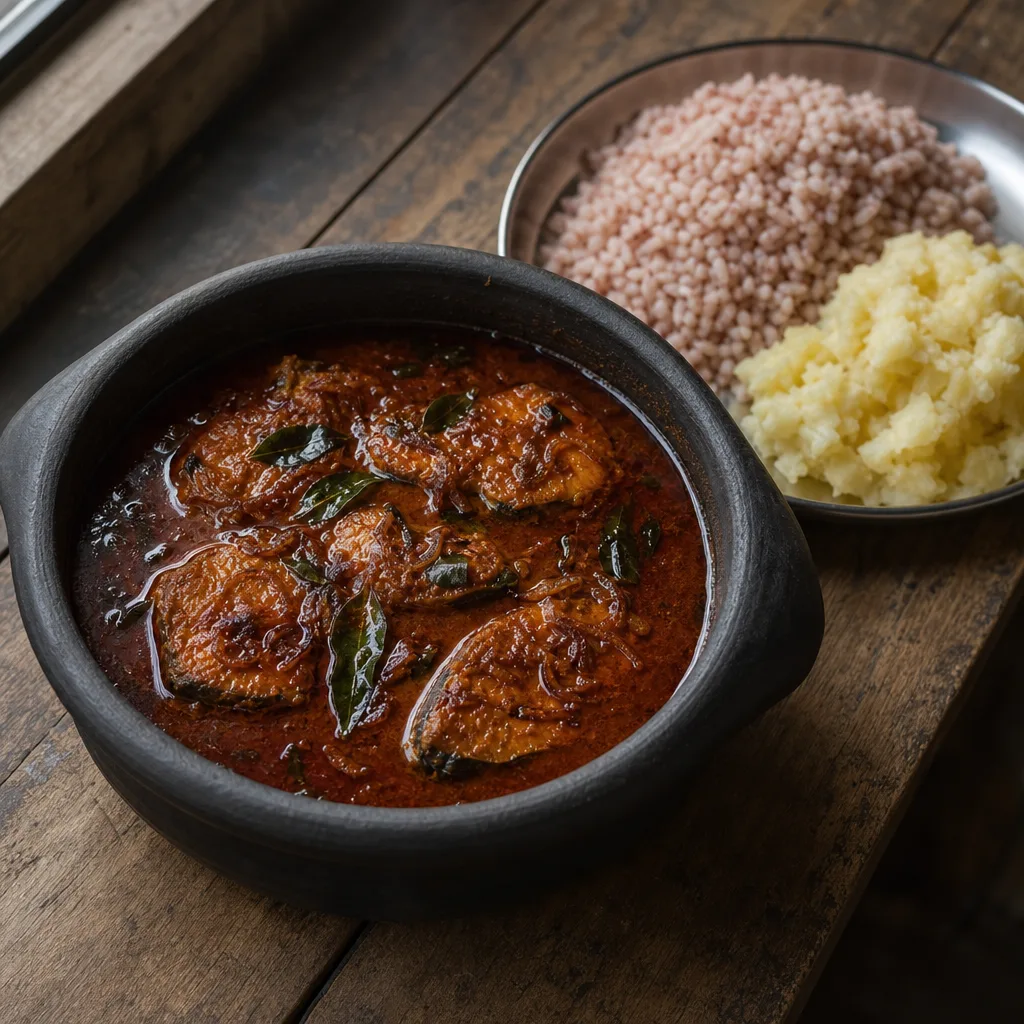
This is the everyday fish curry of the Travancore coast, cooked in a manchatti, the unglazed clay pot that rounds off the heat and draws the kudampuli's sourness into the gravy. It is not a thick curry; the gravy is thin, deeply red, and sour enough to make your mouth water before the pot reaches the table.
Kudampuli, also called Malabar tamarind or fish tamarind, is what separates this from every other red fish curry in the country. It gives a clean, fruity sourness that tamarind cannot replicate. The pieces are soaked briefly in warm water, then go into the pot early so the sourness has time to cook into the gravy and lose its raw edge.
Households differ on two points: whether to add a small amount of coconut paste to the gravy, and whether to finish with a tempering of shallots and curry leaves in coconut oil. Both are genuine. This recipe keeps the gravy without coconut, which is the leaner, more austere Travancore household style, and finishes with a tempering. The curry is always better the next day, when the fish has had time to drink in the gravy.
Ingredients (serves 4)
Fish
Souring agent
Spice paste
Aromatics
Tempering
Method
Soak the kudampuli
Rinse the kudampuli pieces under cold water. Soak them in 100 ml warm water for 15 minutes. Set the soaking water aside; you will use both the pieces and the water in the curry. Do not discard the liquid.
Make the spice paste
Mix the Kashmiri chilli powder, red chilli powder, coriander powder, turmeric and fenugreek powder in a small bowl. Add 3 tablespoons of water and stir into a smooth, thick paste. Making a paste first prevents the powders from burning when they hit the hot pot.
Heat the manchatti
Set a manchatti or a heavy-bottomed pan over medium heat. Add 2 tablespoons of the coconut oil and let it warm until it shimmers. If you are using a new manchatti, it will have been cured; if not, begin with an ordinary pan.
Cook the aromatics
Add the sliced shallots, ginger matchsticks and crushed garlic to the hot oil. Cook over medium heat, stirring often, for 6 to 8 minutes until the shallots are soft and pale gold at the edges. Add the slit green chillies and the curry leaves and stir for one more minute. The shallots should be cooked through, not raw and sharp.
Add the spice paste
Push the aromatics to the side of the pot and add the spice paste directly onto the base of the pan. Stir it into the oil and let it cook for 2 to 3 minutes, folding the aromatics through it. The paste should darken slightly and smell cooked, not raw. If it sticks, add a splash of water. Raw chilli powder in the finished curry is a common mistake.
Add kudampuli and water
Add the soaked kudampuli pieces along with all the soaking water. Pour in an additional 300 ml of water. Stir, bring to a gentle boil and let the gravy simmer uncovered for 5 minutes so the sourness from the kudampuli begins to cook into the base.
Season and add the fish
Taste the gravy and add salt. Slide the fish pieces in gently, making sure they are submerged in the gravy. Do not stir with a spoon; swirl the pot by the handle instead. Stirring will break the fish.
Simmer the fish
Cook uncovered over medium-low heat for 12 to 15 minutes, swirling the pot once or twice. The fish is done when it is just opaque through to the bone and flakes easily at the edge. The gravy will have thickened slightly and turned a deep brick red. Do not overcook; the fish continues to cook in the residual heat.
Rest before tempering
Remove the pot from the heat and let it sit for 5 minutes. This resting step lets the fish settle and the gravy deepen. Do not skip it if you can help it.
Prepare the tempering
In a small pan, heat the remaining 1 tablespoon of coconut oil over medium-high heat until it is hot but not smoking. Add the dry red chillies and let them darken for a few seconds. Add the sliced shallots and curry leaves. Fry, stirring, until the shallots are golden brown and the curry leaves are crisp, about 3 to 4 minutes.
Finish and serve
Pour the tempering over the curry in the manchatti. Swirl once to incorporate. Serve from the pot; the clay holds heat well and the curry will stay warm at the table.
How to serve
Kappa (boiled and mashed tapioca / cassava) is the most traditional pairing in Travancore households. Matta rice (red parboiled rice) is equally common. It is also eaten with plain boiled rice.
Served with: Kappa (boiled and mashed tapioca / cassava) is the most traditional pairing in Travancore households. Matta rice (red parboiled rice) is equally common. It is also eaten with plain boiled rice.
Cook's tips
Kudampuli quantity
The number of pieces matters more than the weight, as pieces vary in size. Start with 3 pieces for a milder sourness and add the fourth only after tasting the gravy at step 6. You can always add more; you cannot take it back.
The manchatti
A clay pot is not merely traditional here; it genuinely affects the flavour. The unglazed surface absorbs coconut oil over time and gives the curry a rounded quality no stainless steel pot matches. A new manchatti should be cured before first use: fill it with water, bring to a simmer, discard and repeat twice.
Fish choice
Neymeen (king fish / seer fish) is the household standard for this curry. Ayala (mackerel) and mullan (mullet) are common alternatives. Firm, oily fish work best. Avoid very delicate white fish, which fall apart.
Next-day curry
The curry tastes noticeably better after 6 to 8 hours. The fish absorbs the sour gravy and the spices mellow. Many cooks make it the evening before. Reheat gently, never at a rolling boil.
Fenugreek caution
A quarter teaspoon is enough. Even a little extra fenugreek turns the curry unpleasantly bitter. This is one of the most common errors in this recipe.
Regional variations
Malabar version uses more whole spices and sometimes coconut milk; Mappila version adds fennel and a thicker coconut paste; some Nasrani households use vinegar in place of kudampuli.
Glossary
- Kudampuli കുടംപുളി
- Dried rind of Garcinia cambogia, used as the souring agent in Kerala fish curries; gives a fruity, clean acidity distinct from tamarind.
- Manchatti മൺചട്ടി
- Unglazed earthenware cooking pot traditional to Kerala; prized for fish and meat curries.
- Cheriya ulli ചെറിയ ഉള്ളി
- Small shallots; the standard allium in Kerala cooking, sharper and more aromatic than regular onions.
- Neymeen നെയ്മീൻ
- King fish or seer fish (Scomberomorus commerson); a firm, oily fish common in Kerala coastal markets.
- Matta rice മട്ട അരി
- Red parboiled rice from Palakkad, Kerala; nutty, chewy and the traditional rice served with fish curry in Travancore households.
- Kappa കപ്പ
- Tapioca / cassava, boiled or mashed; the most traditional accompaniment to meen curry in Travancore.
Two things decide this curry: the kudampuli and the time you give it. The sourness must cook long enough to lose its raw edge and become part of the gravy, not a sharp note sitting on top. And the curry made today is good; the curry made this morning and eaten tonight is better.
More Non-Vegetarian recipes
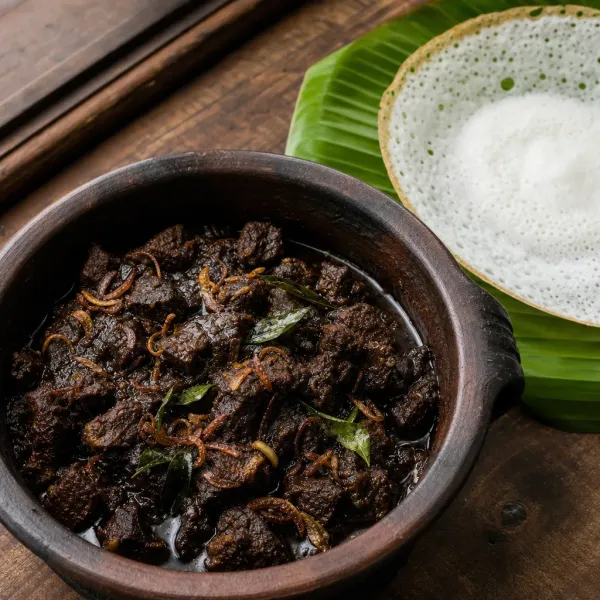
Kerala Nasrani Beef Curry (Irachi Olathiyathu Style Gravy)
Authentic Nasrani beef curry from Central Travancore: slow-cooked with black pepper, whole spices, shallots, and coconut oil. Traditional household r…
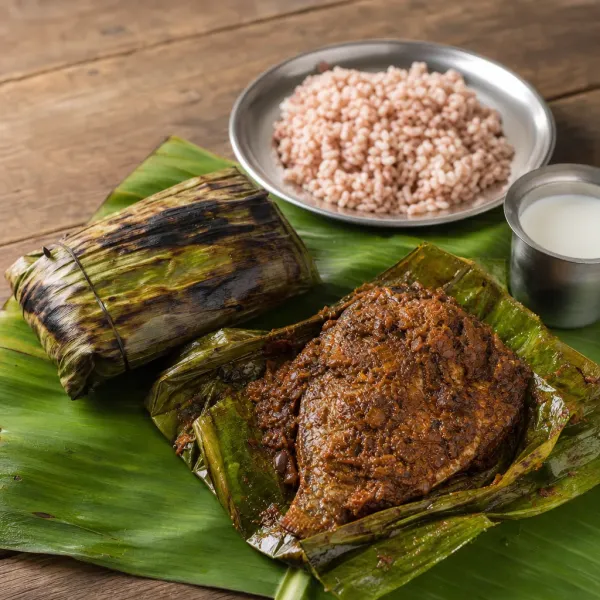
Karimeen Pollichathu
Traditional Nasrani karimeen pollichathu from central Travancore: pearl spot fish coated in a shallot-coconut oil masala, wrapped in banana leaf and…
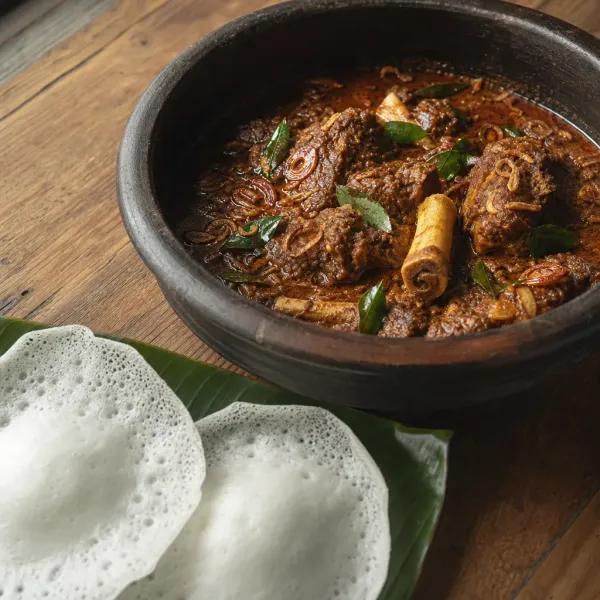
Kerala Nasrani Mutton Curry
Traditional Syrian Christian mutton curry from central Kerala, built on roasted spices and slow-fried shallots. Served with appam or matta rice.
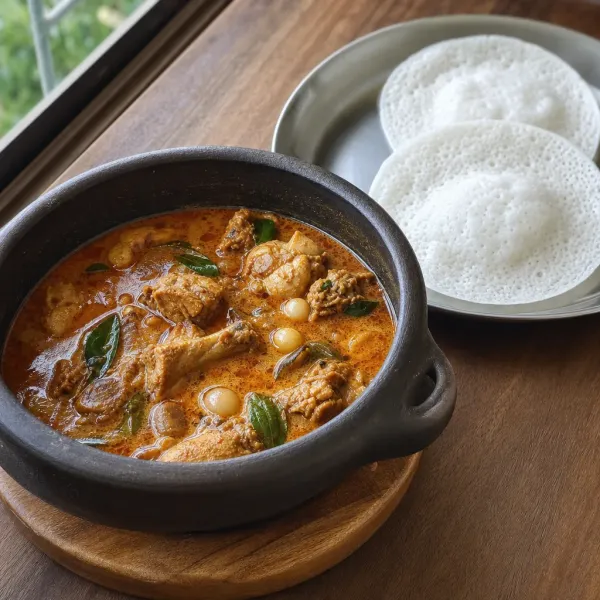
Nadan Kozhi Curry
Traditional Kerala Nasrani chicken curry with fresh-ground spices, pearl shallots, and two-press coconut milk. Served with appam or matta rice.
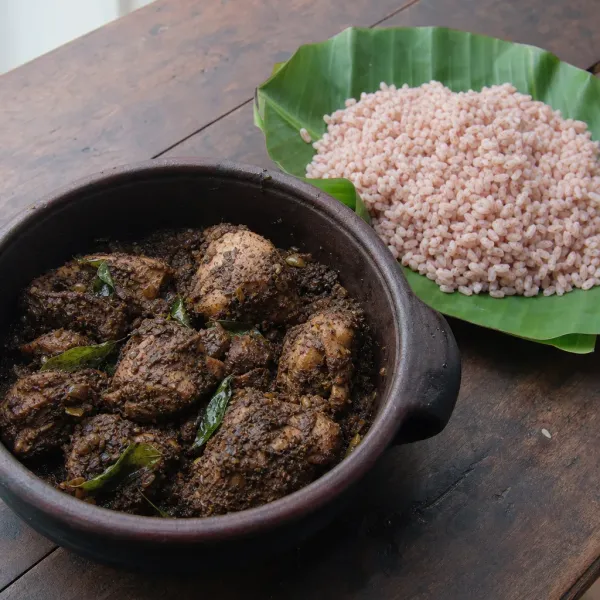
Kurumulaku Kozhi (Kerala Pepper Chicken)
Traditional Kerala Nasrani pepper chicken cooked with freshly cracked black pepper, shallots, curry leaves and coconut oil. A semi-dry Travancore Syr…
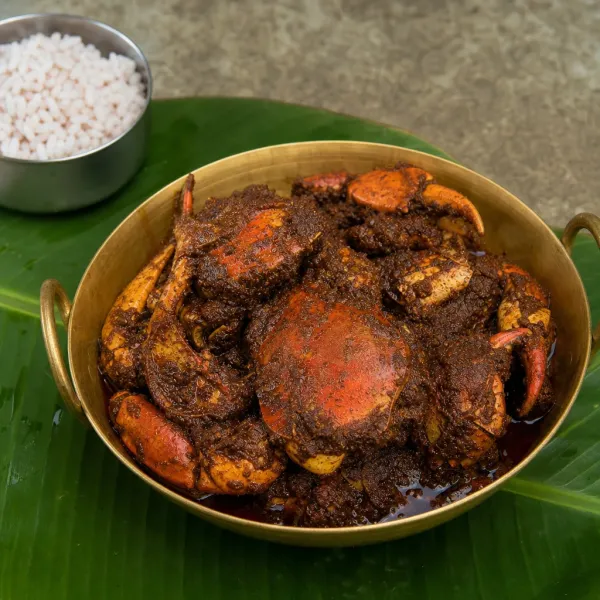
Nandu Masala (Crab Masala)
Authentic Chettinad nandu masala made with fresh-ground kalpasi and marathi mokku masala, gingelly oil, and mud crab. Traditional household recipe fr…