

Kerala Nasrani Mutton Curry Recipe
Malayalam നസ്രാണി മട്ടൻ കറിTamil கேரள நஸ்ரானி மட்டன் கறிKannada ಕೇರಳ ನಸ್ರಾನಿ ಮಟನ್ ಕರಿTelugu కేరళ నస్రానీ మటన్ కర్రీ
- Prep30 min
- Cook1 hr 15 min
- Serves4
- DifficultyMedium
- DietNon-vegetarian
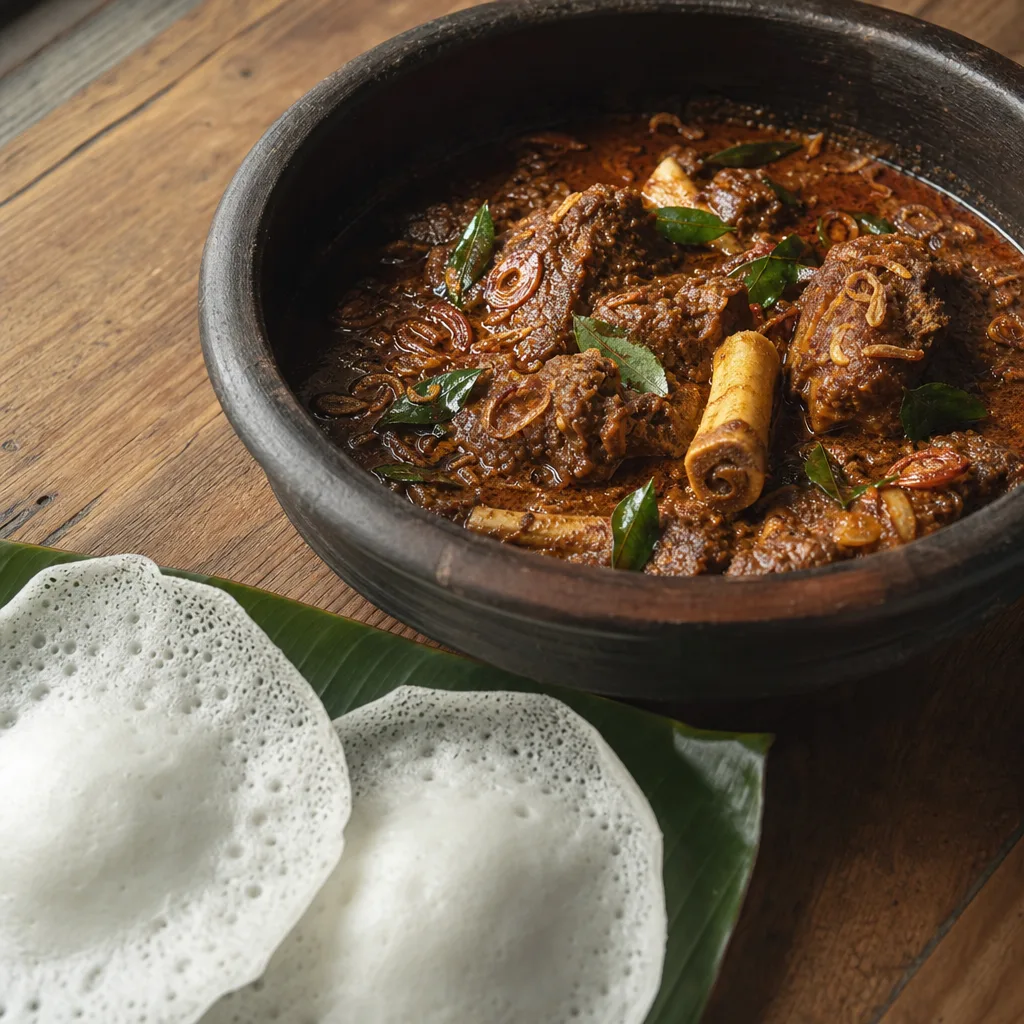
This is the mutton curry of Syrian Christian kitchens in central Kerala, cooked for Sunday lunch and feast days. It is dark, deeply spiced, and built on coconut oil and whole spices rather than a ground coconut gravy. The meat is cooked until it just falls from the bone but still holds its shape. The gravy is thick and oily at the surface, which is exactly right.
The spice base is roasted and ground at home. Nasrani cooks keep a house masala that differs from family to family, but the spine is always coriander, black pepper, and dried red chilli, roasted together and ground coarse, not fine. Fennel does not belong here; that is Mappila territory. Curry leaves are added in quantity and are non-negotiable.
Households differ mainly in the proportion of pepper to chilli. Some families use only black pepper for heat and keep dried chilli low; others balance the two evenly. The dish is eaten with appam, kallappam, or Kerala porotta, and on working days sometimes with matta rice and a cabbage thoran.
Ingredients (serves 4)
Meat
For dry roasting and grinding
Aromatics
Cooking fat and liquid
Finishing
Method
Roast and grind the spices
Heat a dry iron or heavy pan over medium-low flame. Add the coriander seeds, black peppercorns, dried red chillies, cloves, cardamom, cinnamon, and star anise. Roast, stirring constantly, for 3 to 4 minutes until the coriander turns a shade darker and the kitchen smells toasty but not burnt. Tip onto a plate immediately and cool completely. Grind to a coarse powder, not a fine dust; you want some texture.
Salt the mutton
Place the mutton pieces in a heavy-bottomed vessel, preferably a manchatti or a wide stainless pot. Rub in a generous pinch of salt. Set aside while you prepare the aromatics. Do not marinate with the spice powder yet; it goes in later.
Fry the shallots low and slow
Heat 4 tablespoons coconut oil in the same vessel over medium flame. Add the sliced shallots and cook, stirring regularly, for 12 to 15 minutes until they are deep golden brown, almost caramelised at the edges. If you rush this step, the gravy will be pale and lack body. Take your time here.
Add garlic, ginger, chilli and curry leaves
Add the crushed garlic, ginger matchsticks, slit green chillies, and curry leaves to the browned shallots. Fry for 3 to 4 minutes over medium heat, stirring, until the raw smell of the garlic is gone and everything is well coated in the oil.
Add the ground masala
Reduce the flame to low. Add all the ground spice powder. Stir continuously for 2 minutes, cooking the masala in the oil. It will darken slightly. If it sticks, splash in a tablespoon of water and keep stirring. The masala is ready when the oil begins to separate at the edges of the paste.
Seal the meat in the masala
Raise the flame to medium-high. Add the salted mutton pieces and turn them firmly in the masala for 4 to 5 minutes until every surface is coated and the meat is no longer pink on the outside. Do not add water yet; you want the meat to fry briefly in the spiced oil, which builds the base flavour.
Cook with water, covered
Pour in 250 ml of warm water and stir to lift any masala from the bottom. Season with salt. Bring to a boil, then reduce the flame to low. Cover tightly and cook for 50 to 60 minutes, checking every 15 minutes. The mutton should be very tender and the meat should pull away from the bone with gentle pressure. If the gravy is drying before the meat is done, add water 50 ml at a time.
Reduce the gravy
Once the mutton is cooked, remove the lid and raise the flame to medium. Cook uncovered for 5 to 8 minutes, stirring gently, until the gravy thickens and coats the back of a spoon. The surface should show a thin sheen of coconut oil. Do not over-reduce; this is a gravy dish, not a dry roast.
Make the finishing tarka
In a small pan, heat 1 tablespoon coconut oil over medium-high flame. Add the 4 thinly sliced shallots and fry, stirring, for 3 to 4 minutes until crisp and reddish-brown. Add the sprig of curry leaves, let them crackle for 10 seconds, then pour the entire contents of the pan over the curry. Swirl gently and cover for 2 minutes before serving.
How to serve
Appam, kallappam, or Kerala porotta. On ordinary days, with matta rice and a dry thoran on the side.
Served with: Appam, kallappam, or Kerala porotta. On ordinary days, with matta rice and a dry thoran on the side.
Cook's tips
Pressure cooker shortcut
Many households today cook the mutton in a pressure cooker after step 6: add the water, seal, and cook on high for 3 whistles, then release pressure naturally and proceed with reducing the gravy. The texture is slightly different but acceptable. Do not exceed 3 whistles or the meat falls apart entirely.
Bone-in is not optional
Boneless mutton produces a drier, less flavourful curry. The marrow and collagen from the bones give the gravy its body. Shoulder and rib pieces with a mix of meat-heavy and bone-heavy cuts give the best result.
The colour of the curry
This curry is a deep reddish-brown, almost chocolate-tinged, because of the roasted coriander and the depth of the fried shallots. If yours looks pale orange, the shallots were not fried long enough and the masala was not properly cooked in the oil.
Resting improves it
Like most spiced meat dishes, this tastes better an hour after cooking than it does straight off the flame. The next day it is even better. Reheat gently over low flame with a splash of water.
On fennel
Fennel seeds are absent here. They appear in Mappila mutton preparations from North Kerala, which is a different tradition. Adding fennel to this recipe shifts it away from the Nasrani character.
Regional variations
Mappila mutton curry (Malabar) uses fennel and kewra water; Nair-style uses more coconut and less whole spice; Kodava pandi curry uses pork and kachampuli.
Glossary
- Manchatti മൺചട്ടി
- Unglazed earthenware cooking pot traditional to Kerala kitchens; conducts heat gently and adds a faint earthen quality to slow-cooked dishes.
- Chuvannulli ചുവന്നുള്ളി
- Small red shallots used across Kerala cooking; sharper and more aromatic than large onions.
- Kollamulaku കൊല്ലംമുളക്
- Short, moderately hot dried red chilli associated with Kollam district; gives colour without extreme heat.
- Matta rice മട്ട അരി
- Red parboiled rice from Kerala, particularly Palakkad; nutty and slightly chewy, the everyday rice of most Kerala households.
- Nasrani നസ്രാണി
- Kerala's Syrian Christian community, also called Saint Thomas Christians; one of the oldest Christian communities in the world, with a distinct culinary tradition.
Two things decide this curry: the depth of the shallot frying and the quality of the freshly roasted masala powder. Shallots that are only softened, not properly browned, produce a flat, pale gravy. Masala that is bought pre-ground and added without roasting will taste dusty rather than alive. Everything else, the timing, the water, the finishing tarka, follows naturally once those two steps are right.
More Non-Vegetarian recipes
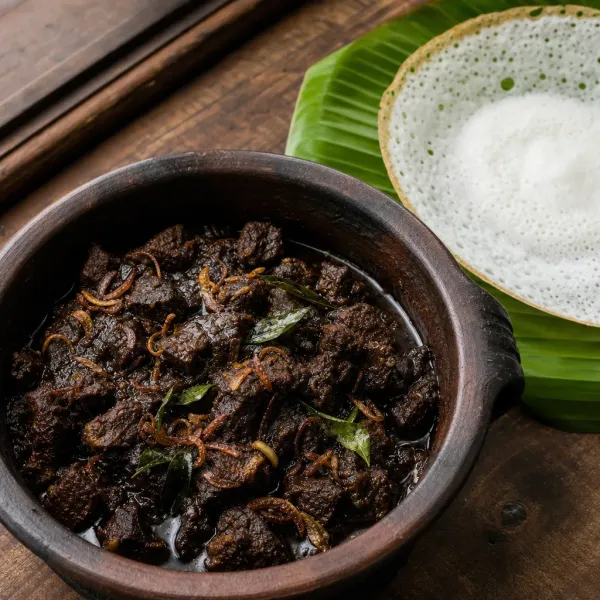
Kerala Nasrani Beef Curry (Irachi Olathiyathu Style Gravy)
Authentic Nasrani beef curry from Central Travancore: slow-cooked with black pepper, whole spices, shallots, and coconut oil. Traditional household r…
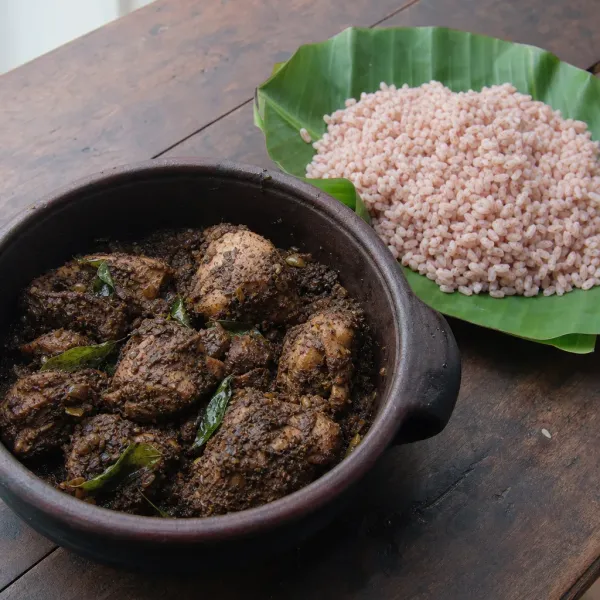
Kurumulaku Kozhi (Kerala Pepper Chicken)
Traditional Kerala Nasrani pepper chicken cooked with freshly cracked black pepper, shallots, curry leaves and coconut oil. A semi-dry Travancore Syr…
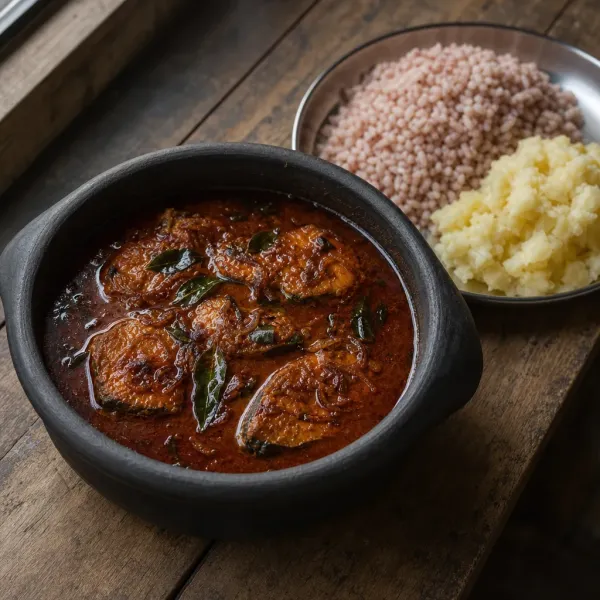
Kerala Meen Curry with Kudampuli
Traditional Kerala fish curry from Travancore, cooked in a clay pot with kudampuli, shallots and coconut oil. No coconut milk, no shortcuts.
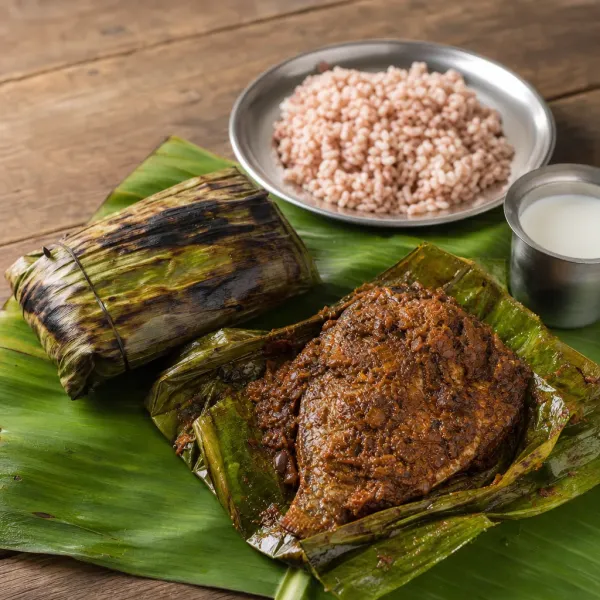
Karimeen Pollichathu
Traditional Nasrani karimeen pollichathu from central Travancore: pearl spot fish coated in a shallot-coconut oil masala, wrapped in banana leaf and…
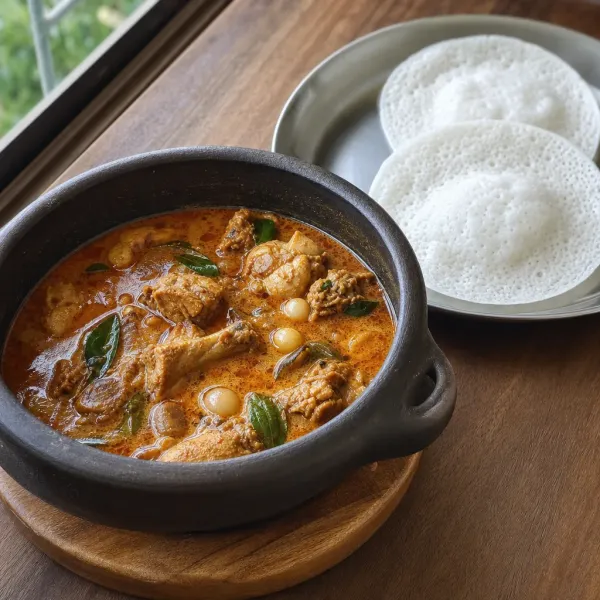
Nadan Kozhi Curry
Traditional Kerala Nasrani chicken curry with fresh-ground spices, pearl shallots, and two-press coconut milk. Served with appam or matta rice.
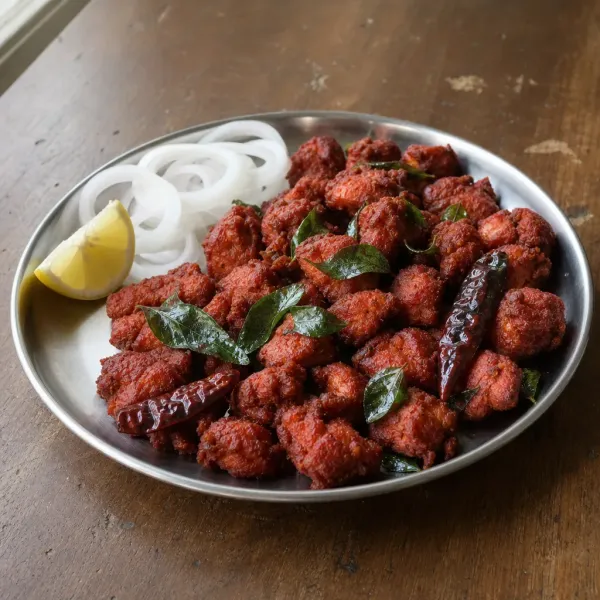
Chicken 65
The original Chennai-style Chicken 65: double-fried boneless chicken in Kashmiri chilli and gingelly oil. Dry, crisp, no sauce. Traditional household…