

Karimeen Pollichathu Recipe
Malayalam കരിമീൻ പൊള്ളിച്ചത്Tamil கரிமீன் பொள்ளிச்சத்துKannada ಕರಿಮೀನ್ ಪೊಳ್ಳಿಚತ್ತುTelugu కరిమీన్ పొళ్ళిచత్తు
- Prep30 min
- Cook25 min
- Serves4
- DifficultyMedium
- DietNon-vegetarian
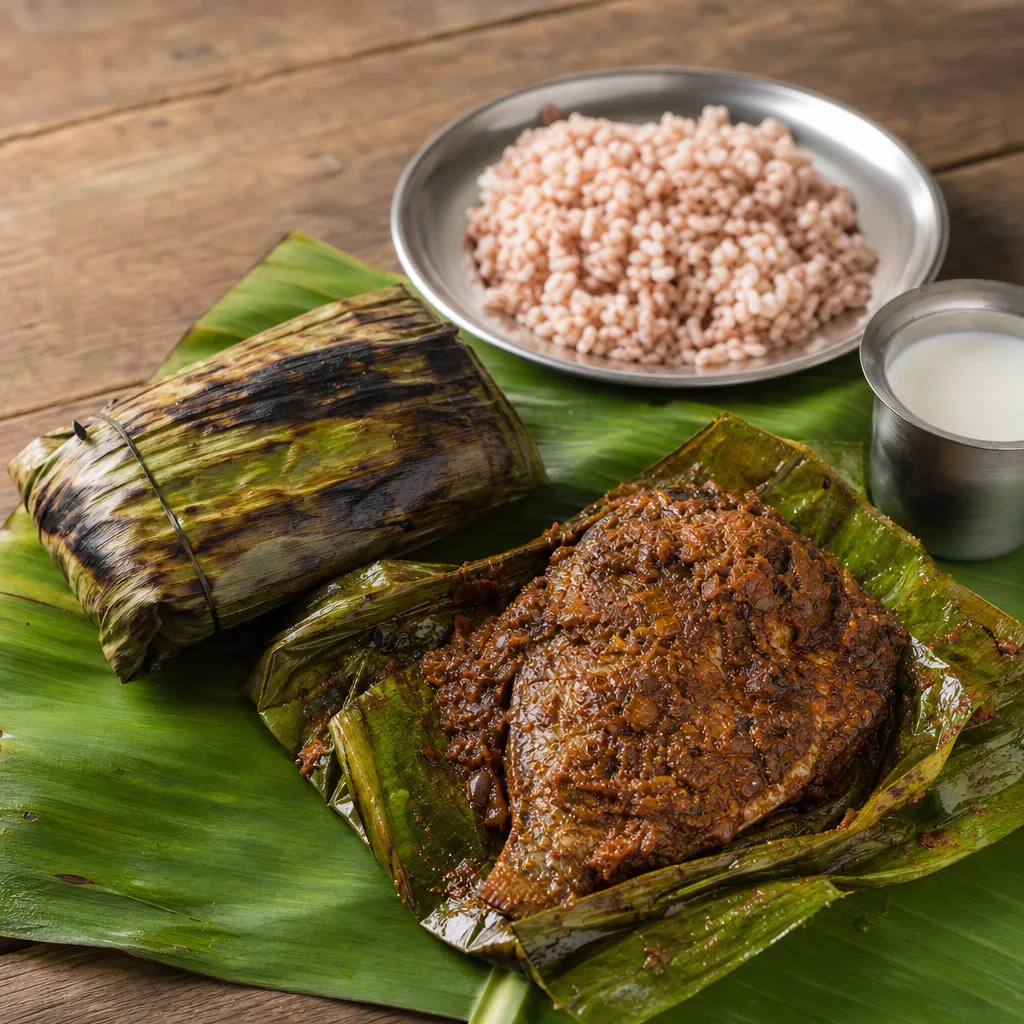
This dish belongs to the backwater country of central Kerala, where karimeen, the pearl spot fish, lives in the brackish kayal waters. In Nasrani homes around Kottayam, Alappuzha and Changanacherry, it is the fish you make when there is something to celebrate, or when a guest arrives who matters. The banana leaf is not decoration. It steams the fish in its own masala, traps every drop of juice inside the parcel, and gives the outside flesh a faint green-smoky character that no pan alone can produce.
The masala is a fried paste of shallots, green chilli, ginger, garlic and coconut, cooked down in coconut oil until the raw smell is completely gone. The fish is scored, marinated briefly, then sealed inside the paste and the leaf together, and the whole parcel goes either onto a tawa or into a covered pan. The leaf chars slightly on the outside. Inside, nothing chars. The fish stays moist and the masala clings to every cut.
Households differ on two things: some cooks add a spoonful of thick coconut milk to the masala just before wrapping, which makes it richer; others keep it dry so the paste forms a proper crust on the fish. Kudampuli is not used here. The souring in some family versions comes from a very small amount of vinegar, though many Nasrani cooks use none at all and rely only on the green chilli for brightness.
Ingredients (serves 4)
For the fish
For the masala
For wrapping
Method
Marinate the fish
Mix the red chilli powder, turmeric, black pepper, salt and coconut oil into a paste. Rub it firmly into the fish, pushing it into the scored cuts with your fingers. Set aside for 20 minutes at room temperature. Do not marinate longer or the salt will draw out moisture and the flesh will be dry after cooking.
Wilt the banana leaves
Hold each banana leaf piece 10 cm above a direct flame, moving it slowly. You will hear a soft crackle and the leaf will turn a slightly darker, more matte green and go limp within 30 to 40 seconds. This makes it fold without splitting. Set the wilted pieces aside on a clean surface.
Fry the shallots
Heat the coconut oil in a wide, heavy pan on medium heat. Add the sliced shallots and cook, stirring regularly, for 10 to 12 minutes until they are deeply golden and beginning to caramelise at the edges. Do not rush this step on high heat; the sweetness of the shallot is what balances the chilli in the finished masala.
Build the masala
Add the ginger, garlic and green chillies to the pan and fry for 3 minutes until the raw smell of garlic is gone. Add the curry leaves and stir for 30 seconds. Add the red chilli powder, coriander powder, turmeric and black pepper, lower the heat, and fry the spice powders into the oil for 2 minutes, stirring constantly. The masala should look dry, fragrant and deeply coloured, with the oil beginning to separate at the edges of the pan. Taste for salt.
Cool the masala slightly
Take the pan off the heat and allow the masala to cool for 5 minutes. It should be thick enough to spread and hold on the fish. If it looks very loose, return it to the heat and stir for another minute.
Assemble the parcels
Lay two pieces of wilted banana leaf on top of each other, overlapping, dull side up. Brush the surface lightly with coconut oil. Place one fish in the centre. Spread a generous tablespoon of masala inside the cavity and press another two tablespoons firmly over the top and into the cuts on both sides. Every scored surface should be coated.
Wrap and secure
Fold the long sides of the leaf over the fish first, then fold in the short ends to make a neat parcel. The double layer of leaf prevents burning before the fish is cooked through. If the parcels will not stay closed, secure them with toothpicks or a strip of softened banana leaf tied around the package.
Cook the parcels
Heat a heavy iron tawa or thick-bottomed pan on medium-low heat. Place the parcels on it without any oil. Cover the pan with a tight lid. Cook for 8 minutes on the first side. You will smell the leaf beginning to scorch faintly — that is correct. Carefully flip each parcel using tongs and cook for another 7 minutes on the second side. Total cooking time for a 200 g fish should be 15 minutes; a 250 g fish needs 17 to 18 minutes.
Check for doneness
Open one parcel carefully — the steam inside is very hot. The flesh at the thickest cut should be white all the way to the bone and pull away cleanly. If the centre is still translucent, re-wrap and cook for 3 more minutes. Do not open the parcels repeatedly or the steam that cooks the fish escapes.
Serve in the leaf
Bring the parcels to the table sealed and open them at the table. The leaf holds the heat and the juices that have pooled inside are part of the dish. Serve immediately.
How to serve
Matta rice (red boiled Kerala rice) and a simple kachiya moru (seasoned buttermilk). Some households serve it with plain white rice when the fish is the centrepiece of a meal.
Served with: Matta rice (red boiled Kerala rice) and a simple kachiya moru (seasoned buttermilk). Some households serve it with plain white rice when the fish is the centrepiece of a meal.
Cook's tips
If karimeen is unavailable
Tilapia of the same size is the most honest substitute for the backwater flavour. Pomfret works for the wrapping technique but gives a different result. Avoid thin-fleshed fish; they overcook before the leaf has time to impart any flavour.
Scoring depth matters
The cuts must reach the bone. A shallow score only marks the skin and the masala sits on top rather than penetrating the flesh. Run the knife firmly at a 45-degree angle. Three cuts per side is the traditional number — more and the fish can fall apart when flipping.
The tawa versus a covered pan
A cast iron tawa on a gas flame gives a better char on the leaf. An aluminium vessel with a lid works but the leaf will not colour as deeply. Do not use a non-stick pan; the high, sustained heat needed for the leaf will damage the coating.
Advance preparation
The masala can be made up to a day ahead and refrigerated. Assemble and wrap the fish up to two hours before cooking. Do not refrigerate once wrapped in the leaf, or the leaf will become soggy and tear when you try to flip the parcel.
The coconut milk variation
Some Kottayam households stir one tablespoon of thick coconut milk (first press) into the cooled masala before spreading it on the fish. This makes the masala slightly saucier and richer. It is a genuine household variation, not an error.
Regional variations
Mappila households in Malabar make a version with more whole spices and fennel in the masala; coastal Travancore fishermen's families sometimes wrap in a full banana sheath rather than a trimmed leaf.
Glossary
- Karimeen കരിമീൻ
- Pearl spot fish (Etroplus suratensis), a brackish water fish native to Kerala's backwaters; the state fish of Kerala.
- Pollichathu പൊള്ളിച്ചത്
- From the Malayalam root meaning 'to char' or 'to scorch'; refers to the technique of cooking wrapped in banana leaf over direct heat so the leaf singes while the interior steams.
- Cheriya ulli ചെറിയ ഉള്ളി
- Small red shallots, the standard allium of Kerala cooking; sharper and more aromatic than the large onion.
- Kudampuli കുടംപുളി
- Garcinia cambogia, the dried sour fruit used as souring agent in Kerala fish curries; deliberately not used in this dish.
- Matta rice മട്ട അരി
- Red boiled rice from Palakkad; the everyday rice of Kerala households, with a firm, nutty texture.
- Kachiya moru കാച്ചിയ മോര്
- Seasoned, tempered buttermilk; a standard Kerala table condiment made by heating diluted curd with mustard, dried red chilli and curry leaves.
- Tawa തവ
- A flat or slightly concave iron griddle used for direct-heat cooking.
Two things decide the result. The first is the masala: it must be fried long enough that the shallots are truly caramelised and the spice powders have cooked in hot oil, not merely warmed. An undercooked masala tastes raw inside the leaf regardless of how long the fish cooks. The second is the seal of the parcel. If steam can escape, the fish dries out. Wrap it tightly, cook it covered, and do not be tempted to peek more than once.
More Non-Vegetarian recipes
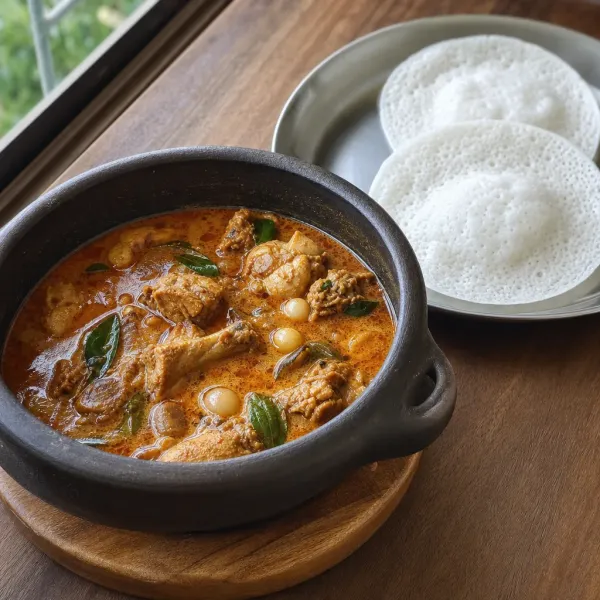
Nadan Kozhi Curry
Traditional Kerala Nasrani chicken curry with fresh-ground spices, pearl shallots, and two-press coconut milk. Served with appam or matta rice.
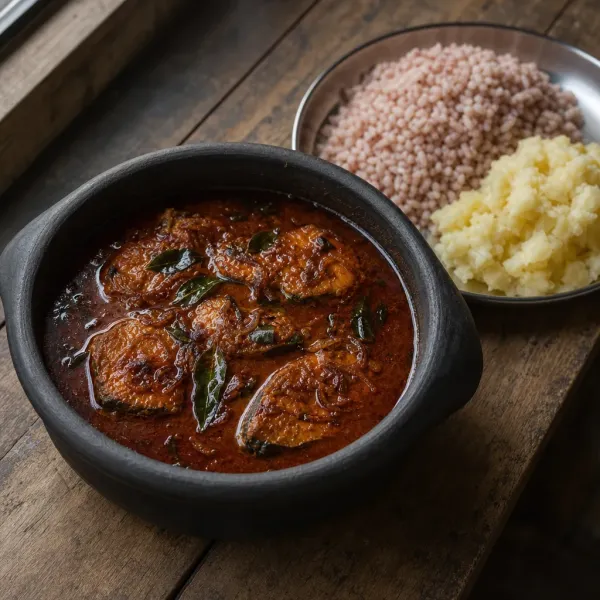
Kerala Meen Curry with Kudampuli
Traditional Kerala fish curry from Travancore, cooked in a clay pot with kudampuli, shallots and coconut oil. No coconut milk, no shortcuts.
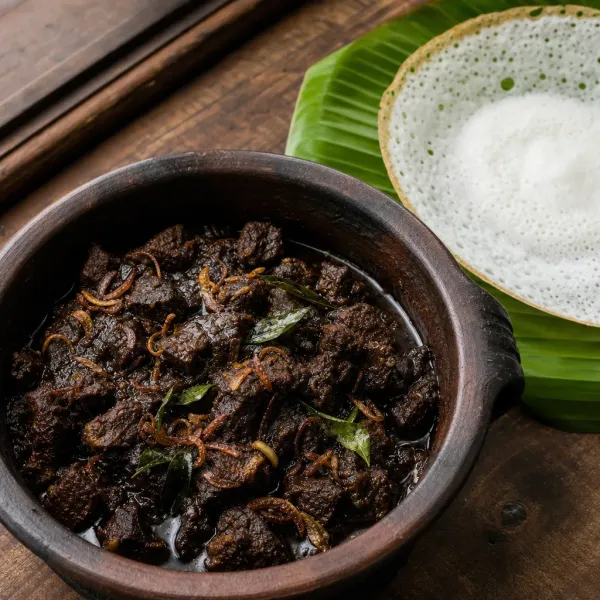
Kerala Nasrani Beef Curry (Irachi Olathiyathu Style Gravy)
Authentic Nasrani beef curry from Central Travancore: slow-cooked with black pepper, whole spices, shallots, and coconut oil. Traditional household r…
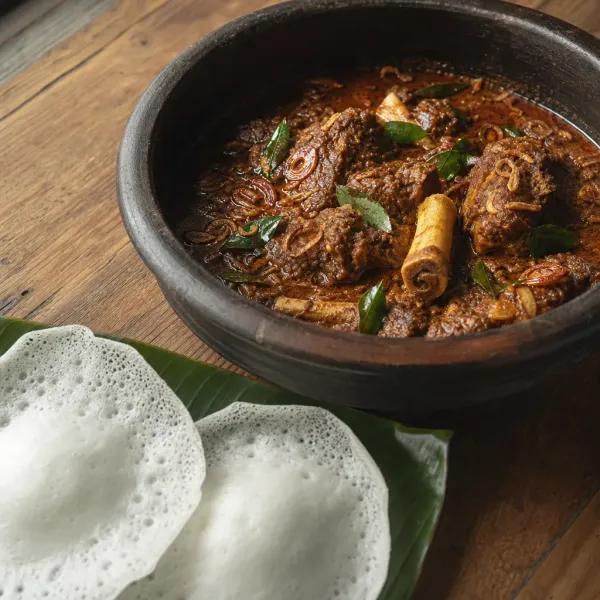
Kerala Nasrani Mutton Curry
Traditional Syrian Christian mutton curry from central Kerala, built on roasted spices and slow-fried shallots. Served with appam or matta rice.
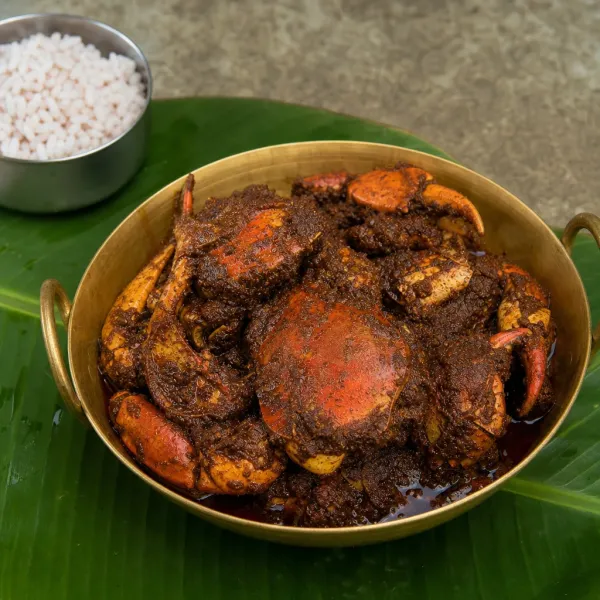
Nandu Masala (Crab Masala)
Authentic Chettinad nandu masala made with fresh-ground kalpasi and marathi mokku masala, gingelly oil, and mud crab. Traditional household recipe fr…
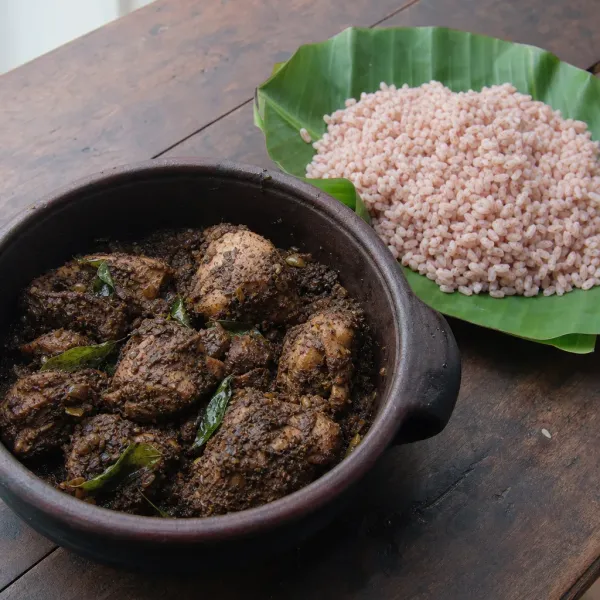
Kurumulaku Kozhi (Kerala Pepper Chicken)
Traditional Kerala Nasrani pepper chicken cooked with freshly cracked black pepper, shallots, curry leaves and coconut oil. A semi-dry Travancore Syr…