

Nandu Masala (Crab Masala) Recipe
Malayalam നണ്ട് മസാലTamil நண்டு மசாலாKannada ನಂಡು ಮಸಾಲಾTelugu నండు మసాలా
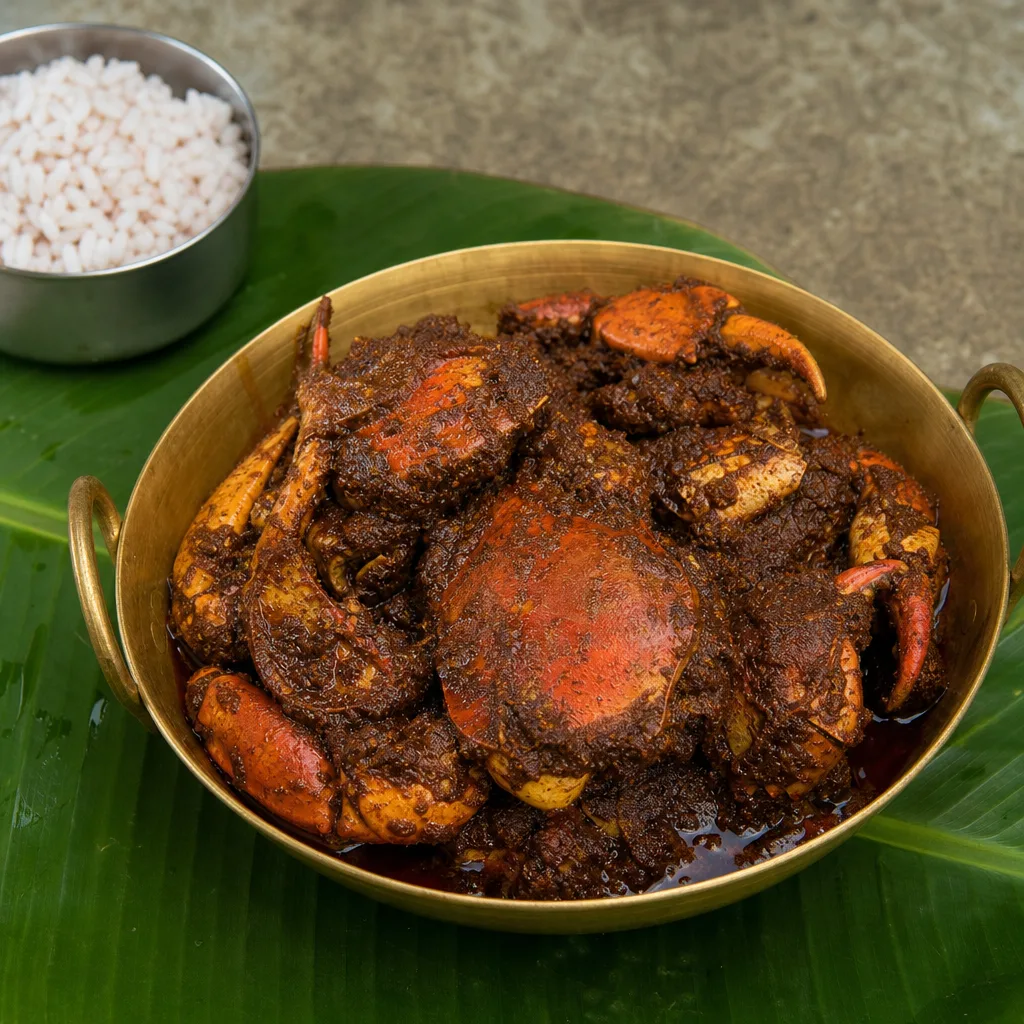
- Prep35 min
- Cook50 min
- Serves4
- DifficultyHard
- DietNon-vegetarian
Nandu masala is a Chettinad kitchen dish, built on the layered, dry-roasted masala that defines that community's cooking. Chettinad sits inland in the Sivaganga district of Tamil Nadu, far from the sea, yet dried and fresh crab have always been traded into its markets. The masala is not a paste stirred in at the end. It is a set of whole spices, toasted separately, ground fresh, and cooked long enough to lose the raw edge.
In most Chettiar households, the crab is cleaned and cracked before it meets the pan. The shell is not discarded. It stays in throughout the cooking and gives the gravy a depth that no amount of powder can replace. The oil is gingelly oil, and that is not optional. Coconut oil would pull this somewhere else entirely.
How thick or thin households take it varies. Some prefer it dry enough to eat with rice on a banana leaf with minimal mess. Others leave a thick coating masala. Both are legitimate. What does not vary is the kalpasi and marathi mokku in the ground masala. Those two aromatics are markers of Chettinad cooking and they are not substituted.
Ingredients (serves 4)
Crab
Chettinad dry masala (to roast and grind fresh)
For the base
Method
Clean and crack the crab
If the crab is live, hold it firmly from behind and pull off the top shell. Remove the gills (the grey feathery flaps along each side of the body), the stomach sac near the mouth, and rinse thoroughly under cold water. Crack each claw with the back of a heavy knife so the masala can enter but the shell stays intact. Cut the body into four pieces. Pat dry and set aside. Do this carefully. Broken shell shards in the finished dish are unpleasant and dangerous.
Dry-roast and grind the masala
Set a small heavy pan over medium-low heat. Add nothing. Roast the coriander seeds, dry red chillies, peppercorns, fennel, cumin, kalpasi, marathi mokku, star anise, cinnamon, cloves, and cardamom together, stirring constantly, until the coriander is a shade darker and the pan smells toasted but not burnt. This takes 3 to 4 minutes. Tip them out immediately onto a plate so the residual heat does not burn them. In the same dry pan, roast the kopparai slices until golden and lightly charred at the edges, about 2 minutes. Do the coconut separately because it burns faster than the whole spices. Once everything is cool, grind to a fine powder. Set aside.
Fry the shallots
Heat the gingelly oil in a wide, heavy-bottomed kadai over medium heat. Add the curry leaves and let them crackle for 20 seconds. Add the shallots and fry, stirring often, until they are deep golden-brown and slightly crisp at the edges. This takes 12 to 15 minutes and cannot be rushed. Under-fried shallots give the masala a raw, sweet edge it should not have.
Add garlic, ginger, and tomato
Add the crushed garlic and chopped ginger to the shallots and fry for 2 minutes until the raw smell of garlic fades. Add the tomatoes and turmeric and cook over medium heat, stirring and pressing the tomato pieces flat, until the tomatoes have completely broken down and the oil begins to separate around the edges of the mass. This takes about 8 minutes. The mixture should look thick and dark, not watery.
Add the ground masala
Reduce the heat to low. Add the ground Chettinad masala powder and stir it into the cooked tomato-shallot base. Cook for 3 to 4 minutes, stirring continuously. The masala will darken and the whole pan will smell intensely aromatic. If it sticks, add no more than 2 tbsp of water and scrape the base clean. Do not add more at this stage; you want the masala to fry, not steam.
Add the crab and coat well
Increase the heat to medium. Add the crab pieces and turn them thoroughly so every piece is coated in the masala. Stir-fry for 4 to 5 minutes. The crab will begin to change colour and the shells will turn orange-red. Press the larger body pieces gently against the pan to help the masala enter through the cracks.
Cook covered with very little water
Add 100 ml of water, stir once, cover the kadai with a lid and cook on medium-low heat for 15 minutes. Check halfway and stir gently to prevent the bottom from catching. The crab releases its own juices as it cooks and this, combined with the small amount of added water, is enough. Adding more water will thin the masala and you will spend extra time reducing it back down.
Reduce to a thick, clinging masala
Remove the lid and cook on medium heat for a further 5 to 8 minutes, turning the crab pieces occasionally. You want the masala to reduce until it clings thickly to the shell and the oil begins to show at the surface. The finished dish is not a gravy. The masala coats each piece densely. Taste and adjust salt.
Rest before serving
Turn off the heat, cover loosely and rest the dish for 5 minutes before serving. The crab continues to absorb the masala as it cools slightly and the flavour deepens noticeably in those few minutes.
How to serve
Plain boiled matta rice or seeraga samba rice on a banana leaf. A plain rasam or a simple kootu alongside. In Chettinad households, appalam is often served on the same leaf.
Served with: Plain boiled matta rice or seeraga samba rice on a banana leaf. A plain rasam or a simple kootu alongside. In Chettinad households, appalam is often served on the same leaf.
Cook's tips
Kopparai, not fresh coconut
Kopparai is the hard, dried interior of a mature coconut, oily and dense. It gives the masala body and a faint smokiness. Fresh coconut is wetter and sweeter and will change the character of this dish. Desiccated coconut is not a substitute in a traditional Chettinad masala.
Kalpasi and marathi mokku are not optional
Both aromatics are available in any market in the Chettinad region and in shops selling South Indian spices elsewhere. If you genuinely cannot find them, the dish will still be good, but it will not taste like Chettinad nandu masala. Mark the recipe accordingly rather than presenting a substitute as the real thing.
Gingelly oil matters
The toasted sesame aroma of gingelly oil is part of the flavour profile of this dish. Refined sunflower or groundnut oil makes a flat-tasting result. Use cold-pressed or wood-pressed gingelly oil if you can find it.
Cracking the claws
The claw shell should be cracked but not shattered. One firm hit with the back of the knife at the widest point is enough. If the shell splinters into tiny pieces, they end up in the masala and are hazardous to eat.
Frozen crab
Fresh mud crab is best. If using frozen crab, thaw it fully in the refrigerator overnight and pat very dry before cooking. Excess moisture from frozen crab dilutes the masala in step 7 and you will need to reduce longer.
Regional variations
Coastal Tamil Nadu (non-Chettiar) versions use coconut milk and less whole spice; Kerala Mappila versions use kudampuli and coconut paste; Mangalorean Catholic versions use bafat powder.
Glossary
- Nandu நண்டு
- Crab in Tamil; mud crab is the most prized variety in Chettinad cooking.
- Kalpasi கல்பாசி
- Stone flower, a lichen (Parmotrema perlatum) used whole in Chettinad masala; earthy, musky aroma.
- Marathi mokku மராட்டி மொக்கு
- Dried flower buds of the Bombax ceiba (kapok) tree; used in Chettinad cuisine for fragrance, not heat.
- Kopparai கொப்பரை
- The dried, hard interior of a mature coconut; oilier and firmer than fresh coconut, used in Chettinad masalas for body and slight smokiness.
- Chinna vengayam சின்ன வெங்காயம்
- Small shallots; used throughout Tamil Nadu cooking in preference to large onions for their sharper, sweeter flavour.
- Sombu சோம்பு
- Fennel seeds; used frequently in Chettinad masalas, giving a gentle anise note that softens the heat slightly.
- Nallennai நல்லெண்ணெய்
- Gingelly oil, cold-pressed sesame oil; the traditional cooking fat for Tamil Nadu savoury dishes.
- Annasi poo அன்னாசிப்பூ
- Star anise; one of several whole spices in the Chettinad spice set, used for its liquorice-like warmth.
Two things decide this dish. The first is the masala: roast and grind it fresh the day you cook, and toast the kopparai separately so it does not burn with the whole spices. The second is patience with the shallots. They must be deeply golden before the garlic goes in. Everything else follows from those two steps.
More Non-Vegetarian recipes
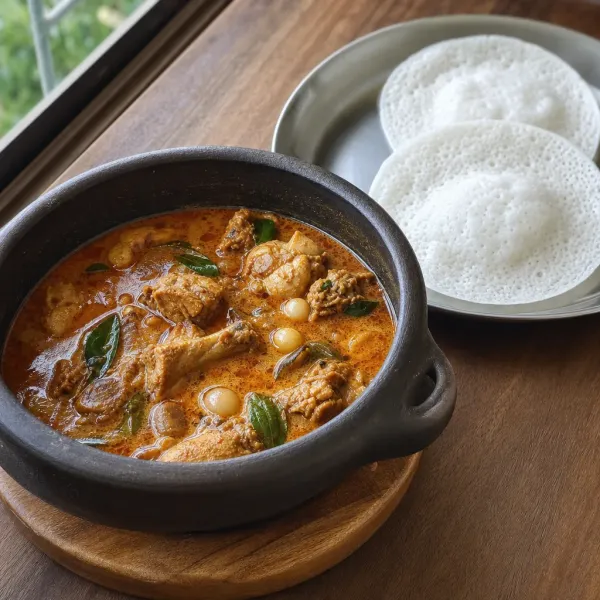
Nadan Kozhi Curry
Traditional Kerala Nasrani chicken curry with fresh-ground spices, pearl shallots, and two-press coconut milk. Served with appam or matta rice.
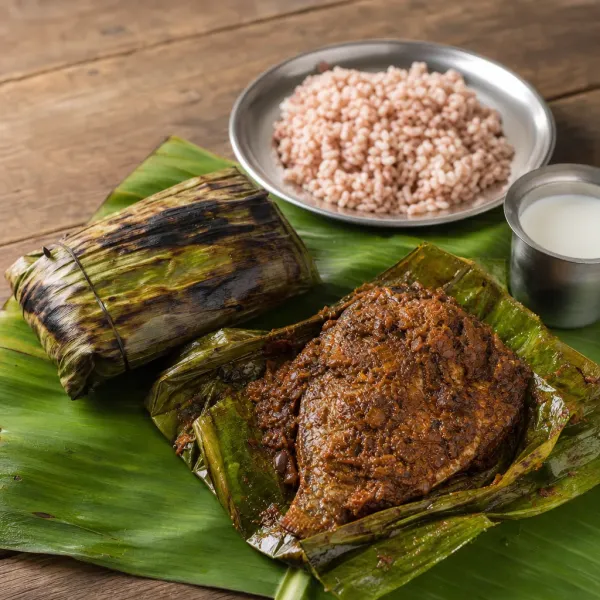
Karimeen Pollichathu
Traditional Nasrani karimeen pollichathu from central Travancore: pearl spot fish coated in a shallot-coconut oil masala, wrapped in banana leaf and…
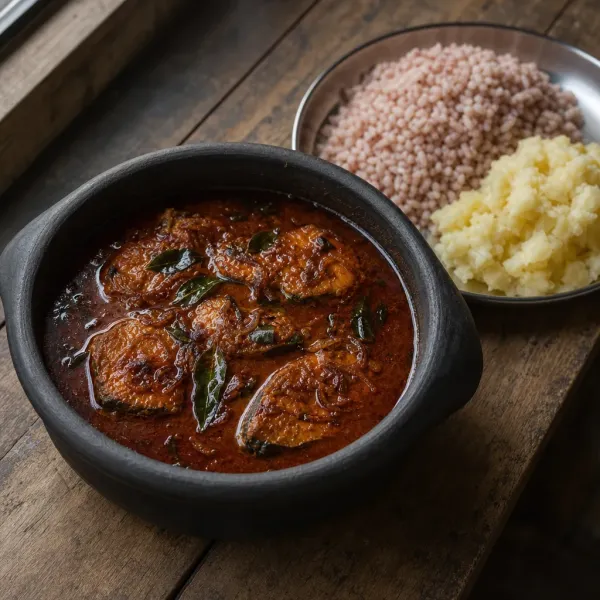
Kerala Meen Curry with Kudampuli
Traditional Kerala fish curry from Travancore, cooked in a clay pot with kudampuli, shallots and coconut oil. No coconut milk, no shortcuts.
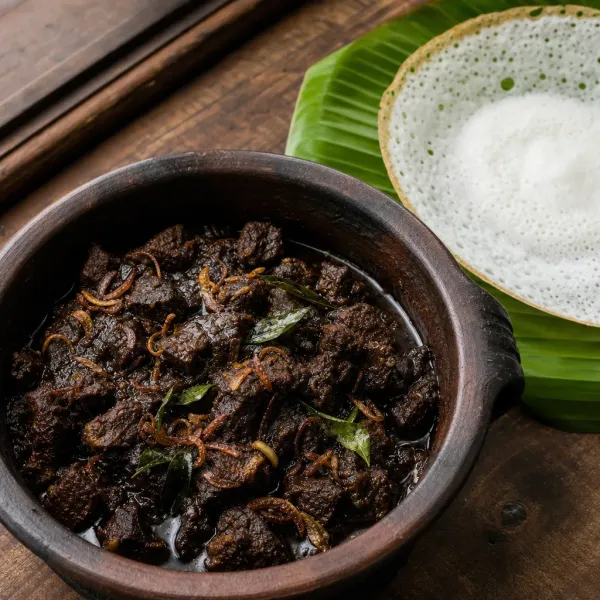
Kerala Nasrani Beef Curry (Irachi Olathiyathu Style Gravy)
Authentic Nasrani beef curry from Central Travancore: slow-cooked with black pepper, whole spices, shallots, and coconut oil. Traditional household r…
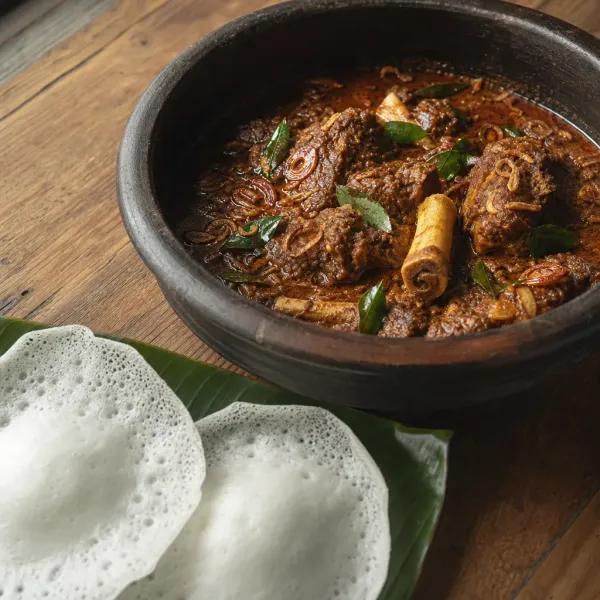
Kerala Nasrani Mutton Curry
Traditional Syrian Christian mutton curry from central Kerala, built on roasted spices and slow-fried shallots. Served with appam or matta rice.
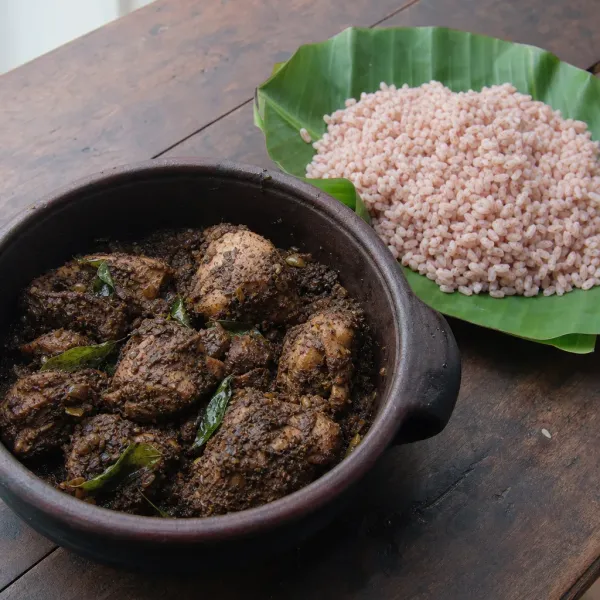
Kurumulaku Kozhi (Kerala Pepper Chicken)
Traditional Kerala Nasrani pepper chicken cooked with freshly cracked black pepper, shallots, curry leaves and coconut oil. A semi-dry Travancore Syr…